

NEW YORK — A federal bankruptcy court judge said Friday he'll approve OxyContin-maker Purdue Pharma's latest deal to settle thousands of lawsuits over the toll of opioids that includes some money for thousands of victims of the epidemic.
The deal overseen by U.S. Bankruptcy Judge Sean Lane would require members of the Sackler family who own the company to contribute up to $7 billion over 15 years. The new agreement replaces one the U.S. Supreme Court rejected last year, finding it would have improperly protected members of the family against future lawsuits.
The judge said he would explain his decision in a hearing Tuesday.
It's among the largest in a series of opioid settlements brought by state and local governments against drugmakers, wholesalers and pharmacies. It could close a long chapter — and maybe the entire book — on a legal odyssey over efforts to hold the company to account for its role in an opioid crisis connected to 900,000 deaths in the U.S. since 1999, including from heroin and illicit fentanyl.
Lawyers and judges involved described it as one of the most complicated bankruptcies in U.S. history. Ultimately, attorneys representing Purdue, cities, states, counties, Native American tribes, people with addiction and others were nearly unanimous in urging the judge to approve the bankruptcy plan for Purdue, which filed for protection six years ago as it faced lawsuits with claims that grew to trillions of dollars.
Purdue lawyer Marshall Huebner told the judge he wishes he could "conjure up $40 trillion or $100 trillion to compensate those who have suffered unfathomable loss." But without that possibility, he said: "The plan is entirely lawful, does the greatest good for the greatest number in the shortest available time frame."

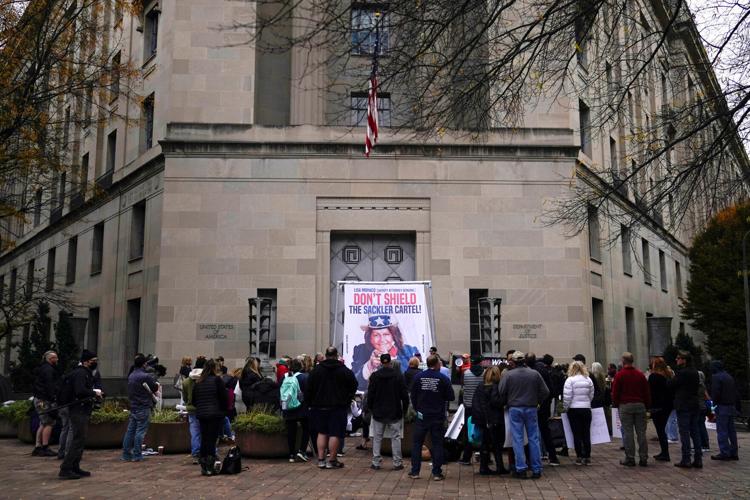
Advocates for opioid victims gather around a banner made by artist Fernando Luis Alvarez during a Dec. 3, 2021, protest outside the Department of Justice in Washington.
Opposition quieter
The saga has been emotional and full of contentious arguments between the many groups that took Purdue to court, often exposing a possible mismatch between the quest for justice and the practical role of bankruptcy court.
The U.S. Supreme Court rejected a previous deal because it said it was improper for Sackler family members to receive immunity from lawsuits over opioids. In the new arrangement, entities who don't opt into the settlement can sue them.
Family members are collectively worth billions, but many of their assets are in offshore accounts that would be hard to access through lawsuits.
This time, the government groups involved reached an even fuller consensus and there's been mostly subdued opposition from individuals. Out of more than 54,000 personal injury victims who voted on whether the plan should be accepted, just 218 said no. A larger number of people who are part of that group didn't vote.
Unlike with other proceedings, there were no protests outside the courthouse.

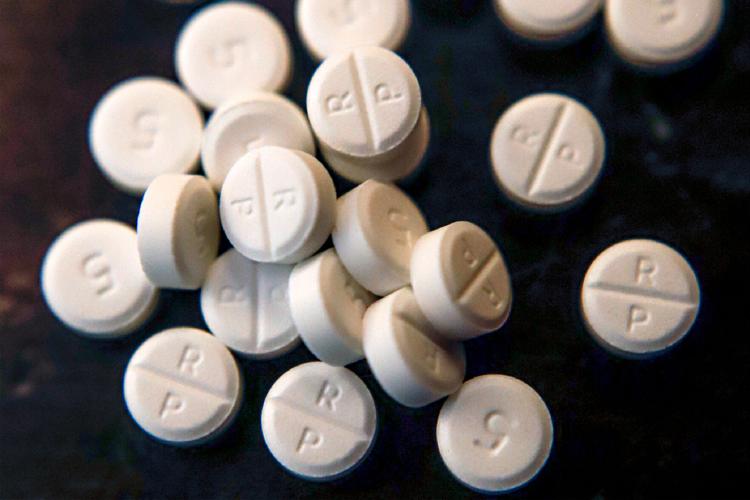
Several 5-mg pills of Oxycodone are photographed June 17, 2019, in Zelienople, Pa.
A handful of objectors spoke during the three-day hearing, sometimes interrupting the judge.
Some said only the victims, not the states and other government entities, should receive the funds in the settlement. Others wanted the judge to find the members of the Sackler family criminally liable — something Lane said is beyond the scope of the bankruptcy court, but that the settlement doesn't bar prosecutors from pursuing.
A Florida woman whose husband struggled with addiction after being given OxyContin for an injury told the court that the deal isn't enough.
"The natural laws of karma suggest the Sacklers and Purdue Pharma should pay for what they have done," Pamela Bartz Halaschak said via video.

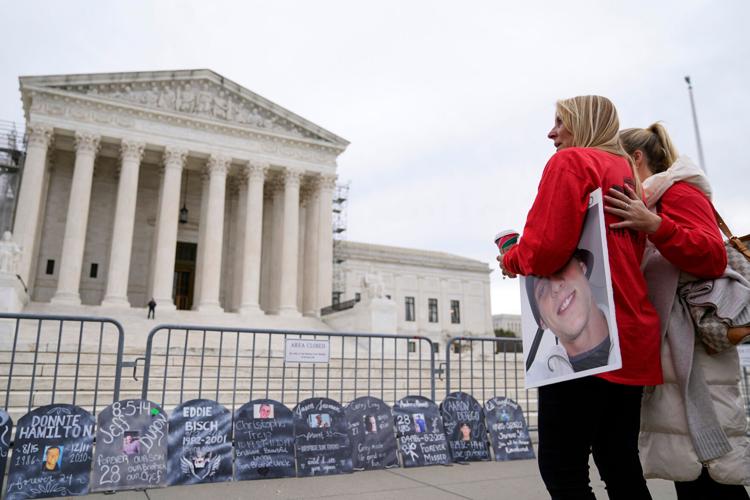
Jen Trejo holds a photo of her son Christopher as she is comforted Dec. 4, 2023, outside the Supreme Court in Washington.
Large settlement
A flood of lawsuits filed by government entities against Purdue and other drugmakers, drug wholesalers and pharmacy chains began about a decade ago.
Most of the major ones already settled for about $50 billion, with most of the money going to fight the opioid crisis. There's no mechanism for tracking where it all goes or overarching requirement to evaluate whether the spending is effective. Those hit the hardest generally haven't had a say.
Besides contributing cash, members of the Sackler family would formally give up ownership of the company. None have been on its board or received payments since 2018. Unlike a similar hearing four years ago, none were called to testify in this week's hearing.
The company would get a name change — to Knoa Pharma — and new overseers who would dedicate future profits to battling the opioid crisis. That could happen in the spring of 2026.
Family members would be barred from involvement in companies that sell opioids anywhere in the world. They would not have their names added to institutions in exchange for charitable contributions. The name already was removed from museums and universities.
Company documents, including many that would normally be subject to lawyer-client privilege, are to be made public.
Unlike the other major opioid settlements, individuals harmed by Purdue's products would be in line for some money as part of the settlement. About $850 million would be set aside for them, with more than $100 million of that amount carved out to help children born dealing with opioid withdrawal.

