


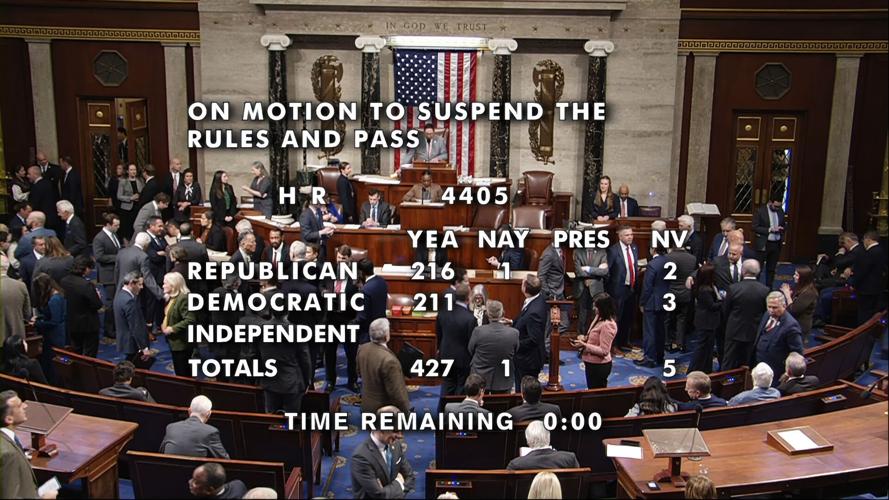
WASHINGTON — Both the House and Senate acted decisively Tuesday to pass a bill to force the Justice Department to publicly release its files on the convicted sex offender Jeffrey Epstein, an effort that struggled for months to overcome opposition from President Donald Trump and Republican leadership.
When a small, bipartisan group of House lawmakers introduced a petition in July to maneuver around Speaker Mike Johnson's control of the House floor, it appeared a longshot effort — especially as Trump urged his supporters to dismiss the matter as a "hoax."
Both Trump and Johnson failed to prevent the vote. The president in recent days bowed to political reality, saying he would sign the bill.
Just hours after the House vote, senators agreed to approve it unanimously, skipping a formal roll call.
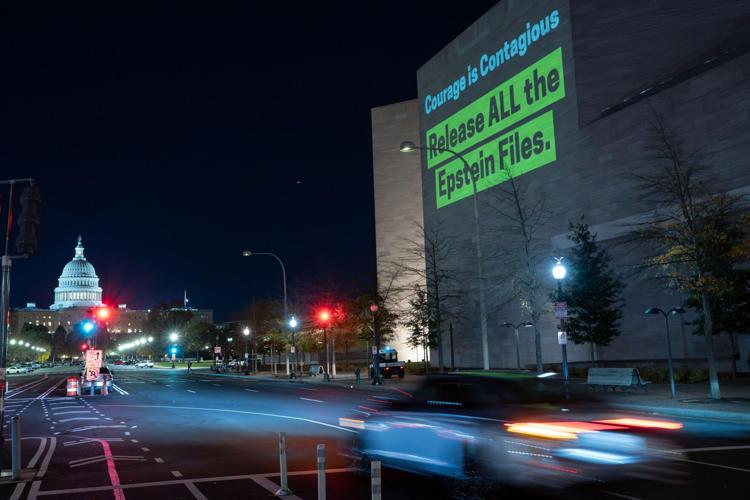
The decisive, bipartisan work Tuesday in Congress further showed the pressure mounting on lawmakers and the Trump administration to meet demands that the Justice Department release its case files on Epstein, a well-connected financier who killed himself in a Manhattan jail while awaiting trial in 2019 on charges he sexually abused and trafficked underage girls.
For survivors of Epstein's abuse, passage of the bill was a watershed moment in a yearslong quest for accountability.
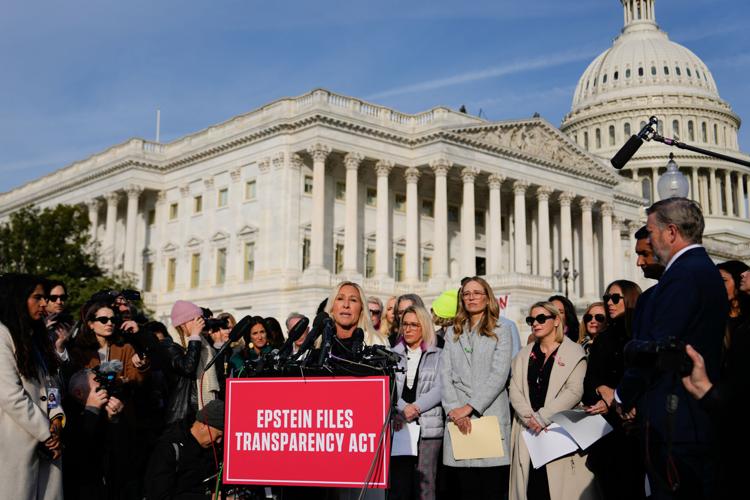
"These women have fought the most horrific fight that no woman should have to fight. And they did it by banding together and never giving up," Rep. Marjorie Taylor Greene said Tuesday morning as she stood with some of the abuse survivors outside the Capitol.
"That's what we did by fighting so hard against the most powerful people in the world, even the president of the United States, in order to make this vote happen today," added Greene, a Georgia Republican.
In the end, only one lawmaker in Congress opposed the bill.
Rep. Clay Higgins, a Louisiana Republican who is a fervent supporter of Trump, was the only "nay" vote in the House's 427-1 tally. He said he worried the legislation could lead to the release of information on innocent people mentioned in the federal investigation.
The bill forces the release within 30 days of all files and communications related to Epstein, as well as any information about the investigation into his death in federal prison. It would allow the Justice Department to redact information about Epstein's victims or continuing federal investigations, but not information due to "embarrassment, reputational harm, or political sensitivity."
Even before the bill's passage Tuesday, thousands of pages of emails and other documents from Epstein's estate have been released from an investigation by the House Oversight Committee.
Those documents show Epstein's connections to global leaders, Wall Street powerbrokers, influential political figures and Trump himself.
In the United Kingdom, King Charles III stripped his disgraced brother Prince Andrew of his remaining titles and evicted him from his royal residence after pressure to act over his relationship with Epstein.
Trump's reversal on the Epstein files
Trump said he cut ties with Epstein years ago, but tried for months to move past the demands for disclosure.
Still, many in the Republican base continued to demand the release of the files. Adding to that pressure, survivors of Epstein's abuse rallied Tuesday morning outside the Capitol. Bundled in jackets against the November chill and holding photos of themselves as teenagers, they recounted their stories of abuse.
"We are exhausted from surviving the trauma and then surviving the politics that swirl around it," said one of the survivors.
Another, Jena-Lisa Jones, said she voted for Trump and had a message for the president: "I beg you Donald Trump, please stop making this political."
The group of women also met with Johnson and rallied outside the Capitol in September, but had to wait months for the vote.
That's because Johnson kept the House closed for legislative business for nearly two months and refused to swear-in Democratic Rep. Adelita Grijalva of Arizona during the government shutdown. After winning a special election on Sept. 23, Grijalva had pledged to provide the crucial 218th vote to the petition for the Epstein files bill. But only after she was sworn into office last week could she sign her name to the discharge petition to give it majority support in the 435-member House.
It quickly became obvious the bill would pass, and both Johnson and Trump began to fold. Trump on Sunday said Republicans should vote for the bill.
Yet Greene told reporters that Trump's decision to fight the bill had betrayed his Make America Great Again political movement.
"Watching this turn into a fight has ripped MAGA apart," she said.
How Johnson handled the bill
Rather than waiting until next week for the discharge position to officially take effect, Johnson held the vote under a procedure that requires a two-thirds majority.
But Johnson also spent a morning news conference listing off problems that he sees with the legislation. He argued that the bill could have unintended consequences by disclosing parts of federal investigations that are usually kept private, including information on victims.
"This is a raw and obvious political exercise," he said.
Still, he voted for the bill. "None of us want to go on record and in any way be accused of not being for maximum transparency," he explained.
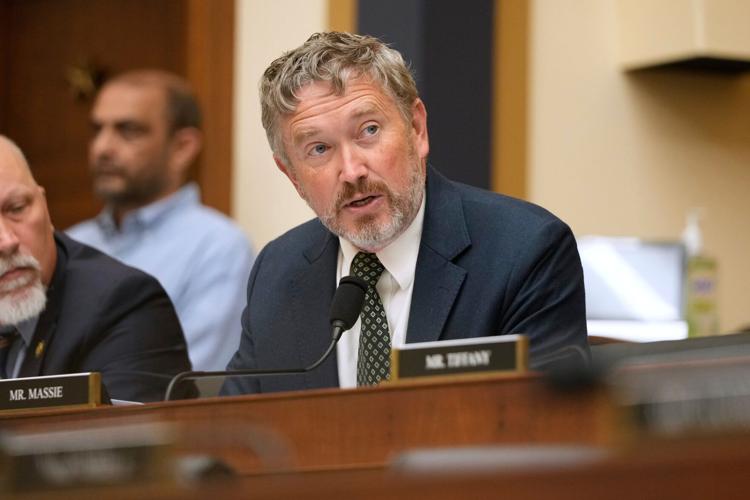
Meanwhile, the bipartisan pair who sponsored the bill, Reps. Thomas Massie, R-Ky., and Ro Khanna, D-Calif., warned senators against doing anything that would "muck it up," saying they would face the same public uproar that forced both Trump and Johnson to back down.
"We've needlessly dragged this out for four months," Massie said, adding that those raising problems with the bill "are afraid that people will be embarrassed. Well, that's the whole point here."
Even as the bill cleared his chamber, Johnson pressed for the Senate to amend it to protect the information of "victims and whistleblowers." But Senate Majority Leader John Thune quickly shut down that notion.
As senators gathered in the chamber Tuesday evening for the first votes of the week, it became clear no one would object to passing the bill as written.
Just before Senate Democratic leader Chuck Schumer called to pass the bill by unanimous consent, Oklahoma Sen. Markwayne Mullin, a Republican who is close to Trump, walked in the chamber and gave Schumer a thumbs-up. He then walked over to Schumer and shook his hand.
"This is about giving the American people the transparency they've been crying for," said Schumer, D-N.Y. "This is about holding accountable all the people in Jeffrey Epstein's circle who raped, groom, targeted and enabled the abuse of hundreds of girls for years and years."
___
Associated Press writers Kevin Freking, Joey Cappelletti, Matt Brown, Lisa Mascaro and Mary Clare Jalonick contributed to this report.

