

Temperatures have peaked at or above 110 degrees the entire month of July in Phoenix. Air conditioning, which made modern Phoenix even possible, is a lifeline.
When a cloudless sky combines with outdoor temperatures over 100, your house turns into an “air fryer” or “broiler,” as the roof absorbs powerful heat and radiates it downward, said Jonathan Bean, co-director of the Institute for Energy Solutions at the University of Arizona. Bean knows this not only from his research, he also experienced it firsthand last weekend when his air conditioner broke.
“This level of heat that we are having in Phoenix right now is enormously dangerous, particularly for people who either don’t have air conditioning or cannot afford to operate their air conditioner,” said Evan Mallen, a senior analyst for Georgia Institute of Technology’s Urban Climate Lab.
Yet some are cutting back on AC, trying to bear the heat, afraid of the high electricity bills that will soon arrive.

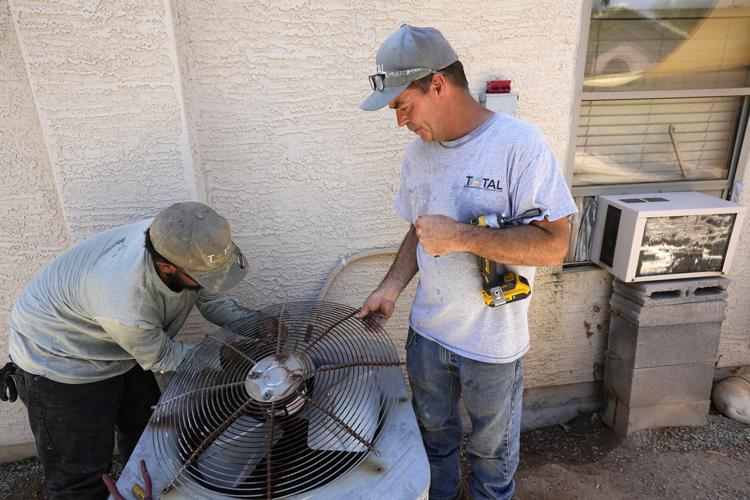
JP Lantin, right, owner of Total Refrigeration, and service tech Michael Villa replace a fan motor on an air conditioning unit Wednesday in Laveen, Ariz.
Camille Rabany, 29, developed her own system to keep herself and her 10-month-old Saint Bernard Rigley cool during the Arizona heat wave. Through trial and error, Rabany found that 83 is a temperature she is willing to tolerate to keep her utility bill down.
By tracking the on-peak and off-peak schedule of her utility, Arizona Public Service, with the help of her NEST smart thermostat, Rabany keeps her home that hot from 4 to 7 p.m., the most expensive hours. She keeps fans running and has a cooling bed for Rigley, and they both try to get by until the utility’s official peak hours pass.
“Those are the hours that I have it at the hottest I’m willing to have it because I have a dog,” she said. Last month, Rabany said her utility bill was about $150.

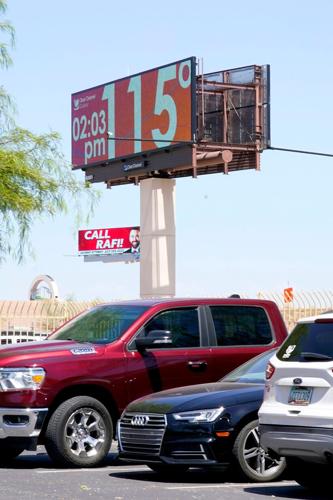
A billboard sign displays an unofficial temperature of 115 degrees Fahrenheit on Wednesday in Phoenix.
Emily Schmidt’s home cooling strategy in Tempe also centers around her dog. Air conditioning is “constantly a topic of conversation,” with her partner, too, she said.
“Sometimes I wish I could have it cooler, but we have to balance saving money and making sure the house isn’t too hot for our pets.”
With the unrelenting heat of the recent weeks, “I’m honestly afraid what the electric bill will be, which makes it really hard to budget with rent and other utilities.”
Katie Martin, administrator of home improvements and community services at the Foundation for Senior Living, said she sees the pet issue, too. Older people on limited incomes are making dangerous tradeoffs and often won’t come to cooling centers when they don’t allow pets.
“In recent years we are finding that most of the seniors we serve are keeping their thermostat at 80 to save money,” she said.
Many also lack a support network of family or friends they can turn to in case of air conditioner breakdowns.
Breakdowns can be dangerous. Models from Georgia Tech show that indoors can be even hotter than outdoors, something people in poorly-insulated homes around the world are well acquainted with.

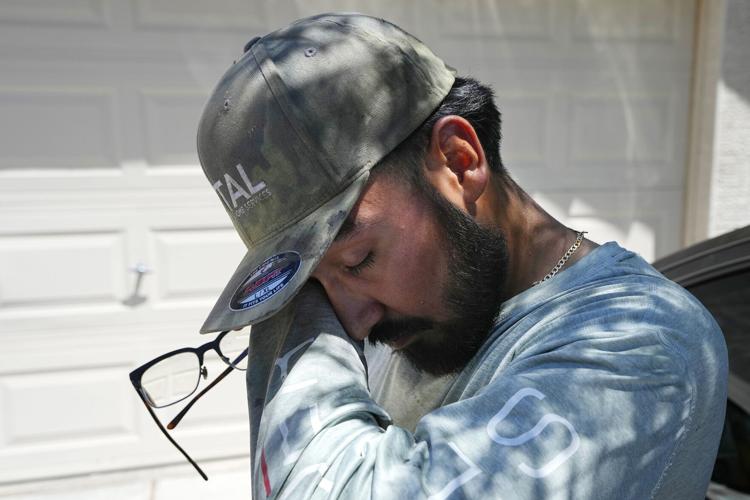
Michael Villa, a service tech with Total Refrigeration, finds shade Wednesday after finishing an air conditioning repair call in Laveen, Ariz.
“A single family, one-story detached home with a large, flat roof heats up by over 40 degrees in a matter of hours if they don’t have air conditioning,” Mallen said.
The Salvation Army has some 11 cooling stations across the Phoenix area. Lt. Colonel Ivan Wild, commander of the organization’s Southwest Division, said some of the people visiting now can’t afford their electricity bills or don’t have adequate air conditioning.
“I spoke to one elderly lady and she that her air conditioning is just so expensive to run. So she comes to the Salvation Army and stays for a few hours, socializes with other people, and then goes home when it’s not as hot,” he said.

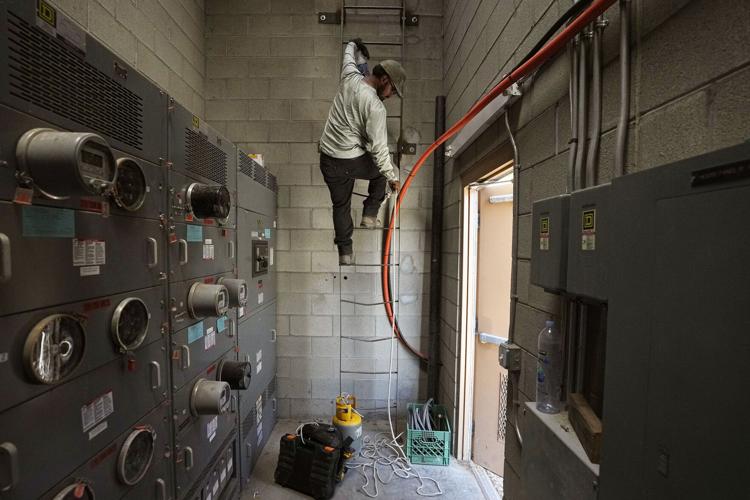
Michael Villa, a service tech at Total Refrigeration, works on a commercial air conditioning roof unit Wednesday in Laveen, Ariz.
While extreme heat happens every summer in Phoenix, Wild said that a couple of Salvation Army cooling centers reported seeing more people than last year.
The Salvation Army estimates that since May 1, they have provided almost 24,000 people with heat relief and distributed nearly 150,000 water bottles in Arizona and Southern Nevada.
Marilyn Brown, regents professor of sustainable systems at Georgia Tech, said that high air conditioning bills also force people to cut spending in other areas.
“People give up a lot, often, in order to run their air conditioner … they might have to give up on some medicine, the cost of the gasoline for their car to go to work or school,” she said.
“That’s why we have such an alarming cycle of poverty. It’s hard to get out of it, especially once you get caught up in the energy burden and poverty,” Brown added.
Photos: Hot weather has US, world sweltering

A jet takes flight from Sky Harbor International Airport as the sun sets Wednesday in Phoenix. Millions of people across the Southwest are living through a historic heat wave, with even the heat-experienced desert city of Phoenix being tested since temperatures have hit 110 degrees Fahrenheit for 13 consecutive days.

Tourists protect a sleeping child from the sun Wednesday as they visit the Hollywood sign landmark in Los Angeles. Forecasters in Southern California say blistering conditions Thursday will build throughout the weekend in the central and southern parts of California, where many residents should prepare for the hottest weather of the year.

Children cool off in a fountain Wednesday just outside of Jerusalem's Old City.

A man runs Thursday along a small road on the outskirts of Frankfurt, Germany, as the sun rises.

Ja-Veah Cheney, 9, pours water over her head Wednesday as she takes shelter from the sweltering heat at the splash pad station at Riverside Park in New Bedford, Mass. Across the U.S., more than 111 million people are under extreme heat advisories, watches and warnings.

A homeless man sleeps under the sun Wednesday in the Hollywood district of Los Angeles. After a historically wet winter and a cloudy spring, California's summer was in full swing Thursday as a heat wave that's been scorching much of the U.S. Southwest brings triple digit temperatures and an increased risk of wildfires. Blistering conditions will build Friday and throughout the weekend in the central and southern parts of California, where many residents should prepare for the hottest weather of the year, the National Weather Service warned.

A man jumps into the sea on a breakwater Wednesday in Barcelona, Spain.

A woman carries her baby and a bottle of water on her head Saturday in Niger.

Migrants stop for a water break Tuesday as they walk in the Rio Grande behind concertina wire as they try to enter the U.S. from Mexico in Eagle Pass, Texas.

An Icelandic horse is sprayed with water at a stud farm in Wehrheim near Frankfurt, Germany, one of several nations gripped in potentially the hottest temperatures ever recorded in Europe.

Youths jump into a commercial swimming pool to cool themselves off Thursday in Peshawar, Pakistan. Countries across the world are preparing emergency measures amid a heat wave projected to get much worse heading into the weekend.

A woman enjoys the sun in the Tuileries gardens Monday in Paris, where temperatures are expected to keep rising.

Salvation Army volunteer Francisca Corral, center, gives water to a man Tuesday at their Valley Heat Relief Station in Phoenix.

People spend time in a public pool Saturday in Wehrheim near Frankfurt, Germany.

A woman uses an umbrella to take shelter from the sun Thursday as she walks in downtown Rome. Temperatures in parts of Mediterranean Europe were forecast to reach as high as 113 degrees starting Friday as a high-pressure system grips the region. Cerberus is named for the three-headed dog in ancient Greek mythology who guarded the gates to the underworld.

A man holds an umbrella Thursday as he and other tourists enters the ancient Acropolis hill during a heat wave, in Athens, Greece. In Athens and other Greek cities, working hours were changed for the public sector and many businesses to avoid the midday heat, while air-conditioned areas were opened to the public. “It’s like being in Africa,” 24-year-old tourist Balint Jolan, from Hungary, said. “It’s not that much hotter than it is currently at home, but yes, it is difficult.”

A boy shows off his swimming skills Wednesday while cooling off in the river Arges, outside Bucharest, Romania.

A woman fans herself Monday in Madrid, Spain. “Italy, Spain, France, Germany and Poland are all facing a major heat wave, with temperatures expected to climb to 48 degrees Celsius on the islands of Sicily and Sardinia – potentially the hottest temperatures ever recorded in Europe” the European Space Agency said Thursday.

A man cools off at a fountain Thursday during a sunny day in Belgrade, Serbia.

A woman wearing sun protection, headgear and sunglasses swims Monday as residents cool off on a sweltering day at an urban waterway in Beijing.

Youngsters cool off Wednesday in the river Arges, outside Bucharest, Romania.

A newly married couple poses for photos Wednesday during sunset as a man takes a dip in the water in Lagonisi southeast of Athens.

