



SEATTLE — You can change your name, but in many states you can’t completely shed your old one — something that’s of particular concern to transgender people and that legislators in at least two states are trying to change.
A bill in Washington would allow gender expression and identity as reasons to seal, or keep out of the public record, a future petition for a name change. And a California bill would require the sealing of petitions by minors to change their name and gender on identity documents.

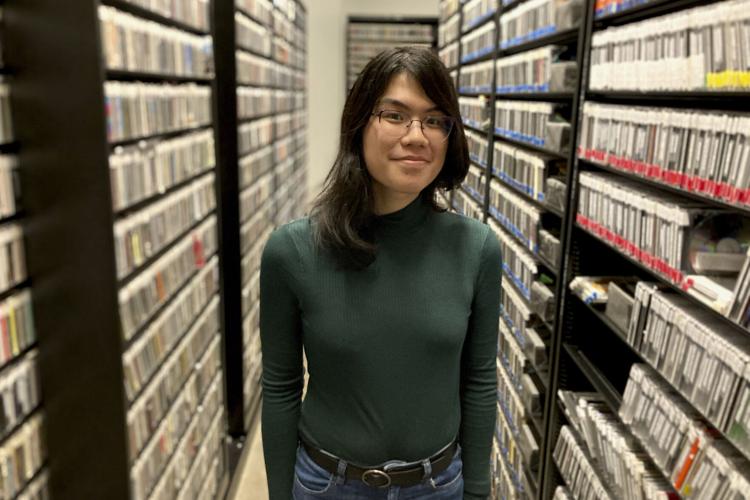
Maia Xiao poses for a portrait Feb. 17 in the library of radio station KEXP, where she volunteers, in Seattle.
Advocates warn that in states where such petitions aren’t sealed, transgender people can be susceptible to cyberbullying or even physical violence because their previous names, and by extension their lives, are an open book in the public record. Students, for instance, can and do easily find and share such records when looking for background on a new kid in town, one advocate noted.
Maia Xiao, a University of Washington graduate student, changed her name in that state and said the publication of a transgender friend’s name-change records in an online forum led to harassment, including hate mail. She wrote last summer to Democratic state Sen. Jamie Pedersen to urge reform.
“It feels very close to me,” said Xiao, who would not disclose the name of her friend, citing privacy. “I don’t live a very online life, but it’s really scary to know that something so personal can be so easily accessed by transphobic trolls who want to cause harm.”

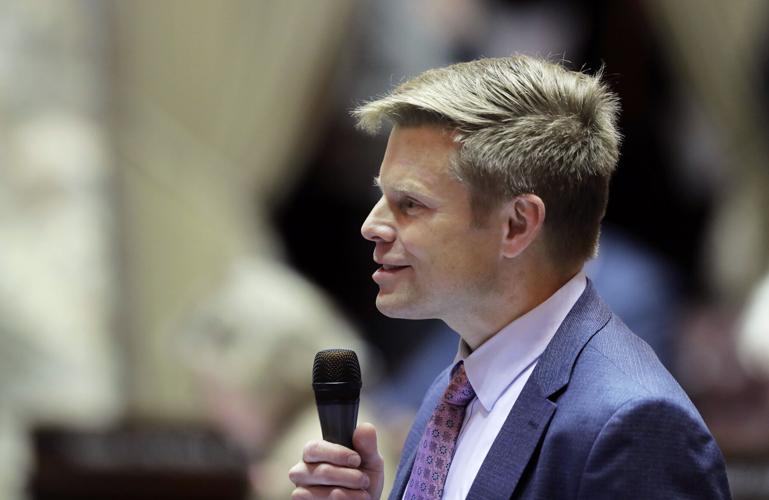
Sen. Jamie Pedersen, D-Seattle, speaks on the state Senate floor Jan. 30, 2019, in Olympia, Wash.
Pedersen is sponsoring the Washington legislation, which passed the Senate this month with bipartisan support and is expected to also pass the House. The bill is modeled on laws in New York and Oregon and also would extend records privacy to refugees, emancipated minors and people who have been granted asylum.
Currently, only people subjected to domestic violence can have their name changes easily sealed in Washington. Some other states, including California, also make exceptions for victims of crimes such as human trafficking, stalking and sexual assault.
“This seemed to me like a simple action that could go a long way in making transgender people a lot safer in our state,” Pedersen said.
Some officials and law enforcement officers worry that criminals who request a name change could escape accountability under the proposals. The Washington bill would allow courts to unseal a name change file if law enforcement had reasonable suspicions, and sex offenders and incarcerated people would be ineligible for a sealed name change.
The approaches contrast starkly with recent and mysterious moves in Florida and Texas to compile lists of trans residents using public records, and as lawmakers in at least 39 states consider a torrent of anti-trans bills.
Republicans’ “disturbing” requests for data on transgender residents in some of those states add urgency to his proposal, Pedersen said.

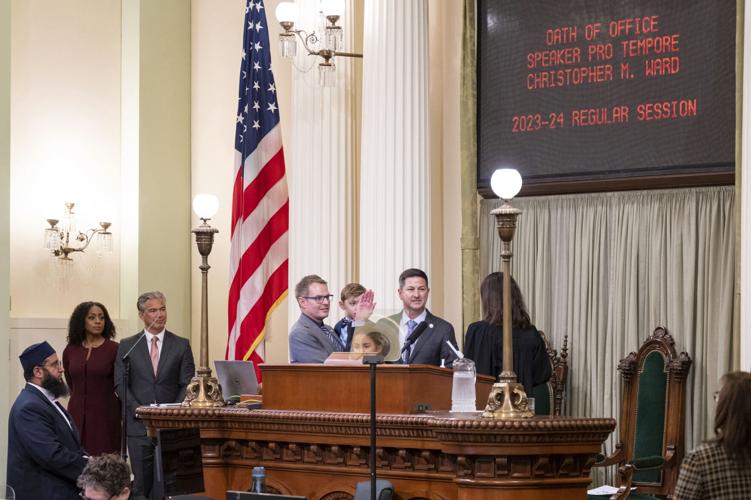
Assembly member Chris Ward is accompanied by his partner, Thom Harpole, and children Betty and Billy as he is sworn in as speaker pro tempore Dec. 5, 2022, during the opening session of the California Legislature in Sacramento.
The office of Texas Attorney General Ken Paxton last year requested data on how many people changed the gender information on their driver’s licenses. The Texas Department of Public Safety found over 16,000 gender changes during the prior two years but didn’t turn over data because it could not determine the reason for each change.
In Florida, Gov. Ron DeSantis asked state universities last month for data on students who sought or received treatments for gender dysphoria.
Harassment from such disclosures can target young trans people who struggle with mental health issues or gender dysphoria, advocates say. The same internet forum that Xiao said targeted her friend came under fire last year for instances of doxxing trans people, or maliciously publishing their personal information online, and was linked to suicides.
Peers may search students’ names as they move to a new school and can easily find and share court records related to their petitions for a name and gender change, said Kathie Moehlig, executive director of the San Diego nonprofit TransFamily Support Services. She approached California Assembly Speaker Pro Tem Chris Ward with the idea for the bill after students she advises brought the trend to her attention.
Many families with trans children aren’t even aware such records are public, Moehlig said.
The California bill, introduced last month, would require the state to seal any petition filed by a person under 18 for a change to gender and sex or to gender, sex and name in identity documents. Also sealed would be documents from a petitioner’s court proceedings.

Maia Xiao works in a production room Feb. 17 at radio station KEXP, where she volunteers, in Seattle.
San Diego lawyer Clarice Barrelet, whose 11-year-old son is transgender, said simply plugging his name into a search engine shows his legal gender change.
He had insisted by age 6 that he should not be called a girl and would grow up to be a man, Barrelet said. He came out as transgender at age 8 and changed the name and pronouns he used in school even before his mom sought a legal change to his identity documents.
Barrelet said she thinks those records should be sealed for children and adults to better protect their privacy.
Ward, a San Diego County Democrat and vice chair of the California Legislative LGBTQ Caucus, said he hopes his bill will reduce the risk of bullying for gender-nonconforming children. He noted that being outed can be especially traumatic for young people who are still processing their identities.
“I want them to certainly be comfortable,” Ward said, “and free to be themselves.”
25 transgender celebrities who broke barriers
Intro
Updated
At the forefront of the movement for gay rights are transgender people, serving as the most fervent activists for the rights of queer people around the world. For the past few decades, transgender people have demonstrated their skills and passions in various fields and industries. By excelling at what they do, they have broken barriers, helping to progress social norms and attitudes toward queerness. And by using their profile and social status, these trans celebrities have acted as guiding lights to young queer people all over the world.
To that end, Stacker compiled a list of 25 prolific transgender celebrities, covering not only their individual backgrounds and bodies of work but also detailing any famous firsts they accomplished through their work and activism, if applicable. There are no politicians on this list.
These figures are actors, musicians, models, athletes, artists, and influencers. They are prominent not only for being transgender individuals in their fields but for also contributing to and advancing their fields overall. Whether they have been out their entire life or only came out in the middle of their career, they have served as inspirations to many.
Through the hardships and obstacles they faced from their peers and society, these figures have emerged in the mainstream, paving the way for more queer and trans people to follow. Read on to see which of these celebrities you recognize and whose work you have followed.
You may also like: Most famous celebrities from the year you were born

Andreja Pejić
Updated
Hailing from present-day Bosnia-Herzegovina, Andreja Pejić has modeled for both women’s and men’s clothing. Pejić has been featured on the covers of Elle, Marie Claire, and GQ, and became the first transgender model profiled by Vogue in 2015. In addition to becoming one of the most prolific transgender models in the world, Pejić has appeared as a guest judge on “Britain’s Next Top Model” and acted in 2018’s “The Girl in the Spider’s Web.”
Asia Kate Dillon
Updated
Actor Asia Kate Dillon is the first nonbinary performer to portray a major role in an American television show, playing the character of Taylor Mason in “Billions.” They have been nominated for several Critics’ Choice Television Awards and co-starred in “John Wick: Chapter 3 - Parabellum.” Their presence in film and television has helped observers learn about the nonbinary experience and the use of singular they/them pronouns, resulting in such awards ceremonies as the MTV Awards making some of their categories gender-neutral and inclusive.
Billy Tipton
Updated
For several decades in the 20th century, Billy Tipton was one of the most accomplished jazz musicians of his time. As a bandleader and a pianist, Tipton toured the country and released several successful albums. Tipton, assigned female at birth, changed his gender presentation in the early 1930s to fit the “jazz band image” at the time; his status as a trans man was unknown until after his death and was a surprise to even his closest friends and family.
Caitlyn Jenner
Updated
One of the most prolific coming-out moments from a celebrity in the modern era was that of Caitlyn Jenner, who is a long-retired gold medalist decathlete. Jenner’s transition sparked publicity and wide discussions about the transgender experience, and she would win accolades such as the Arthur Ashe Courage Award at the ESPY Awards for sharing that of her own.
Candis Cayne
Updated
Before her successful acting career, Candis Cayne performed as a drag queen in the early 1990s. She then began to appear in film and television, including some projects by RuPaul. By 2007, Cayne had a spot on the television show “Dirty Sexy Money,” becoming the first transgender actress to portray a recurring role as a transgender character on prime time television.
You may also like: The best streaming services in 2021
Caroline Cossey
Updated
After the release of the 1981 James Bond film “For Your Eyes Only,” in which model Caroline Cossey appeared as an extra, British tabloids outed Cossey as a transgender woman. While the incident severely upset her, Cossey continued her modeling career and fought for trans rights in the U.K., with her efforts reaching all the way to the European Court of Human Rights.
Chaz Bono
Updated
As the child of Sonny Bono and Cher, Chaz Bono has received media attention since early in life. Before his transition, tabloids outed him as a lesbian, and his transition to a male began in earnest during the late 2000s. Chaz has since been a prominent LGBTQ+ activist and advocate. He proceeded to share his story in a 2011 documentary film and later competed on “Dancing with the Stars,” both of which helped to spur conversation about transgender people.
Chris Mosier
Updated
Transgender athletes have always faced difficult battles within their fields due to the gender-separated nature of many events, but triathlete Chris Mosier has instigated change in sports. Through Mosier’s challenging the International Olympic Committee policy, he was able to participate in the Duathlon Age Group World Championship Race and many events afterward. Mosier was the first transgender man to compete in Olympic trials with other men, and he was the first transgender athlete to participate in the “Body Issue” of ESPN Magazine.
Christine Jorgensen
Updated
In the 1950s, Christine Jorgensen was the first known person to undergo sex reassignment surgery, identifying as a woman some years after her service in World War II. With her wit and cadence, Jorgensen became profiled in the news and became an advocate for transgender people while also working as an actress and a performer. As a spokesperson for transgender people, Jorgensen has remained an influential figure even decades after her death.
Fallon Fox
Updated
Now-retired MMA fighter Fallon Fox struggled with her gender identity for most of her early life, eventually receiving reassignment surgery. After becoming an MMA fighter in the women’s division, Fox came out as transgender, which led to controversy and debate over whether or not she would be allowed to compete against other women. While her career has ended, outlets like Outsports deemed Fox the “bravest athlete in history.”
You may also like: The best streaming services for sports in 2021
Gigi Gorgeous
Updated
Gigi Loren Lazzarato Getty, known professionally as Gigi Gorgeous, was one of the earlier makeup artists building a following on YouTube in the late 2000s. Initially identifying as a gay man, Gigi Gorgeous came out as a transgender woman in 2013. In August 2016, she was unfortunately detained at the Dubai International Airport due to her transgender status and social norms in the United Arab Emirates, which sparked calls for equal protection and reform in anti-transgender laws.
Hari Nef
Updated
As the first transgender person to appear on the cover of a major British magazine, Hari Nef has used her modeling and acting career to speak out about trans issues. Along with her work in fashion and modeling, Nef is also a writer; her work has appeared in publications like Vice as well as a sex advice column. Her most familiar work in film and television includes appearances on the TV show “Transparent” and the film “Assassination Nation.”
Hunter Schafer
Updated
Model Hunter Schafer has modeled for several prominent labels, including Tommy Hilfiger and Coach. In 2019, Schafer captivated audiences with her role in HBO’s “Euphoria,” in which she co-stars as the love interest of Zendaya’s protagonist. Her role was praised by viewers and critics alike, and Schafer crafted her character’s backstory with showrunner Sam Levinson for a sense of authenticity. With “Euphoria” bringing her to fame, Schafer has been a prominent queer activist.
Jamie Clayton
Updated
Actress and model Jamie Clayton found herself drawn to the Netflix show “Sense8,” as it featured a transgender woman character written by transgender writers. Clayton portrayed the character of Nomi Marks in the series, and would go on to appear in shows, films, and video games, including “The Snowman,” “The Neon Demon,” “Designated Survivor,” and “Mass Effect: Andromeda.” In the docuseries “Equal,” Clayton even portrayed transgender icon Christine Jorgensen.
Jazz Jennings
Updated
Seeing a significantly young and prominent trans person in the media is important for other trans children who may be going through a difficult time, and Jazz Jennings was able to offer that representation. Jennings was diagnosed with gender dysphoria at the early age of 5, and since transitioning, she has made multiple media appearances to speak about her challenges on shows like “20/20” as well as on the Oprah Winfrey Network. Since then, Jennings has launched a number of initiatives and charities supporting transgender children.
You may also like: From Stonewall to today: 50+ years of modern LGBTQ+ history
Josie Totah
Updated
Born in 2001, Josie Totah is one of the youngest out transgender performers in the entertainment industry. After appearing in the Disney Channel show “Jessie,” Totah would go on to receive praise for her performance in the 2016 film “Other People.” It wasn’t until 2018 that she came out as a transgender woman. She’s since gone on to appear in projects like Peacock’s “Saved by the Bell” reboot as a cheerleader.
Kye Allums
Updated
During his time at George Washington University, Kye Allums was part of the university’s women’s basketball team. While playing on the team, he came out as a trans man and later left the team. After graduating, Allums traveled the country and acted as a public speaker, sharing his own experiences and advice on how to handle bullying toward trans youth.
Lana Wachowski and Lilly Wachowski
Updated
Best known for writing and directing “The Matrix” films, Lana and Lilly Wachowski both came out as trans women in 2010 and 2016, respectively. “The Matrix” films have been pointed out for containing trans allegories, and the duo has continued to be inclusive in their works, especially with their Netflix series “Sense8.” Lana and Lilly also directed “Speed Racer,” “Cloud Atlas,” and “Jupiter Ascending.”
Laura Jane Grace
Updated
Punk rock star Laura Jane Grace is the founder, lead singer, and guitarist of the band Against Me! She is one of the few openly transgender punk rock artists in the industry, coming out as a trans woman in the latter half of her band’s career in 2012. To reflect on her identity, Against Me! independently released a well-received concept album entitled “Transgender Dysphoria Blues” in 2014.
Laverne Cox
Updated
Quite possibly the most famous trans celebrity is actress and activist Laverne Cox, who is primarily known for her role in the Netflix series “Orange Is the New Black.” Cox has the distinction of being the first transgender performer nominated for an Emmy in an acting category. She went on to be the first transgender actress with a series regular role on a broadcast network for her work on CBS’ “Doubt.” As an activist, Cox is credited with having a large role in the national discussion about transgender people in the United States.
You may also like: The best streaming services for football in 2021
Lynn Conway
Updated
As a computer scientist and engineer, Lynn Conway was fired from her job in 1968 when she revealed her intention to transition to a woman. Still, her work has been credited for a number of technological and computer innovations, specifically with microchip design. Near retirement, Conway became a trans rights activist, specifically concerning employees in the tech industry.
Michaela Jaé Rodriguez
Updated
Best known for her role in FX’s “Pose,” Michaela Jaé Rodriguez is the lead actress in what is the largest transgender and queer cast in a television show to date. In 2021, Rodriguez became the first transgender woman to take home the Emmy for Outstanding Lead Actress in a Drama Series. The following year, Rodriguez made another meaningful leap for trans representation in the entertainment industry by claiming the Best Actress trophy at the Golden Globe Awards, making her the first trans actress to win the honor in the history of the awards.
Nat Puff
Updated
Better known by the stage name Left at London, Nat Puff is a singer-songwriter and internet personality. She is best known for her viral Vines and her parodies of musicians and comedians, while also being an accomplished musician in her own right, with her “Transgender Street Legend” albums. Since her social media presence has grown, she frequently shares fundraising campaigns for a number of struggling transgender individuals.
Natalie ‘ContraPoints’ Wynn
Updated
In response to the increasing number of right-wing video essays on YouTube, Natalie Wynn, best known by her online name ContraPoints, began producing elaborate counterargument video essays on the platform. Her videos are known for their detail in terms of both her nuanced arguments and her intricate production and costume design. She remains one of the most-followed leftist YouTubers, alongside Hbomberguy and Philosophy Tube, both of whom have campaigned for trans equality.
Nikkie de Jager
Updated
Popularly known as NikkieTutorials online, Nikkie de Jager is an online influencer and makeup artist with over one billion views on YouTube. She has received accolades from Forbes and the Teen Choice Awards for her work, and she came out as transgender early in 2020. Later that same year, she had the distinction of serving as the online host of “Eurovision: Europe Shine a Light,” which replaced the traditional Eurovision Song Contest due to the COVID-19 pandemic.
You may also like: Celebrities who married people who are not famous

