



She also dishes on what the real threat is in the deep blue sea. Buzz60’s Tony Spitz has the details.
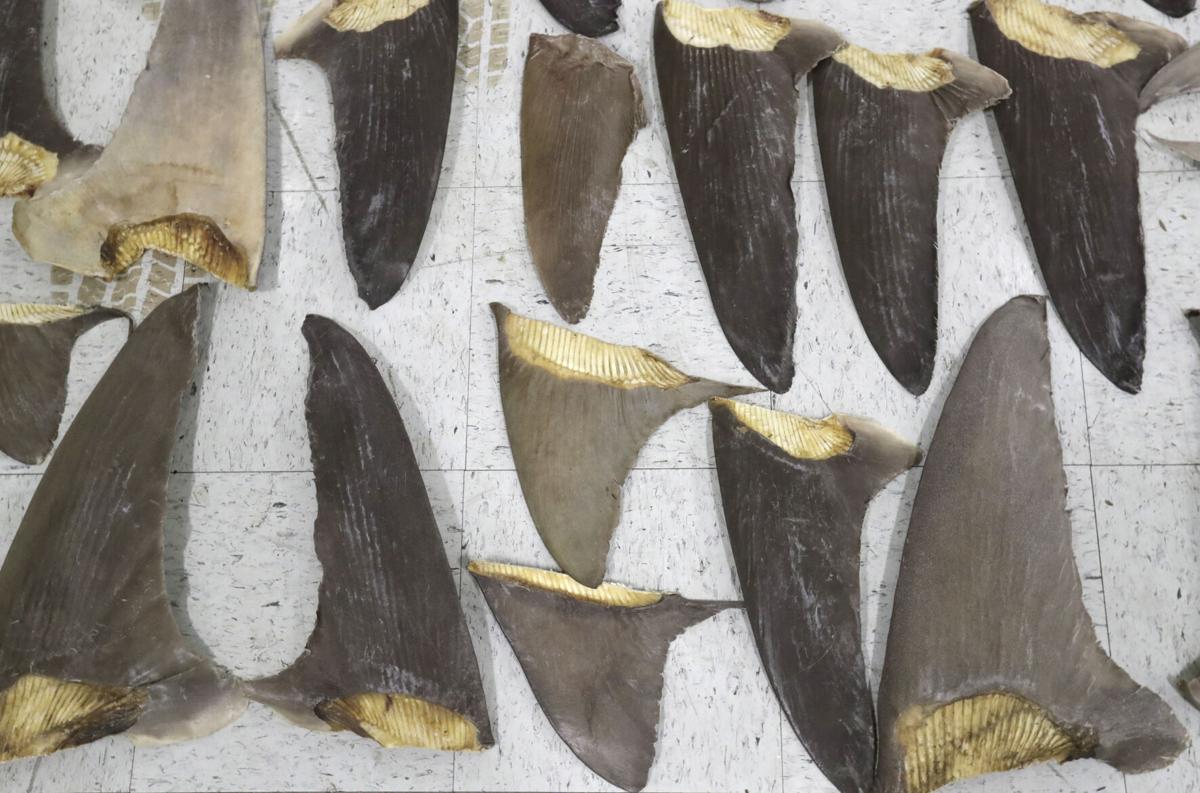
MIAMI — The U.S. is poised to ban the lucrative trade in shark fins, a move conservationists hope will help protect millions of sharks butchered every year to satisfy demand in China and other parts of Asia.
The practice of shark finning, whereby sharks are caught for their fins and their carcasses then dumped back into the ocean, has been banned in U.S. waters for decades. But the U.S. remains a major hub for the brisk trade where the fins of as many as 73 million sharks are cut off around the world each year.
The House and Senate passed identical versions of the proposed ban as part of a broader defense spending bill that President Joe Biden is expected to sign into law. Once he does, it will be illegal for Americans to buy, sell, transport or even possess foreign-caught fins — something ocean conservation activists have long sought.
Every year, American port inspectors seize thousands of dried, foreign-caught shark fins in undeclared shipments headed to China and other parts of Asia where shark fin soup is a delicacy.
"Our ports are no longer open for business for shark fins," said Gib Brogan, campaign director with the ocean conservation group Oceana. "That will take them out of the supply chain and we expect it to disrupt the global fin market."
But some scientists who study shark fisheries aren't so certain. They believe the legislation will have little impact on the trade in shark fins and will only serve to shut down a regulated American fishery for shark meat and other legal products.
U.S. shark fisheries, although small, are well managed, and removing the country from the fin trade could encourage more exploitation of sharks in parts of the world where it's less sustainable, said Robert Hueter, senior scientist emeritus at Mote Marine Laboratory in Sarasota, Florida.
"It's putting the wrong people out of the fishery, creating opportunities for those that are doing it the wrong way to have more market share," Hueter said. "People think this is going to solve the problems, and it's not."
While not all sharks are killed just for their fins, none of the other shark parts — such as its meat, jaws or skin — can compete with fins in terms of value. Depending on the type of shark, a single pound of fins can fetch hundreds of dollars, making it one of the priciest seafood products by weight.
Kevin Wark, a shark fisherman based in New Jersey, said the new rules have the potential to put fishermen out of business.
"I understand there might be a lot of illegal fishing in the South China Sea and around the world, and there might be a couple incidents in the U.S., but there's a lot of hardworking, honest guys here," Wark said.
However, conservationists say the U.S. must act forcefully to encourage other countries to take similar steps, much in the way the U.S. ban on the ivory trade has been pivotal in protecting African elephants. The fin ban, first floated in 2017 by a bipartisan group of lawmakers, is similar to action already taken by Canada.
Overfishing has led to a 71% decline in shark species since the 1970s. The International Union for Conservation of Nature, a Switzerland-based group that tracks wildlife populations, estimates that more than a third of the world's 500-plus shark species are threatened with extinction.
At an international wildlife conference in Panama last month, governments from around the world extended trade restrictions to more than 90 shark species that are increasingly being hunted not only for their fins but also their meat, some of which ends up in pet food.
5 things you might not know about sharks
1. Humans vs. sharks
UpdatedWhen it comes to humans versus sharks, the numbers are staggering. An average of 6 humans are killed worldwide each year by sharks, while humans kill 100 million to 273 million sharks annually, selling their body parts in markets around the globe.

A surfer rides the waves along Mexico's Pacific Coast near El Rancho village, Wednesday, May 28, 2008. Sharks have attacked three surfers in the area in less than a month, two fatally. (AP Photo/Eduardo Verdugo)
2. They're old
UpdatedSharks were swimming in the ocean depths long before dinosaurs climbed onto land. Researchers say sharks date back 400 million years.

In this March 16, 2011, photo children look at the Shark Jaw of a Megalodon, a prehistoric shark, at the Museum of Nature and Science in Dallas. The jaw is 11 feet wide and almost 9 feet tall, it consists of 182 teeth collected from South Carolina rivers. (AP Photo/Rich Matthews)
3. 465 species
UpdatedThere are 465 known species of sharks, ranging from the tiny spined pygmy shark (about 8 inches long) to the whale shark (about 50 feet in length). Each of these sharks plays a role in keeping other fish populations in check, which is why hunting and killing of sharks can create great imbalances in ocean life.

A diver feeds fish to a male whale shark at the Hakkeijima Sea Paradise aquarium-amusement park complex in Yokohama near Tokyo, Saturday, June 11, 2011.(AP Photo/Itsuo Inouye)
4. Not a 'miracle of evolution'
UpdatedRichard Dreyfuss' character in "Jaws" claimed that the shark is "a miracle of evolution," and that the only thing it does is "swim and eat and make little sharks, that's all." That's not exactly correct.
Sharks have to eat, like every other living organism, but they don't mate until they are 12 to 15 years old. The females give birth to one or two pups at a time, making it difficult for the sharks' reproduction rates to keep pace with the annual kill rates.

FILE - In this Tuesday, July 3, 2012 photo, Rima Jabado, a marine scientist and shark researcher pulls up a baby spottail shark from the water for the tagging off the Dubai coast, United Arab Emirates. (AP Photo/Kamran Jebreili, File)
5. A sixth sense
UpdatedSharks are extraordinary hunters, who use six senses. In addition to smell, hearing, touch, taste and sight, they also are gifted with electroreception — special pores around their faces detect electrical currents from other organisms and allow them to deftly hone in on their prey.

A Sand Tiger Shark swims in its aquarium at the Zoo-Aquarium in Berlin, Germany, Tuesday, Nov. 9, 2010. (AP Photo/Michael Sohn)
Visit The Mercury News (San Jose, Calif.) at www.mercurynews.com
Distributed by Tribune Content Agency, LLC.

