


WASHINGTON – You might get more than that $600 stimulus check after all.
The City of Buffalo could get the federal aid it needs to fill a $65 million budget hole.
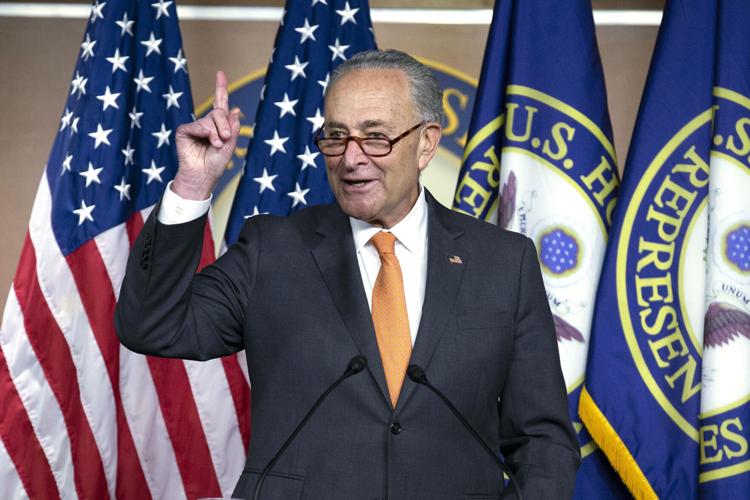
And Senate Minority Leader Charles E. Schumer, after four years as head of the loyal but impotent Democratic minority in the Senate, will likely become majority leader as soon as Jan. 20 – the day Democrat Joe Biden gets sworn in as president and when Democrats will likely claim one-party rule in Washington for the first time in more than a decade.
The seismic implications of two U.S. Senate upsets in runoff elections Tuesday in Georgia have taken a backseat to the chaos that enveloped Washington the next day. But history was made when the Rev. Raphael Warnock, a Democrat, ousted Republican Sen. Kelly Loeffler and former congressional aide Jon Ossoff, 33 and also a Democrat, bested Republican Sen. David Perdue, according to unofficial results.
That would mean that as of Jan. 20, there would be a 50-50 deadlock in the Senate – and that incoming Vice President Kamala Harris, a Democrat, would hold the deciding vote when it's close.
It does not mean Democrats will get their way every day and on every issue in the coming two years. Sen. Joe Manchin of West Virginia, the upper chamber's most conservative Democrat, is likely to stand in the way of some Democratic dreams, most notably the Green New Deal.
Here's a closer look at what could happen after Jan. 20 and over the next two years in a new, barely Democratic era, should Ossoff's narrow lead hold:
• Congress will turn on the stimulus spigot. Free money is popular, and it proved to be so in the Georgia races. Not long after the odd couple of Sen. Bernie Sanders of Vermont and Sen. Josh Hawley of Missouri announced their support for $2,000 stimulus checks, Loeffler and Perdue did, too – but it didn't matter because the Republican Senate Majority Leader, Mitch McConnell, stood in the way.
In doing so, McConnell handed Warnock, Ossoff and Biden a closing argument.
“Their election will put an end to the block in Washington on the $2,000 stimulus check,” Biden said at a rally in Georgia Monday night. “If you send Sen. Perdue and Loeffler back to Washington, those checks will never get there. It’s just that simple. The power is literally in your hands.”
Georgia voters used that power, and in doing so, gave the new Congress the impetus to deliver another, larger stimulus check to most Americans in what now seems like an inevitable new stimulus measure to be drawn up by lawmakers early this year.
"I said what I said about the checks. It’s one of the first things we want to do once our new senators are seated," Schumer said Wednesday. "They campaigned on it.”

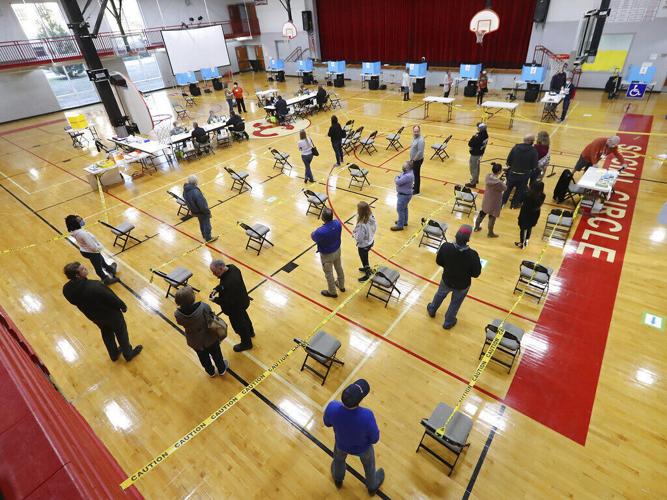
Voters socially distance while waiting in line Tuesday to cast their votes in the state's runoff election inside the gymnasium at Social Circle Middle School, in Social Circle, Ga.
That new stimulus bill also seems likely to include something that Schumer, Gov. Andrew Cuomo, Mayor Byron Brown and Rep. Tom Reed, a Corning Republican, have been pushing for for many months: additional state and local aid for governments that have seen the Covid-19 pandemic blast holes through their budgets.
That's because Manchin, the nation's new tipping-point senator, wants it. In fact, last month he wanted it so much that he was the only Senate Democrat willing to cave to McConnell's demand that liability reform be tied to state and local aid. McConnell's demand doesn't mean much now – but Manchin's support for state and local aid means everything.
• Going big on vaccines and infrastructure. America's efforts to vaccinate its residents against Covid-19 are falling behind just as its roads and bridges are falling apart. But with Democrats nominally in charge of the Senate, both of those things are likely to change fast.
Biden has promised a more centralized effort to fight the pandemic.
"The Biden-Harris administration will spare no effort to make sure people get vaccinated," he said on Dec. 29.
Biden has set a goal of 100 million doses of vaccine in his first 100 days in office, and will likely ask Congress for money to do that in that stimulus measure. And with more than 3,000 Americans dying from Covid-19 every day in recent weeks, it will be hard for many in Congress to say no to that.
One big question about that stimulus package, though, involves infrastructure spending. Biden has vowed to spend $2 trillion to improve the nation's roads, bridges, internet networks and energy grid, and the question he and his congressional allies now face is: How fast do we go for this? Is it part of the stimulus deal or separate legislation?
But sooner or later, a big infrastructure investment – like the one Rep. Brian Higgins, a Buffalo Democrat, has been pushing for years – now seems likely, given that Manchin has been pushing such a plan for years and touts it on his website.
"Senator Manchin believes that rebuilding America and investing in the next generation of infrastructure is not a Democratic ideal or a Republican ideal, it’s an American ideal," his website says.
• Schumer will become majority leader. Schumer will be the first New Yorker ever to serve as Senate majority leader. That means he would control what legislation comes to the floor of the Senate and, in essence, shape the Senate's agenda.
It's difficult to overstate the implications of Schumer's new role for both the state and the nation. His ascension will guarantee that the Senate takes up state and local aid and other New York priorities, and possibly the restoration of full state and local tax deduction, which the Republican Congress trimmed in its 2017 tax overhaul. Moreover, it means that Biden's cabinet and judicial nominees will have a far easier path to confirmation, as will many key parts of his agenda.
Sen. Kirsten E. Gillibrand weighed in on the implications of it all in a conference call with reporters Tuesday as voters in Georgia were going to the polls.
"We are so eager to see Sen. Schumer as the majority leader so that we can actually get votes on bills that are bipartisan and meaningful," she said.
• Manchin might be the most powerful senator. Manchin, an affable throwback to the days when senators from both parties worked with and actually liked each other, is no cookie-cutter Democrat and no progressive. He won his Senate seat in 2010 in part with an ad that touted his National Rifle Association endorsement and that showed him quite literally shooting a hole through climate change legislation.
Now the man in the middle in the new Senate, Manchin is likely to do the same thing figuratively, shooting to bits the Green New Deal and any other climate bill that does damage to West Virginia's dwindling coal industry.
Up for reelection in 2024, Manchin is likely to suddenly be the nation's most courted senator, too. Don't be surprised if McConnell tries to get him to change parties, a move that could well ensure Manchin's political future in heavily Republican West Virginia.
But why would Manchin do that? He's in a better spot to deliver for West Virginia in a free-spending Democratic majority that gives him plenty of bacon to bring home.
There's a personal element to all this, too. Manchin and Schumer are personally very close: Schumer, in fact, has been known to spend time on the Potomac in Manchin's boat in the summertime. So to change parties, Manchin would have to betray not only his party, but his friend.
• Some Democratic dreams will die hard. Democrats are in a state of ecstasy over the Georgia results, but reality will likely hit them hard not long after Inauguration Day.
That's because Manchin supports the filibuster, the rule that means most Senate legislation needs 60 votes to move forward – and the rule that will give Republicans the power to block bills they don't like.
"The minority should have input – that’s the whole purpose for the Senate," he told The New York Times last month. "If you basically do away with the filibuster altogether for legislation, you won’t have the Senate. You’re a glorified House. And I will not do that."
Senate Democrats can rely on one end-around that will allow them to pass some important legislation over Republican objections. It's called "budget reconciliation," and it allows the majority to combine bills into one big legislative package once a year that can pass with the unanimous consent of the majority in the Senate.
Reconciliation is supposed to be used on bills that impact the budget, and many do. The Affordable Care Act, for example, passed via the reconciliation process in 2010.
But many of the most progressive Democratic dreams – such as packing the Supreme Court and making the District of Columbia a state – don't neatly fit into the reconciliation process.
So progressives are going to have to reconcile themselves to two hard facts. They won't get everything they want out of the new Democratic Senate. But Joe Manchin might.

