


Elizabeth Switzer and Paul Polak should be celebrating their first Valentine's Day as a married couple next Sunday. But instead, they're lovers in a dangerous time, separated by 60 miles of highway and an international border and a pandemic that's destroying lives and breaking hearts, including theirs.
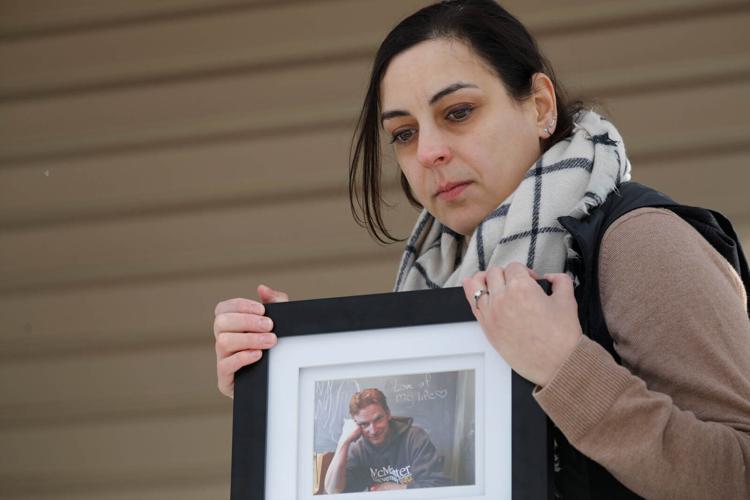
"This was supposed to have been the best part of our lives, right?" said Switzer, 41, a special education teacher who lives in North Tonawanda. "We were going to finally be together the way we wanted to be for so many years. And then, because he lives on one side of the border and I live on the other, we're not even allowed to see each other."
The closure of the U.S.-Canadian land border, now in its 11th month, puts a strain on her fiancé as well.
"It's just a really unpleasant situation," said Polak, 46, who met Switzer while living and working in Buffalo years ago and now is finishing his Ph.D. at McMaster University in Hamilton, Ont. "It feels a lot of the time like people like us have been forgotten."
There are plenty of people like Switzer and Polak. Let Us Reunite, a U.S.-based group that's pushing to make it easier for people to cross the border to see loved ones, has more than 1,800 members. Faces of Advocacy, a Canadian group serving the same purpose, has more than 10,000.
And members of Congress, led by Rep. Brian Higgins, haven't forgotten them.
Higgins, a Buffalo Democrat who co-chairs the House Northern Border Caucus, is leading a push to open the U.S. border to Canadians who have unmarried partners here, a move Canada made for Americans in the same situation months ago. He's also pushing for a more open border for people who own property on the other side of the border, and he's hoping for a fully open U.S.-Canadian border later this year.
For the first time since the land border was closed to nonessential travel last March, Higgins is guardedly optimistic.
"We're just two weeks into the new administration, and there's already been a lot of activity as it relates to getting that border open and, short of that, getting the definition of 'essential traveler' expanded," he said.
A sudden shutdown
Switzer and Polak visited Lakeward Spirits in the Barrel Factory in the Old First Ward last March 8 and thought they had found it: the perfect location for their October wedding, a beautiful place with dark wood and exposed beams in a neighborhood that reflected their own ethnic history. But that visit came as the novel coronavirus started to spread like fire on both sides of the border. Thirteen days after the couple settled their wedding plans, the U.S. and Canada announced that the border would shut down.
"I remember those first weeks thinking: OK, well, we'll just give it a couple of weeks, and it's going to be OK; this can't last that long," Switzer said. "And then it just kept going and going and going."
Did it ever. Around the 15th of every month since, Canadian Prime Minister Justin Trudeau has stood before TV cameras in Ottawa and announced, in a grave tone, that the two nations had agreed the shutdown would last another month.
By doing so, the two nations no doubt limited the spread of a virus that has killed more than 456,000 Americans and 25,000 Canadians.
Yet the border shutdown also wreaked havoc in the lives of thousands.
Like Switzer and Polak, Natasha Marsh of Cheektowaga hoped to be settled with her boyfriend Kingsley, who lives north of Toronto, by now. Instead they haven't seen each other since March.
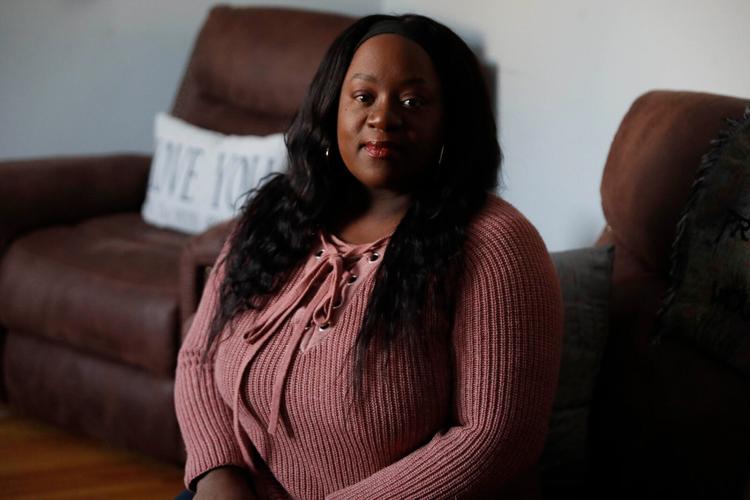
"It's horrible," said Marsh, 42. "We had plans to start a life together. Now we have date nights on FaceTime and we watch television shows together and we try to keep in contact with each other's families and let each other know what's going on in each other's lives and we try to keep it as real as possible. But of course it's not the same."
Similarly, a 54-year-old gay man from Buffalo, who asked that his real name not be used for this story, hasn't seen his partner in Southern Ontario since last March, either.
"It's been extremely difficult because we never spent a weekend away from one another for 13 years, literally," the Buffalo man said. "The weekends and vacations were really especially important to us ... And that's been taken away. Completely and totally."
Others have taken desperate, costly steps to see their loved ones, taking advantage of the policy that lets Canadians fly to the U.S. – even though Let Us Reunite members argue that air travel poses a greater Covid risk than driving alone across a border. The "travel nightmares" section of the Let Us Reunite website tells the story of a Hamilton resident who drove to Toronto, flew to Chicago and then Buffalo to visit his girlfriend in Niagara Falls, N.Y. – an 11-hour trip that cost $400.
A woman recounted an even worse travel nightmare.
"I live in Sault Ste. Marie, Ontario, he is in Sault Ste. Marie, Michigan. Literally a 5-minute drive," she wrote on the website. "I flew to Traverse City, Michigan, last week via 4 airports, 11 hrs. and $1,100."
A one-sided policy
The border restrictions have remained largely static since last March, with one exception. Last October, Canada began temporarily admitting foreigners who have committed but unmarried partners north of the border, as well as spouses and people who want to visit dying relatives, so long as they quarantine for 14 days upon arrival.
It's a policy that many people in such situations wish that the U.S. would adopt.
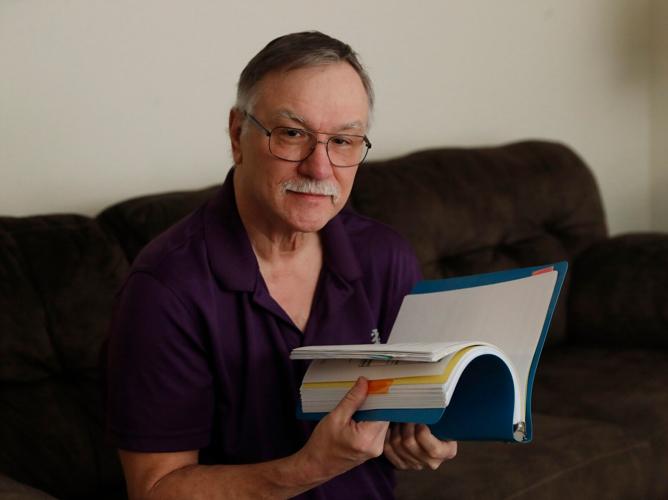
"We would just like to be able to have other people take advantage of that," said Don Alesse, 65, of North Tonawanda, whose girlfriend lives north of Toronto.
That less-restrictive Canadian policy is by no means a free pass into the Great White North.
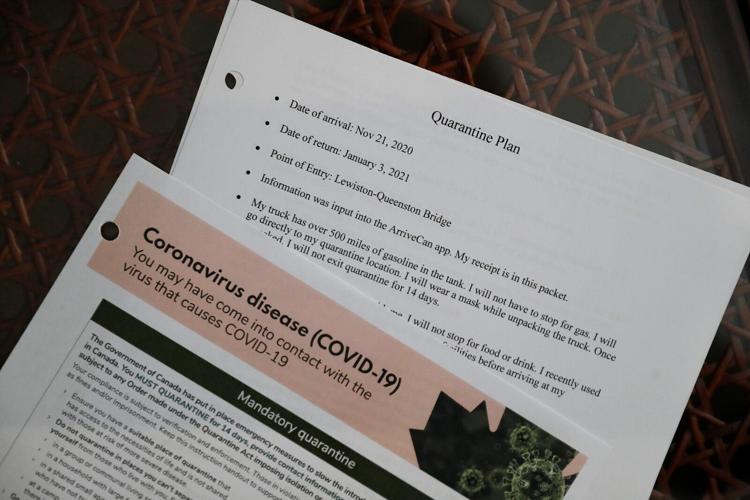
Alesse learned that when he visited his girlfriend in November. He packed up all the food he would need for 14 days of quarantine and all the documents that he needed to prove that he actually qualified to cross the border – more than 120 pages of them – before the trip.
"When the Customs agent at the Lewiston-Queenston Bridge said I could go in after about five minutes, it was such a relief," said Alesse, who acknowledged that even that slightly looser border restriction won't work for every couple.
"It was very difficult: 14 days of quarantine in Canada, 14 days of quarantine back when I got back to New York, and you know, we were both working," he said. "It's difficult to arrange that, so we're not going to be able to do that very often."
Despite those difficulties, the Let Us Reunite group has been pressing the U.S. government to adopt the Canadian policy, meeting with Higgins via Zoom recently and writing a letter to President Biden and telling sad stories of separation whenever they get the chance.
"You know, we have a member of our group who gave birth with her husband watching on FaceTime because he wasn't allowed to come into the country," said Devon Weber, an American living in Montreal and the founder of Let Us Reunite.
But even if Canadians eventually are able to visit loved ones in the U.S., there will of course be a wrenching downside to those visits: saying goodbye.
Switzer and Polak learned that the hard way after she took advantage of the looser Canadian policy and visited her partner for a few weeks in December. In January, she had to return to the U.S. for work.
"I remember leaving him a few weeks ago and thinking: OK, it can't be worse," Switzer said. "It just can't. You know, me walking away having no idea when we'd be together again was really hard. It took a toll on both of us."
A sign of hope
Jan. 21 – the second day of the Biden administration – proved to be the most hopeful day in 10 months for people who find themselves separated by the border shutdown. That's because on that day, for the first time, the U.S. government gave at least some hint that it wants to plan for the shutdown's eventual end.
In an executive order, Biden instructed his government to "immediately commence diplomatic outreach to the governments of Canada and Mexico regarding public health protocols for land ports of entry."
Biden called on his diplomats to submit a plan for those health protocols by this Thursday, but the administration has not yet announced what that plan will be. In the meantime, Trudeau – who has continued to push back against the idea of broader travel – nevertheless said he was pleased to be coordinating with the Biden administration on the pandemic.
"We're working very, very closely on all aspects of it from borders to scientific research to indeed vaccines," Trudeau said Thursday.
To Higgins, that's great news.
"What's happening in the last two weeks that didn't happen the last 11 months is a focus and an engagement between two leaders who can make a very, very big difference toward the goal of getting that border open," he said.
Higgins said a border reopening is likely to start slowly, perhaps with America agreeing to loosen its policy for visits by unmarried partners, while eventually broadening the border opening to those with compelling reasons to visit – such as property – along with proof of vaccination against Covid-19.
Rep. Chris Jacobs would welcome a partial reopening, too. The Orchard Park Republican, a member of the Northern Border Caucus, has both a professional and a personal interest in prying the border open. His constituents are clamoring for it, and his mother-in-law lives in Canada – meaning she has not seen her 2-year-old granddaughter for a year.
"Thank God for Zoom," Jacobs said. "That's all we have."
That, and hope, are all that Switzer and Polak have now, too. They're rebooked their wedding for September at Lakeward Spirits in the Barrel Factory, but their wedding planning is nothing like it would have been before the pandemic.
"Instead of doing any of the normal bride- and groom-to-be stuff – discussions about which photographer to choose or celebrating with our friends and families – I am up at night sending letters to senators and congressional leaders, tweeting (I was never a Twitter person) at the president and the Canadian PM, living and dying with press releases," Switzer said. "This is not the stuff anyone's dreams are made of."

