



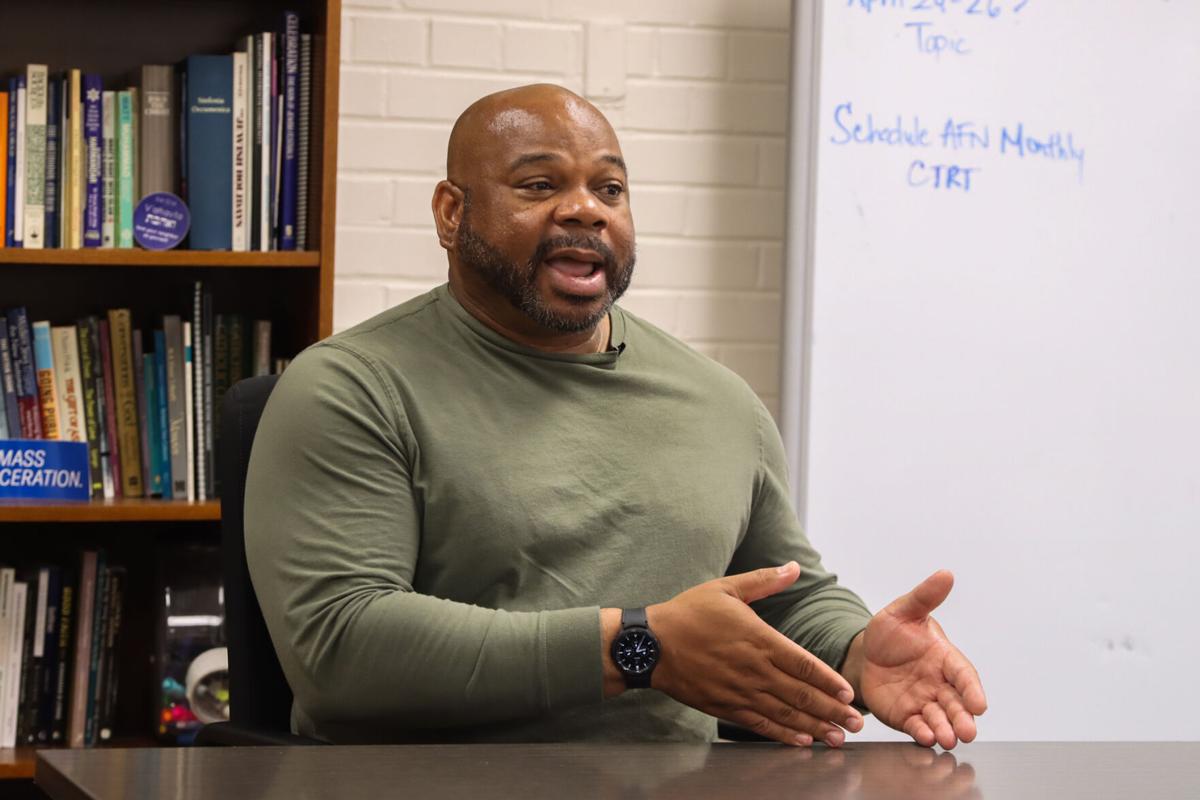
PHOENIX – Khalil Rushdan was sent to prison for life when he was 22.
“I was wrongfully convicted of a crime of first-degree murder,” he said, “which I did not commit.”
Rushdan is now a free man thanks to the Arizona Justice Project, which works to exonerate people who have been wrongfully convicted.
He has become an advocate for criminal justice reform and serves as social justice programs manager for Arizona Faith Network, where he helps others who have been wrongfully accused through several social and criminal programs.
“After my release, I decided to not just sit around and wait for change, I decided to be on the front line of change. So I went from the injustice-impacted to justice-impacting,” Rushdan said.
Rushdan grew up in a rough home situation. He ran away at age 13 and started selling drugs. In November 1993, Rushdan, then 19, introduced a drug buyer to a seller and then left. The buyer robbed and killed the seller and took the drugs, according to Rushdan and the Arizona Justice Project.
Rushdan cooperated with the police investigation but did not testify during the trial and was later prosecuted for the murder. He said the reason the prosecutor “charged me with the murder was because he felt I let the real killer go.”
When Rushdan went to trial, he was found guilty and sentenced to life in prison with the possibility of parole after 25 years. He served more than 15 years in prison and was exonerated and released in 2012.
A year prior to his release, he was contacted by the Arizona Justice Project, which helped him bring his case back to court. A federal district court granted relief to Rushdan on the claim of vindictive prosecution.
Rushdan was a scheduled speaker at the Innocence Network conference over the weekend in Phoenix.
The Innocence Network, which is affiliated with the national Innocence Project organization, consists of 71 organizations worldwide – including the Arizona Justice Project – that are working to free innocent people, prevent wrongful convictions and reform the criminal justice system.
The Phoenix conference was to allow social workers, lawyers, policy reformers, advocates and exonerated members to come together to engage and find new ways to stop wrongful convictions. Of the 843 people who attended last year’s conference, 203 were exonerees.
“Not only is this year the 20th anniversary of the Innocence Network conference, but it will be, by far, the largest we’ve ever had,” said Meredith Kennedy, director of the Innocence Network Support Unit. Some 1,100 people were expected to attend.
More than a decade after he left prison, Rushdan is not only speaking at conferences but is also serving on the Maricopa County Commission on Trial Court Appointments, which reviews applications for county trial judges and makes recommendations to the governor. He was appointed to a public member seat on the commission by Gov. Katie Hobbs, who said he would bring a valuable perspective “as someone who experienced challenges with the judicial process,” according to The Arizona Republic.
Lamar Johnson testified Thursday that he was with his girlfriend the night Marcus Boyd was shot to death, except for a period of a few minutes when he stepped outside to sell drugs on a corner several blocks away from the killing. "Did you kill Marcus Boyd?" an attorney asked. "No sir," Johnson responded. Johnson took to the stand at a hearing to determine if he should be freed from prison after serving nearly 28 years for a murder he has maintained from the outset that he didn't commit. St. Louis Circuit Judge David Mason is presiding over the hearing that is expected to conclude Friday. An investigation conducted by St. Louis Circuit Attorney Kim Gardner with help from the Innocence Project convinced Gardner that Johnson is innocent. She filed a motion in August to vacate his conviction. The Missouri Attorney General's Office is seeking to keep Johnson incarcerated.

