


When Rep. Tyson Running Wolf bought tickets to a Tool rock concert in Phoenix, Arizona, he had no idea he’d return from the trip with a Blackfeet dress made in the 1890s.
Weeks earlier, the tribe received a call from an Arizona woman named Debra Hunter, who recently came into possession of an old Blackfeet girl’s dress.

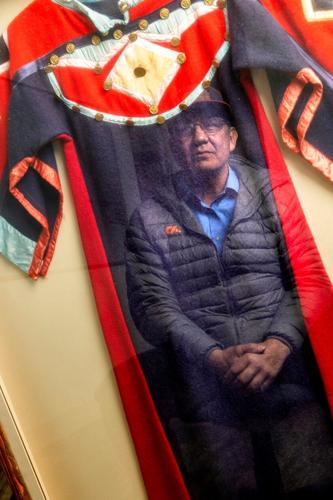
Rep. Tyson Running Wolf of the Blackfeet Nation recently returned from Phoenix with a Blackfeet dress believed to have been made in the 1890s.
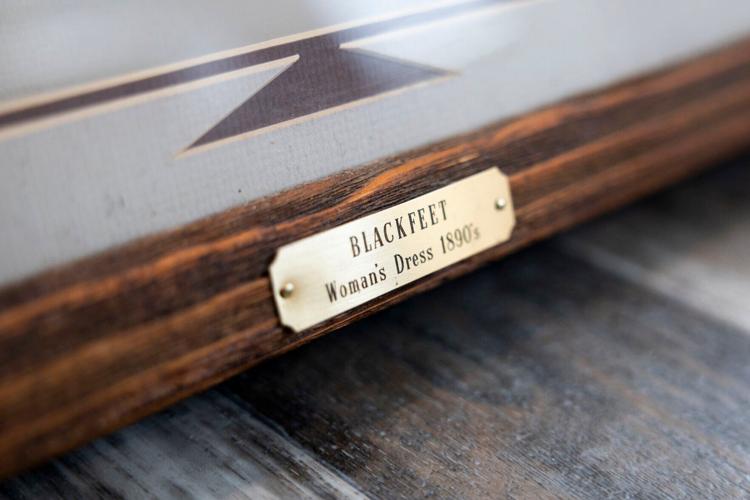
Hunter had been taking care of an older woman who collected historic items, and when the woman died, she gave Hunter the framed dress that hung on her wall. On the bottom of the frame, a plaque reads “Blackfeet woman’s dress 1890s.”
Hunter wanted to return the dress to the tribe, and when she called, the Tribal Historic Preservation Office immediately started thinking through the logistics of repatriating the item. First, the office, which operates entirely on grants and donations, would need to find funding. Then it would need to find someone who could drive to Arizona.
That’s where Ed Kennedy and Running Wolf came in.
Kennedy, a community member and contractor of the tribe’s new arbor, offered to fund the trip, and because Running Wolf was planning to be in Arizona, he would retrieve the dress.

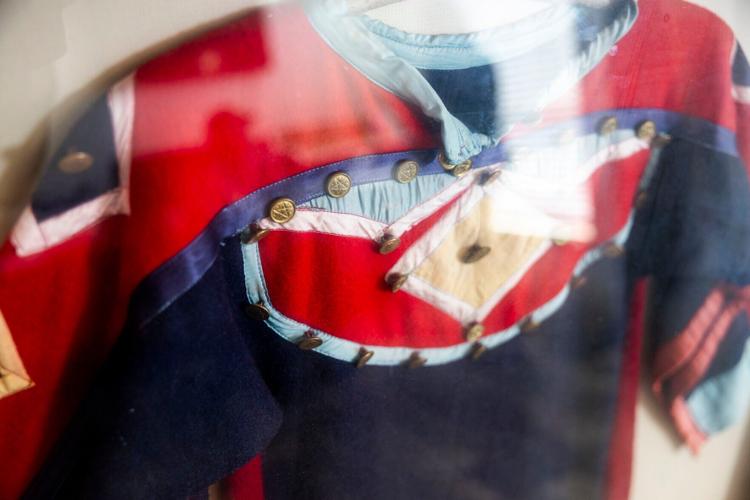
The felt dress features Blackfeet patterns and four types of buttons made from coins minted in the early 1800s.
After the concert, Running Wolf laid the seats flat in his Chevy Equinox rental car so the dress could ride safely in the back for the 1,250-mile journey home to Browning.
Gheri Hall, who works at the Tribal Historic Preservation Office, said the first thing the office does when it receives a cultural item is verify whether it’s authentic to the tribe and to the time period.
The red, black and blue felt dress drapes over a chokecherry hanger, which Running Wolf said is local to the area. Designs on the dress indicate Blackfeet patterns, and Hall found that the four different types of buttons on the dress were made of coins that had been minted in the early 1800s. While the dress was made using a sewing machine, Hall found that in 1846, there were 14 million Singer sewing machines distributed worldwide. She also found archives showing the presence of sewing machines in Blackfeet camps in the early 1900s.
The dress is now stored at the tribe’s new historic preservation office in Browning. When the building is complete, it will include offices, a kitchen, a space for ceremony and temperature-controlled rooms for storing cultural artifacts, like the dress.

The dress is now stored at the tribe’s new historic preservation office in Browning. Once complete, the building will feature temperature-controlled rooms for storing cultural artifacts, like the dress.
“It’s a beautiful item,” Running Wolf said. “It’s a big source of pride to bring something like this home. This is us practicing self-government and sovereignty. It shows we are taking care of our own items, and we can decide what to do with them.”

