


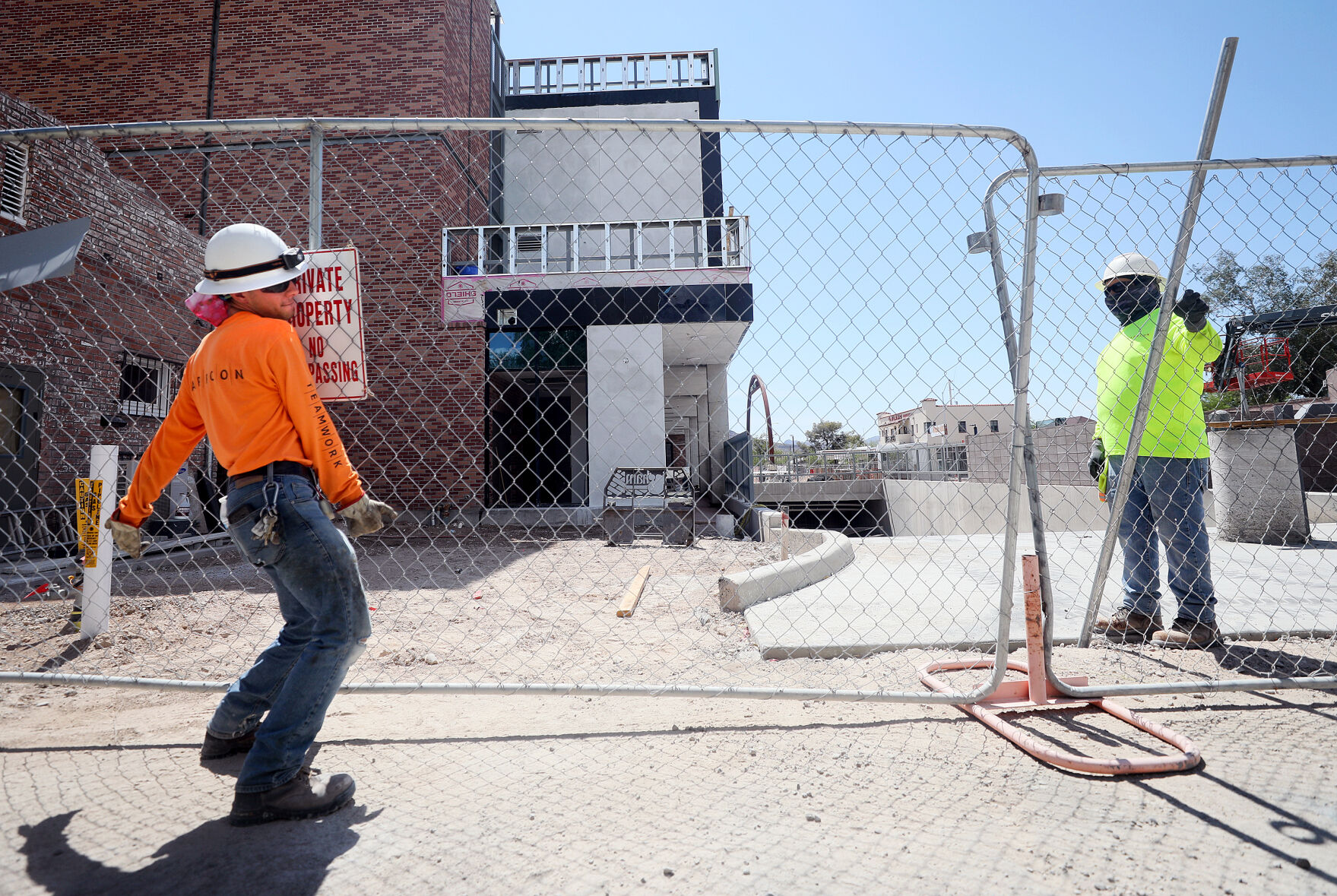
With temperatures well into the triple digits, state inspectors will be out checking job sites to ensure employers are protecting their workers against heat-related illness and injury.
A new program launched Monday will have the Arizona Department of Occupational Safety and Health use its overall powers to require safe workplaces to specifically ensure that workers have “adequate’’ access to water, shade and rest. Inspectors also will check to see if employers have the training to recognize and treat heat stress and injury.
Strictly speaking, there is no formal rule about what is considered adequate.
But there are existing regulations that require companies to provide their workers with a place of employment that is “free from recognized hazards.’’
That means employers can find themselves in legal trouble if inspectors determine employees are subject to conditions the U.S. Department of Labor, which sets the standards for ADOSH to enforce, considers “heat-related hazards that are likely to cause death or serious harm.’’
There is no hard-and-fast rule of what employers need to do to ensure they are in compliance, said ADOSH spokesman Trevor Laky.
“When investigators go out there, they’ve got to do a comprehensive inspection on these things,’’ he said.
“They have to make sure that employers are providing water, rest, shade,’’ Laky said. “So it’s very cumulative. I can’t really identify one thing.’’
Depends on type of work
It varies from job to job.
Take homebuilding, where workers may be up on roofs.
“Obviously, putting shade on a roof, that’s perhaps unfeasible,’’ Laky said. “But we definitely want to see that if someone’s recuperating, especially if they’re exhibiting signs of heat stress, that they can do so in a shaded environment.’’
But it won’t mean state-specified rest periods for those working outside, he said.
“Obviously, every work environment’s different,’’ he said. “And if the environment puts them in such a situation where they need rest or shade, then that’s definitely something they need to look into.’’
The program, called State Emphasis Program, is designed to help employers ensure shade and water are available to workers during their rest periods.
According to the plan, inspectors will look to see that companies are providing “an adequate supply of cool, potable drinking water to workers throughout the day.’’ That means promoting water breaks as needed and educating workers on the importance of staying hydrated.
In another new step, Laky said employers must each now develop, and implement, a written heat-stress program that addresses the issues specific to jobs being performed. That means not only dealing with water, rest and shade but also ensuring workers and their supervisors recognize the signs and symptoms of heat stress.
While the targets are companies whose employees work outdoors, he said the focus on protecting workers from heat is not limited to those firms. The same concerns and rules can apply to situations such as workers in hot kitchens or employees in a warehouse where the air conditioning has failed, Laky said.
Inspectors will now target heat issues specifically
What is particularly significant about the new program, he said, is it goes beyond what the department’s 33 inspectors normally do in ensuring that safety rules are followed.
“This now opens up a new type of avenue that we can go and inspect heat-related conditions,’’ Laky said. “Instead of having another reason to be there, they can target it just because it’s a high-heat working condition. That’s pretty big.’’
Those inspections can be unannounced.
“If we see people working out in an agricultural field, we can go out there because they’re working in a high-heat condition,’’ he said.
One piece of the new program involves gathering data on what companies are doing.
“There might be rules that come afterwards regarding any sort of heat-stress standards,’’ Laky said. “But, as of now, we need to get as much information as possible.’’
Recommendations, citations possible
While ADOSH inspectors can cite employers after an inspection, the plan also includes the possibility of instead issuing a “letter of recommendation’’ of what the companies should do beyond water, shade and rest.
That may include protective clothing and equipment, such as hats for working in the sun.
The plan also includes “acclimatization.’’
For example, it suggests that new workers begin with 20% of the normal workload and time spent in the sun, gradually increasing over a period of up to 14 days.
Screening also is important, with the program saying that conditions such as pregnancy, fever, gastrointestinal illness, heart disease and obesity may increase the risk of heat-related illness. Documents produced by ADOSH warn that employers are not entitled to know whether workers have those conditions but only whether workers have any health conditions that limit their ability to perform their job duties.
The department’s actions drew praise from Gov. Katie Hobbs.
“In the middle of a devastating heat wave, Arizona workers need relief,’’ she said in a prepared statement, calling this “a critical step in building an Arizona for everyone, where working people can go to their jobs every day knowing we have a plan to keep them safe.’’
Records for extreme heat continue to be broken across the U.S. The triple-digit heat wave in the Southwest looks set to become the longest heat wave on record. Parts of the Southern U.S., Midwest, and south Florida are seeing heat indexes reach over 100 degrees Fahrenheit for extended periods.

