


Editor's note: This story is part of 'ESA at 50,' a series that examines the past, present and future of the Endangered Species Act. Often called the "pit bull of environmental laws," the ESA has provided federal protection to nearly 2,000 animals and plants. On its 50th anniversary, it grapples with political uncertainty and unforeseen ecological challenges.
Yellowstone National Park’s bison are one of only two populations in the world to have “continually persisted on their current landscape” for more than 14,000 years … barely.
In the early 1900s, about 20 bison had avoided hunters by hiding in the park’s remote backcountry. By breeding these animals with other bison moved from Texas and northwest Montana, the population slowly rebounded from a genetic bottleneck.

Montana Untamed: Often called “the pit-bull of environmental statutes,” the ESA has given federal protection to nearly 2,000 animals and plants.
It’s now estimated there are 420,000 plains bison in commercial herds spread across the United States. One of the largest of these is owned by media mogul and part-time Montana resident Ted Turner. Turner Enterprises touts 45,000 bison across 14 ranches, two of which are in Montana. Most of those are descended from Yellowstone Park populations.
Another 20,500 bison are in what the Fish and Wildlife Service calls conservation herds. Out of the total population, about 15,000 bison are considered wild by the Department of Interior’s estimate.
Despite these numbers, the agency under current Secretary Deb Haaland has referred to bison as “functionally extinct” and this year dedicated $25 million to restore the species. In addition, the U.S. Fish and Wildlife Service is considering whether to list Yellowstone bison a threatened or endangered species under the 1973 Endangered Species Act.
That’s justified because wild bison populations, without connectivity, are suffering from a lack of genetic diversity, according to Darrell Geist, habitat coordinator for Buffalo Field Campaign, a bison advocacy group that has sued to push a listing.
“As a wildlife species, bison are in serious, serious trouble,” Geist said. “Which is why it is vitally important we protect one population in the Lower 48 states, at least one that might make it for the long term.”
In other words, the issue is not about how many bison are on the landscape, but the ancient evolutionary qualities that made it the dominant herbivore on the North American continent until the 19th century.
“Above all, it’s the wild genome that’s at risk of extinction,” Geist said, pointing to human management’s artificial selection of which animals die. “You’re going to end up with an entirely different bison than the ancestral one, known as the wild American buffalo.
“Limiting their range, that’s going to affect their ability to adapt to changing circumstances in the future,” he added. “Really you’re hobbling a wild characteristic.”

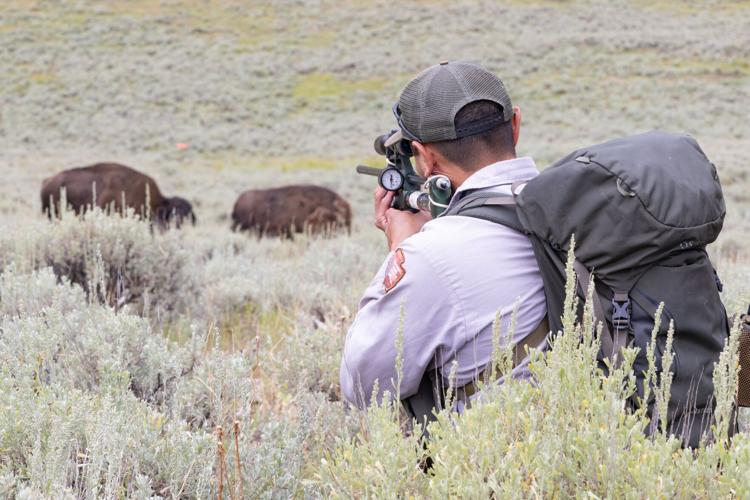
It's unusual to see Park Service personnel, or anyone, in Yellowstone National Park carrying a weapon. But this summer a crew used an air rifle to shoot darts to collect DNA samples from bison. The sampling is a small part of the work being conducted as the animals are considered for protection under the Endangered Species Act.
Conservation triumph
The restoration of bison in North America is hailed as a conservation success story. After nearly being obliterated by market hunters and the federal government’s attempt to starve Plains Indian tribes into submission in the late 1800s, bison — also called buffalo — were nursed back from near oblivion.
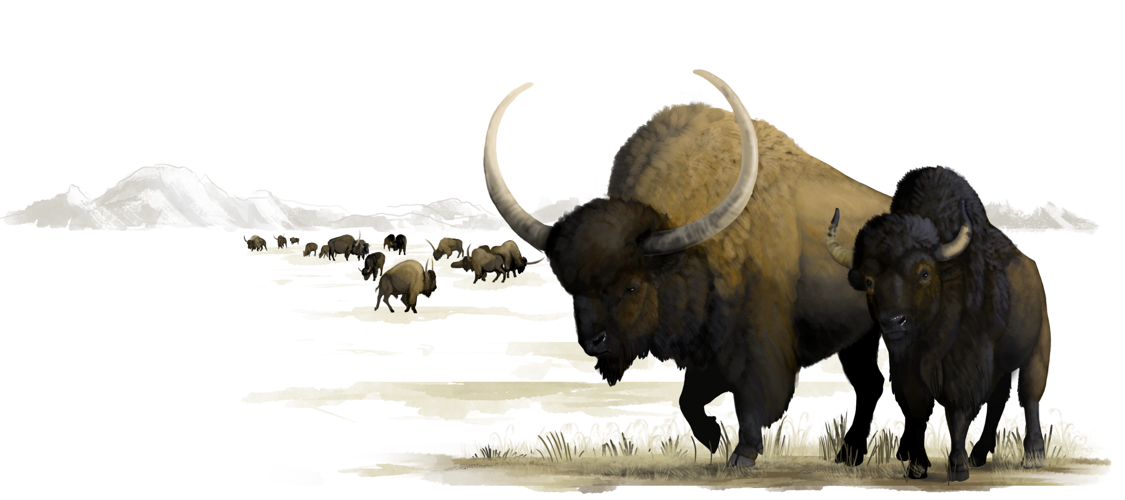
While wild bison in the Lower 48 states are now constrained, their ancestors roamed across continents. It’s estimated the bison’s much larger predecessor, Bison antiquus, first migrated into North America from Asia around 130,000 years ago. The “smaller” version now roaming Yellowstone has been around since the last Ice Age, more than 10,000 years ago.
Before European settlement, it’s estimated 30 to 60 million bison roamed North America from Alaska to Mexico and all the way from Nevada and the Great Plains to the eastern Appalachian Mountains.

The ancient bison, Bison antiquus, was taller, had longer horns, and was 25% more massive than living American bison (Bison bison). It was roughly 7.5 feet tall and 15 feet long, weighing approximately 3,500 pounds. Bison had bone horn cores on their skull that served as a base for a longer horn made of keratin, the protein that makes up our fingernails. The span of the horns of Bison antiquus was approximately 3 feet.
In part because of their incredible history, in 2019 bison were recognized as the national mammal.
“That has not done anything to elevate its conservation prospects, apparently,” said Western Watershed’s executive director Erik Molvar. “It hasn’t changed the public debate.”
Thanks to transfers of live bison, the animals have also repopulated historic lands on the Blackfeet, Crow, Fort Belknap and Fort Peck Indian reservations in Montana, as well as other states. A large conservation herd has also been established on ranch lands purchased by the nonprofit American Prairie group in north-central Montana. Because of that group's goal to reestablish bison as a keystone species on the prairie grasslands, which include federal grazing leases, American Prairie has drawn continual fire from some state politicians and livestock groups.
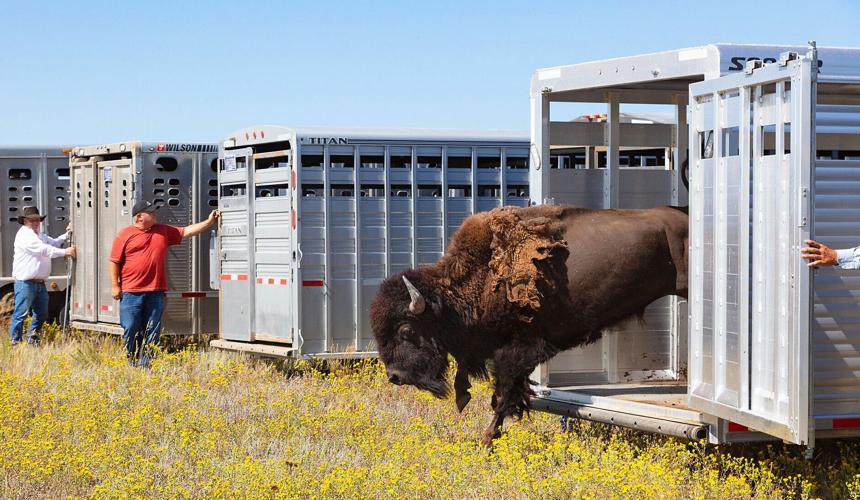
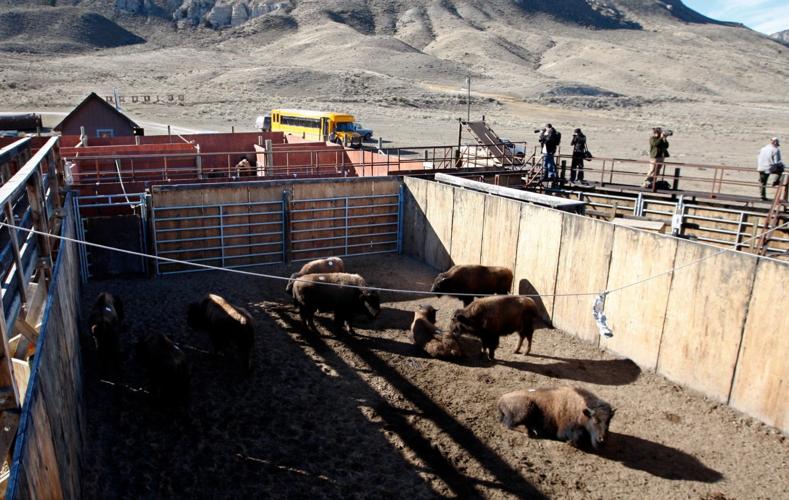
Last fall, Yellowstone’s bison population was estimated at 6,000 animals. Following a harsh winter and heavy migration into the Gardiner Basin, the number shrank by more than 1,500 through hunting, shipment to slaughter or being held for the park’s quarantine and transfer program that ships live, disease-free bison to tribes.

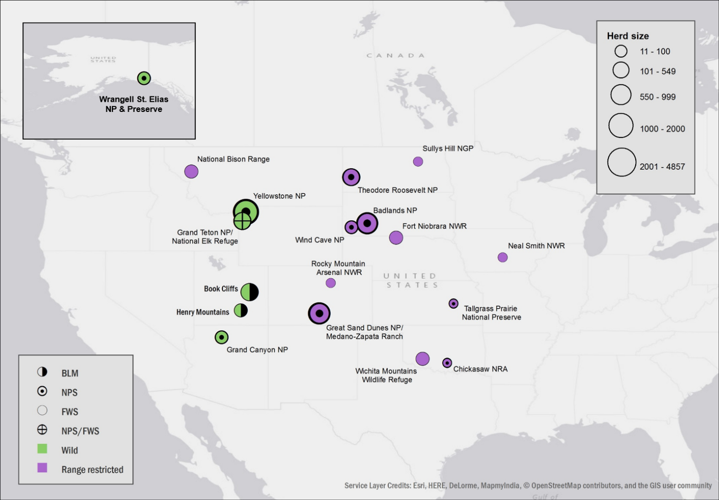
Department of Interior stewards 11,000 bison in 19 separate herds, comprising a third of all plains bison currently managed for conservation in North America. The DOI Bison Conservation Initiative is bringing the NPS, US Fish and Wildlife Service (FWS), Bureau of Land Management (BLM) and other bison conservation stakeholders together to develop scientifically-informed, innovative strategies for managing these bison in order to maximize the long-term viability and collective conservation value of federal herds. (Map courtesy of the Wildlife Conservation Society)
“It’s all take, take, take, take, take,” Geist said. “Capture, trap, hunt, shoot, remove.”
Environmentalist George Wuerthner compared Yellowstone to a bison ranch, saying the animals are subject to unnatural, selective slaughter and likening the existing animals to fish raised in hatcheries.
“The issues are not the number of bison but the quality of the bison and the question of domestication,” he wrote in a recent column.

Wildlife or livestock?
Bison are unique among wildlife in Montana where they are managed as a “species in need of disease control” because they can carry brucellosis. Brucellosis also infects some elk in the Greater Yellowstone Ecosystem that move freely in Montana, yet they are not similarly managed.
Brucellosis can cause pregnant cattle to abort, which is why the Montana Department of Livestock shares oversight of bison with the Montana Department of Fish, Wildlife & Parks.
Under regulations established between the state, Yellowstone National Park and other agencies, bison are confined mainly inside the park boundaries with the exception of two tolerance zones to the north, near Gardiner, and to the west, near West Yellowstone, where bison are allowed. These two areas are also where tribal and public bison hunting occur in Montana.

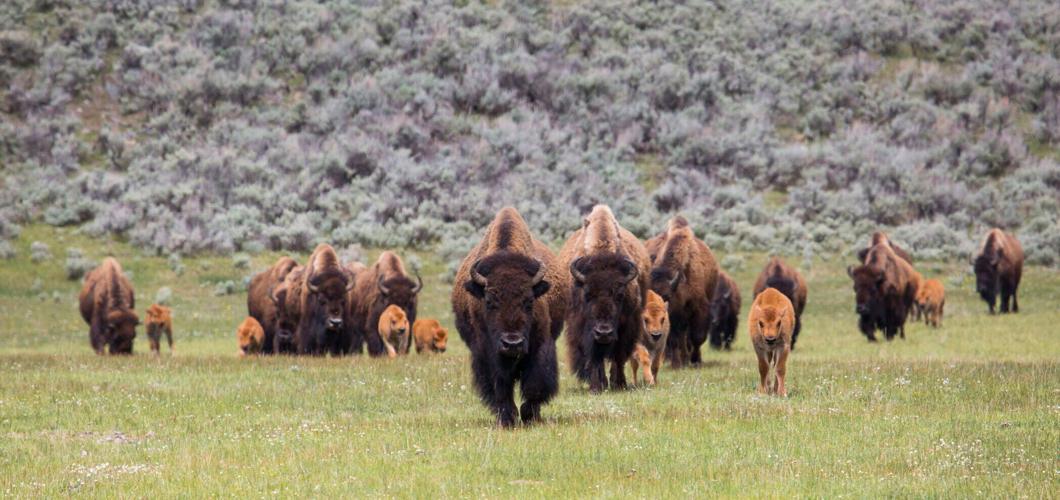
Bison herd with calves in Lamar Valley of Yellowstone National Park.
The Fish and Wildlife Service’s review of bison for possible listing under the Endangered Species Act is being undertaken as Yellowstone National Park considers an overhaul of its bison management plan. The Park Service has offered three alternatives. One would attempt to keep the population between 3,500 to 5,000 animals using hunting and culling as well as live bison transfers to reduce the population.

Explore which species in your state have made the endangered species list.
Another alternative would allow the bison population to grow to 6,000 animals and emphasize live transfers of bison to tribes to control the population. However, this alternative would allow park officials to shoot bison within the park’s capture facility to reduce the population if needed.
The third alternative would allow the bison population to grow to 7,000 animals and rely on hunting outside the park, as well as live bison transfers, to reduce the population. If the population approached 7,000 bison, removals would occur.
“Range curtailment” is one of the factors the FWS will consider in its review. One estimate put the amount of land bison currently roam at one-tenth of one percent of the species’ historic range.

Yellowstone officials are working to ensure more bison are transferred to tribes rather than slaughtered, but the program requires long quarantine periods to ensure the animals are disease free.
Critics call for population, disease control
The Montana Stockgrowers Association criticized the park’s plan in a fall press release. That was followed by a 17-page letter from Gov. Greg Gianforte’s office, written in consultation with the director of Montana Fish, Wildlife & Parks and the Department of Livestock’s executive officer.
“Alternatives should include management tools like population control, spring hazing, vaccination, culling, tribal hunting, and shipment of excess animals to processing facilities,” said Raylee Honeycutt, executive vice president of the Stockgrowers. “While alternatives include some components, it is imperative to have all management tools be available to manage the herd depending on time of year, location, and environmental scenarios.”

Bison are being held in the National Park Service's bison capture facility at Stephens Creek, shown here in 2015, in preparation for shipment to slaughter.
The press release went on to state, “MSGA continues to express its concerns with the increase in the bison population as it is likely to increase bison migration out of the park and the risk of brucellosis transmission to cattle and the limited forage availability in the park during winter for a growing herd size. The association is further concerned with the concept of limiting management tools as the population increases, leading to an exponential growth in bison numbers.”

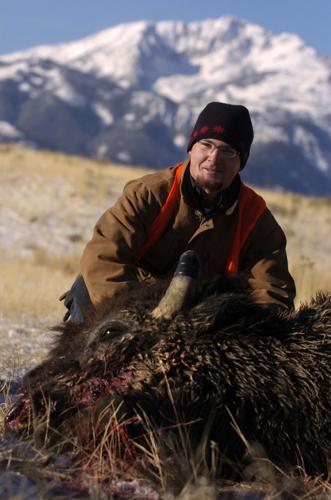
George Clement looks over the bison he shot in 2005 during a hunt near Gardiner.
In his letter, Gianforte and his administrators decried all of the park’s proposals in great detail and called Yellowstone officials’ posture “uncollaborative and obstinate.” The letter also included a not-so-veiled threat.
“Given Montana’s strident and consistent opposition to the alternatives proposed, and the fact that YNP’s alternatives may undermine the foundation of Montana’s tolerance, ‘common sense’ precludes assuming that Montana’s tolerance zones will remain unchanged,” the state officials warned.
In other words, should the Park Service move ahead with a plan to increase or maintain a higher bison population, the state could pull back from its agreement allowing bison to wander north and west outside of Yellowstone.
On the other side of the fence, Defenders of Wildlife has argued for a higher low-end number of bison — 4,000 animals. The group also proposed recognizing tribes as co-stewards to manage the herd and expanding the transfer program.
Giving bison ESA protection would check states’ abilities to treat bison like domestic livestock.
“Endangered Species Act protection can break the stranglehold Montana has placed on recovering wild bison in the Yellowstone ecosystem,” said Geist in an online post. “We need to honor, protect and restore Yellowstone bison where they are now extinct because of the failure of the State of Montana to provide for a self-sustaining population in the wild.”
Decades of court fights
Buffalo Field Campaign, along with the Western Watersheds Project, petitioned the Fish and Wildlife Service to protect bison under the Endangered Species Act in 2014. They were preceded by other petitioners.
In 1999, Minnesota author James Horsely appealed to FWS to safeguard Yellowstone bison. Ten years later, in 2009, the Center for Biological Diversity and Western Watersheds asked the FWS to protect bison. Each time the agency turned down the petitions.

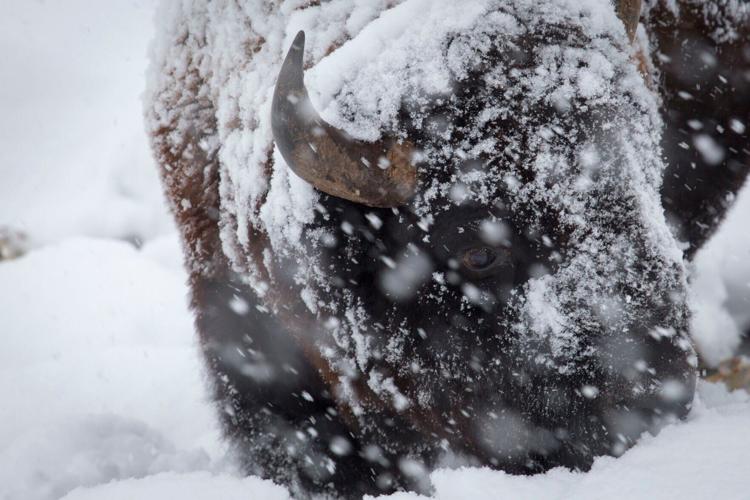
Bison close up in a snow storm in Yellowstone National Park.
In 2018, a federal judge accused the Fish and Wildlife Service of picking among contradictory scientific studies without explaining why the most recent petition’s science was “unreliable, irrelevant or otherwise unreasonable.” A year later, the FWS again turned down the petition, and in 2022 a federal judge for a second time ordered the agency to revisit its decision.
The repeated delays have frustrated Western Watershed’s Molvar, who said his group is again considering legal action to compel the FWS to move ahead.
“The Fish and Wildlife Service is definitely dragging its feet,” Molvar said. “The same issues keep cropping up over and over again.”
He accused the agency of ignoring best available science and being motivated by political agendas, instead of what’s best for bison.

A herd of bison in Yellowstone National Park.
Finally, in June 2022, the FWS said it would conduct a comprehensive status review of Yellowstone’s bison to determine if the species warranted protection under the Endangered Species Act. The agency noted the petitioners had “presented credible information to indicate potential threats to the (distinct population segment) from reductions of its range due to loss of migration routes, lack of tolerance for bison outside Yellowstone National Park, and habitat loss.” The FWS also acknowledged management actions, disease and loss of genetic diversity “may pose further threats.”

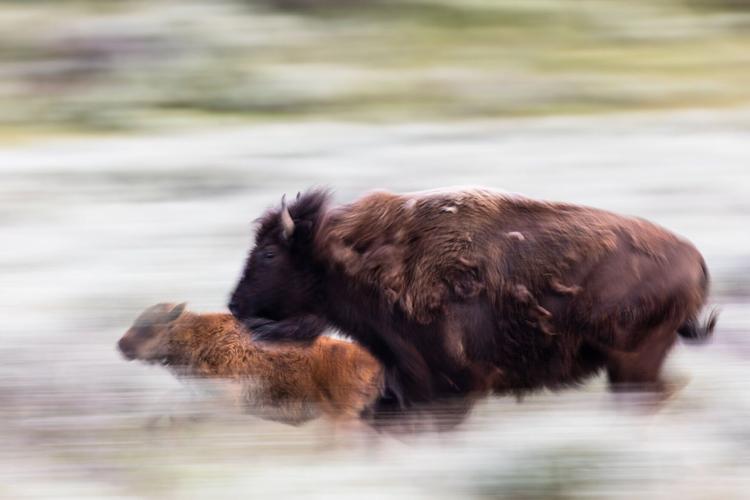
Cow and calf run through the sage in Lamar Valley in Yellowstone National Park.
Although the agency calls its assessment a “12-month finding,” its 14-page list showing all of the species being studied for protection in the United States forecasts the bison work won’t be done until 2026.
“The Service is conducting an in-depth status review and analysis using the best available science and information to arrive at a finding as to whether listing is warranted,” Joe Szuszwalak, a public affairs specialist for FWS, said in an email. “If listing is found to be warranted, the Service would then conduct a separate rulemaking process, with public notice and comment.”
The U.S. Fish and Wildlife Service is overseen by Martha Williams, a former director of Montana Fish, Wildlife & Parks.
'Listing is a long haul'
Robert Fischman, a professor at Indiana University Maurer School of Law, testified in April before a U.S. House Committee on Natural Resources subcommittee regarding the Endangered Species Act.
When contacted for this story, he said the Fish and Wildlife Service’s latest move is not a signal that bison will be listed as threatened or endangered. Instead, the agency will be conducting a two-part test: One is to decide if the bison are a distinct population segment; and the other to resolve whether there’s a trend suggesting bison are threatened or likely to be endangered.
The Fish and Wildlife Service could also decide the Yellowstone bison are a distinct population, but not rule on listing them, citing other priority species, Fischman said.

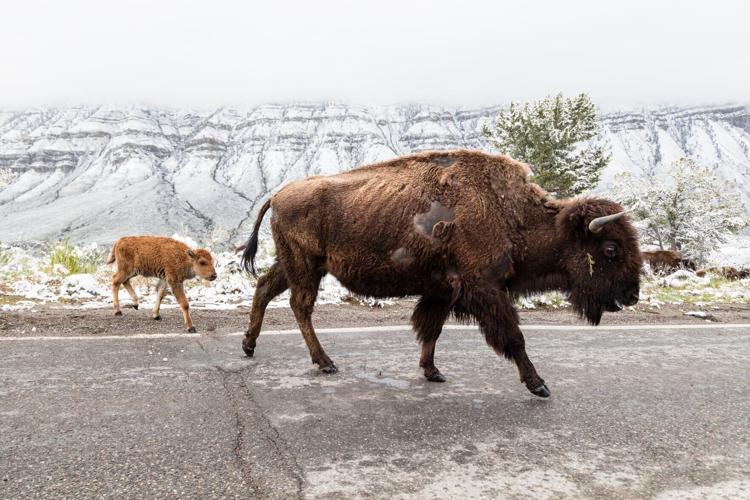
A bison cow and calf walk in the road in Yellowstone National Park.
“One thing I think it will be important for readers in Montana to understand is that this would be a good time, before listing, for stakeholders to get together and decide: ‘Well, what’s something we can all accept that would contribute to bison conservation?’”
That was done in Montana when greater sage grouse were considered for listing under the ESA. Candidate Conservation Agreement with Assurances were developed with landowners in existing core sage grouse habitat. The landowners voluntarily agreed to maintain and enhance bird habitat. In exchange, the landowners have fewer federal restrictions to worry about if the sage grouse is listed under the ESA.
Such a collaborative deal could protect a migratory corridor or create a program where private landowners could haze or shoot bison on their property, Fischman said as an example.
“If you can fold all those practices into a plan and show the Fish and Wildlife Service how that would be a net benefit for bison,” then the agency can approve the agreement and whatever is authorized by the agreement could continue to occur even if bison were listed, he explained.
Without such an agreement, were bison to be listed, Fischman said Park Service management would likely change little, if at all. However, it could affect how other agencies – like the Forest Service, Bureau of Land Management, as well as the state of Montana and private landowners – deal with bison when they migrate out of the park.

“The bottom line is: It doesn’t matter how few bison there are,” Fischman said. “It doesn’t matter how constricted their habitat is. It doesn’t matter whether the International Union for Conservation of Nature says these animals are in danger of disappearing. From a legal perspective, to be protected under the Endangered Species Act, it’s an administrative action that stems from this rulemaking procedure. So no matter how imperiled the species, if it’s not subject to a final rulemaking, it’s not protected under the Endangered Species Act.”
Nonetheless, Geist of the bison advocacy group Buffalo Field Campaign, said his group sees the Fish and Wildlife Service’s decision to conduct a 12-moth status review as “quite the milestone.” He also points to the federal courts twice ruling in the group’s favor as encouraging.
“Endangered Species Act listing is a long haul,” he said. “Anybody expecting a quick listing is going to be greatly disappointed.”
As an Outstanding in the Field dinner happens behind them, a herd of bison graze at North Bridger Bison in Wilsall
50 years of the ESA: Explore this series, in photos

Erin Fenger, conflict prevention specialist for Montana Fish, Wildlife and Park, throws old cattle bones into a dump trailer on a ranch outside Valier, Mont. in Sept. 2023. Montana FWP’s prairie bear team routinely picks up bone pits and carcasses from ranches to prevent grizzly bear attraction to the operations.

Henry Becker, pets Zia, an anatolian shepherd, on the Stickleg Ranch outside Conrad, Mont. in Sept. 2023.

Range rider Sigrid Olson rides her horse Jake on public land in search of cattle outside Potomac, Mont. in Oct. 2023.

Range rider Sigrid Olson rides her horse Jake on public land in search of cattle outside Potomac, Mont., in October 2023.

Range rider Sigrid Olson rides her horse Jake on public land in search of cattle outside Potomac, Mont. in Oct. 2023.

A major aspect of Sigrid Olson’s job as a range riding is documenting the condition of cattle on the range and signs of predators in the area. She produces a report from her notes that she shares with producers and wildlife agencies.

Range rider Sigrid Olson poses for a portrait after a day of range riding outside Potomac, Mont. in Oct. 2023.

Range rider Sigrid Olson loosens the saddle on her horse Jake after a day of range riding outside Potomac, Mont. in Oct. 2023.

Kristina Harkins of the Montana Department of Fish, Wildlife & Parks walks down a hillside near Ambrose Creek northeast of Stevensville after using a radio receiver to locate sharp-tailed grouse on Nov. 16. Harkins is a field coordinator for FWP's effort to reintroduce the species west of the Continental Divide, where they haven't been seen for decades.

Harkins uses a handheld radio antenna to listen for collared sharp-tailed grouse near the MPG Ranch in the northern Bitterroot Valley on Nov. 16.

Kristina Harkins, in the driver seat of an FWP truck near the MPG Ranch Nov. 16, listens for signals from radio-collared sharp-tailed grouse using an omnidirectional antenna mounted atop the truck cab.

Male sharp-tailed grouse dance on a lek in early morning light in spring 2023.

An estimated 300 wolverines prowl the snowy elevations of the Rocky Mountains in Montana, Idaho, Wyoming and parts of Washington, Utah and Colorado. Their hard-to-find nature has challenged the ability of biologists to confirm wolverines' population in the Lower 48 states.

A wolverine triggers a remote camera in the Helena National Forest. The elusive carnivore depends on deep snow for breeding and scavenging food. Climate change and habitat fragmentation have made it a candidate for listing under the Endangered Species Act on its 50th anniversary.

Staff from the Montana Department of Fish, Wildlife & Parks re-introduced Arctic grayling in French Creek in the Mount Haggin Wildlife Management Area in early October 2023. The fish have genetic ties to river-dwelling Arctic grayling in the Big Hole River. French Creek is a tributary to the river.

Fish, Wildlife and Parks Fisheries Biologist Jim Olsen, right, and Region Three Supervisor Marina Yoshioka hold buckets for transporting Arctic grayling during a repopulation project on French Creek on Oct. 2 in the Mount Haggin Wildlife Management Area.

Fish, Wildlife & Parks fisheries technician Lance Breen releases Arctic grayling into French Creek during a repopulation project in the fall of 2023 in the Mount Haggin Wildlife Management Area near Anaconda.

Fluvial Arctic Grayling

Fluvial Arctic Grayling
It's unusual to see Park Service personnel, or anyone, in Yellowstone National Park carrying a weapon. But this summer a crew used an air rifle to shoot darts to collect DNA samples from bison. The sampling is a small part of the work being conducted as the animals are considered for protection under the Endangered Species Act.
Bison close up in a snow storm in Yellowstone National Park.
Bison herd with calves in Lamar Valley of Yellowstone National Park.
A herd of bison in Yellowstone National Park.
A bison cow and calf walk in the road in Yellowstone National Park.

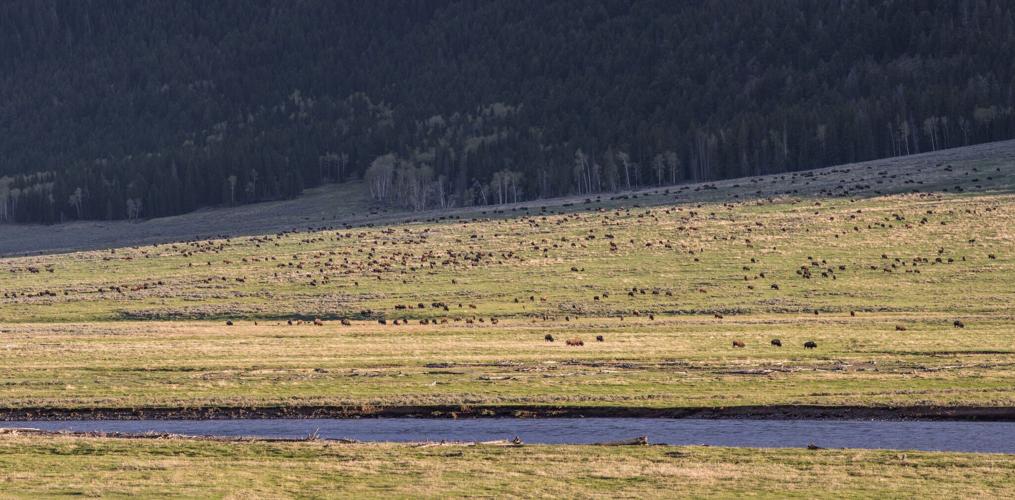
A herd of bison move through the Lamar Valley in Yellowstone National Park.
Cow and calf run through the sage in Lamar Valley in Yellowstone National Park.
The ancient bison, Bison antiquus, was taller, had longer horns, and was 25% more massive than living American bison (Bison bison). It was roughly 7.5 feet tall and 15 feet long, weighing approximately 3,500 pounds. Bison had bone horn cores on their skull that served as a base for a longer horn made of keratin, the protein that makes up our fingernails. The span of the horns of Bison antiquus was approximately 3 feet.

Attorney and former Boone and Crockett Club president Lowell Baier spent seven years compiling the "Codex of the Endangered Species Act," reviewing its 50 years of impact.
Fish, Wildlife & Parks repopulation project of Arctic grayling into French Creek.

Wesley Sarmento, prairie bear specialist for Montana Fish, Wildlife and Parks, left, talks with Jennie and Seth Becker on the Stickleg Ranch outside Conrad, Mont. in Sept. 2023.