


Efforts to loosen one of the St. Louis region’s most notorious traffic choke points wrapped up on Friday.
During the last two summers, the Missouri Department of Transportation overcame one significant physical obstacle to add another lane in each direction on Interstate 270, roughly between Manchester Road and Interstate 44.
MoDOT had to work around railroad bridge columns that carry tracks over the bustling interstate, and blasted away some of the rock bluffs that posed a natural barrier to widening. Replacing the bridge would have been cost-prohibitive, MoDOT officials say.
So the project called for adding a fifth lane in each direction to the four-lane highway. MoDOT did this by making the north- and southbound lanes slightly narrower than the traditional 12-foot lane width.
Reader Marcel Roy of Crestwood noticed that there were some complications to merging onto southbound I-270 at Dougherty Ferry while the work was under way.
With the entrance ramp restricted to one merge lane, traffic could sometimes back up on eastbound Dougherty Ferry, and sometimes on southbound Des Peres Road.
The new northbound lane between Manchester Road and I-44 opened in December 2012. With little fanfare, MoDOT officials on Friday opened the fifth southbound lane between Dougherty Ferry Road and I-44.
The need was pretty clear. The roughly four-mile stretch carries 175,000 to 185,000 cars each day, making it one of the busiest roads in the region.
Traffic is known to slow to a crawl — and by crawl, we mean about 35 mph — on a typical morning commute on the northbound segment of I-270. That means it takes about 10 minutes more to drive this section during rush hour than periods of light traffic.
The state learned during the nearly two-year closure of Highway 40 (Interstate 64) that it could restripe highways without sacrificing safety. During the Highway 40 closure, MoDOT painted narrower lanes on sections of Interstate 70 and I-44.
MoDOT spokeswoman Linda Wilson Horn said the lane on southbound I-270 opened after lunchtime Friday — just in time for the evening commute and for traffic heading to the National League championship series game between the Dodgers and the Cardinals.
The two-lane on-ramp from Dougherty Ferry Road to southbound I-270 also opened on Friday.
METRO DRIVER TALKS CONTINUE
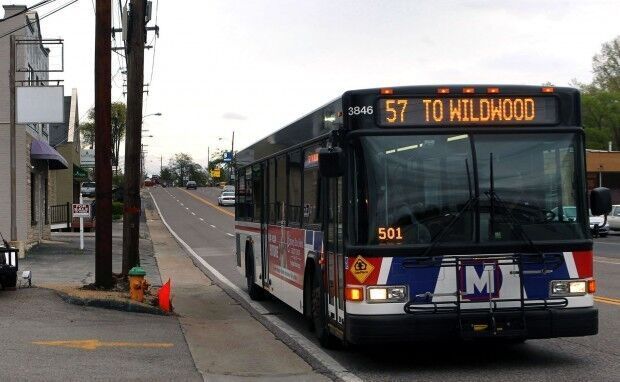
Contract talks continue between the Metro transit agency and the union that represents — among others — the agency’s bus and MetroLink operators.
Metro officials confirmed that the two sides are still talking after resuming discussions in August. Last week, the St. Louis region’s largest transit agency characterized the talks as “productive.”
The 1,500-member union authorized a strike in June. The two sides have clashed over pension benefits, medical coverage and wages, and the labor tiff led to warnings of a possible strike during Fair St. Louis. The union steadfastly denied that any job action was planned during the celebration.
In August, a neutral mediator issued a report siding with the union on the issue of pension benefits and pay increases, and recommending that Metro’s proposals with regard to medical insurance and retiree health care be followed.
WATER MAIN WORK ENDING
Missouri American Water is wrapping up its replacement of more than 11,000 feet of aging mains along Manchester Road in west St. Louis County.
Spokeswoman Ann Dettmer said the utility worked between Henry and Old Ballwin Road at night to limit the hassles to drivers, and that the work is ending about a month ahead of schedule.
Drivers have complained about the condition of Manchester Road during the project. The utility said its contractor will be finished resurfacing Manchester in the next few weeks.
The project was part of a Missouri American water main replacement blitz during the past two years.
AMTRAK RIDERSHIP ON RISE
Amtrak has reported strong passenger growth between St. Louis and Chicago — the route that is being upgraded to higher-speed trains.
As you may have seen last week, Amtrak passenger counts between the two cities were up 10 percent in the year ending Sept. 30, compared to the previous 12 months. The corridor is served by the Lincoln Service and the Texas Eagle.
It was Amtrak’s largest reported jump among state-supported and long-distance markets during that year.
While it’s impressive at first blush, remember that more than 97 percent of people who travel between St. Louis and Chicago still do so by car. Rail accounts for 1.3 percent of those trips, according to a December 2012 report. The rest travel by airplane or bus.
Nationally, Amtrak trains carried a record 31.6 million passengers last year. Ridership on the Missouri River Runner, between St. Louis and Kansas City, increased 1.8 percent in the past year.

