



One of the most legendary and influential basketball players of all time is making his way to Tucson this month to talk about his life and basketball journey.
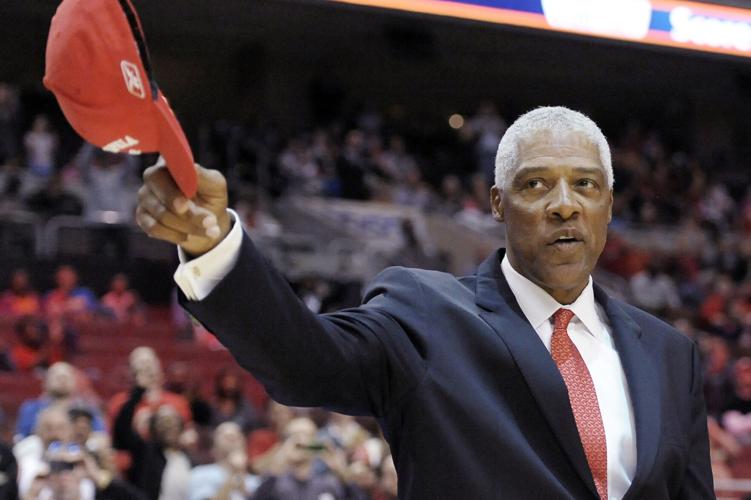
Julius Erving — also known as “Dr. J” — will be the next featured speaker in the African American Museum of Southern Arizona’s “Fireside Chat” series on January 16 at Palo Verde High School.
Information and sponsorship packages for Erving’s speaking event in Tucson can be found at aamsaz.org. The event will be hosted by African American Museum of Southern Arizona co-founder Bob Elliott, a former UA basketball star and All-American.

Basketball Hall of Famer Julius Erving is 74.
Erving, a Naismith Basketball Hall of Fame member and former Philadelphia 76ers star, is the latest Fireside Chat speaker, joining Ruby Bridges, a civil rights activist who was the first Black student to attend William Frantz Elementary School during the New Orleans school desegregation crisis. Bridges is the subject of “The Problem We All Live With,” an “iconic painting by Norman Rockwell,” Elliott said.
Other speakers to trek to Tucson: Carlotta Walls of the “Little Rock Nine,” the first Black students to attend Little Rock Central High School in Arkansas, and Stacey Snowden, the daughter of former UA basketball head coach Fred Snowden, who was the first-ever Black head coach at a major university in 1972.
Erving and Elliott’s relationship dates back to 1977, when the former Arizona Wildcat was drafted 42nd overall in the second round by the Sixers. Erving just finished his second season in Philadelphia after he played the previous four seasons with the New York Nets (now Brooklyn Nets).
In preseason practices in 1977, “we definitely struck up a brotherly relationship,” said Elliott.
“In training camp, the veterans had their own rooms, while the rookies had to bunk up,” Elliott said. “After the first week, there was a cut and I had a single room. Some of the vets, like Doug Collins and Henry Bibby, they were like, ‘Hey, put three of those little rookies in the same room together.’
“Julius moved in with me and he’s been my big brother ever since. About six months ago, he and I and our wives were having dinner and he gets our newsletter from the museum and he said, ‘I want to do something for the museum.’ I said, ‘Well, it would be great if you came into town and became a part of our Fireside Chat series.’”
During an appearance on ESPN Tucson’s “Spears & Ali,” Elliott discussed more about Erving’s legacy and how African American Museum of Southern Arizona is faring since opening its doors on Jan. 14, 2023. Here’s part of the interview, which can also be heard on the Spears & Ali Spotify and Apple Podcasts platforms.
How would you describe the significance of having someone like Dr. J come to Tucson to support the African American Museum of Southern Arizona?
A: “Someone told me, ‘Wait a minute, Julius Erving coming to Tucson? Are you for real?’ Yes. His life is unbelievable. He is the reason why there was a merger (between the NBA and ABA). He’s going to get into all of that and (talk about) behind the scenes between the ABA and the NBA.

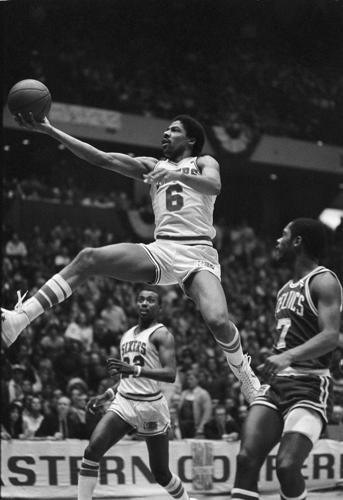
Philadelphia ‘76ers Julius Erving seems to be floating to the basket past Boston Celtics Nate Archibald, April 30, 1981 in NBA Eastern Division playoff game in Philadelphia. The soft layup went through the basket.
“It’ll be a great chance for people in Tucson to see a true sports icon, one who is very well-respected. … Someone asked President (Barack) Obama, ‘Would you rather be the president of the United States or Julius Erving?’ He said, ‘Not even a question, I want to be the doctor. I want to float from the free-throw line and dunk it.’ … What a lot of people don’t realize is Julius broke the barrier for a lot of pro athletes to be branded and marketed into other things like the Wheaties box or movies or endorsing products and becoming a member of the board of directors for major Fortune 500 companies. He bridged the gap for a lot of us in different areas.”
How would you describe Erving’s impact on the game of basketball?
A: “To put it into today’s language, Julius is like LeBron (James). He’s the focal point. He was the Michael Jordan before there was Michael Jordan. So I’m at practice and I learned very quickly that in the rectangle — a basketball court is the rectangle — he is Dr. J. He does things with the basketball that you just don’t believe or thought was possible. Once he leaves the rectangle, he’s Julius. I think that’s the thing I’ve learned the most, which is be a pro athlete and do your job, but when you get out of rectangle, you’re just a person. What you do with your life as that person, that’s what makes a difference. That’s why he has always been one of my top mentors.”

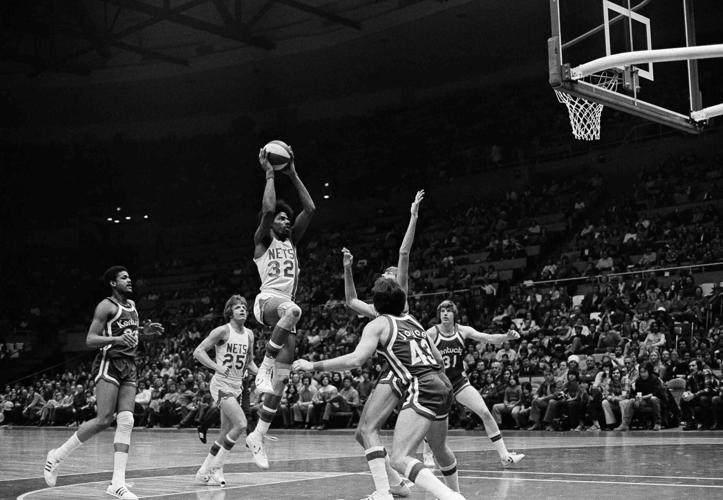
New York Nets Julius Erving (32), known as “Dr. J”, leaps for the basket on way to 35 points against the Kentucky Colonels at the Nassau Coliseum in Uniondale, N.Y., in this Jan. 24, 1976, file photo.
What were some of the messages and pieces of advice Erving conveyed to you when you first became a professional basketball player?
A: “Multiple. Just so many. He was always teaching me even when he didn’t even know. … They talk about the great ones and how they make everyone better. Whatever Julius did in practice, I felt like I could do it. Professionally, Julius has always been about class and style. I remember when we were getting ready for our first game and Julius said, ‘What are you going to wear?’ I showed him and he said, ‘No.’ He takes me down to a place called Boyds in Philadelphia, which was the place where he got his clothes and he said, ‘Make him — talking about me — a gray three-piece (suit) and a brown three-piece; classic looks that you’ll always be able to use.’ How you look in public makes a difference. I learned that in broadcasting. When I was doing TV, 90% of people, when you come on camera to begin the show, they’ve already made an assessment as to how they think you’re going to sound like and what you’re going to say based on how you look regardless of what you say.”

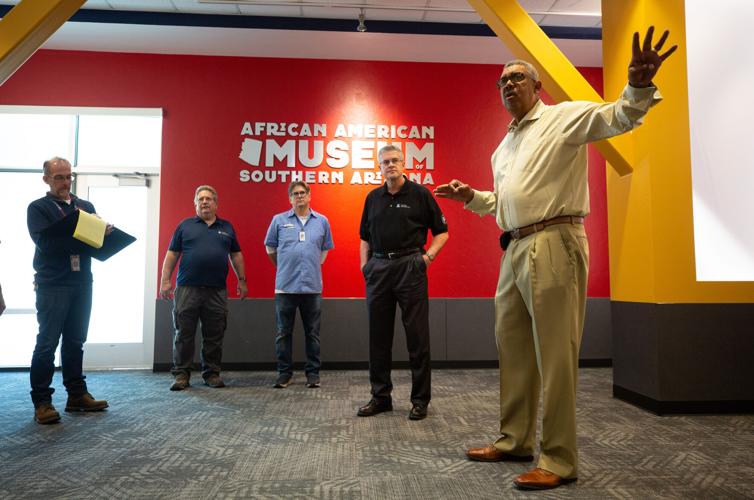
Former University of Arizona basketball star Bob Elliott, right, talks with UA Associate Vice President Chris Kopach and facilities management staff at the African American Museum of Southern Arizona inside the University of Arizona Student Union.
Since the African American Museum of Southern Arizona opened nearly two years ago, how many visitors have you received?
A: “The response from not only Tucson and the Southern Arizona community but all over the state — we’ve had over 7,000 people come through the museum in the last year and a half. Just to give you a metric, the Arizona State Museum across the street gets about 2,000 in a year. We’ve had over 7,000 people and it’s a combination of the regular people and people who like to come to museums, but we’ve had so many students. We’ve had students come from Phoenix high schools, Casa Grande high schools, Flagstaff high schools and Yuma high schools. They come down and one of the byproducts of the museum is to try and help recruit future Wildcats. If the hook is the museum and they come down, now you have them on campus. Now that you have some of these high school kids on campus, let some of the admissions people take over, take them to lunch, give them some swag, give them a show about what the university is about and this how you increase not only the minority population in the school, but the total population.”

