


In less than three years of existence, the Arizona triathlon program arguably has it all already.
That is, talented, multidimensional athletes — potential Olympians — from all over the world. A national championship earned last year. Ideal year-round weather and training facilities.
Even a bit of celebrity.
“They’ve had times, even at Trader Joe’s, where people recognize them,” coach Wes Johnson says.
There’s only one thing the Wildcats lack, and it isn’t their fault: There is no open body of water to swim in, as triathlon competitors traditionally do. They can’t schedule around some random monsoon flow into the Rillito, after all.
So not surprisingly, that’s also one reason why the Wildcats have been the perpetual guests, traveling all over the country for college competition since their inaugural 2023 season, including races in South Dakota and Colorado already this season.
Until now.
The Wildcats will host ASU for their first-ever triathlon competition Saturday by jumping into the pool at Hillenbrand Aquatic Center and taking off on bike and foot from there. Using a swimming pool is a compromise that’s allowed in college triathlon, still officially labeled as an “emerging sport” by the NCAA and as of now mostly run by USA Triathlon.

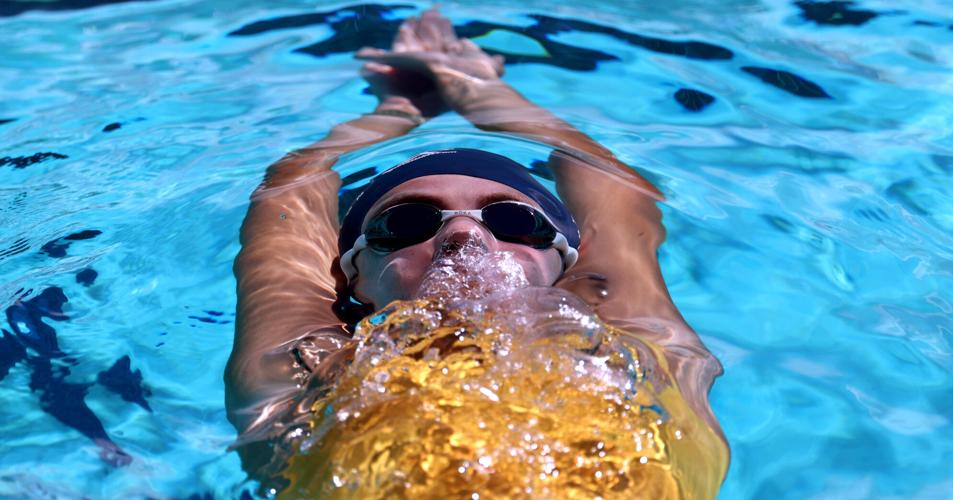
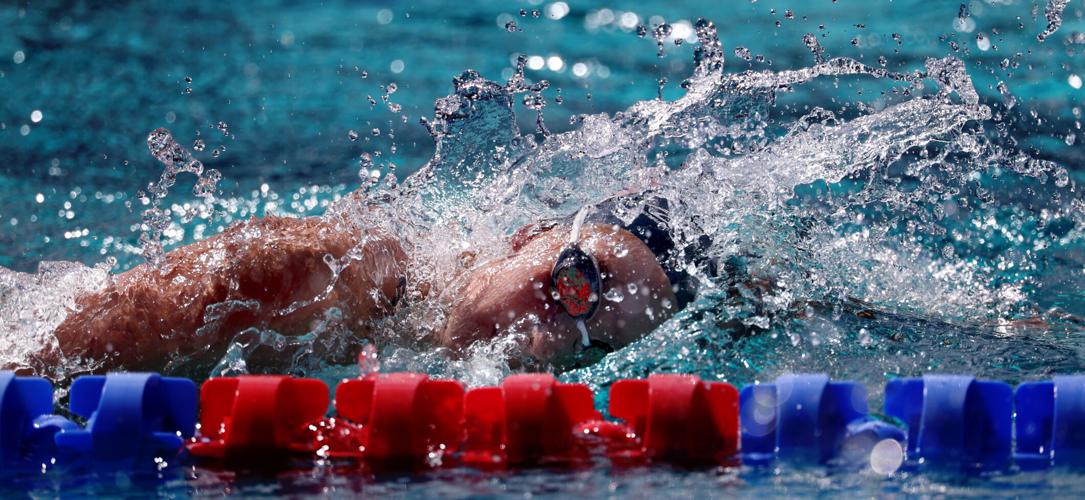
Ellison Wolfe swims through a lap or two of the backstroke during the University of Arizona’s triathlon team training at Hillenbrand Aquatic Center, Sept. 17, 2025. The team is preparing to host its first-ever meet in Tucson.
The way Johnson sees it, the type of race that UA will hold Saturday — all of it tightly wound around the east end of campus — could become a model for what’s ahead.
“Most college campuses don’t have a lake on it, so this is kind of what I see the direction going — more races on campuses so we can have that college feel,” Johnson says. “I think your championship races ideally are in the lake, but for home races or duels against another school like this, it just makes it so fun.”
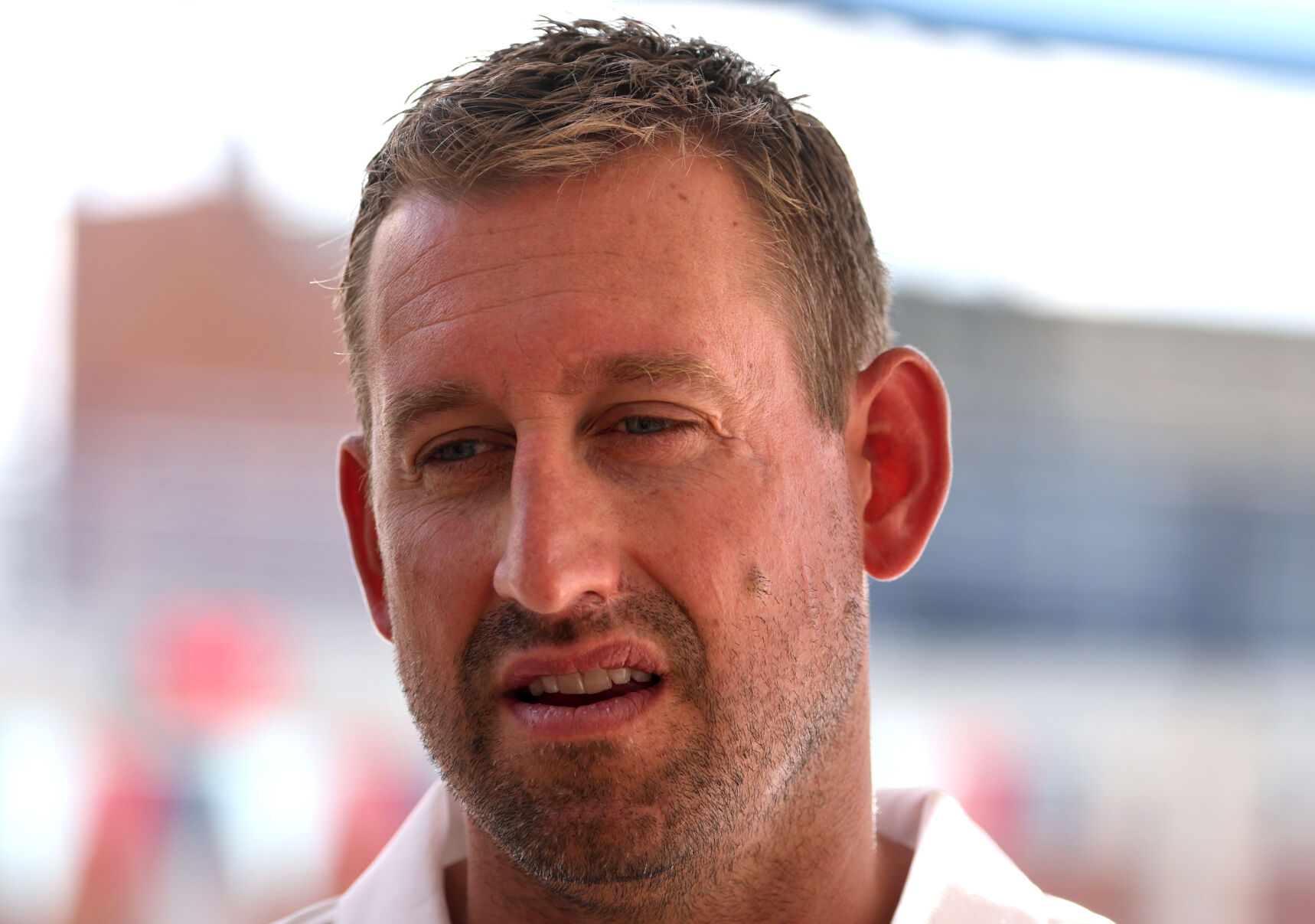
University of Arizona’s head women’s triathlon coach Wes Johnson answers questions at Hillenbrand Aquatic Center, Sept. 17, 2025.
It will be fun for the competitors and spectators alike, the way UA triathletes Kelly Lyn Wetteland and Molly Lakustiak described their home setup.
“It’s easy to see everything and it’s very fast,” Wetteland said. “It’s not like the usual hour of triathlon where you kind of watch everyone ride by and then wait for a little while.”
Before a UA team workout this week, Johnson, Wetteland and Lakustiak described exactly how it will look:
It’s actually a ‘tri-tri’
The first thing to note is that UA isn’t really hosting one triathlon. It will actually be three: Prelims, finals and relays.
(And also: The relays aren’t really a relay in the traditional sense. But more on that in a minute.)
The prelims are necessary because the UA pool is limited to 16 swimmers at a time, so there will be two prelim heats of eight competitors per team. All of them will swim 200 meters, then bike 4.64 kilometers and run 1.35 kilometers.

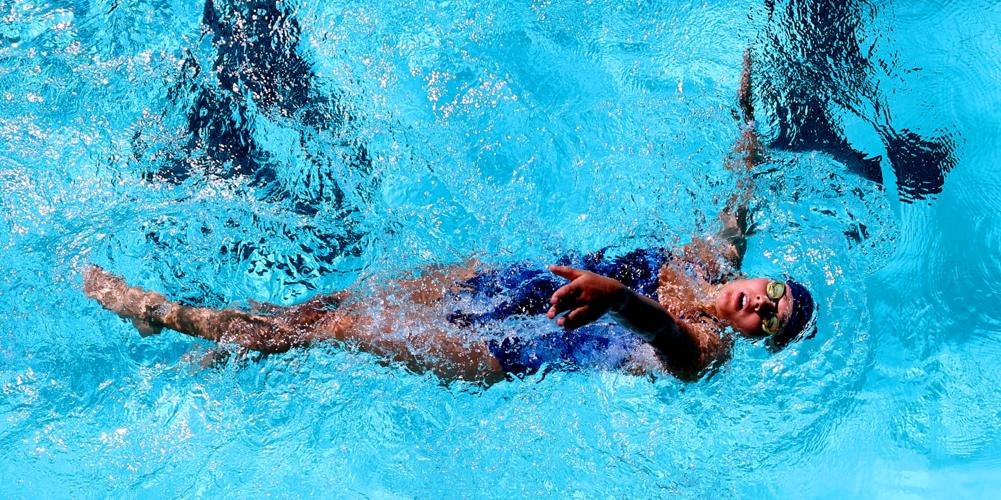
Sofia de Rosas swims freestyle while putting in training laps at Hillenbrand Aquatic Center with the University of Arizona’s triathlon team, Sept. 17, 2025, in Tucson.
The top six finishers from each heat, plus those with the next fastest four times, will qualify for the finals, in which the distances are doubled.
Then three three-person teams from each school will compete in the relays, which are essentially exhibition mini-triathlons involving a swim of 100 meters, a 2.5-kilometer bike ride and an 800-meter run. Each team will race one competitor through the entire course (not handing off to a teammate in between sections) before the next one can start swimming.
Relay results don’t count for the final scores, which are computed with the top five finishes in the finals from each team.
Transitions matter
After triathletes finish swimming, they’ll head into the walkway between the pool and McKale Center, where their bikes will be set up and waiting… while the clock keeps ticking.
In other words, how smooth they are getting into their shoes and clipping into their helmets matters every bit as much as the strokes they just finished.
“I think they often get a little overlooked because you always think of fitness in the swim, bike and run, but the transition can actually be crucial to make up time,” Lakustiak says. “I’m not the strongest swimmer, so a lot of times I’m playing catch up as soon as I get out of the water. So it’s kind of crucial for me to make up the most time there.”

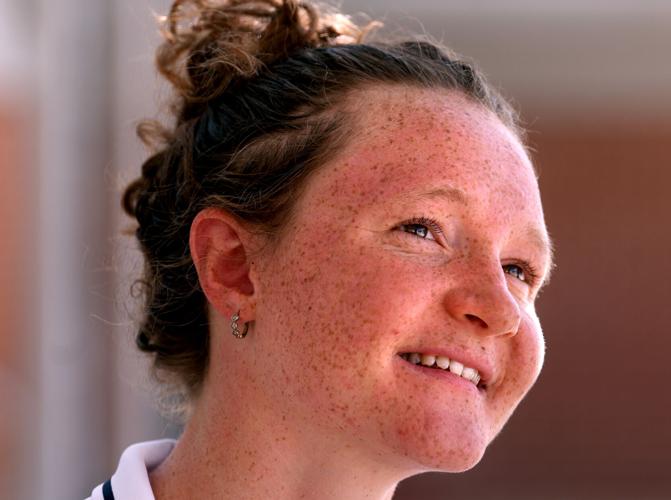
University of Arizona’s triathlete Molly Lakustiak answers questions at Hillenbrand Aquatic Center, Sept. 17, 2025.
After the bike segment, the triathletes will return to the transition area to swap shoes, remove their helmets … and ditch the bike properly.
Lakustiak says the swim-to-bike transition is hardest — “you’re going from horizontal in the pool to vertical, and also everything’s wet” — but the bike-to-run transition has its own challenges.
“When you get off the bike your legs are kind of fried,” Wetteland says. Then it’s “getting your shoes and making sure your bike is up (in a rack) because you can get a penalty that can kind of disrupt you.”

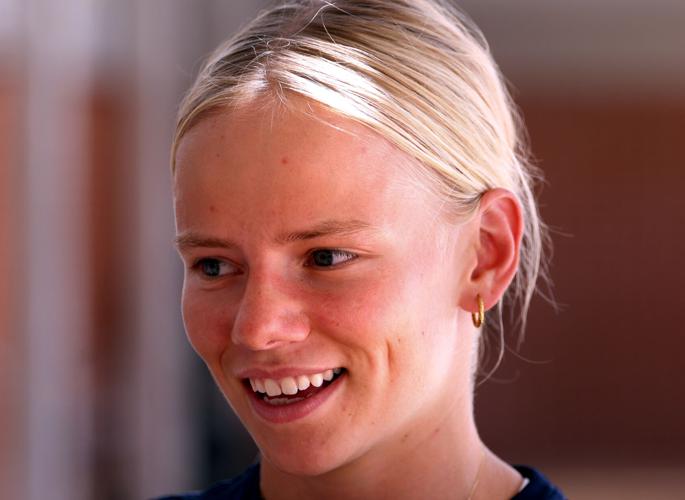
University of Arizona’s triathlete Kelly Wetteland answers questions at Hillenbrand Aquatic Center, Sept. 17, 2025.
Teamwork helps
While triathlon is an individual sport, team elements can be critical in college races.
With a veteran roster that returned nearly everyone from its national championship team last year, Johnson says the Wildcats know how best to deploy each triathlete’s individual strengths.
For example, he said, UA might ask its top runner to draft behind a top biker — riding alongside so as to gain an aerodynamic edge — subject to the competition’s efforts to break it up.
“That will allow them to save some energy, though in a pack, there may be some ASU athletes in there,” Johnson says.
Johnson says ASU, which will host the triathlon national championships on Nov. 8, is No. 1 in USA Triathlon’s college rankings, just ahead of UA. By now, both Arizona teams also know what each other’s strengths and weaknesses are.
“We’re like,’if that athlete is not as good of a cyclist, let’s tire that athlete out,’” Johnson says. “We want to tire them out so they don’t run as well.”
Accidents happen
Teamwork also helps when things are going wrong.
During last week’s Desert’s Edge Collegiate Cup in Colorado, UA’s Dana Prikrylova and Margareta Vrablova were involved in what Johnson called a “gnarly” bike crash, with a pack of riders from other schools literally running over Prikrylova.
In the bloody aftermath, Prikylova got up, noticed Vrablova was still stuck in a ditch, and hesitated.
“She was asking Are you OK? Do you want me to stay with you?’ And (Vrablova) said , ‘No, just go!’” Johnson said. “So she got back up, re-caught the group, and then did the whole run like that.”
While telling the story, Johnson punched up a photograph of Prikrylova finishing the race on foot, blood dripping down the left side of her face. She received 11 stitches in Colorado and will sit out Saturday’s race with a concussion, though Vrablova will compete.

Triathlete Margareta Vrablova takes her laps at Hillenbrand Aquatic Center during the University of Arizona’s training session, Sept. 17, 2025, in Tucson.
The viewing will be easy
Spectators taking in Saturday’s race can spend the entire time in the pool area, watching the swimming from the stands and then walking to the west-facing wall to look down on the transition area.
Or they can also make the short walk to the UA Mall to catch the running or biking close-up, or set up near the finish line at the arch between the north side of McKale and the Richard Jefferson Gym.
Whatever the case, they’ll get a chance to see a team that has never been showcased on its home surf-and-turf before.
Win or lose, that might be the Wildcats’ real accomplishment Saturday.
“We’ve had so many people express so much interest in our program after we won last year and even in our first year,” Wetteland said. “So to be able to show it to all the people we’ve talked to for so long is just really exciting.”

