


INDIANAPOLIS — After one of the best seasons in Arizona men’s basketball history, the memories were all lined up for center Motiejus Krivas and his teammates to choose from. Many of them may never escape their minds.
The favorite? Was it bursting into national consciousness with those three big early-season games against Florida, UCLA and UConn? Something along the way of that school and Big 12-record 23-0 start, like ignoring the frantically waving palm fronds at UCF or the frenzied students at BYU?
Maybe beating longtime nemesis Houston on its home floor to take control of the Big 12 race? The Jaden Bradley game-winner against Iowa State in the Big 12 Tournament?
Or the big breakthrough, their 79-64 win over Purdue in the NCAA West Regional final that put them in their first Final Four in a quarter century?
The answer, several Arizona players said in the immediate aftermath of their decisive 91-73 loss to Michigan on Saturday, had little to do with anything that happened on the floor.
It was their time together, forming a tight-knit group whose chemistry and interconnectedness helped them perform beyond expectations in 2025-26.
For Krivas, it happened in Casa Grande during a preseason retreat.
“It felt like a punishment that we have to be in one place, practice, and do all those culture things,” Krivas said. “But you realize now we had a lot of fun and we built our culture that led us to this moment. So I will look back at that moment of how together we got in that trip.”
The bonding was what seniors Jaden Bradley and Tobe Awaka spoke of, too.
“It's just the relationships that you've been able to create, the people, the staff,” Awaka said. “Honestly, it’s the best basketball environment that I've been in in my life.”

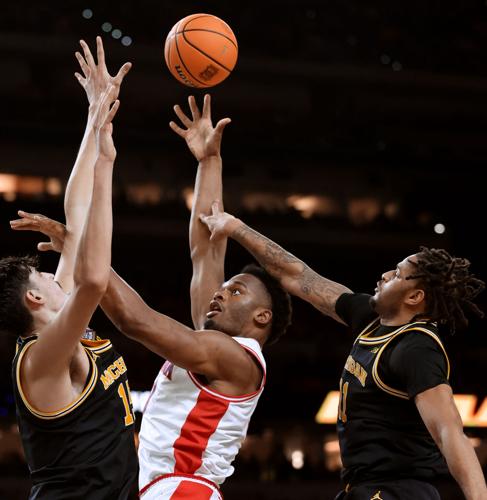
Arizona forward Tobe Awaka (30) splits Michigan center Aday Mara (15), left, and Michigan guard L.J. Cason (2)1 for a shot in the first half of their Final Four game.
After the Wildcats' season-ending loss to Michigan, Bradley spoke similarly.
“Sharing it with this group, on and off the court, building connections, building the culture,” Bradley said. “I'm just proud of the guys. From day one, we all had the same goals, checked off a couple. We weren't able to get the last one, but just so proud of the guys.”
Even freshman Brayden Burries, who began putting together a personal highlight reel when he went off for 28 points at Alabama in mid-December, said “being around each other” was the big highlight.
“There's a lot” of good memories, he said. “Probably JB’s game-winner against Iowa State or Tobe going off at home against ASU or even Franny hitting the 3 at the end of the game.”
“It’s little stuff like that that you’re gonna remember for the rest of your life. But I’m just thankful of just having fun and practicing, just being around each other.”
“Franny,” by the way, refers to walk-on Jackson Francois, who hit a 3 at the end of UA’s Oct. 27 exhibition game against Embry-Riddle.
That was toward the end of the first, and most publicly unknown, segment of a season that can be roughly divided into five parts that looked like this:
The build
While visa roadblocks kept Sudanese freshman Sidi Gueye from arriving at Arizona until the end of the summer, the Wildcats had already started working out together in July, crunching together an unusual mix of seven freshmen with four key returners: Krivas, Bradley, Awaka and wing Anthony Dell'Orso.
Then, before they held their preseason Red-Blue Showcase tipoff event, the Wildcats made the then-unannounced trip to Casa Grande to work out at Central Arizona College and spend a lot of time together.

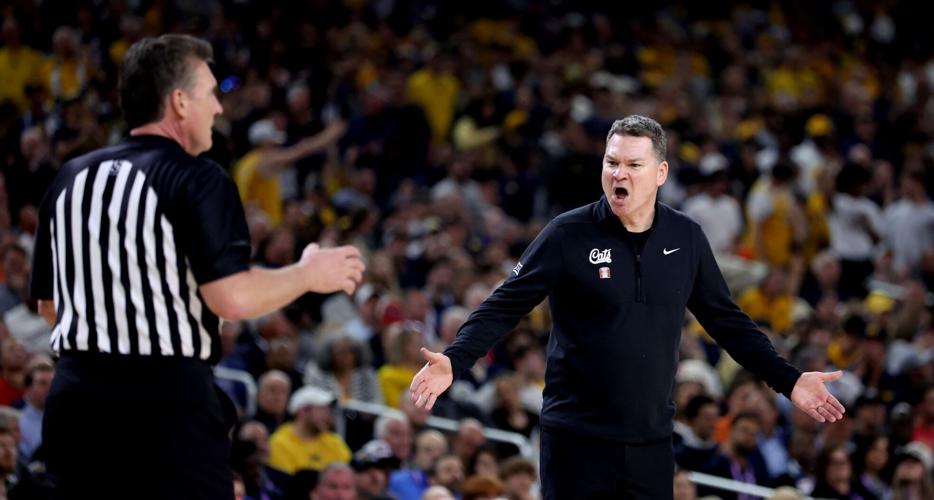
Arizona head coach Tommy Lloyd has a point to make after a non-call late in the second half against Michigan in their Final Four game in Indianapolis, Ind., April 4.
“That Texas Roadhouse there might be the best one in the country,” UA coach Tommy Lloyd said while disclosing the trip following UA’s 87-74 win over ASU on Jan. 31.
Krivas said the Wildcats had a lot of meetings, played a lot of pickup ball and practiced hard in Casa Grande. The results became apparent not then, but in the weeks and months to come.
“We built our culture there,” Krivas said. “I think building a foundation for us helped us this season. That moment was the most fun.”
Meanwhile, the final pieces slipped into place quietly before the Wildcats opened the regular season, with Awaka and Dell'Orso accepting moves to the bench after starting last season.
Awaka had been an honorable mention All-Big 12 pick as a junior in 2024-25, but the highly regarded Krivas was coming back from a foot/ankle injury that sidelined him most of last season, while five-star freshmen Koa Peat had arrived.
They needed spots. Awaka said he wasn’t sure exactly how it worked out, but said he was looking out for the best interests of the team.
“Internally, we know what we're trying to build, the pieces that we have,” Awaka said in mid-November. “I don't underestimate how hard Coach Lloyd’s job is. You have big-time talent coming in every single year and there's a lot of egos, there's a lot of skill sets you have to mix and match, you know? I'm just trying to make his job as easy as possible.”
The move was not only a key to building a workable rotation, but it also paid off for Awaka personally. He ran away with the Big 12’s Sixth Man award after averaging 9.3 points and 9.1 rebounds — while leading all of Division I in offensive rebounding percentage (20.2).

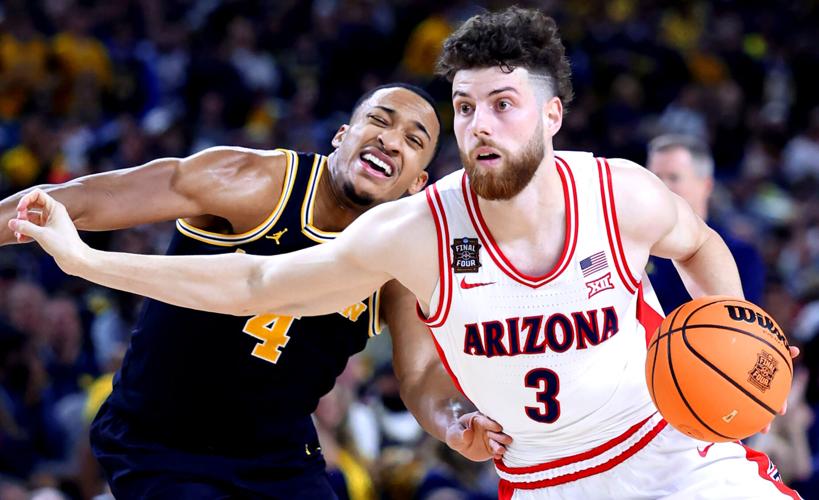
Arizona guard Anthony Dell’Orso (3) slips by Michigan guard Nimari Burnett (4) in the second half of their Final Four game on April 4.
Though Dell'Orso had been a starter for the first three seasons of his career, he adjusted quickly to the bench, hitting 4 of 7 3s in UA’s Nov. 13 win against UCLA while also showing an improved ability to get to the basket, something he said he did earlier in his career.
Slashing is “something that in the offseason that I’ve gained, this muscle and this understanding of the offense,” Dell'Orso said after the UCLA game. “It’s already been there. It’s just kind of been hidden.”
The takeoff
With Awaka and Dell'Orso coming off the bench, there was immediate certainty in the Wildcats’ frontcourt: Krivas didn’t have to worry about a role that was uncertain early last season, while former German pro Ivan Kharchenkov immediately took over at small forward.
That allowed UA to take advantage of Krivas’ dominance around the basket, Peat’s athleticism and Kharchenkov’s versatility on both ends of the floor.
Together, the front line showed its potential immediately: Peat dropped 30 points on Florida, while Kharchenkov added a double-double with 12 points and 10 rebounds, both in their first college games ever. Krivas added six points, eight rebounds and two blocked shots.
Still, it wasn’t clear if that was a one-off until Arizona beat UCLA in Los Angeles and then won at UConn before a rowdy, cheap-beer-night crowd in Storrs, Conn.
"I'd love to see what this place is on $1 beer night," Lloyd said. "You know, $2 beer night was pretty impressive.”
While the Wildcats established a dominant frontcourt in those three early big wins, Bradley’s leadership and clutch play were visible, seen especially in game-changing drives to the basket against UCLA and UConn.

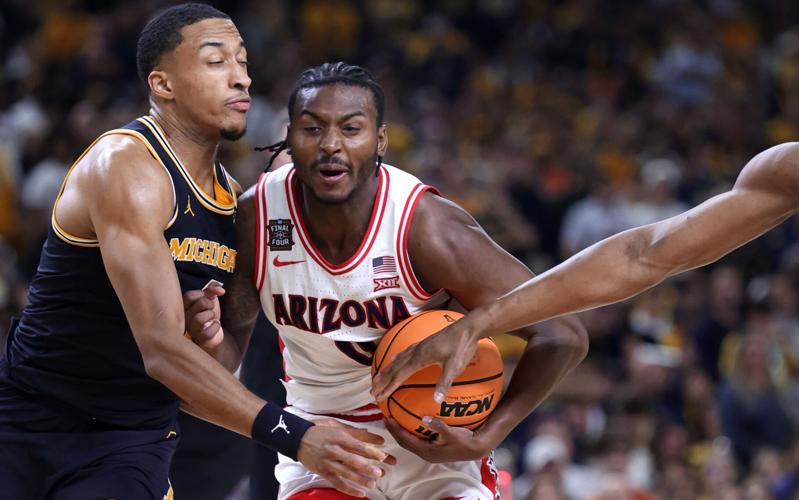
Arizona guard Jaden Bradley (0) tries to find the room to drive past Michigan guard Nimari Burnett (4) in the second half of their Final Four game April 4.
“The great thing about JB is that everything he does just equates to winning, not necessarily stats,” Lloyd said in December. “I really appreciate how consistent he is on a night in and night out basis.”
The records
When Bradley provided as-needed offense early in the season, that gave freshman Brayden Burries cover while he adjusted to high-level college basketball.
Peat had won four gold medals in international competition with USA Basketball and Kharchenkov had played in arguably the second-best league in the world, EuroLeague, but Burries’ experience was mostly domestic.
A five-star guard who scored 44 points in California’s Open Division championship a year ago, Burries averaged just 4.0 points while hitting just 1 of 7 3-pointers combined in UA’s wins over Florida, UCLA and UConn.
Lloyd said Burries simply needed “more at-bats,” and the freshman guard finally found his stroke on a mid-December night in Alabama. Burries entered that game shooting just 30% from 3-point range, and was only 1 for 10 against ranked teams, but went off for 28 points against the Crimson Tide.
Arizona won that game 96-75 and Burries never really slowed down after that.
En route to becoming UA’s leading scorer (16.1) points, Burries played a big role in powering the Wildcats to their school and Big 12 record 23-0 start, especially when he had 29 points while making 13 of 14 free throws in the Wildcats’ 86-83 win at BYU on Jan. 26. Burries also sealed that game when he blocked a late layup attempt from Cougar guard Robert Wright.
“Brayden came up with a big time defensive play, got the rebound and made two free throws,” Lloyd said. “It's a big-time finish for us.”
Burries also had 17 points, seven rebounds and four assists to lead UA to an 87-74 win at ASU on Jan. 31, breaking the Wildcats’ school-record start of 21-0. Arizona pushed its streak to a Big 12 record 23-0 by crushing Oklahoma State at home 84-47 at home on Feb. 7 before finally losing 82-78 at Kansas on Feb. 9.
The adversity
One reason for the Wildcats’ 23-0 start was that none of the Wildcats’ eight rotation players had missed a single game to that point. Kharchenkov struggled off the court with an ankle injury on Nov. 29 against Norfolk State but returned for the Wildcats’ next game against Auburn on Dec. 6.
But during the Oklahoma State win, Peat had a lower-leg injury flare-up. While he tried to play through it two days later at Kansas, he was 2 for 10 from the field and the Wildcats wound up losing their first game of the season, 82-78.
Peat tried again on Feb. 14 against Texas Tech but didn’t take a shot in 11 minutes and left the game in the first half. UA lost that one 78-75 in overtime, while Peat sat out the next three games.
Forward Dwayne Aristode, the Wildcats’ eighth player, also missed the Texas Tech game and the next three while he suffered from an undisclosed illness.
But the Wildcats quickly adjusted, with Awaka, Kharchenkov and Dell'Orso all playing bigger roles. Dell’Orso even scored season-highs of 22 points in both UA’s wins against BYU on Feb. 18 and at Houston three days later.
Importantly, Dell'Orso also soaked up 34 minutes against the Cougars, even returning to the floor despite suffering a medium-grade ankle sprain late in the game.
The Wildcats’ win at Houston gave them control of the Big 12 race, which they wound up winning by two games, allowing them to snip the McKale Center nets after a March 2 win over Iowa State. It also snapped a streak of three straight losses to the Cougars, dating back to the 2022 Sweet 16.

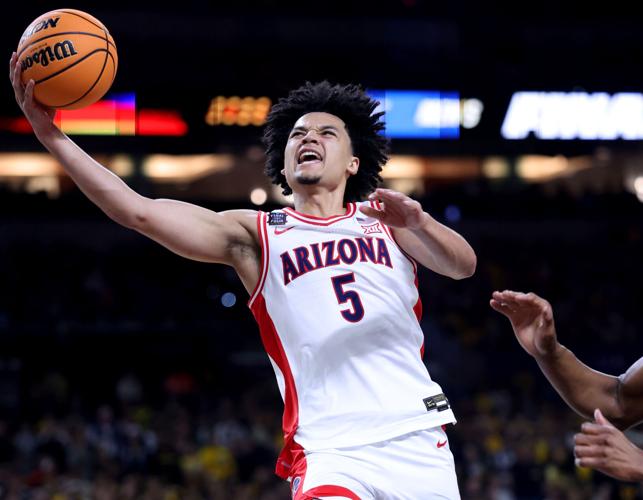
Arizona guard Brayden Burries gets to the basket on a break to score on Michigan in the second half of their Final Four game in Indianapolis on April 4.
“We put ourselves in position to be in position,” Lloyd said at Houston. “Now you've got to go take advantage of it."
The breakthroughs
Beating Houston was only the first of Arizona’s breakthroughs late in the season. The Wildcats also swept another team that spent most of the season in the Top 10, Iowa State, asserting dominance in the rugged Big 12.
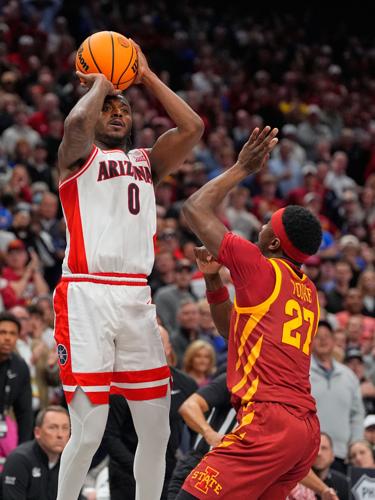
In the second matchup with the Cyclones, Burries missed all seven field goals he took, but Bradley popped up again at the most critical time: At the end of a riveting second half, when he cleared out teammates from the top of the key, then drove right and hit a buzzer-beating 17-footer over the close defense of Cyclone guard Killyan Toure.

Arizona's Jaden Bradley makes a game-winning basket over Iowa State's Killyan Toure at the buzzer to defeat Iowa State during the semifinal round of the Big 12 Conference tournament on March 13 in Kansas City, Mo.
“That's stuff you dream about in your backyard, counting down and hitting the shot,” Bradley said, shaking his head.
A day later, Arizona beat Houston again and it was clear: There was nobody better in the Big 12 this season, even the Cougar team that had dominated it since moving from the American Athletic Conference in 2023-24.
“When anyone talks about Big 12, first of all, they talk about Houston,” Krivas said. “It was a standard, their program, how they play. Of course, it’s great to beat them.”
While the Big 12 Tournament title re-validated their credentials as the league’s best team, the Wildcats didn’t really need it to get the West’s No. 1 seed. That was already locked up, probably after they came back from a two-point deficit to beat Colorado in their regular-season finale — and definitely after beating Iowa State in the Big 12 Tournament.
The next step they needed, the real breakthrough, was a barrier Arizona hadn’t been able to cross for nearly a quarter-century: Into the Final Four.

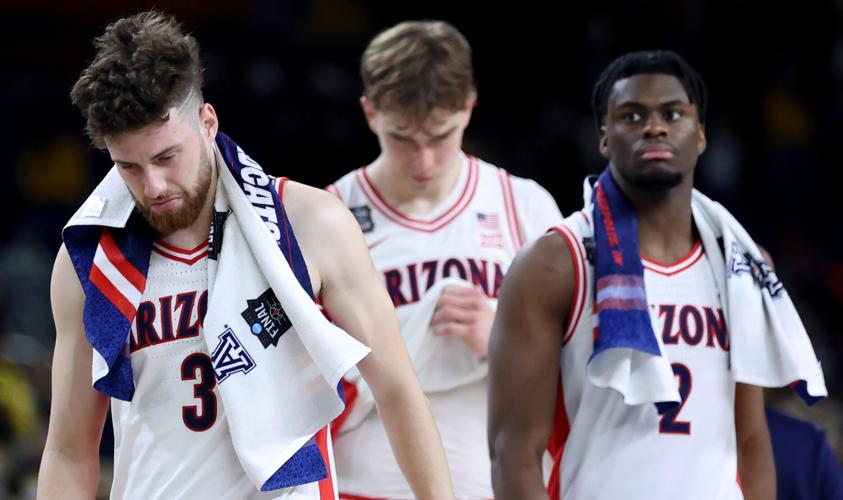
Arizona guard Anthony Dell’Orso (3), left, center Motiejus Krivas (13) and guard Dwayne Aristode (2) head off the court shortly after the final buzzer and their 91-73 loss to Michigan in their Final Four game, Indianapolis, Ind., April 4.
But after three of Lloyd's first four UA teams ended their seasons in the Sweet 16, this time the Wildcats tore through Arkansas’ shoddy defense in a 109-88 win on March 26.
That set up an Elite Eight game that Wildcats fans had plenty of reason to be anxious about.
UA had lost five straight Elite Eight games and, when Purdue hit 7 of 14 3-pointers to take a seven-point halftime lead, a sixth was all but queued up. But after a brief halftime talk, Lloyd said he left the Wildcats alone to figure out a response … and the Wildcats won by 15 points.
“In the second half, we just played fearless,” Dell'Orso said. “At the start, we were playing a little tentative, worrying about the outcome and trying to play it safe a little bit.
“We came in at halftime and we just said, 'There's nothing to be scared of. It's just another game. We've already achieved so much, so just play.'”
After a week of adulation and media attention swirling around them, the Wildcats couldn’t gather a similar response against Michigan in the national semifinals.
The Wolverines took a 16-point lead and, while Arizona had come back to win seven times after trailing at halftime, the Wildcats on Saturday issued no response.
They trailed by 30 midway through the second half, their otherwise overwhelmingly successful season screeching to a halt.
Afterward, Lloyd said he wished he had another crack at the Wolverines to better figure them out, but there’s no telling when that might happen.
Just like there’s no telling when the Wildcats will get back to the Final Four again.
Will it be another quarter-century? Or an every four or five-year type of thing, as it was for much of the Lute Olson era.

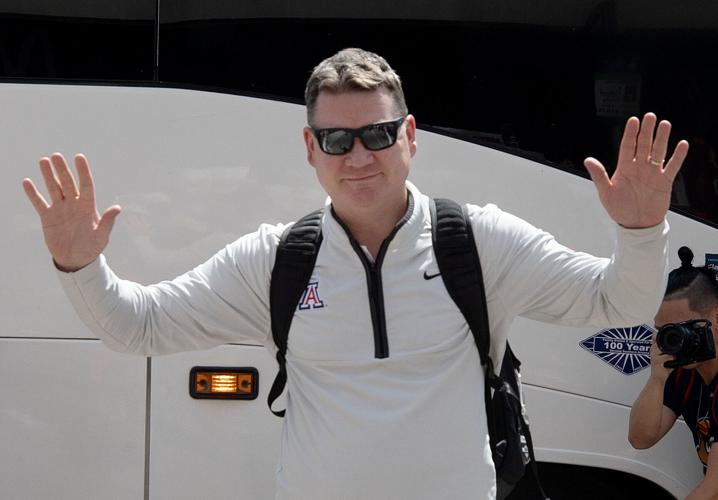
Coach Tommy Lloyd greets fans as they cheered upon the return of the Arizona men’s basketball team at McKale Center on April 5. Fans greeted the team from Indianapolis after their Final Four loss to Michigan the night before.
Lloyd said he has even more frequency in mind.
“Let's all roll up our sleeves, support each other and see if we can make this a normal thing,” Lloyd said in his postgame news conference Saturday night. “I thought one day, 'Man, I can't wait until we get to a Final Four … so I could just coach and I don't have to worry about any of your guys' narratives or anything.
“But then the first thing that popped to my head was, 'One Final Four? Why don't we go five times in 10 years?' That's where my mind's at …. That's my big dream.”

