


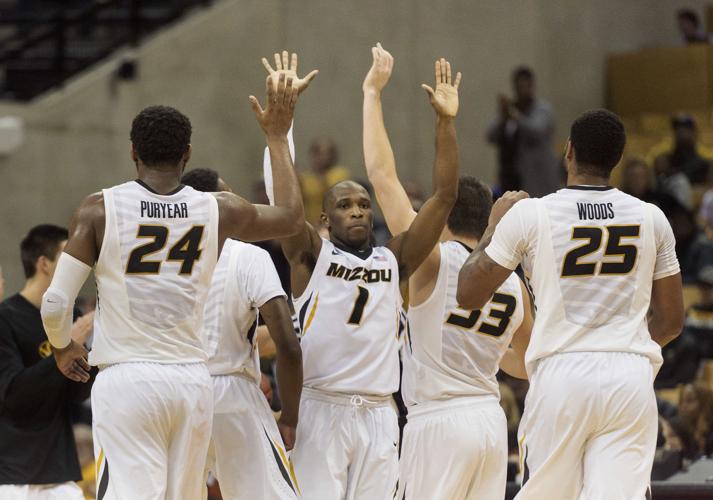
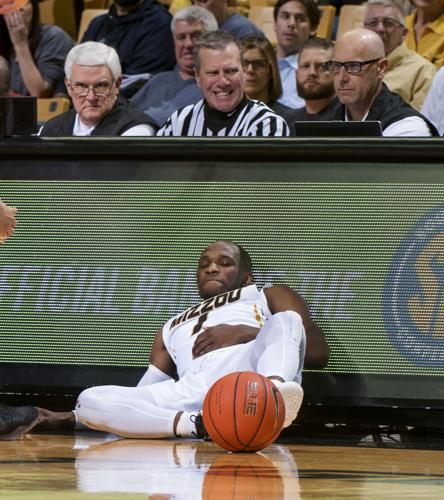

There are times Terrence Phillips’ Twitter feed reads like a promotional blitz for Missouri basketball.
Some examples from just the past few days:
- “So Mizzou fans and Students...... can we make it feel like The ZOU on Saturday???”
- “Everyone is always talking about I miss when Mizzou arena (used) to rock...... well, come out and make it rock and we will rock with you”
- “Mizzou students I know it’s the weekend before finals but I’m asking for 2 hours!”
- And, with an attached GIF of a giddy-looking kid wearing Mizzou gear, Phillips asked: “Hey Mizzou students did I mention that the first 500 students get free Chick-fil-A breakfast for Saturday’s game.”
The push is understandable for two reasons. One is that Phillips, the younger brother of former UA signee Brandon Jennings, is a born leader who has already taken over the Tigers as a sophomore.
His Twitter handler, after all, is @FloorGeneral03.
The other reason: Missouri needs all the promotion it can get. The Tigers won only 19 games over the first two years of coach Kim Anderson’s rebuilding job, and were drummed out of McKale Center 88-52 last season.
Not only did that game stick in Phillips’ mind, but so did the crowd, further igniting his passion for promotion.
“It’s not something new. I’ve always been pushing to get our students at the game,” Phillips said. “The love and support means a lot. I remember walking into Arizona and seeing the students go ballistic. They were great.”
Winning helps, of course. That’s the problem at Missouri. The Tigers averaged just 6,295 fans last season at 15,061-seat Mizzou Arena while winning 10 games, down from the half-full scene (8,064) they averaged in 2014-15 while winning nine.
For five nonconference home games so far this season, they’re averaging 4,166 fans.
It doesn’t help in the short run that Missouri plays in the SEC, nor that the Tigers are running into Arizona for the third straight season.
Nor does it help that five more guys transferred out of the Tigers program last spring, giving Anderson a roster flushed out with solely his own recruits but also precious little experience.
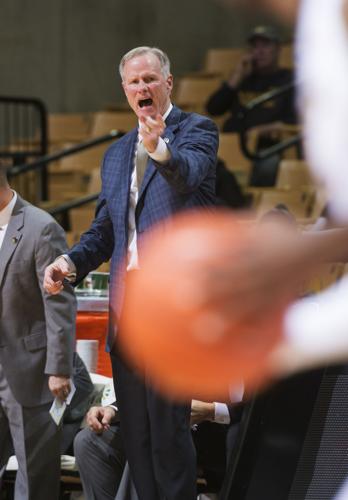
“It’s a great group of guys, but we’ve had a complete roster flip,” Anderson said. “We have no one who was here when I got here two years ago. So we have our growing pains and moments where we’re not so good. We’re getting ready to face up against one of the best teams in the country and when we’ve played them the last couple of years we haven’t been that competitive.”
UA coach Sean Miller can relate.
In a different way, he had to rebuild the Wildcats for the better part of four seasons — if you consider UA’s 2011 Elite Eight season an exception due in part to Derrick Williams’ surprise stardom — and he watched former aide James Whitford break through with 21 wins at Ball State last season after he won 11 combined in his first two seasons.
“You sign up for that rebuild and not everybody’s going to stick around to rebuild,” Miller said. “It’s so hard right now and at every level, too. It’s not like you recruit a class, then they come back as sophomores, then you recruit again and you have your team.
“Well, a lot of times those guys leave and there’s unexpected things. At (Whitford’s) level, a player might transfer up. It’s so much of a one year at a time deal.”
In Anderson’s case, the Tigers lost players he inherited and recruits who had been recruited by previous coach Frank Haith but then signed with Anderson without either party knowing each other well.
It’s not unlike the way the UA suffered transfers such as Zane Johnson, who signed with previous staff, and then lost players such as Josiah Turner, and Daniel Bejarano, who signed with Miller despite not having a long relationship.
Also somewhat like Miller, Anderson has suffered some unexpected losses that appeared at least in part due to outside influences. UA lost Craig Victor to LSU in January 2014, despite having said a month earlier about his limited playing time that “I know I’m getting better; that’s all that matters.”
Anderson says he’s found things change over spring breaks, too.
“They’ll say ‘We’ll be back, coach. We’ll be back,’” Anderson said. “Then they go home for spring, and they’re transferring. What happened? ‘Ah, well, I talked to my parents.’”
Sometimes they talk to others, too. Anderson, a former Missouri standout player who was a longtime assistant for the Tigers under Norm Stewart, said not only do today’s players more often seek instant playing time, with a goal of reaching the NBA, but they now have bigger circles of family members and other advisors.
“I think a lot of times young men have more people in their ear than 15, 20 years ago,” Anderson said. “I came from Division II, and you didn’t have that many people who were helping a young man through the recruiting process.”
The good news for Anderson is that this season, finally, he has a roster full of players he recruited entirely. He said he went out seeking players who would buy into his vision of “hard-nosed, fundamental basketball.”
Phillips was among the first he found, a star high school quarterback from Orange County that had no real aspirations of trying to follow his brother into the NBA.
“I really didn’t think I’d ever be at Missouri playing basketball,” Phillips said. “I thought I’d be playing football somewhere in the Pac-12.”
Phillips said he received some good recruiting attention in football, including from Pac-12 schools, and was projected to move from quarterback to running back in college. But instead, he opted to play basketball at Oak Hill Academy.
There, Phillips was only a three-star recruit, but he caught Anderson’s eye and, during the middle of Anderson’s tough first year, committed to the Tigers.
While Anderson had about a year to get to know Phillips before he signed, there was no waiting period when he arrived. Anderson had to immediately put him to work.
“He’s had to be a leader at a young age and take on a little more responsibility than a freshman normally has to take,” Anderson said. “We’ve played him a lot. He’s made some really good decisions and some that him and I have had to discuss. But he’s a great kid.”
Now, finally, Anderson has a whole team of guys he knows well, that he’s developing, that he’s hoping will help turn the Tigers around.
They’re on the same page now, even if it appears a bit tattered at times.
“This is a great group that we recruited, and I know them a lot better,” Anderson said. “We’ve been able to develop a relationship with them and they kind of know what we expect. The next step is playing better.”

