


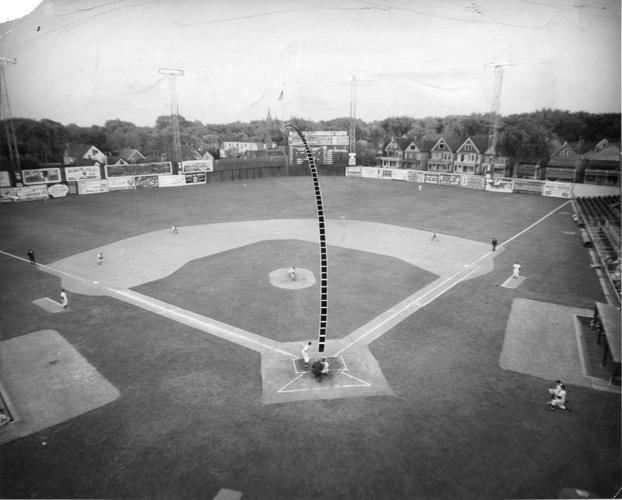
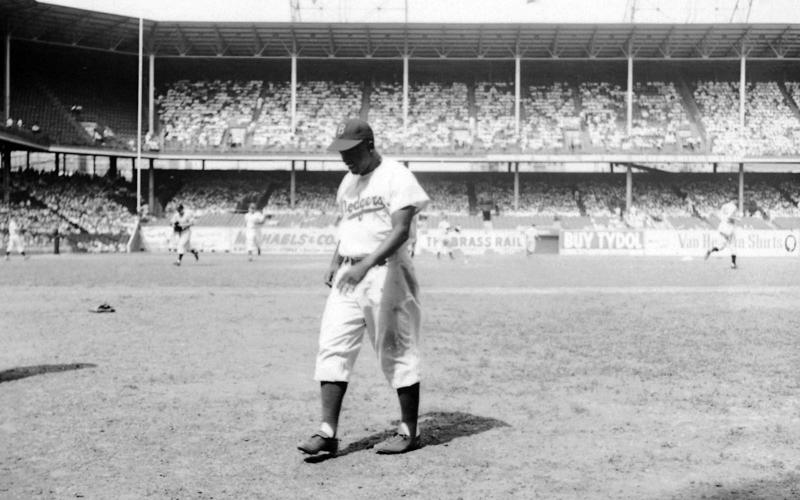
This was the spot. Seventy-four years ago this week, a few strides from where some old friends converged the other day on East Ferry Street, Jackie Robinson of the Montreal Royals hurtled down the third base line at Offermann Stadium.
To the shock of a lefty Buffalo pitcher named Ted Gray, Robinson stole home, a central reason Buffalo Evening News sportswriter Cy Kritzer described him in the next day's paper as “amazing.” It was only eight months before Robinson shattered Major League Baseball's onerous "color line," a moment of such courageous significance that big league baseball designated Friday as its annual Jackie Robinson Day in this pandemic-altered season.
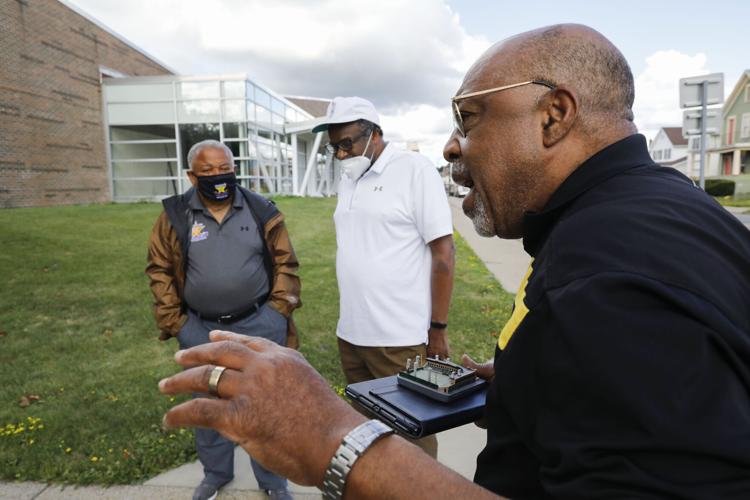
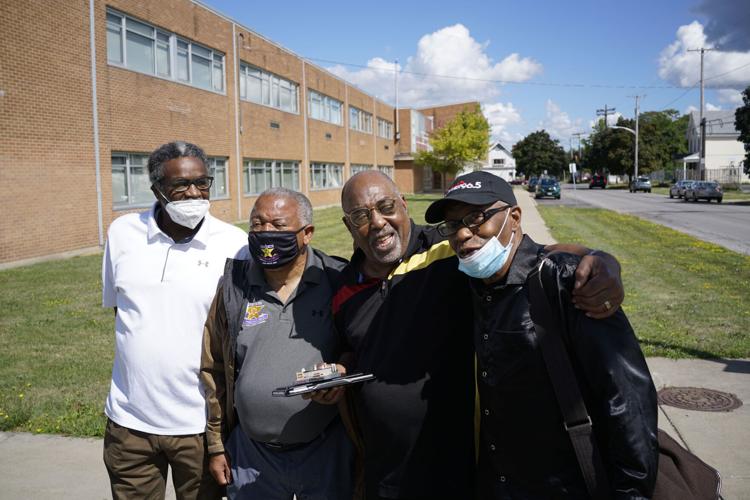
Offermann is long gone – indeed, the final game there was 60 years ago next month – but Charlie Wilson, a lawyer and a youth baseball umpire, had his reasons for inviting me to walk its phantom perimeter. The temporary arrival of the Toronto Blue Jays in Buffalo has Wilson thinking of larger messages from the game. He was joined by veteran schools administrator Gilbert Hargrave, longtime coach and youth volunteer Vernon Duncan and Lee Pettigrew, a Power 96.5 DJ with 40 years in local radio.
While too young to remember Robinson, they all were raised close to Offermann. As children, they grew accustomed to the musk of cigars and hot dogs from the ballpark. They knew this spot in the ballpark fence on Masten Avenue: Time it right, lift the chain-link and crawl like mad and the attendants would act as if they did not see you coming.
Wilson called because he and his companions, all in their mid-60s to early 70s, had a reflection that fits well with a Jackie Robinson Day of particularly intense meaning. Many professional athletes - including the Blue Jays and Red Sox in Buffalo - declined to compete Thursday as part of an ongoing national statement after Jacob Blake, who is African-American, was shot multiple times in the back by a police officer in Wisconsin.
To Wilson, you find evidence of the same aching American ravine in struggle and estrangement within his old neighborhood, where men and women of different working-class backgrounds once lived side-by-side. But a middle-class exodus from what Hargrave called "a lively community" hurt many African-American families facing what he came to learn were silent obstacles to many professions and communities. On East Ferry, the old friends spoke of how they almost never see baseball played casually on the streets where they grew up, a small symptom of the forces eroding bonds of vitality.
Looking back on his youth, Duncan recalled walking to play pickup games at Delaware Park, before the Scajaquada Expressway became a treacherous barrier and the Kensington Expressway flattened another layer of their childhood terrain.
“Once they put in the 33,” Wilson said, “the big break for the suburbs was on.”
They remember when Woodlawn Junior High – today's Buffalo Academy for the Visual and Performing Arts – was built on the spot that once held Offermann. In the early 1960s, the school district planned to make the student body almost entirely African-American, an effort that led Dr. Lydia Wright, the school board's first person of color, to push back – resisting what she saw as another way of cementing institutional segregation.
The destruction of the ballpark sent the Bisons to the old War Memorial Stadium, a structure whose dimensions were not built for baseball. Without a suitable home, the team eventually left town, leading to a void when Buffalo had no pro baseball at all.
Walking toward Woodlawn Avenue, Wilson and his friends recalled how spectators in the Bisons heyday of the late 1950s watched from upper-floor porches bordering Offermann, and how some neighbors made a few dollars on the side by parking cars.
Yet the most powerful aspect of that ballpark, in shared memory, was the daily affirmation from all those players and coaches and team administrators who made the neighborhood a centerpiece of their baseball lives.
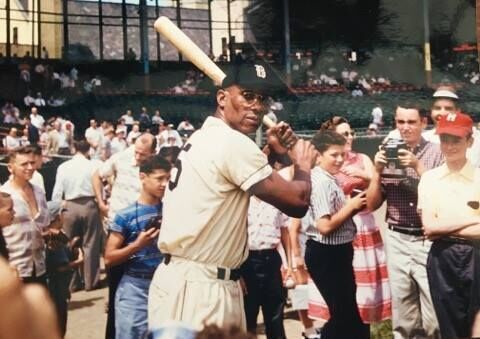
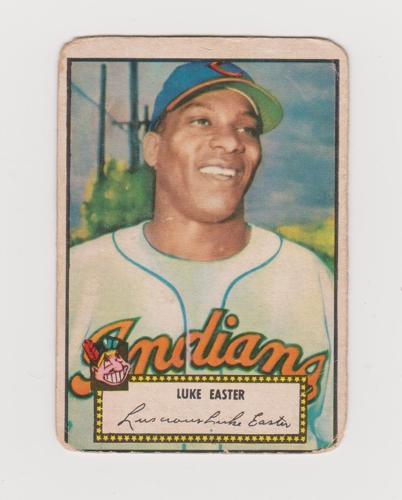
Consider, said Wilson and his companions, the presence of Luke Easter. He was the first African-American to play for the Bisons since Frank Grant in the 1880s, joining the team about eight years after Robinson shattered baseball's racial barrier, though the Indianapolis Clowns – a Negro Leagues team that briefly had a young and ascendant Henry Aaron on the roster – also called Offermann home for a few years.
Easter lived on Northland Avenue, not far from where he suited up. He would sometimes stop at Anna’s, a nearby tavern, Wilson said, proving himself a part of the neighborhood rather than distinct from it. In the same way, the great slugger routinely paused outside the ballpark to kid around with children in the street.
“We saw what they were doing with their lives, and we knew somehow we wanted to be like them, even if we didn’t know exactly what we wanted to do,” said Pettigrew, who said his aunt was a Bisons loyalist who used to watch the team from a third-floor porch.
Wilson and Duncan showed up last week for a ceremony at the Johnnie B. Wiley Sports Pavilion, built atop the old War Memorial. They listened as writers and editors involved with “The Seasons of Buffalo Baseball,” a new book on the city’s baseball heritage, promised to use some of the proceeds for a baseball-inspired mentoring effort overseen by staff and volunteers from the Wiley Pavilion and the Willie Hutch Jones Educational and Sports Program.
Jones, in a few brief remarks, spoke of how history and memory are important – but what matters for neighborhood children, more urgently than ever, is what comes next.
There it is. To Wilson and his friends, it is the imperative for honoring Jackie Robinson. “That was big-time, what he went through,” said Duncan, speaking of the abuse Robinson endured simply to play a game. Even now, they know the easy mistake is to freeze that accomplishment in time, to see Robinson's struggle as rigid and one from long ago.
Wilson asked out loud: Why did so many white ballplayers and fans resist Robinson? It was senseless fear based on what they never experienced, what they did not know. While Robinson shouldered relentless cruelty to help bring down those walls, Wilson looks at his childhood neighborhood as it is now and understands how such division and separation carries an escalating cost.
“The same fear,” he said, “is what gets people shot.”
Robinson’s sacrifice, Wilson said, was always about something beyond baseball. The goal involves the ongoing American journey toward a breakout way of life for suffering communities, which means there is far more about this day than looking back to say of Robinson: What great things he once did.
Wilson sees the mission as confronting every institutional choice that amplified mistrust – whether it is a beloved ballpark brought to dust for suspect reasons or expressways dropped like bombs on once-vibrant neighborhoods or civic commitments that say everything about how much a child matters – and to start thinking, collectively, of the work required to forge a way ahead.
“We were all in it together," Wilson said of the neighborhood he knew as a kid. At Ferry and Masten, there was a quiet grandeur that still offers inspiration, such as Jackie Robinson breaking from third and against all odds somehow finding home.


