


LOS ANGELES — While bouncing between courts at a club-ball recruiting event in Mesa late last April, Arizona coach Tommy Lloyd had just seven players lined up for this season, inducing panic among fans who were already livid over a first-round NCAA Tournament loss to Princeton.
“I think we’re in great shape,” Lloyd said then. “People will be really happy.”
Three months later, his roster had added considerable young international talent and domestic experience, most notably transfers Jaden Bradley (Alabama), Keshad Johnson (San Diego State) and Caleb Love (North Carolina).
Then Lloyd mixed them all together during an August exhibition trip to Israel and the United Arab Emirates and, about a month after returning home, the Wildcats were voted the No. 12 team in the Associated Press Top 25 preseason poll and atop the Pac-12’s official preseason poll.
They wound up finishing pretty much in exactly those places. But the way the Wildcats stormed out to start the regular season — winning at No. 2 Duke in the second game of the regular season, rising to the top spot in the AP poll and crushing a ranked Wisconsin team in early December — ratcheted up expectations
Especially with the Final Four being held in Glendale, it wasn’t hard to envision Arizona winning its first national title in 27 years.
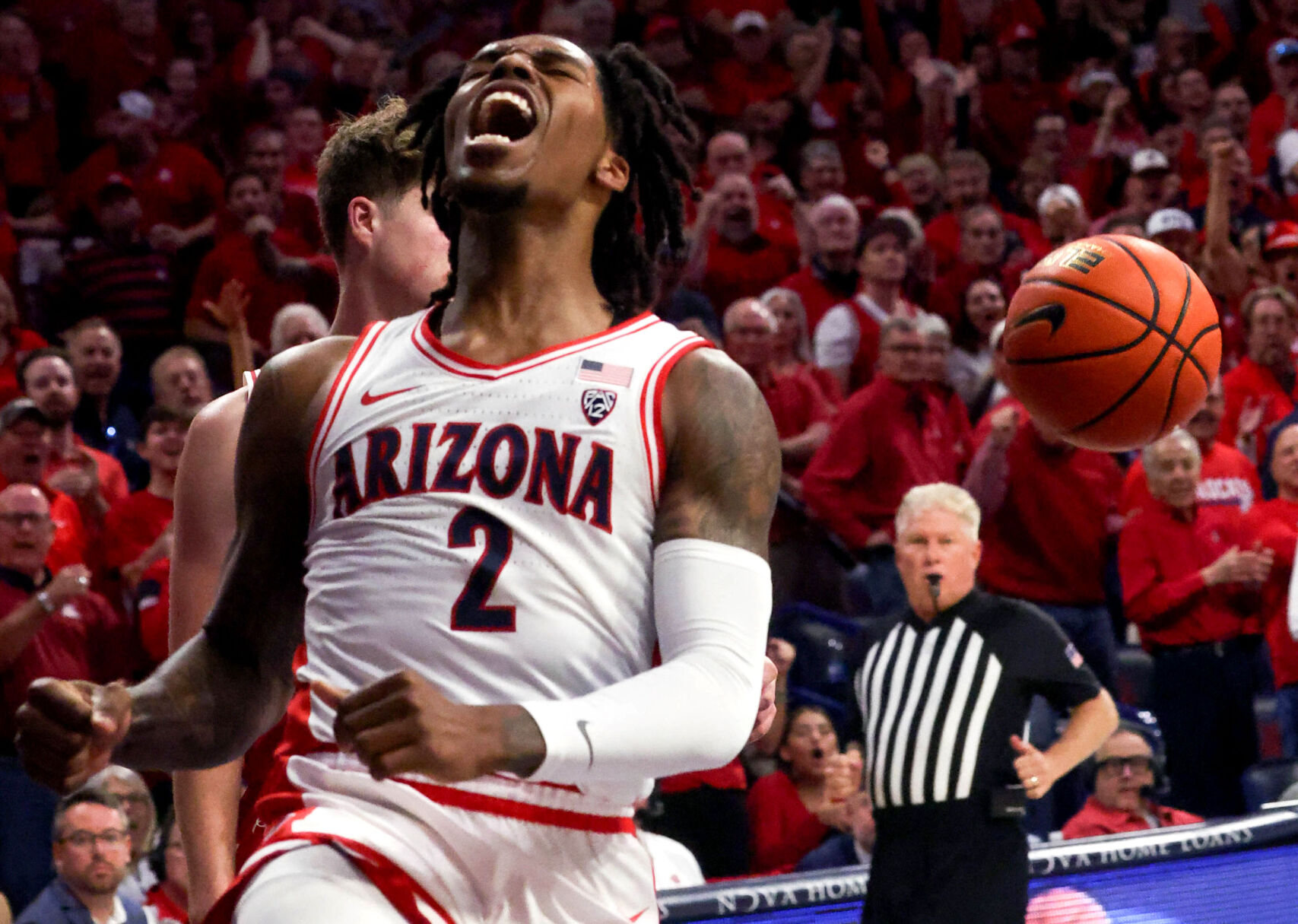
Arizona’s Caleb Love screams in celebration after a dunk during the rout of a ranked Wisconsin team at McKale Center on Dec. 9. Love would go on to win Pac-12 Player of the Year honors for the conference champion Wildcats.
But the Wildcats didn’t even make it to Glendale. They went home after losing 77-72 to Clemson in the Sweet 16, not one but two wins short of the Final Four and four wins short of a national title.
They know, on one level, that’s not good enough.
“Arizona has a higher standard,” center Oumar Ballo said. “If you don’t make it to the Final Four, if you don’t win the ‘chip,’ it’s not a successful year. Some programs will say that (it is) with a Sweet 16 but we have a higher standard.
“This was not a failure by any means. But it was not a success either.”
So what was it?
Maybe the Arizona Wildcats’ season is best described as just another example of modern-day mandatory spring roster rebuilding, with a quick takeoff, a leveling-off period and a March Madness-style descent into what Ballo calls a “great teaching lesson for our coaching staff and players.”
A journey that can be described in five parts:
1. Assembly required
Even without a single returning starter around him at the end of April, Ballo said he wasn’t worried Lloyd would find talent to help him out.
“We trusted Tommy,” Ballo said. “We knew he was gonna put us in the best way to succeed and I had no doubt that he was gonna fill out a roster and get the best guys to work with. We had like four guys on the team but I knew in the next couple of weeks we’re gonna have like 10 guys.”
Sure enough, a little over a month after that April club ball event, Lloyd had added Bradley, Love, and Johnson plus Lithuanians Paulius Murauskas and Motiejus Krivas and Spanish point guard Conrad Martinez.
Lloyd had recruited Bradley out of high school, so had a relationship with him after he left Alabama following his freshman season in 2022-23. Love appeared back in the portal after academic credits became an issue in his intended transfer to Michigan, while Johnson became an especially marketable free agent after graduating from San Diego State with an NCAA title-game appearance last season.
They all brought vastly different skill sets to what was probably Lloyd’s most versatile and deepest roster yet at Arizona.
“I don’t think we’ve got a lot of guys with jagged edges,” Lloyd said in June. “I think we have a team that’s going to have the ability to play incredibly hard. We’re gonna strive to play incredibly unselfish and very aggressive.”
2. Middle East mixer
College teams are allowed to take foreign exhibition tours every four years, but Arizona hadn’t taken one since August 2017, when it cut its Spanish trip short after a terrorist drove a van down Barcelona’s famed Ramblas and killed 13 people.
The timing and location to try again proved ideal. The Wildcats took advantage of the 10 pre-trip practices in July and August to begin meshing together on the court and then took off for Israel and the United Arab Emirates for 10 days in August.
They played only three games, using most of their time to tour places such as Jerusalem’s Old City, Bethlehem, and Abu Dhabi’s out-of-this-world Grand Mosque while riding camels and spending one afternoon bobbing in the Dead Sea. (Actually, that day it was so hot outside and in the water, that the Wildcats trudged out of the Dead Sea after about 30 minutes, then spent the rest of the afternoon lounging in a nearby resort pool).
In between basketball and sightseeing, the Wildcats held meetings in which Lloyd spoke not only about local culture and history but also Arizona basketball history and culture.
Meanwhile, they spent meals together passing around unfamiliar dishes, enjoying a Shabbat dinner at a Jerusalem hotel, visiting a Palestinian Christian family for a home-cooked meal and meandering through the food stalls of Tel Aviv’s Carmel Market, all while learning about each other at the same time.
Thirteen players, from a total of seven different countries, all meshing together.
“It was my first time leaving the United States and with some people I wasn’t familiar with,” Johnson said. “We had a lot of foreign players on this team and I learned a lot from them. And I gained brothers for the rest of my life.”

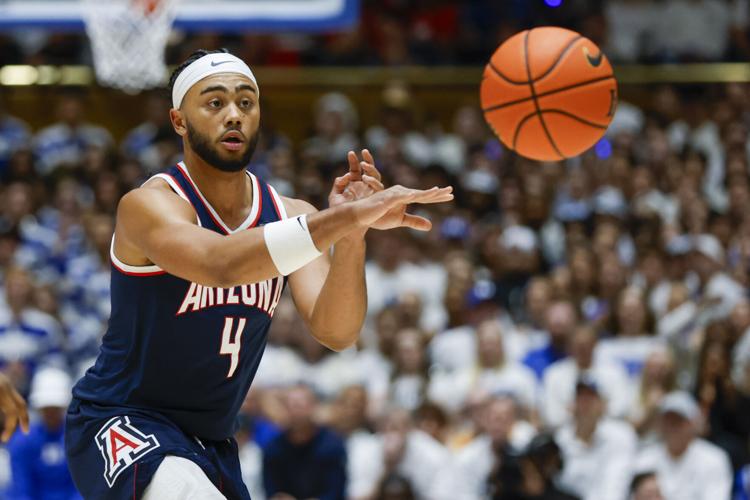
Arizona guard Kylan Boswell passes against No. 2-ranked Duke in UA's November win in Durham. Boswell was often at his best in big Wildcat wins, but then all but disappeared in some losses.
3. Rocket ride
Maybe because of their head start and team bonding in the late summer, or maybe because Lloyd’s teams have always been strong out of the gate, Arizona blitzed to an 8-0 start through early December. The Wildcats scored more than 90 points in five of those eight wins while displaying the sort of free-flowing, fast-paced, ball-sharing offense that kept everyone happy.
And, because one of those wins happened to be a 78-73 victory at Duke on Nov. 10, the Wildcats took over the top spot in the Associated Press Top 25 poll on Dec. 4. Then they affirmed it with a 98-73 thumping of No. 23 Wisconsin on Dec. 9 at McKale Center.
After that game, the Wildcats acknowledged having learned about all the pain the Badgers had years ago inflicted, including how Wisconsin kept then-coach Sean Miller’s best teams out of the Final Four with back-to-back Elite Eight wins in 2013-14 and 2014-15.
“We play for the city and the school every night but this one was for sure special because of the history,” wing Pelle Larsson said after the game. “Having teammates and friends from Tucson explaining what happened maybe gave us a little extra juice.”

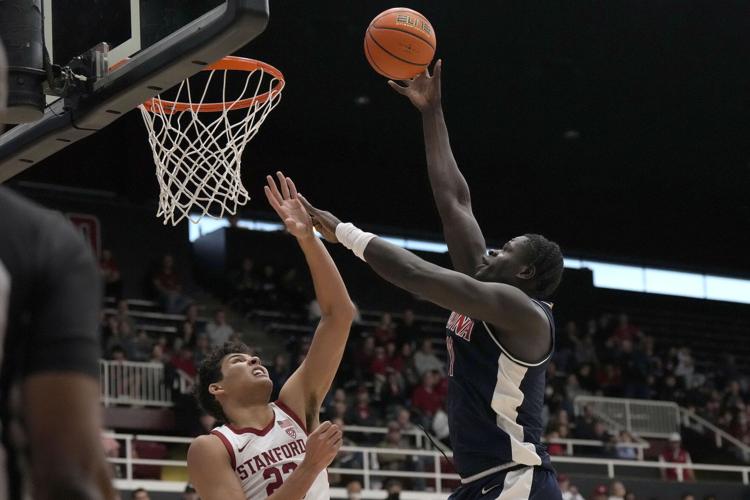
Arizona center Oumar Ballo drives to the basket against Stanford forward Brandon Angel in a New Year's Eve game. The UA defense could do nothing to slow the Cardinal that day in a 100-82 loss.
4. Last Pac-12 go-round
Lloyd backloaded the Wildcats’ nonconference schedule with the intent of preparing them for the Pac-12 and NCAA Tournament challenges ahead, and they predictably struggled at times.
UA lost 92-84 to Purdue on Dec. 16 before a raucous semi-away crowd in Indianapolis — though the Wildcats had plenty of Midwestern-based fans also in attendance — then lost 96-95 in double-overtime to FAU in Las Vegas a week later.
Neither of those results were a huge surprise — the Owls returned all their starters from a Final Four team last season — but the Wildcats then lost three of their first eight Pac-12 games in a troubling manner.
They shot just 34.7% in a 73-70 loss at Washington State on Jan. 13, with Love missing a potential game-tying 3-pointer with six seconds left. That loss later looked excusable when the Cougars wound up the Pac-12’s second-place finisher, but Arizona’s 100-82 blowout loss at Stanford on Dec. 31 and their 83-80 loss at last-place Oregon State on Jan. 25 were not.
They were the sort of losses that suggested Arizona might still win the league but wasn’t likely to make a four-game NCAA Tournament run to the Final Four.
Against Stanford, the Wildcats shot only 26.9% from 3-point range while allowing the Cardinal to shoot 58.1% overall and make 16 of 25 3-pointers, with big wing Spencer Jones making 5 of 6, center Maxime Raynaud stretching out to hit 2 of 3 while freshman guard Kanaan Carlyle broke out by hitting 6 of 8.
After that game, Lloyd said the Cardinal “kicked our ass” in every way but was particularly appalled to see the perimeter defense slip. UA had entered the game with the nation’s second-most efficient defense, according to Kenpom.
“That’s an absolute lie,” Lloyd said. “I mean, our guards have been getting their asses kicked in these games defensively. They need to figure it out. And our staff needs to help them.”
Pretty much the same thing happened less than four weeks later when the Wildcats lost a closer game to a lesser team: Oregon State shot 56.3% overall and hit 12 of 20 3-pointers, with stretch-bigs Tyler Bilodeau (3 of 4) and Michael Rataj (2 of 3) stepping back to hit 3s — and guard Jordan Pope sinking 5 of 8 from beyond the arc, including a buzzer-beating game-winner.
“Our bigs are literally acting like they’ve never seen another big make a 3,” Lloyd said after that game. “We’ve probably got to scout it better, and we got to respect people a little bit more. But that’s on the coaching staff and on our bigs. We’ve gotta be better there. It’s a recurring theme against us.”
Oregon State won only three more games the rest of the season.
But Arizona also had plenty of success while picking up its final Pac-12 regular-season conference title with a 15-5 record, finishing one game ahead of WSU.
The Wildcats embarrassed a well-regarded Colorado team 97-50 in early January at home, ended a six-game losing streak at Oregon when Love tied the Matthew Knight Arena scoring record with 36 points, swept the Mountain trip with a triple-overtime win at Utah and a 20-point blowout at Colorado, while putting on plenty of big Saturday shows at McKale.
Among them was a 77-71 win over UCLA they pulled out despite being dragged into the Bruins’ slower style and facing a 19-point deficit, a 105-60 win over ASU that avenged the Wildcats’ home loss to the Sun Devils last season and a perfectly scripted 103-83 win over Oregon in their regular-season home finale.
In that Senior Day game, three Wildcat seniors — Larsson, Johnson and Love — scored more than 20 points, while Ballo posted his ninth straight double-double with 11 points and 12 rebounds and walk-on senior Grant Weitman had two steals while starting in place of sophomore Kylan Boswell.
Then the Wildcats hit the road and wrapped up the Pac-12 title at Pauley Pavilion, of all places, learning toward the end of their 88-65 win over UCLA that WSU had lost to Washington earlier that night, meaning they clinched the title.
A locker room water celebration quickly followed.
“It was ecstatic,” Johnson said. “Showers, that kind of stuff. It was ecstatic. It was ecstatic. We are Pac-12 Champions.”

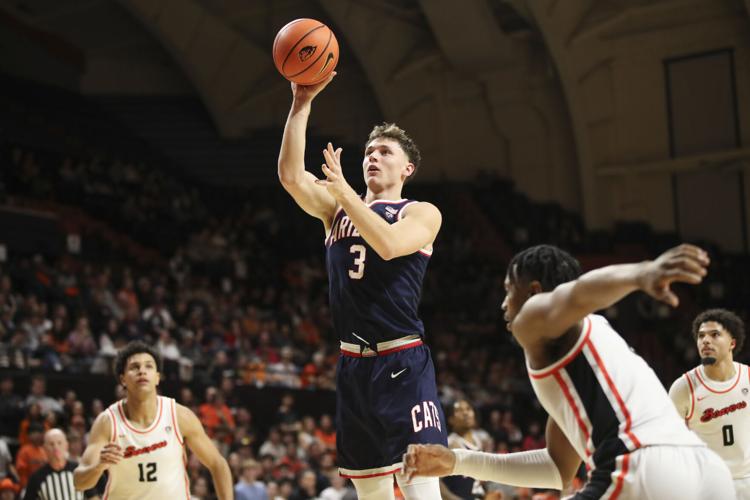
Arizona guard Pelle Larsson shoots against against Oregon State in perhaps the most perplexing game of the season. The Beavers, who would finish last in the Pac-12, won on a buzzer-beating 3-pointer.
5. Descent into madness
In what appeared to be a classic letdown game, the Wildcats lost at USC 78-65 two days after clinching the title, all but eliminating themselves for consideration of a final No. 1 NCAA Tournament seed.
They gained a valuable extra day of rest by losing to Oregon in the semifinals of the Pac-12 Tournament, but the USC and Oregon losses combined both foreshadowed trouble ahead: The Wildcats shot only 38.7% (28.6% from 3) at USC and almost exactly repeated things six days later in Las Vegas against Oregon, shooting 38.3% overall and 28.3% from 3.
Picking up the West Region’s No. 2 seed, Arizona didn’t shoot much better (41.7%) in its NCAA Tournament opener against Long Beach State, but held the considerably less-talented Beach to juist 33.3%. Then the Wildcats broke free for a 78-68 second-round win over Dayton thanks in part to the press-breaking efforts of guard Jaden Bradley off the bench.
But another spirited effort from Bradley five days later in Salt Lake City wasn’t enough to save the Wildcats from a 77-72 upset loss to sixth-seeded Clemson. Not in a game when the Wildcats shot just 37.3% overall and a season-low 17.9% (5 of 28) from 3-point range, with Love missing all nine 3-pointers he took.
“We weren’t surprised,” Clemson guard Chase Hunter said of UA’s 3-point shooting. “We knew they like to get up shots. A few players are volume scorers. When you don’t see it going in, your confidence gets down.”
Arizona fell behind by 13 points early, by eight at halftime and, despite taking a brief one-point lead in the second half, trailed for 37 minutes.
Their season was over at 27-9.
Postscript
While Lloyd spoke at the Crypto.com Arena interview podium after the Clemson game about wanting to analyze what happened, to continue to build competitive teams and to learn from it all, a cascade of criticism was flowing over social media.
It was the third time in Lloyd’s three seasons that he had led the Wildcats to a high NCAA Tournament seed but also the third time in three seasons that they had lost to a lower-seeded team.
They had again failed to reach a Final Four, this time one that would be held in their own state.
They were being judged not on their regular season, not on that win at Duke, not on what was arguably their finest moment against Wisconsin nor on their Pac-12 regular-season title.
Just on those last three games, in the NCAA Tournament, where college basketball seasons are defined more than anything.
In an interview with the Star before the tournament began, Lloyd acknowledged that’s the way it is.
March is really all that matters: Arizona’s 1996-97 team is not known as the fifth-place Pac-10 team it was but as the national champions; conversely, Arizona’s 2023-24 team probably won’t be known as much for winning the (possibly) last Pac-12 title but as another UA team that underachieved in March.
“It is unfair,” Lloyd said in that interview before the tournament began. “But there’s no reason to spend any time, effort or energy thinking about it because it’s not going to help me coach better. It’s not going to help us play better. And the narrative’s always going to be there because it’s an easy, lazy narrative.
“We don’t let others outside our program define what college basketball means to us or what’s important. ... I’m not in this business to prove people wrong or right that are outside our program. Because I’ll never win that.
“The only way you win is you coach a long, long time. You win at a really high level, and then it’s funny how people forget all the struggles you had along the way. But I’m new in this as a head coach. I’m starting my journey.”
Clemson held off Arizona in the second half to advance to the Elite Eight of the 2024 men’s NCAA tournament. Watch the extended highlights from the Tiger’s Sweet 16 win here. (March Madness YouTube)
After a late push in the second half to solidify their lead, Arizona defeated Dayton, 78-68, to advance to the Sweet Sixteen. (March Madness YouTube)
No. 2 Arizona defeated No. 15 Long Beach State, 85-65, in the first round of the 2024 NCAA tournament, led by a 20 point performance from Kylan Boswell. (March Madness YouTube)
Photos: (2) Arizona Wildcats dispatch (15) Long Beach State 85-65, NCAA West Region

Arizona center Oumar Ballo (11) gestures for noise as the Wildcats start pulling away from Long Beach State in the second half of their west regional game of the NCAA Basketball Championship, Delta Center, Salt Lake City, Utah, March 21, 2024.

Arizona guard Pelle Larsson (3) cuts through the Long Beach State defense in the second half of their west regional game of the NCAA Basketball Championship, Delta Center, Salt Lake City, Utah, March 21, 2024.

Arizona guard Kylan Boswell throws down an unopposed dunk late in the second half against Long Beach State.

Arizona guard Pelle Larsson (3) pays the price for his drive to the basket against Long Beach State forward Aboubacar Traore (25) in the second half of their west regional game of the NCAA Basketball Championship, Delta Center, Salt Lake City, Utah, March 21, 2024.

Arizona center Oumar Ballo (11) gets hacked by Long Beach State forward Amari Stroud (1) in the second half of their west regional game of the NCAA Basketball Championship, Delta Center, Salt Lake City, Utah, March 21, 2024.

Arizona center Oumar Ballo (11) is squeezed out of a rebound by Long Beach State forward Amari Stroud (1), left, and forward Aboubacar Traore (25) in the second half of their west regional game of the NCAA Basketball Championship, Delta Center, Salt Lake City, Utah, March 21, 2024.

The Arizona bench celebrates guard Kylan Boswell’s (4) dunk late against Long Beach State in the first round of the NCAA Men’s Basketball Tournament Thursday in Salt Lake City.

Arizona guard Jaden Bradley (0) swims his way to a score over Long Beach State forward Aboubacar Traore (25) in the second half of their west regional game of the NCAA Basketball Championship, Delta Center, Salt Lake City, Utah, March 21, 2024.

Arizona guard Kylan Boswell (4) talks with one of the game officials during a break in play against Long Beach State their west regional game of the NCAA Basketball Championship, Delta Center, Salt Lake City, Utah, March 21, 2024.

Arizona guard Caleb Love (2) gets table-topped by Long Beach State guard AJ George (10) while hauling down a rebound in the second half of their west regional game of the NCAA Basketball Championship, Delta Center, Salt Lake City, Utah, March 21, 2024.

Arizona center Oumar Ballo goes airborne to defend Long Beach State forward Amari Stroud, who is trying to drive into the lane, in the second half.

Long Beach State forward Amari Stroud (1) drives between Arizona guard Jaden Bradley (0), left, and center Oumar Ballo (11) in the second half of their west regional game of the NCAA Basketball Championship, Delta Center, Salt Lake City, Utah, March 21, 2024.

Arizona forward Keshad Johnson (16) intercepts the inlet pass intended for Long Beach State forward Amari Stroud (1) in the second half of their west regional game of the NCAA Basketball Championship, Delta Center, Salt Lake City, Utah, March 21, 2024.

Arizona guard Pelle Larsson (3) gets interviewed in the locker room following their 85-65 win over Long Beach State in the west regional of the NCAA Basketball Championship, Delta Center, Salt Lake City, Utah, March 21, 2024.

Arizona guard Caleb Love (2) talks to reporters from the Wildcats’ locker room following their 85-65 win over Long Beach State in the west regional of the NCAA Basketball Championship, Delta Center, Salt Lake City, Utah, March 21, 2024.

Arizona center Motiejus Krivas (14) and Long Beach State forward Amari Stroud (1) scramble for the ball in the first half their west regional game of the NCAA Basketball Championship, Delta Center, Salt Lake City, Utah, March 21, 2024.

Arizona guard Kylan Boswell (4) takes a blow from Long Beach State guard Jadon Jones (12), but no foul was called, in the first half their west regional game of the NCAA Basketball Championship, Delta Center, Salt Lake City, Utah, March 21, 2024.

Arizona guard Jaden Bradley (0) slams into Long Beach State forward Lassina Traore (23) picking up the foul on his shot attempt in the first half their west regional game of the NCAA Basketball Championship, Delta Center, Salt Lake City, Utah, March 21, 2024.

Arizona guard Pelle Larsson (3) keeps Long Beach State guard Marcus Tsohonis (0) from getting cleanly into the lane in the second half of their west regional game of the NCAA Basketball Championship, Delta Center, Salt Lake City, Utah, March 21, 2024.

Arizona guard Kylan Boswell (4) threads the needle between Long Beach State forward Amari Stroud (1), left, and guard AJ George (10) in the second half of their west regional game of the NCAA Basketball Championship, Delta Center, Salt Lake City, Utah, March 21, 2024.

Long Beach State guard Messiah Thompson (4) waits in the spotlight for his introduction before taking the court against Arizona in their west regional game of the NCAA Basketball Championship, Delta Center, Salt Lake City, Utah, March 21, 2024.

Arizona forward Keshad Johnson (16) snatches the pass right out of the hands of Long Beach State guard Marcus Tsohonis (0) trying to make a pass from the seat of his pants in the first half their west regional game of the NCAA Basketball Championship, Delta Center, Salt Lake City, Utah, March 21, 2024.

Long Beach State guard Jadon Jones takes a swipe but can’t stop the shot form Arizona guard Caleb Love in the first half of the teams’ matchup in first round of the NCAA Men’s Basketball Tournament Thursday at the Delta Center in Salt Lake City.

Arizona center Motiejus Krivas (14) gets a whole lot of Long Beach State forward Lassina Traore (23) in pursuit of a rebound in the first half of the teams' matchup in first round of the 2024 NCAA Men's Basketball Tournament Thursday at the Delta Center in Salt Lake City.

Arizona center Motiejus Krivas (14), left, and guard Jaden Bradley (0) swarm over Long Beach State forward Lassina Traore (23) trying to win the rebound in the first half their west regional game of the NCAA Basketball Championship, Delta Center, Salt Lake City, Utah, March 21, 2024.

Arizona guard Pelle Larsson (3) questions the call against him in the first half of their game with Long Beach State in the NCAA Basketball Championship, Delta Center, Salt Lake City, Utah, March 21, 2024.

Arizona guard Caleb Love (2) slips past Long Beach State guard AJ George (10), left, and guard Jadon Jones (12) in the first half of their west regional game of the NCAA Basketball Championship, Delta Center, Salt Lake City, Utah, March 21, 2024.

Long Beach State guard Marcus Tsohonis (0) loses the footrace to the ball to Arizona guard Kylan Boswell (4) in the first half their west regional game of the NCAA Basketball Championship, Delta Center, Salt Lake City, Utah, March 21, 2024.

Assistant coach Riccardo Fois gives Arizona guard Pelle Larsson (3) a pep talk before he subs in against Long Beach State in the first half their west regional game of the NCAA Basketball Championship, Delta Center, Salt Lake City, Utah, March 21, 2024.

Arizona head coach Tommy Lloyd talks to one of the game officials during a time out in the game against Long Beach State during the NCAA Basketball Championship, Delta Center, Salt Lake City, Utah, March 21, 2024.

Nevada guard Kenan Blackshear (13) gets hit by Dayton forward Nate Santos (2) trying to get out of the backcourt during the second half of their game in the west regional of the NCAA Basketball Championship, Delta Center, Salt Lake City, Utah, March 21, 2024. Dayton came back from a double digit deficit to upset the Wolf Pack 63-60, setting up a second round match against Arizona.

Dayton forward DaRon Holmes II (15) gets off the pass between forward Jeriah Coleman (12), left, and Nevada forward Tre Coleman (4) during the second half of their game in the west regional of the NCAA Basketball Championship, Delta Center, Salt Lake City, Utah, March 21, 2024.

Dayton forward Isaac Jack (13) takes a shot to the chin trying to back down Nevada forward K.J. Hymes (42) during the second half of their game in the west regional of the NCAA Basketball Championship, Delta Center, Salt Lake City, Utah, March 21, 2024.

Dayton guard Enoch Cheeks (6) streaks in to knock the ball away from Nevada guard Kenan Blackshear (13) creating a turnover during the second half of their game in the west regional of the NCAA Basketball Championship, Delta Center, Salt Lake City, Utah, March 21, 2024.

Dayton guard Enoch Cheeks (6) scrapes the ball out of reach of Nevada forward Tre Coleman (4) during the second half of their game in the west regional of the NCAA Basketball Championship, Delta Center, Salt Lake City, Utah, March 21, 2024.

Nevada guard Jarod Lucas (2) flings himself on the ball ahead of the rush from Dayton guard Enoch Cheeks (6), top and Dayton forward Nate Santos (2) during the second half of their game in the west regional of the NCAA Basketball Championship, Delta Center, Salt Lake City, Utah, March 21, 2024.

Dayton head coach Anthony Grant can’t believe the Flyers didn’t get the jump ball during a scramble late in the second half of their game against Nevada in the west regional of the NCAA Basketball Championship, Delta Center, Salt Lake City, Utah, March 21, 2024.

Dayton players rush the court celebrating their come from behind 63-60 win at the buzzer over Nevada during the second half of their game in the west regional of the NCAA Basketball Championship, Delta Center, Salt Lake City, Utah, March 21, 2024.

Dayton forward DaRon Holmes II (15) takes a bow to the Nevada band and booster after the Flyers held on to slip by the Wolf Pack 63-60 during the second half of their game in the west regional of the NCAA Basketball Championship, Delta Center, Salt Lake City, Utah, March 21, 2024.

Arizona guard Conrad Martinez (55), left, guard Kylan Boswell (4) and guard KJ Lewis (5) line up for the national anthem before the Wildcats take the court against Long Beach State for a west regional game in the NCAA Basketball Championship, Delta Center, Salt Lake City, Utah, March 21, 2024.

Arizona guard Pelle Larsson (3) looks for the bucket over Long Beach State guard Marcus Tsohonis (0) in the first half their west regional game of the NCAA Basketball Championship, Delta Center, Salt Lake City, Utah, March 21, 2024.

Arizona forward Keshad Johnson (16) takes a shot to the face from Long Beach State forward Aboubacar Traore (25) on his shot in the first half their west regional game of the NCAA Basketball Championship, Delta Center, Salt Lake City, Utah, March 21, 2024.

Arizona head coach Tommy Lloyd gives Long Beach State head coach Don Monson a hug after the Wildcats defeated LBS in the second half of their west regional game of the NCAA Basketball Championship in Salt Lake City, Utah, March 21, 2024.

Arizona forward Keshad Johnson (16) comes up a few inches short for a rebound against Long Beach State forward Amari Stroud (1) in the second half of their west regional game of the NCAA Basketball Championship, Delta Center, Salt Lake City, Utah, March 21, 2024.
Photos: Arizona edges Dayton 78-68, NCAA Men's Tournament 2nd Round, Salt Lake City

Arizona coach Tommy Lloyd, left, reacts after the ball was called out on the Wildcats as assistant coach Riccardo Fois calls out to the court late in the second half against Dayton in the second round on March 23.

Arizona guard Caleb Love (2) gets really fouled in a drive around Dayton guard Kobe Elvis (24) in the second half of their round of 32 game in the west region of the NCAA Basketball Championship, Delta Center, Salt Lake City, Utah, March 23, 2024.
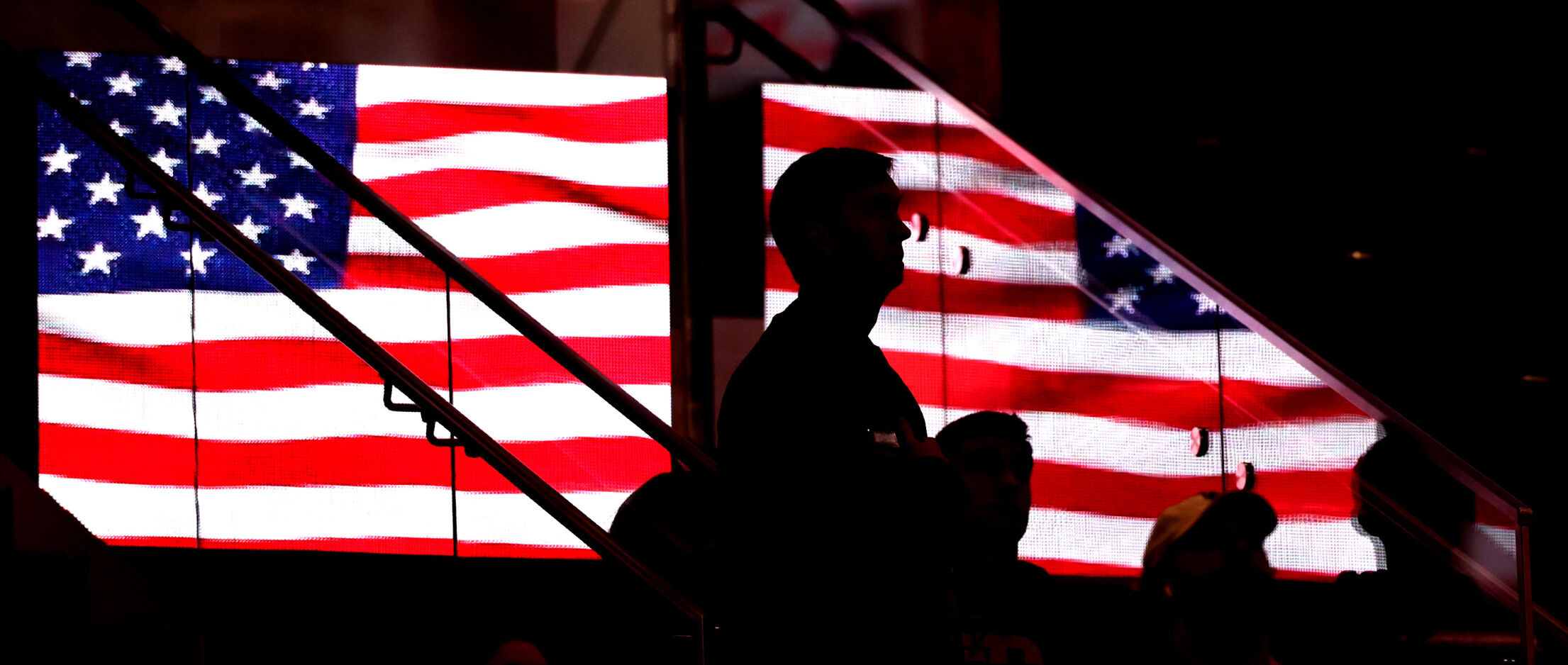
Fans stand for the national anthem just before the tip-off of the NCAA West Regional game between Arizona and Dayton in Salt Lake City on Saturday, March 23, 2024. The game began at 10:45 a.m. local time.

The Pride of Arizona pep band harasses a Dayton player during the second half of their round of 32 game in the west region of the NCAA Basketball Championship, Delta Center, Salt Lake City, Utah, March 23, 2024.

Arizona guard Pelle Larsson celebrates after nailing a 3 from the top of the key in the second half.

Arizona guard Caleb Love (2) heads over to congratulate teammate forward Keshad Johnson (16) as the clock ticks down on their round of 32 game against Dayton in the NCAA Basketball Championship, Delta Center, Salt Lake City, Utah, March 23, 2024.

Arizona guard Kylan Boswell outjumps Dayton forward DaRon Holmes II (15), left, and guard Enoch Cheeks (6) but can’t quite grab the rebound in the second half.

Arizona guard Jaden Bradley (0) flies in to deflect the pass out of the hands of Dayton forward Nate Santos (2) in the second half of their round-of-32 game in the West Region of the NCAA Tournament in Salt Lake City on Saturday, March 23, 2024.

An Arizona fan cheers from the stands as the Wildcats make a run against Dayton in the second half of their round of 32 game in the west region of the NCAA Basketball Championship, Delta Center, Salt Lake City, Utah, March 23, 2024.

Arizona guard Pelle Larsson (3) makes his way past Dayton forward DaRon Holmes II (15) and guard Enoch Cheeks (6) on a baseline drive in their round-of-32 game in the West Region of the NCAA Tournament in Salt Lake City on March 23, 2024.

Arizona forward Keshad Johnson scoops his way past Dayton guard Koby Brea (4) for bucket.

Arizona forward Keshad Johnson (16) draws a bead on the basket Dayton forward DaRon Holmes II (15) on a dunk attempt in the first half of their round of 32 game in the west region of the NCAA Basketball Championship, Delta Center, Salt Lake City, Utah, March 23, 2024.

Arizona guard Pelle Larsson (3) elbows his way to a score over against Dayton forward Petras Padegimas (12) during the first half of their round of 32 game in the west region of the NCAA Basketball Championship, Delta Center, Salt Lake City, Utah, March 23, 2024.

Arizona guard Jaden Bradley (0) looks for contact trying to shoot past Dayton forward Nate Santos (2) in the first half of their round-of-32 game in the West Region of the NCAA Tournament in Salt Lake City on Saturday, March 23, 2024.

Arizona forward Paulius Murauskas (23) reaches up to stretch the net before the Wildcats take on Dayton in the first half of their round of 32 game in the west region of the NCAA Basketball Championship, Delta Center, Salt Lake City, Utah, March 23, 2024. During the ‘Cats first game, the ball got stuck in the tight nets following several baskets.

Arizona guard Jaden Bradley, left, forces Dayton guard Enoch Cheeks into a traveling turnover in the first half Saturday in Salt Lake City.

Arizona center Motiejus Krivas (14) gets fouled between Dayton forward Nate Santos (2), left, and Dayton guard Enoch Cheeks (6) while pulling down a rebound in the first half of their round of 32 game in the west region of the NCAA Basketball Championship, Delta Center, Salt Lake City, Utah, March 23, 2024.

The Arizona bench reacts after the Wildcats forces a Dayton turnover in the second half of their round of 32 game in the west region of the NCAA Basketball Championship, Delta Center, Salt Lake City, Utah, March 23, 2024.

Arizona forward Keshad Johnson (16) gets a few minutes to cut off his tape and get into his phone as some of the other Wildcats draw the reporters for post-game interviews after their win over Dayton in their round of 32 game in the west region of the NCAA Basketball Championship, Delta Center, Salt Lake City, Utah, March 23, 2024.

Arizona guard Caleb Love (2) attracts a lot of microphones as he answers questions in front of his locker following the Wildcats’ second-round win against Dayton in the NCAA Tournament in Salt Lake City on Saturday, March 23, 2024.

Arizona forward Keshad Johnson (16) has clean run to the bucket, scoring a tomahawk dunk against Dayton early in the first half in their round of 32 game in the west region of the NCAA Basketball Championship, Delta Center, Salt Lake City, Utah, March 23, 2024.

Arizona center Oumar Ballo (11) scores two on a dunk over the Dayton defense in their round of 32 game in the west region of the NCAA Basketball Championship, Delta Center, Salt Lake City, Utah, March 23, 2024.

Arizona center Motiejus Krivas (14) cleans up a Dayton turnover under the Wildcat basket with a dunk in the first half in the west region game of the NCAA Basketball Championship, Delta Center, Salt Lake City, Utah, March 23, 2024.

/a against /d in the second half of their round of 32 game in the west region of the NCAA Basketball Championship, Delta Center, Salt Lake City, Utah, March 23, 2024.

/a against /d in the second half of their round of 32 game in the west region of the NCAA Basketball Championship, Delta Center, Salt Lake City, Utah, March 23, 2024.

Arizona center Oumar Ballo, center, tries to navigate a crowded lane between Dayton forward DaRon Holmes II (15), left, and forward Nate Santos (2) in the first half.

Arizona guard Caleb Love gestures after nailing a deep 3 against Dayton on Saturday. The Wildcats won by 10, setting up a Sweet 16 showdown against either Baylor or Clemson in Los Angeles on Thursday.

Arizona guard Pelle Larsson gets to the rebound ahead of Dayton forward Nate Santos in the first half Saturday.
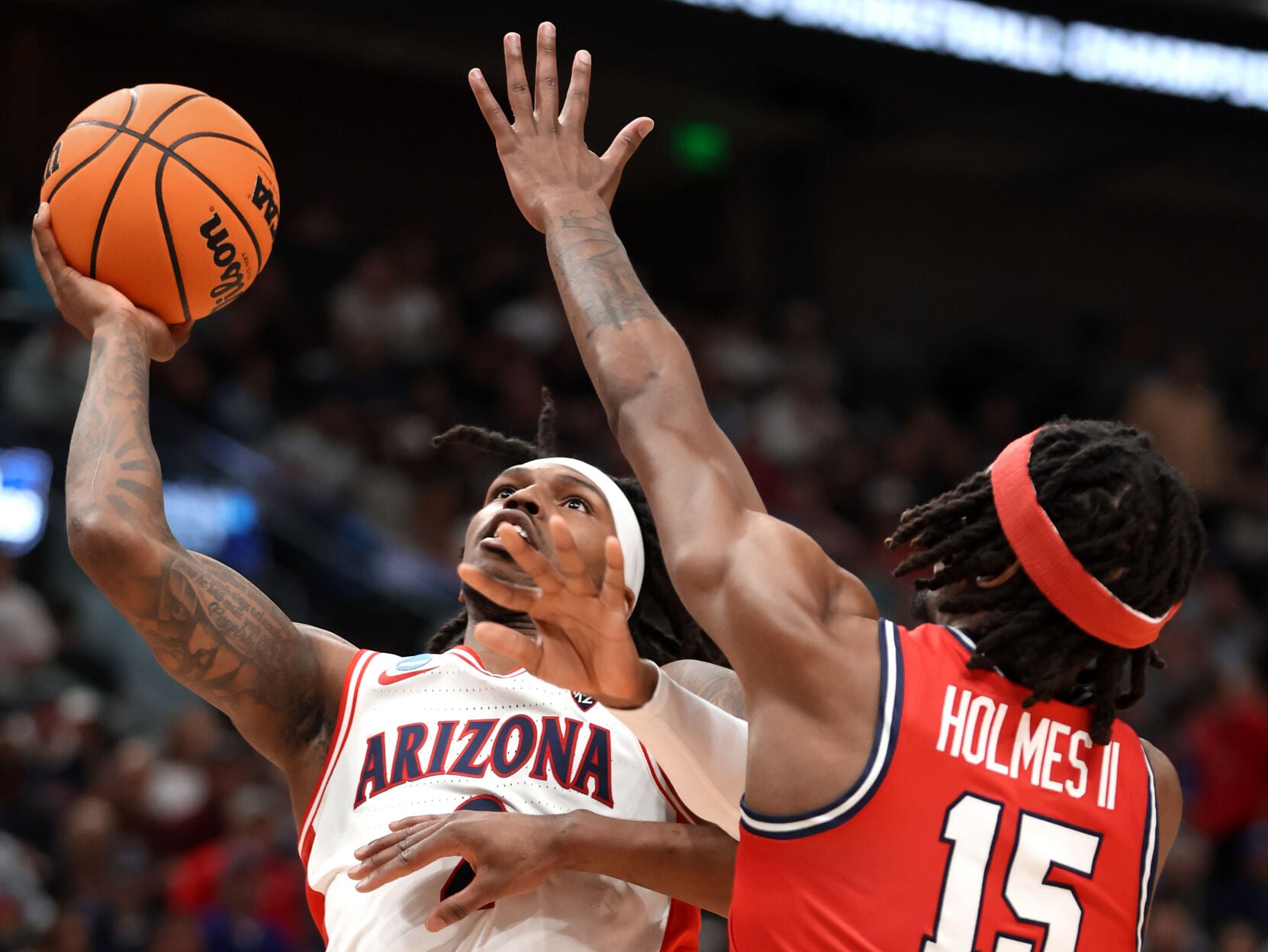
Arizona guard Caleb Love (2) has to muscle his way around Dayton forward DaRon Holmes II (15) to get off a shot in the second half of their round of 32 game in the west region of the NCAA Basketball Championship, Delta Center, Salt Lake City, Utah, March 23, 2024.

Arizona guard KJ Lewis (5) fights his way into the lane through Dayton guard Koby Brea (4), left, and guard Enoch Cheeks (6) in the second half of their round of 32 game in the west region of the NCAA Basketball Championship, Delta Center, Salt Lake City, Utah, March 23, 2024.

Arizona guard Pelle Larsson, left, and guard KJ Lewis come together to fight Dayton guard Enoch Cheeks (6) for a loose ball in the second half.

The Arizona bench celebrates as the Wildcats finally start building some daylight against Dayton in the second half Saturday. The UA bench outscored Dayton’s 23-2.

Dayton guard Enoch Cheeks (6) tries to slow down Arizona guard Jaden Bradley (0) and the Wildcat fastbreak in the second half of their round-of-32 game in the West Region of the NCAA Tournament in Salt Lake City on Saturday, March 23, 2024.

Arizona center Oumar Ballo (11) uses every inch to get a block on a shot from Dayton forward DaRon Holmes II (15) in the second half of their round of 32 game in the west region of the NCAA Basketball Championship, Delta Center, Salt Lake City, Utah, March 23, 2024.

Arizona guard Kylan Boswell (4) sweeps past Dayton guard Kobe Elvis (24) in the first half of their round of 32 game in the west region of the NCAA Basketball Championship, Delta Center, Salt Lake City, Utah, March 23, 2024.

Arizona guard KJ Lewis (5) tries to bounce the ball off Dayton forward DaRon Holmes II (15) while falling out of bounds in the first half of their round of 32 game in the west region of the NCAA Basketball Championship, Delta Center, Salt Lake City, Utah, March 23, 2024.
Photos: Arizona goes down 77-72 to Clemson, NCAA Tournament West Region Sweet 16

Arizona guard Jaden Bradley (0) walks off the court as the Clemson Tigers celebrate their 77-72 upset win of the second-seeded Wildcats in their Sweet Sixteen game in the NCAA Tournament, Los Angeles, Calif., March 28, 2024.

Clemson head coach Brad Brownell hugged Clemson guard Chase Hunter (1) after their Tigers upset Arizona 77-72 in the Sweet Sixteen of the NCAA Tournament, Los Angeles, Calif., March 28, 2024.

Clemson center PJ Hall (24) gestures to the bench after slamming home a dunk late in the second half of their Sweet Sixteen game against Arizona in the NCAA Tournament, Los Angeles, Calif., March 28, 2024.

Arizona forward Keshad Johnson (16) thinks Clemson center PJ Hall (24) had a three second violation, but it ended up being a foul on Johnson in the second half of their Sweet Sixteen game in the NCAA Tournament, Los Angeles, Calif., March 28, 2024.

Arizona guard Jaden Bradley (0) comes in to claw away a shot from Clemson center PJ Hall (24) in the second half of their Sweet Sixteen game in the NCAA Tournament, Los Angeles, Calif., March 28, 2024.

Clemson head coach Brad Brownell, right, and the bench can’t believe the call was against them in a tense second half against Arizona in the Sweet Sixteen of the NCAA Tournament, Los Angeles, Calif., March 28, 2024.

Arizona guard Jaden Bradley (0) draws a foul on his drive against Clemson forward RJ Godfrey (10) in the second half of their Sweet Sixteen game in the NCAA Tournament, Los Angeles, Calif., March 28, 2024.

Arizona center Oumar Ballo (11) stuffs a shot from Clemson forward RJ Godfrey (10) in the second half of their Sweet Sixteen game in the NCAA Tournament, Los Angeles, Calif., March 28, 2024.

Arizona guard Caleb Love (2) gets blocked from behind by Clemson forward Ian Schieffelin (4) in the second half of their Sweet Sixteen game in the NCAA Tournament, Los Angeles, Calif., March 28, 2024.

Arizona head coach Tommy Lloyd pleads his case after a foul in the second half against Clemson in their Sweet Sixteen game in the NCAA Tournament, Los Angeles, Calif., March 28, 2024.

Arizona forward Keshad Johnson (16) surges above a trio of Clemson defenders in the second half of their Sweet Sixteen game in the NCAA Tournament, Los Angeles, Calif., March 28, 2024.

Clemson center PJ Hall (24) crashes down atop Arizona center Oumar Ballo (11) trying to block his put-back attempt in the second half of their Sweet Sixteen game in the NCAA Tournament, Los Angeles, Calif., March 28, 2024.

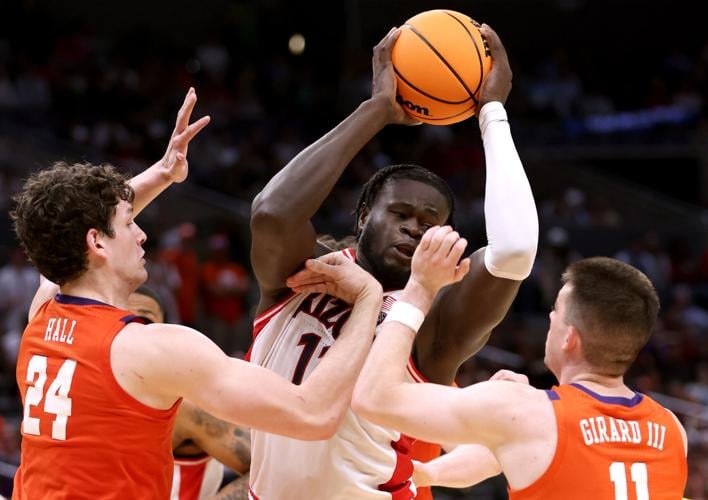
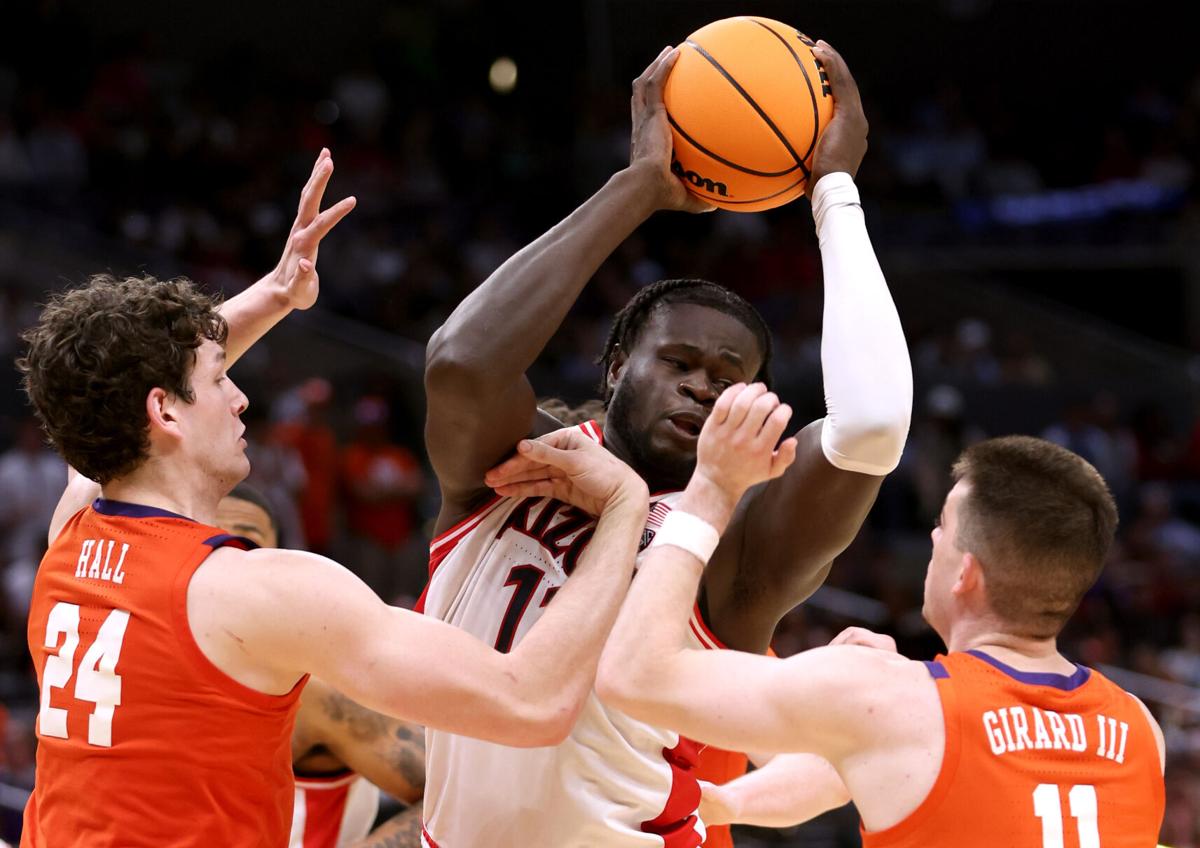
Clemson center PJ Hall (24), left, and guard Joseph Girard III (11) swarm Arizona center Oumar Ballo (11) in the paint in the second half of their Sweet Sixteen game in the NCAA Tournament, Los Angeles, Calif., March 28, 2024.

Arizona guard Jaden Bradley lets go a roar after drawing a foul on his basket against Clemson in the first half of their Sweet 16 game,
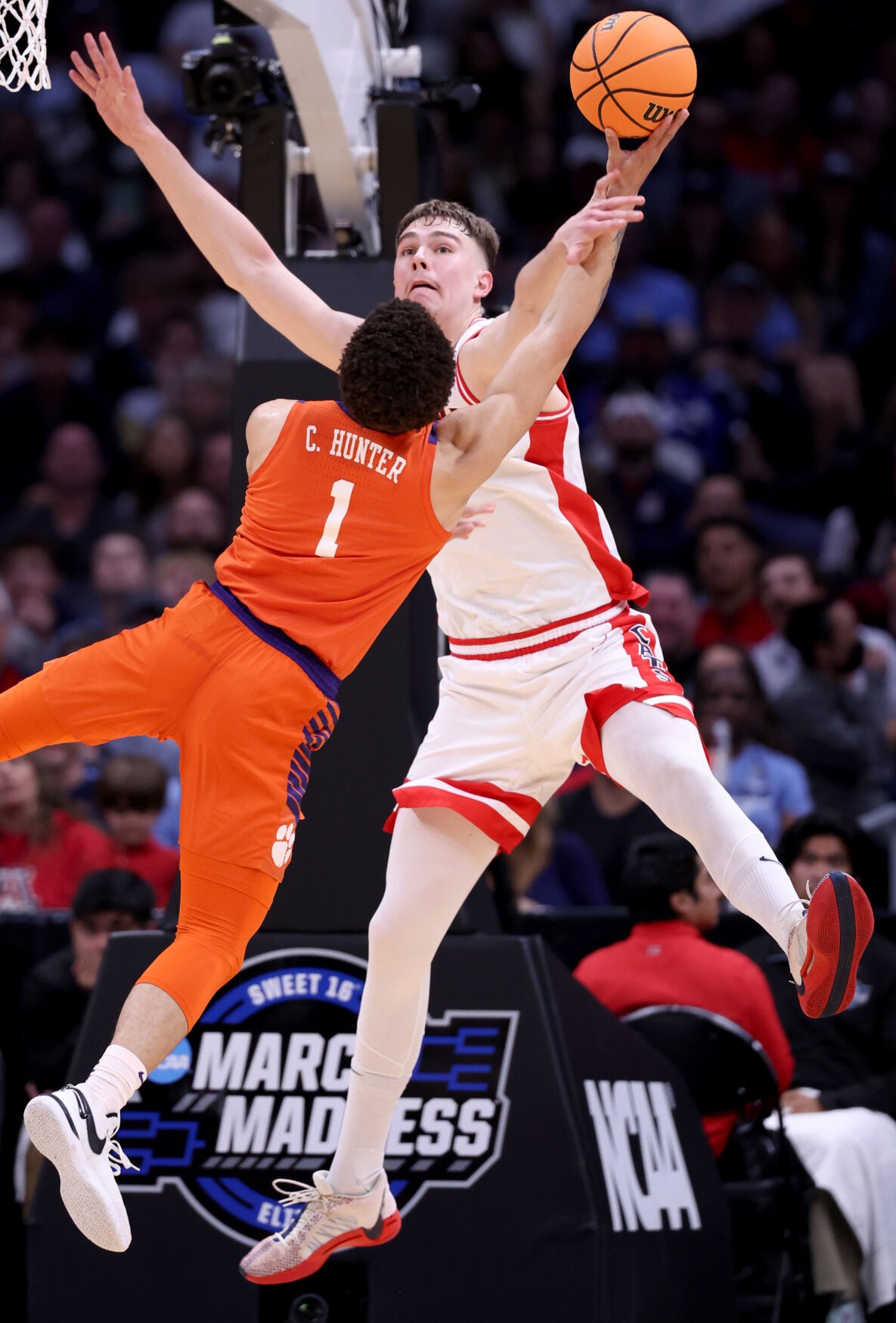
Arizona center Motiejus Krivas (14) gets away with hit on the arm stopping Clemson guard Chase Hunter’s (1)shot in the first half of their Sweet Sixteen game in the NCAA Tournament, Los Angeles, Calif., March 28, 2024.

Clemson center PJ Hall (24) ties up Arizona center Oumar Ballo (11) and keeps him from getting a lob into the paint in the first half of their Sweet Sixteen game in the NCAA Tournament, Los Angeles, Calif., March 28, 2024.

Arizona guard Caleb Love (2) charges past Clemson center PJ Hall (24) and to the basket in the first half of their Sweet Sixteen game in the NCAA Tournament, Los Angeles, Calif., March 28, 2024.

Clemson forward RJ Godfrey (10) strips Arizona guard Jaden Bradley (0) of the ball in the first half of their Sweet Sixteen game in the NCAA Tournament, Los Angeles, Calif., March 28, 2024.

Arizona guard KJ Lewis (5) is fraction late to keep Clemson forward Chauncey Wiggins (21) from gathering in a swing pass in the first half of their Sweet Sixteen game in the NCAA Tournament, Los Angeles, Calif., March 28, 2024.

Arizona guard KJ Lewis (5) scores on a dunk against Clemson in the first half of their Sweet Sixteen game in the NCAA Tournament, Los Angeles, Calif., March 28, 2024.

Arizona forward Keshad Johnson (16) dunks against Clemson during a Wildcat flurry in the first half of their Sweet Sixteen game in the NCAA Tournament, Los Angeles, Calif., March 28, 2024.

Arizona guard KJ Lewis (5) pokes the ball away from Clemson forward Ian Schieffelin (4) for a steal in the first half of their Sweet Sixteen game in the NCAA Tournament, Los Angeles, Calif., March 28, 2024.

Arizona guard Caleb Love (2) stretches out to pressure Clemson forward Jack Clark (5) in the second half of their Sweet Sixteen game in the NCAA Tournament, Los Angeles, Calif., March 28, 2024.

Arizona center Oumar Ballo (11) scores on an unopposed dunk against Clemson in the second half of their Sweet Sixteen game in the NCAA Tournament, Los Angeles, Calif., March 28, 2024.

Arizona forward Keshad Johnson (16) tries to get the Wildcat crowd into the game during a run against Clemson in the second half of their Sweet Sixteen game in the NCAA Tournament, Los Angeles, Calif., March 28, 2024.

Arizona guard Pelle Larsson (3) and forward Keshad Johnson (16) bat a loose ball out of the lane in the second half aginst Clemson during their Sweet Sixteen game in the NCAA Tournament, Los Angeles, Calif., March 28, 2024.

Clemson forward Jack Clark (5) takes a swipe at Arizona guard Jaden Bradley (0) while trying to keep him from the basket in the second half of their Sweet Sixteen game in the NCAA Tournament, Los Angeles, Calif., March 28, 2024.

Arizona guard Caleb Love (2) goes face-to-face with Clemson guard Chase Hunter (1) on a drive in the second half of their Sweet Sixteen game in the NCAA Tournament, Los Angeles, Calif., March 28, 2024.

Arizona center Oumar Ballo (11) throws an arm around Clemson forward Ian Schieffelin (4) late in the second half of their Sweet Sixteen game in the NCAA Tournament, Los Angeles, Calif., March 28, 2024.

Arizona head coach Tommy Lloyd talks to the Wildcats during a timeout in the final minute and trailing Clemson in the second half of their Sweet Sixteen game in the NCAA Tournament, Los Angeles, Calif., March 28, 2024.

Arizona guard Grant Weitman (15) and the Wildcat bench ride out the last few minutes of their 77-72 loss to Clemson in the NCAA Tournament on Thursday in Los Angeles.

Clemson guard Chase Hunter (1) picks the pass right out of the hands of Arizona guard Caleb Love (2) in the first half of their Sweet Sixteen game in the NCAA Tournament, Los Angeles, Calif., March 28, 2024.

Arizona guard Pelle Larsson (3) gets stripped by Clemson guard Joseph Girard III (11) on a drive in the first half of their Sweet Sixteen game in the NCAA Tournament, Los Angeles, Calif., March 28, 2024.

Arizona guard KJ Lewis (5) gets fouled by Clemson guard Dillon Hunter (2) on his attempt to get into the lane in the first half of their Sweet Sixteen game in the NCAA Tournament, Los Angeles, Calif., March 28, 2024.

Arizona guard KJ Lewis (5) picks up a personal foul defending Clemson guard Dillon Hunter (2) in the first half of their Sweet Sixteen game in the NCAA Tournament, Los Angeles, Calif., March 28, 2024.

Arizona head coach Tommy Lloyd, the Wildcat bench and fans can’t believe the ball is called out on them on a Keshad Johnson (16) strip against Clemson in the first half of their Sweet Sixteen game in the NCAA Tournament, Los Angeles, Calif., March 28, 2024.

Arizona center Oumar Ballo (11) gets tangled in the net going after a shot under the basket from Clemson forward Ian Schieffelin (4) in the first half of their Sweet Sixteen game in the NCAA Tournament, Los Angeles, Calif., March 28, 2024.

Clemson forward Ian Schieffelin (4) rises up to swat away a shot from Arizona guard Caleb Love (2) in the second half of their Sweet Sixteen game in the NCAA Tournament, Los Angeles, Calif., March 28, 2024.

The celebrating crowd and Clemson players surround Arizona guard Caleb Love after the Wildcats gave up a basket and a foul late in the second half of their Sweet 16 game in the NCAA Tournament in Los Angeles on March 28, 2024.

Clemson head coach Brad Brownell, his staff and bench try to get the defense set to face a Wildcat possession late in the second half of their Sweet Sixteen game against Arizona in the NCAA Tournament, Los Angeles, Calif., March 28, 2024.



