




Two steps forward, 10 giant steps back.
This is what’s happening to women’s basketball across the country — and at Arizona.

PJ Brown
Sure, the powers that be — TV execs, athletic directors and the NCAA administration — would like you to focus on the two steps forward. They aren’t talking about how women’s basketball (really every college women’s sport) is being pushed back to levels not seen since the 1980s.
After all, the steps forward are supposed to be about finally getting equity. Let’s throw those units at them — starting this spring, women’s basketball gets paid just like men’s basketball does for playing and winning in the NCAA Tournament — and they won’t notice what’s going on over here.
Despite women’s basketball breaking all records for viewership (18.7 million) in last spring’s NCAA title game, they won’t be receiving the same percentage as the men to start. The women will get $15 million in 2025 (this number goes up 2.9% each year). Meanwhile, the men got $171 million in 2024.
Teeny baby steps.
The viewership numbers have been going up for years. The audience was always there for women’s basketball, and it definitely helps that the title game was finally broadcast on ABC in 2022.
As Kevin Costner’s character said in “Field of Dreams,” “build it and they will come.” In this case, show it on national TV, and they will watch. Let’s go a little further, show it during prime time and even more people will watch.
As former Notre Dame coach and now TV analyst Muffett McGraw said, “We’re in a great place right now, and we’re only going to get stronger, so we need to put the money into it.”
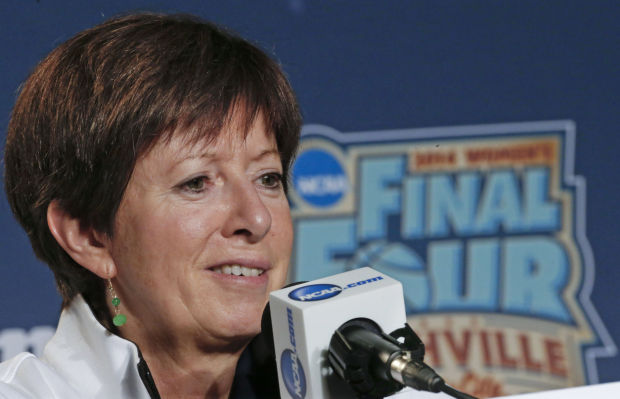
McGraw
McGraw said that even though women’s basketball was building towards this, those in charge at the networks, as well as NCAA administration, were “almost unprepared” for this growth.
And that leads us to one of the things that those in power don’t want you to see: no separate media deal for women’s basketball.
That’s right, women’s basketball, along with other college sports (think softball and volleyball), are thrown into the men’s basketball deal with ESPN for the championships. That is, ESPN is getting these games free. In addition, companies can only sponsor the men’s tournament and not, say, only the Women’s Final Four.
There’s a ton of money being left on the table.
“We still have a lot of limitations on the ability of the corporate champions program to be able to pursue our worth …,” said UCLA coach Cori Close, a former president of the Women’s Basketball Coaches Association.
“Women’s basketball is on the rise, not just because it’s the right thing to do but because it’s a really good business investment. I think that we really need to see that response from our administrators.”
This is the next layer. From the top, it’s the NCAA administrators and the TV execs not investing in women’s basketball. At the university level, administrations need to get on board, too.
With the new House settlement looming on the horizon, it looks more like women’s basketball programs not tied to Top 25 football teams will not be shown the money. In some cases these programs will be getting the same as they are now or possibly even less.
While everyone is excited that the athletes will be getting paid, as they should be, this settlement could end up hurting women’s sports and especially women’s basketball.
Over the last two years, we’ve started seeing how a lack of investment — whether it’s directly from universities or through a collective/donors — has impacted women’s basketball.
Pay-for-play era

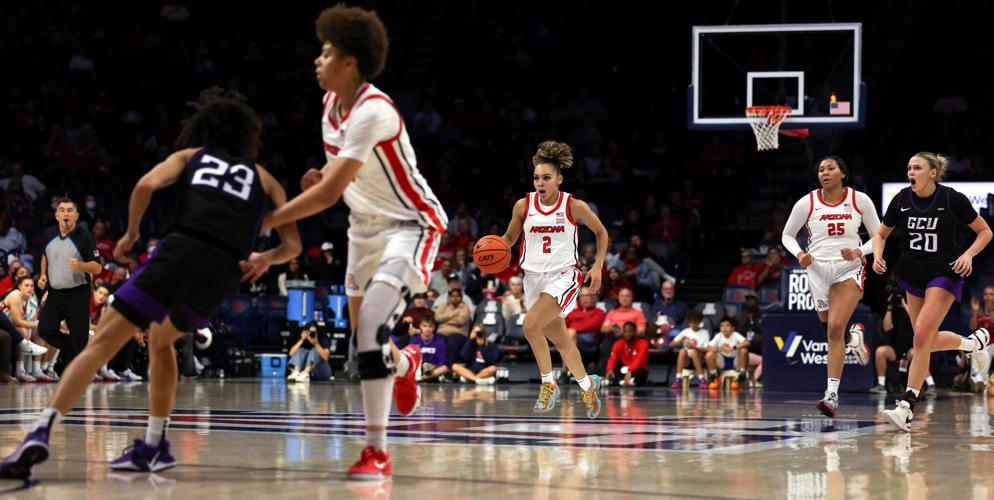
Arizona Wildcats guard Jada Williams (2) dribbles the ball down the court during the match against GCU at McKale Center, Dec. 5, 2024.
For Arizona in this new pay-for-play era, the biggest area hit is recruiting. With little money to pay players, Arizona isn’t competing for the elite players anymore. While they get close, when it comes down to signing on the dotted line, these young women are taking the money.
Yes, there are always a few players who put development and everything else they gain from being coached by Adia Barnes above money. Think Jada Williams, who has gotten name, image and likeness (NIL) deals on her own since high school. However, most players are taking the money.
This is why Barnes hasn’t locked in the elite transfers – some won’t even talk to a coach unless they can show upfront that they have money.
Barnes has been in the mix for five-star high school recruits during the last two recruiting cycles and has come up empty. At times, Barnes has even tipped her hand that an announcement from an athlete was coming soon, then nothing. These recruits soon sign elsewhere and you can bet another program swooped in with the money.
Times have changed. Just two years ago, Barnes pulled in one of the highest-rated recruiting classes with Williams, Breya Cunningham and Montaya Dew (Skylar Jones was added in the spring). The world has shifted with money ruling the day in women’s basketball.
Going forward it will be even harder for Barnes and others to keep competing. While it starts with paying players to come in and paying them to stay, it’s also about the things that have always kept certain programs one step in front of others.
It’s the charter flights or even new innovations in such things as recovery that go directly to the well-being of the athlete, the locker rooms, the basketball offices and even the food.
Arizona cut back on charters this year — it had flown this way for every game since the pandemic — most likely to balance the extra costs for food and hotel rooms when traveling due to inflation and to help with the financial issues within the UA Athletic Department.
Heck, the Wildcats have redesigned their offices — on paper — but it’s never come to fruition. The last time these offices were updated was when Joan Bonvicini was the Wildcats’ coach — at least 21 years ago. All of these things add up when others have all the upgrades and your program doesn’t.
USC, Washington, Iowa and UC San Diego have hired GMs to help women’s basketball implement and manage NIL programs. Many, like UA women’s basketball, don’t have this role. UC San Diego is not even in a Power 4 conference, and it is stepping up.
It’s been well-documented in stories like in the Washington Post, that the majority of schools don’t have a collective solely for women’s basketball. Coaches have to fundraise, with some being more successful than others in this area.
Still, ESPN analyst Steffi Sorensen was surprised that Arizona didn’t have a women’s basketball-only collective. She said with Barnes’ “history there, her legacy, the excitement around what she’s done for the program … I can only imagine somebody like her after the run that they had, and trying to build off that success and then not have any investment would be wildly frustrating.
“When you sign up to be a coach, I’m not sure, in their mind, it’s like they’re trying to win games, they’re trying to win national championships, they’re trying to win league conferences,” Sorensen said. “Now, it’s a race to who can raise the most money, ‘what way I can get the most talent, because I’ve got to have this much money to bring in this top tier talent.’ It’s just changed.”
Haves and have nots
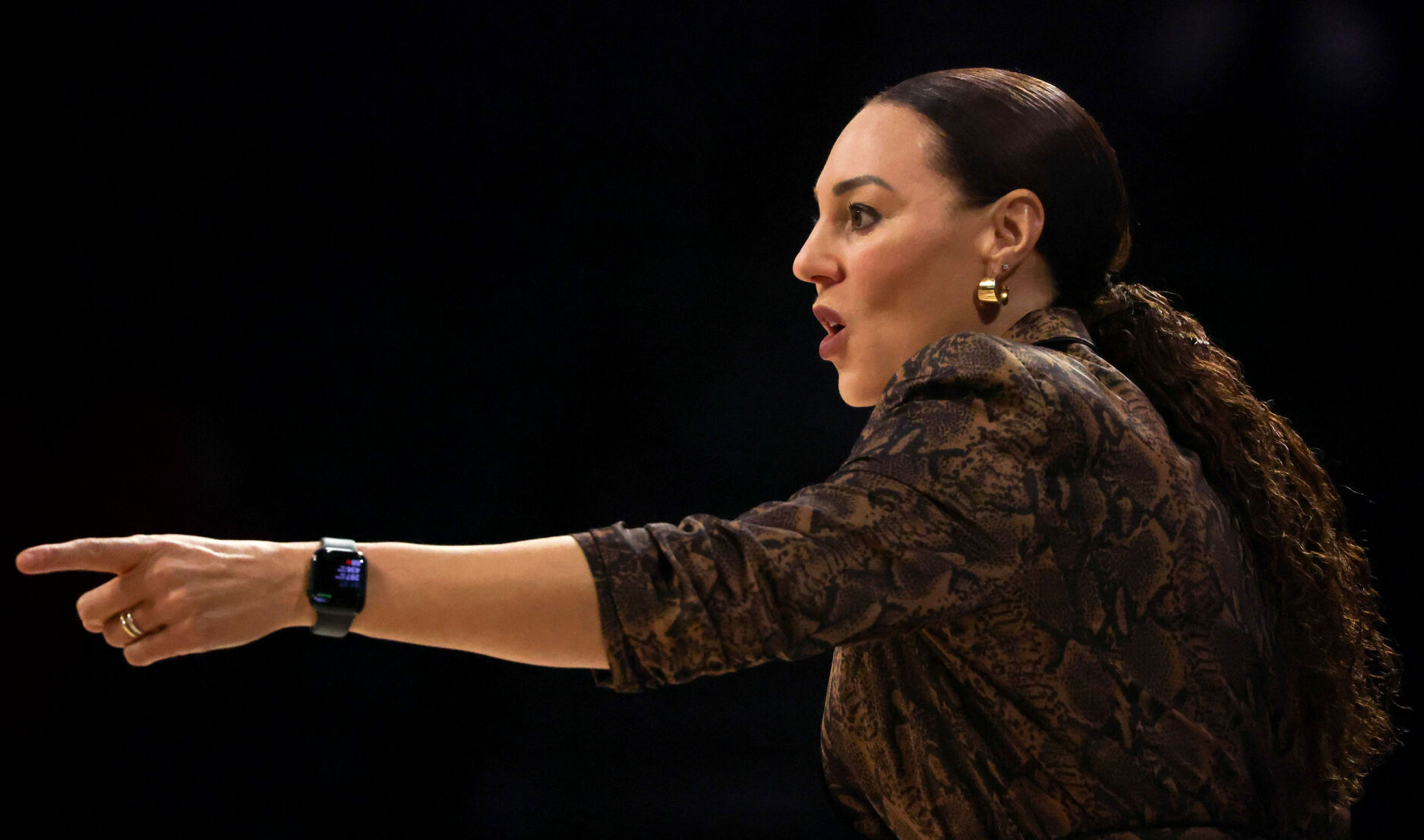
Arizona coach Adia Barnes communicates with her team during the second half of the game against Grand Canyon in McKale Center on Dec. 5, 2024.
While it’s never been a true even playing field because the football schools have much more money than the average school, the gap between the “haves” and “have nots” continues to grow even further.
“It’s negatively impacting a lot of programs across the country,” McGraw said. “Within the same conference you’re even seeing an incredible discrepancy from the top to the bottom of the league; what people are paying at the top and what they’re able to pay at the bottom. I think that it’s really changing things.”
Yes, now that revenue-sharing is starting — UA Athletics has around $20 million to share with its athletes, according to an email from Arizona Athletic Director Desireé Reed-Francois to the Wildcat Club — you hope that women’s basketball will get what they need.
While we don’t know exact numbers just yet, most likely football and men’s basketball, no matter how it is split, will end up with the majority of the pot.
That leaves the rest for women’s basketball, softball and baseball — the other three sports that will be included in revenue-sharing.
It’s anyone’s guess what the future looks like for Arizona women’s basketball.
Will they be able to keep up with the changing times with investments from the athletic department and others? Or will they quietly slip to the back of the bus not competing with the Top 25 programs — or even lesser teams?
In case you are wondering what this would look like, slipping backward, that is, see the Niya Butts coaching era (2008-16). That’s when maybe 100 fans attended games — and that’s being generous.
Meanwhile, Barnes has built the program back up and now is averaging 7,300 fans per game the last three years — good enough to make the Top 10 in the national list of highest attendance in women’s basketball for three consecutive seasons.
When Barnes was hired in 2016, nearly everyone she knew told her not to take the Arizona job, warning that the administration wouldn’t give resources to help not only build but sustain success.
She accepted the job anyway because it was the opportunity to do something special at her alma mater.
Barnes did just that, from winning the WNIT at McKale Center when everyone had written them off (with more fans attending each game right up to the sellout of 14,644 attending the title game) to just 3½ years ago taking her Wildcats to within one basket of winning the national championship (more than 4 million viewers watched that game).

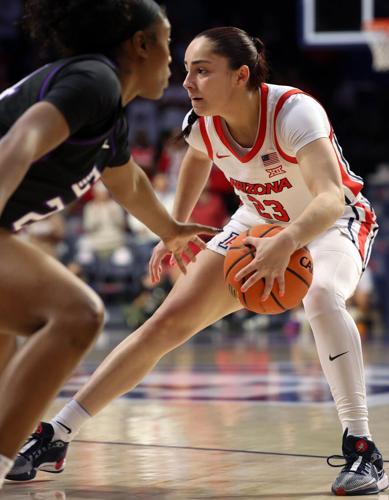
Wildcats guard Paulina Paris (23) dribbles by Antelopes guard Tiarra Brown (24) during the match against GCU at McKale Center, Dec. 5, 2024.
With everything moving at such a fast pace, we’ll know soon whether Arizona is taking the two steps forward or the 10 giant steps backward.

