

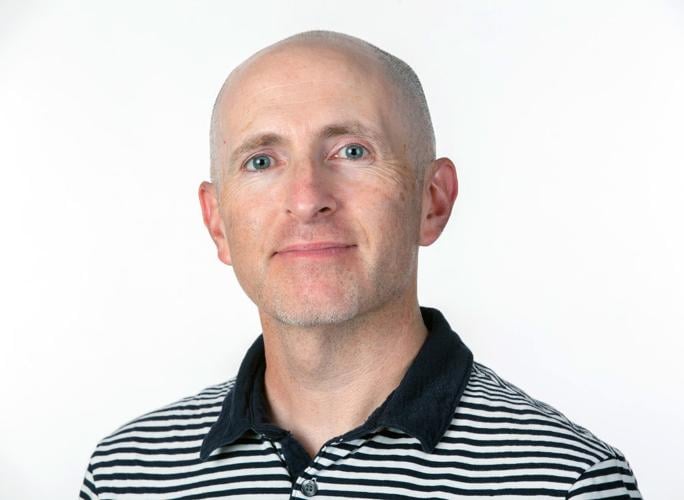
Ted Purdy cheerily greeted a visitor on the sun-splashed patio at La Paloma Country Club as workers scurried about preparing the grounds for this weekend’s Cologuard Classic by Exact Sciences.
It would not be accurate — at all — to say that Purdy, the former University of Arizona All-American, is content. But he is at peace, finally, with his first act as a professional golfer. And he’s very much looking forward to the second one.

Michael Lev is a senior writer/columnist for the Arizona Daily Star, Tucson.com and The Wildcaster.
Pro golf is unique that way: It’s the only sport that gives you a second chance once you’ve turned 50 — by which time most professional athletes have retired and moved on to whatever’s next.
For Purdy, that’s the PGA Tour Champions. It’s an opportunity that’s many years, disappointments and life lessons in the making.
You know how in TV shows and movies they’ll depict a character jotting X’s on a calendar to count down the days until a significant event? For Purdy, that was Aug. 15, 2023, the day he hit the half-century mark.

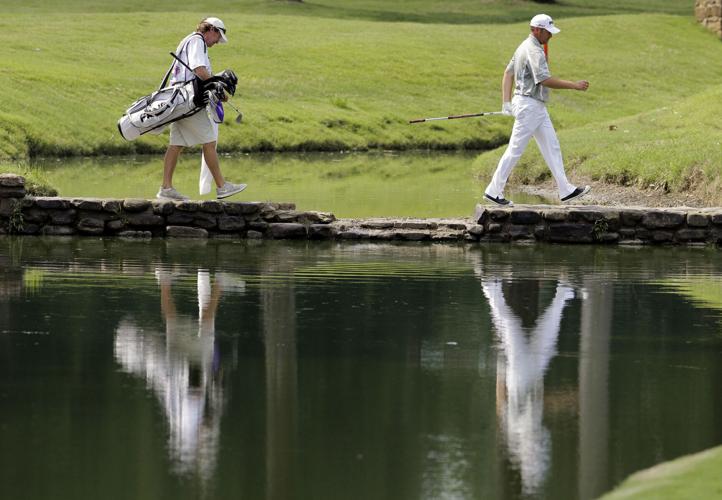
Ted Purdy, right, and his caddie cross a creek at the St. Jude Classic on June 8, 2012, in Memphis, Tennessee.
“Oh, I’ve been counting down,” he said. “Trust me.”
Purdy doesn’t have full status yet on the Champions Tour; he got into the Cologuard Classic, which runs Friday through Sunday, via a sponsor exemption. The symmetry isn’t lost on him: The Tucson Conquistadores made sure he had a spot in this week’s tournament, just as they did back in 1998 when he made his PGA Tour debut at the Tucson Chrysler Classic.
Although he won one PGA Tour event, the 2005 Byron Nelson Championship, and earned nearly $7.5 million over 20-plus years, Purdy considers that first chapter more of a failure than a success.
“I feel, personally, that I kind of screwed up my first career,” he said. “So I don't want to screw up this one.”
If it seems like Purdy is being unduly hard on himself, well, he’s been working on that. It’s all part of a mental retraining he’s undertaken to get to this point. But we need to finish the first chapter before we can flip the page to the second.

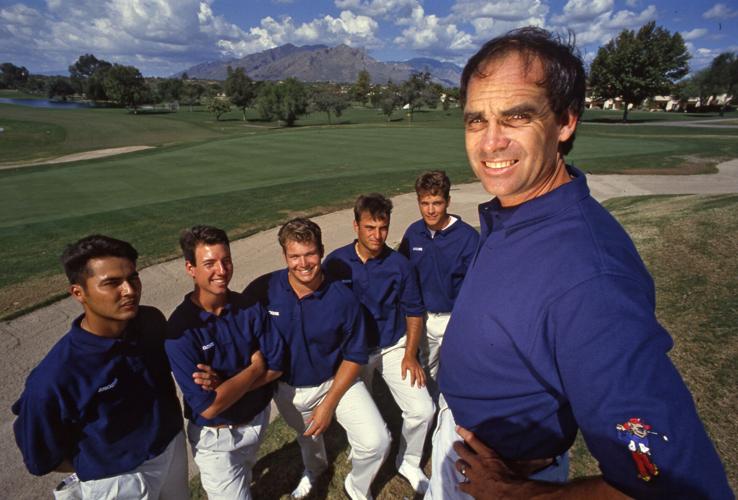
University of Arizona golf coach Rick LaRose, right, and the 1992 golf team in September, 1992, at Tucson National. From left, David Berganio Jr., David Howser, Jason Gore, Manny Zerman and Ted Purdy.
Why do you think you screwed up, Ted?
“I set so many big goals for myself that I never achieved on the PGA Tour,” said Purdy, a two-time first-team All-Pac-10 selection who holds the record for most collegiate rounds played (194) by a UA men’s golfer. “I obviously had a decent career. I won on the PGA Tour. But I always thought that I would be a household name. I never was.”
Purdy made 300 starts on the PGA Tour. Besides that one win, he finished second twice, third once and had 13 total Top 10s. He missed almost as many cuts (147) as he made (148).
The difference between a journeyman and a champion is marginal. Most pros will tell you it’s more mental than physical. They all can pound the ball and land it close to the flag. They don’t all head home with the hardware.
“It's a grind. It's a discipline,” Purdy said. “You've got to be completely disciplined, and you've got to be extraordinarily kind to yourself mentally.”
Purdy was in a good mental space in the mid-2000s. His career was ascending, and he was working out in his hometown of Phoenix with Mack Newton, a renowned martial-arts trainer who also worked with the Oakland Athletics and Dallas Cowboys in the 1980s and ’90s.
“Mack Newton really had me positive and in shape and feeling great when I was playing my best,” Purdy said. “I was kind to myself and was always optimistic.
“As those negative things happened, I got negative. I got less positive, less optimistic, kind of down on myself. Very hard on myself.”
One of those negatives happened off the course yet profoundly impacted him on it. Purdy made some unwise investments that coincided with the U.S. financial crisis of the late 2000s. He became distracted. His motivation morphed.
“When you're playing golf for other reasons than loving the game, it's a lot more difficult,” Purdy said. “It became a job instead of just (going) out there winging it and having fun.”
By the early 2010s, Purdy had lost his status on the PGA Tour. He suddenly needed a job in the real world. He applied to be the men’s golf coach for his alma mater, a position that went to Jim Anderson instead. Purdy sold cars for a time in Phoenix, or at least tried to.

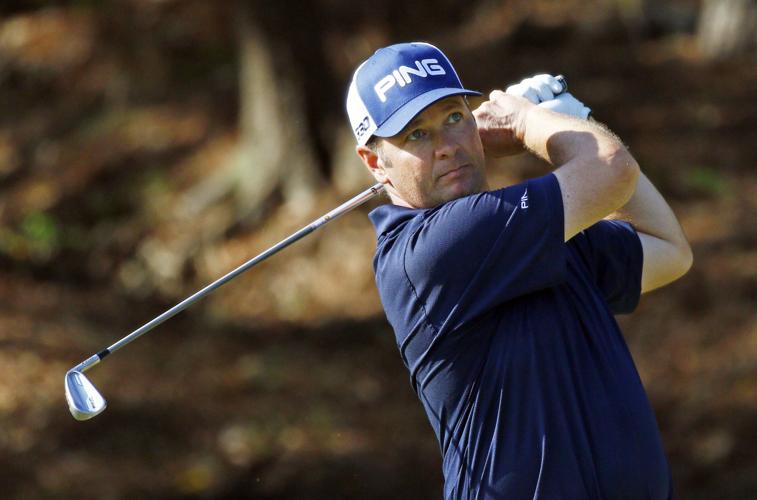
Ted Purdy watches his drive from the No. 10 tee during the second round of the Sanderson Farms Classic golf tournament on Nov 6, 2015, in Jackson, Mississippi.
“I hated it,” he said with a laugh. “Absolutely hated it.”
Between 2011 and ’15, Purdy played in 42 events on the Web.com Tour (now known as the Korn Ferry Tour). He missed the cut 28 times.
As he inched toward Champions Tour eligibility, two things changed Purdy’s perspective. One was working as the interim executive director for the Midwest Food Bank of Arizona. His stint there paralleled the pandemic. Ironically, Purdy stopped playing golf at a time when so many people started.
“Everybody was out playing golf, and the food bank was busier than they knew what to do with,” Purdy said. “They needed my help. I was happy to stay. That was a blessed time in my life.”
I asked Purdy what he took away from that experience.
“The world has a lot bigger issues than getting a ball in a hole,” he said, “when you see these poor people that are struggling just to eat.”
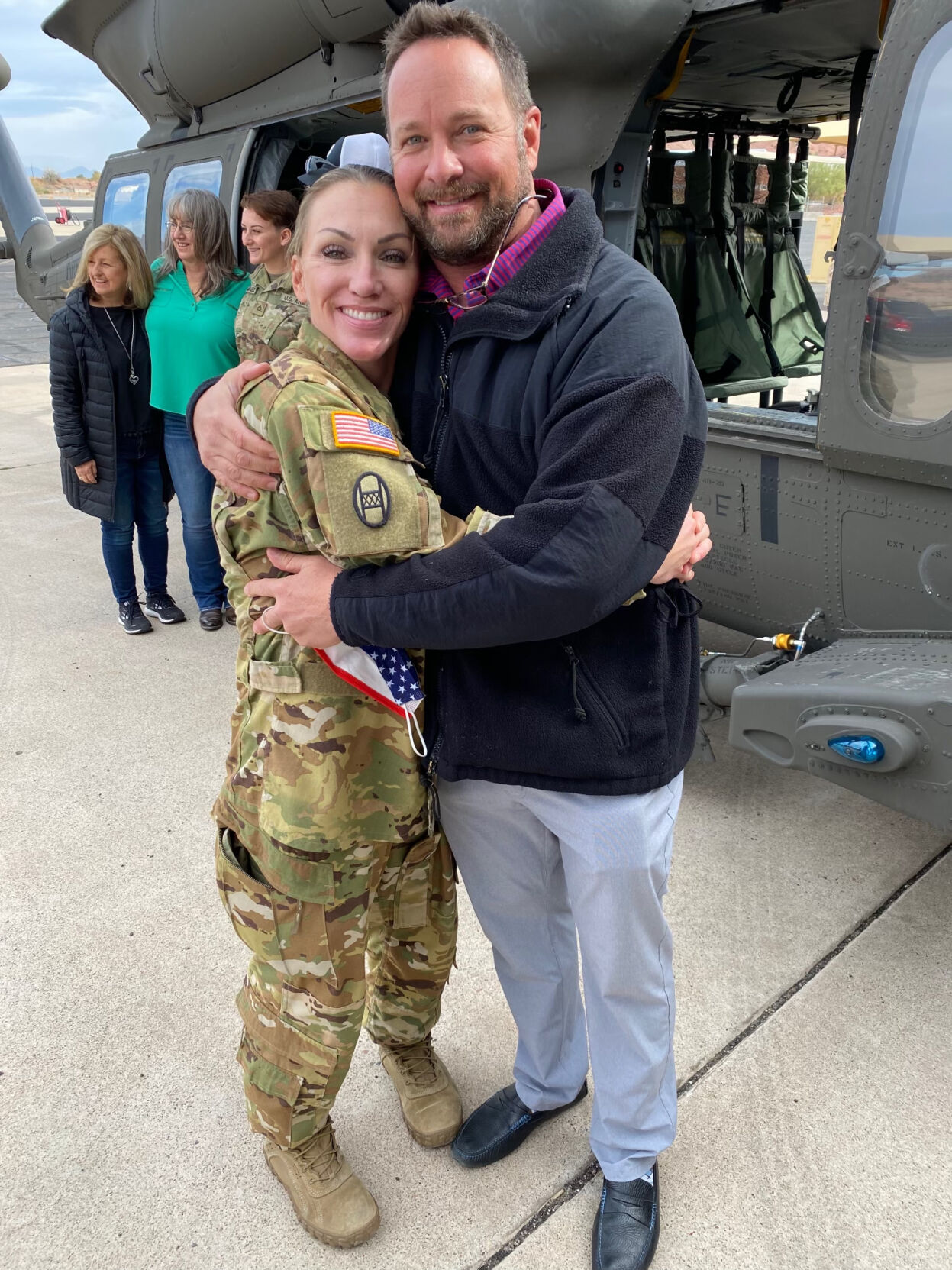
Former UA golf standout Ted Purdy hugs his wife, Frankie, who trains helicopter pilots for the Army National Guard. The two were married July 4, 2023, at Tucson Country Club, where Purdy is now a member.
Purdy also began working with VISION54, a golf instructional program that focuses, per its website, “on the human being playing golf, not just the technical aspect of the game.” Purdy’s coach was Pia Nilsson, who’s best known for tutoring Annika Sorenstam.
“They've got a saying called, ‘Great, good or good enough.’ That's the three categories of shot,” Purdy said. “If you hit a great shot, it's a great shot; reward yourself mentally. If it's good, give yourself a pat on the back; it’s still good. Even if it's the worst shot ever, hey, that's good enough; I can still salvage something from there, close the door and move forward.”
Purdy got valuable reps in 2022 and ’23 on the Korn Ferry Tour. He didn’t play well, missing every cut. But he got back out there.
He’s been working on his wedge game with Seth Glasco, the director of instruction at Tucson Country Club, where Purdy is now a member. He recently moved back to Tucson and got married at the club to the former Frankie Williams, who trains helicopter pilots for the Army National Guard.

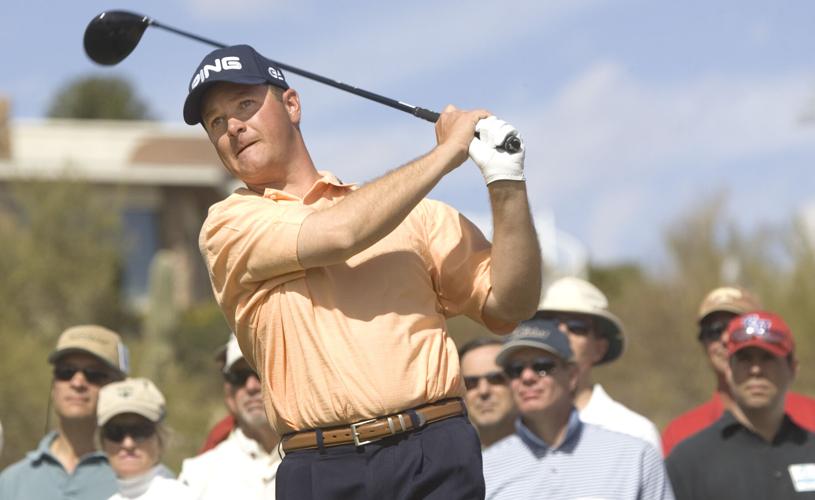
Ted Purdy watches his drive on the 13th hole of the Chrysler Classic at Omni Tucson National Resort on Feb. 26, 2006.
As Purdy told me his story and bared his golf soul, I wondered how confident he’d be stepping onto the first tee Friday morning. He believes in himself again, placing process above results. He has a new goal as his second career gets underway: Champions Tour Rookie of the Year.
“When I tee it up Friday morning, I'm going to know that I'm fully committed to that shot. I'm just going to hit that shot with commitment. And then after the shot, I'm going to be nice to myself,” Purdy said. “The confidence lies in the fact that I know my process. As long as I stick to that process. I'm going to do great.”


