


Gridiron Guide: Tour of Tucson's football stadiums
- Updated
A look at our ongoing series profiling Tucson's high school football stadiums.
- Updated
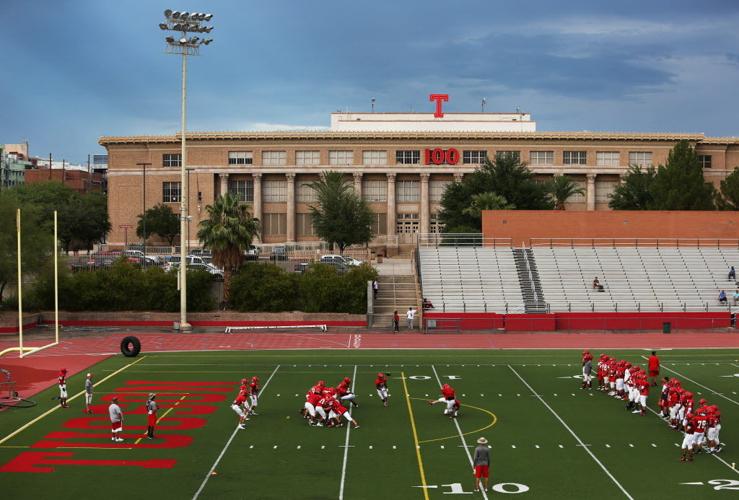
Gridiron Guide: Historic Gridley Stadium still gives goosebumps
School: Tucson High
Name: Gridley Stadium
Address: 400 N. Second Ave.
Opened: 1906, though grandstands weren’t installed until 1939. Home players and fans have been located on the east side since 1987, when an addition was completed.
The lowdown: Undoubtedly the most historic venue in town, Gridley Stadium is essentially Tucson’s own Rose Bowl. It has housed numerous local legends, starting with its namesake. Rollin T. Gridley coached the Badgers to five state titles and a 32-game winning streak from 1935-47. The stadium also has been home to some of the most memorable games ever played in Tucson, both in the regular season and in the playoffs. Among the legendary players to call Gridley Stadium home were Mike Dawson, Fred Batiste, Joe Petroshus and Joel Favara, just to name a few. The Badgers installed artificial turf nearly 10 years ago; the surface will likely need to be replaced soon, fifth-year coach Justin Argraves said. The stadium has one quirk: The stands on the west side don’t line up with the current field because the previous setup had the field running up against Sixth Street to the north with Seventh Street bordering the south end zone. The Badgers enter the field from underneath the home stands near the 50-yard line, similar to a college or NFL team.
Don’t miss: The Badger T. Atop the school’s main building to the east of the stadium sits a red “T” that lights up in red and white on game nights. It was a gift from the Class of 1959 and was renovated two years ago to make it bigger and brighter. “That’s a staple for every home game,” Argraves said. “It’s been going on for a long, long time now.”
Biggest game: Tucson put together a 94-yard scoring drive in the final quarter to hold off visiting Palo Verde 28-20 in its final home game of the storied 1970 season, when the Badgers finished 12-0 and won the first of two straight state titles under coach Ollie Mayfield. After Tucson stopped Palo Verde inside their own 10, Allistaire Heartfield helped drive the Badgers down for the go-ahead touchdown, successfully converting two fourth-down attempts along the way. Heartfield plunged in for a 1-yard score with 2:26 left in the game, clinching the win and a state playoff berth for the Badgers.
Performance for the ages: Hayzel Daniels, who became Arizona’s first black All-State player, rushed for a city-record 301 yards and four touchdowns in a 32-7 win at home against Bisbee in 1925. The 5-foot-9-inch, 190-pound Daniels had a similar performance a year later. Playing in his final home game, he rushed for 300 yards and scored five touchdowns as Tucson beat Nogales 66-6.
Quotable: “I get goosebumps every time we take the field; it never gets old. Every home game that we have is a special evening here at Tucson High.” – Argraves
Daniel Gaona
- Updated
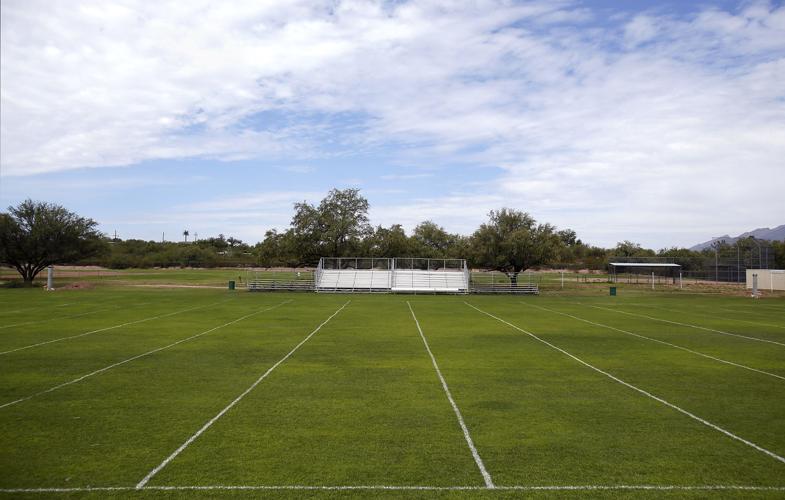
Gridiron Guide: Tanque Verde set to turn on lights
School: Tanque Verde
Name: None
Address: 4201 N. Melpomene Way
Opened: 2007
The lowdown: Tucked far away on Tucson’s east side, the one-time junior high is soon to be more than just a well-maintained field with a spectacular view of the Santa Catalinas and Mount Lemmon. New this year will be state-of-the-art LED lighting for the home opener on Aug. 21. Tanque Verde had been renting portable lights, which were costly and noisy enough to distract players, coaches and fans. The Hawks are also close to breaking ground on adding 800-1,000 in bleacher seating, similar to the setup at Pusch Ridge Christian. All of the upgrades are part of a 10-year plan that’s happening five years ahead of schedule, and are just beginning. Second-year coach Jeremiah Johnson has big plans for the small school still striving for its first trip to the state playoffs.
Don’t miss: While modest, there is still plenty of pride on a Friday night out at Tanque Verde. Lawn chairs line the sidelines and an eye-catching, relatively new snack bar marks the entrance. Along with a breathtaking view of the mountains, the surrounding area was once a large mesquite forest. The charm remains.
Biggest game: The Hawks completed a 25-24 comeback win against Patagonia in 2009, scoring 13 straight points in the second half. Tanque Verde was led by senior quarterback Hunter Haynes, who completed 10 of 15 passes for 246 yards and three touchdowns. He also gained 90 yards rushing on 19 carries. Fellow seniors Ryan Pernu and Ryan South were the main beneficiaries of Haynes’ big game: Pernu finished with 131 yards and two touchdowns as South accounted for 91 yards and a score, while also hauling in four passes.
Performance for the ages: In the 2013 home opener against Mesa Sequoia, senior Benito Pimienta rushed for 312 yards and six touchdowns on just 18 carries as Tanque Verde won 48-6. Pimienta also caught eight passes for 63 yards in the victory and had a similar performance the next week when he registered 332 all-purpose yards in a 35-14 win against Eloy Santa Cruz.
Quotable: “I’m just excited to have a stadium and lights because the community, I think, wants football. They want Friday night lights, but I don’t think they’ve really had it yet. They’ve had football, but now we’re going to actually have the lights, the stadium. I think it’s going to be a very positive impact.” — Johnson
Jason Harris
- Updated
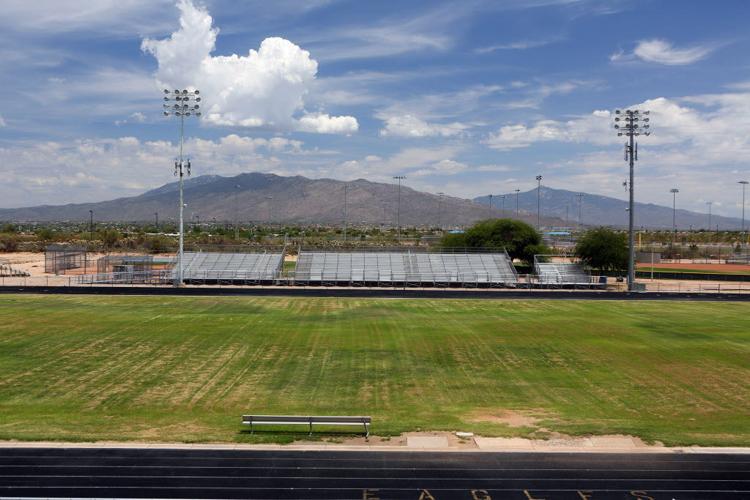
Gridiron Guide: Santa Rita eager to bring success back home
School: Santa Rita
Name: None
Address: 3951 S. Pantano Road
Opened: 1973
The lowdown: A welcoming mural marks the entrance to Santa Rita’s football field, which is tucked into the northwest corner of Lincoln Park on Tucson’s east side. The venue isn’t far removed from housing some of the city’s toughest teams, when coach Jeff Scurran led the Eagles to two state title game appearances and a trip to the state semifinals from 2007 to 2009. With five different coaches and no winning seasons since then, any traditions from those times have eroded. First-year coach Felix Jamero hopes to bring those winning ways back but he’ll have to wait until the fourth week of the season to play at home because the Eagles are on the road for their first three games. What Santa Rita’s stadium might lack in modern amenities, it makes up for in history: It was home to Eric Drage and J.J. Holliday, two of the most memorable wide receivers the city has seen.
Don’t miss: Its location. The stunning view from the home side features both the Santa Catalina and Rincon Mountains. Plus, if the timing is right, you could catch a picturesque moonrise during a game.
Biggest game: Santa Rita opened 2003 with a 41-10 victory over east-side rival Palo Verde, snapping a six-game skid against the Titans and notching its first win in the series since 1994. Senior quarterback Bryan Tubaugh was intercepted on his first pass but went on to complete 8 of 15 passes for 156 yards and four TDs. Meanwhile, Santa Rita finished the season 7-4 and qualified for the state playoffs for the first time in nine years.
Performance for the ages: Senior running back AuBurá Taylor rushed for a game-high 241 yards and five touchdowns on 28 carries to help Santa Rita rally for a 38-37 win in overtime against visiting Scottsdale Coronado in the first round of the 2007 Class 4A-II state playoffs. The dramatic victory extended a nine-game winning streak and came just one year after the Eagles finished off a winless campaign in 2006. It also sent Santa Rita on to the state quarterfinals for the first time in program history.
Quotable: “I like how things look. In the forefront, we have the desert there. It’s kind of like when you’re on NCAA football. You can build your own stadium and we have that luxury of having our desert in the back.” – Jamero
Jason Harris
- Updated
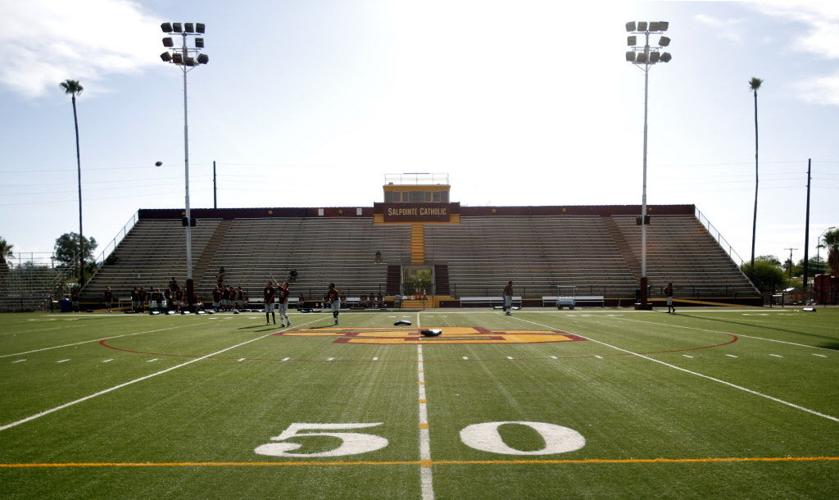
Gridiron Guide: Salpointe has 'first-class facility'
School: Salpointe Catholic
Name: Ed Doherty Stadium
Address: 1545 E. Copper St.
Opened: 1958. Before that, the facility existed as a field only. Salpointe in 1991 named the stadium after Doherty, who coached at the Lancers to their first state title game 10 years earlier.
The lowdown: Doherty Stadium is one of Tucson’s most storied venues, in part because of the players and coaches who have called it home. Lancers stars John Fina and Frank Garcia went on to play in the NFL, while Kris O’Dowd (USC) and John Kadous (Notre Dame) were both U.S. Army All-Americans. Doherty was the first in a line of successful coaches that continued to Pat Welchert and Dennis Bene. Both men coached Salpointe to the state finals, and Bene — a Salpointe alum — led the Lancers to their first state championship in 2013. The 57-year old stadium has seen its fair share of change: In the last 15 years, Salpointe has installed a new scoreboard, lights, goal posts, visitor’s-side bleachers and an artificial turf field. Bene said the stadium’s allure and ambiance is the same today as it was when he played there three decades ago.
Don’t miss: Salpointe’s is one of the few high school football stadiums in Arizona that doesn’t include a track, meaning spectators are right on top of the action. Want to get even closer? Savvy fans and students watch from a fence that sits just behind of the end zone.
Biggest game: One of Bene’s most memorable wins at home came in the first round of the 2005 Class 5A-I state playoffs, when the Lancers topped Catholic rival Phoenix St. Mary’s to win the coveted Ed Doherty Trophy for the first time since 1998. Junior quarterback Max Fritz scored on a short touchdown run the final minute to secure the win. “It was more than a playoff game,” Bene said. “It was years and years of history.”
Performance for the ages: Senior quarterback Tyler Graunke cemented his place in Tucson history and took down Phoenix Brophy in the same night in 2003. Graunke threw for 251 yards and four touchdowns as Salpointe beat the visiting Broncos 42-14 in the first round of the Class 5A state playoffs. Graunke broke Tucson single-season passing yardage and touchdowns records that night, and finished the season with 3,372 yards and 37 scores. Both remain the top marks in Tucson history.
Quotable: “We have a first-class facility and we have the success that goes with it, so we’ve been proud of it.” – Bene
- Updated
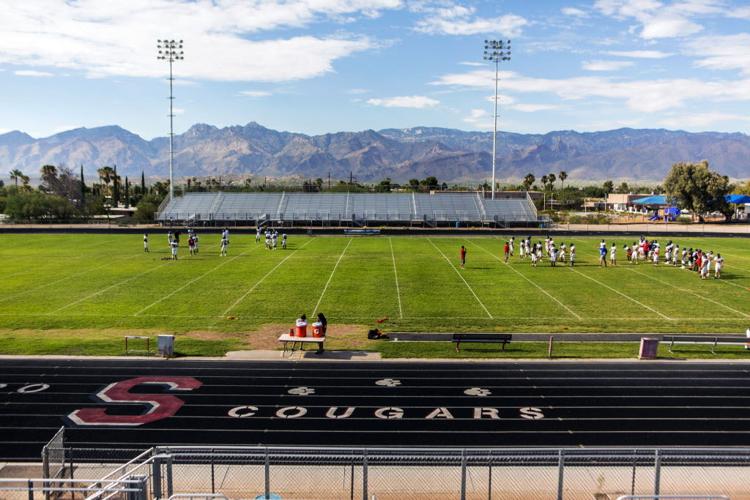
Gridiron Guide: Sahuaro home to legendary coaches, players
School: Sahuaro
Name: None
Address: 545 N. Camino Seco
Opened: 1968
The lowdown: Some of Southern Arizona’s most accomplished coaches called Sahuaro home. So did Rodney Peete, possibly Tucson’s most prominent high school athlete of all time. The list of local legends continues on after Peete, from wide receiver John Mistler to offensive lineman Mike Ciasca. Coach Howard Breinig built Sahuaro into the power it was, leading the Cougars to four title game appearance over 12 seasons. Will Kreamer and Nemer Hassey continued the legacy that seventh-year coach Scott McKee has been trying to rekindle. The stadium itself is simple, a natural-grass field that runs east and west and is bordered with aluminum bleachers on both sides. It’s missing one touch, McKee said: The stadium should be named after Breinig.
Don’t miss: The Rick Botkin Memorial Game. For the past 37 years, Sahuaro has held an annual memorial game in honor of Botkin, a star quarterback who was killed in a car accident during the 1977 season. It’s the longest-consecutive memorial game in the country, according to school officials; this year’s event will be held on Sept. 11, when Sahuaro hosts Canyon del Oro.
Biggest game: The Sabino-Sahuaro rivalry is one of the biggest in the state and the 1998 rendition certainly did not disappoint. Junior quarterback Reggie Robertson, one of Tucson’s most prolific passers of all time, threw a pair of touchdowns in the final nine minutes and led the Cougars to a come-from-behind 20-19 win. Robertson connected with Chad Huber for the go-ahead 21-yard touchdown pass with 3:34 left. Sahuaro’s student section swarmed the field in celebration after Sabino’s final drive fell short.
Performance for the ages: Senior running back Omar Bacon gained 206 yards on just 13 carries against Sunnyside in 1994 before leaving the game with concussion-like symptoms. Sahuaro topped the Blue Devils 33-14 for its sixth straight win; it was over when Bacon broke free for a 78-yard touchdown with 6:55 left in the second quarter. Bacon and the Cougars, then coached by Breinig, went on to tie for the Class 4A state championship that season.
Quotable: “This should be Breinig Field. He’s worked hard and he made it to what it was. It would be our responsibility to try to get his name and his family’s name on it. That’d be something I’d like to have done before my days are over.” – McKee
Daniel Gaona
- Updated
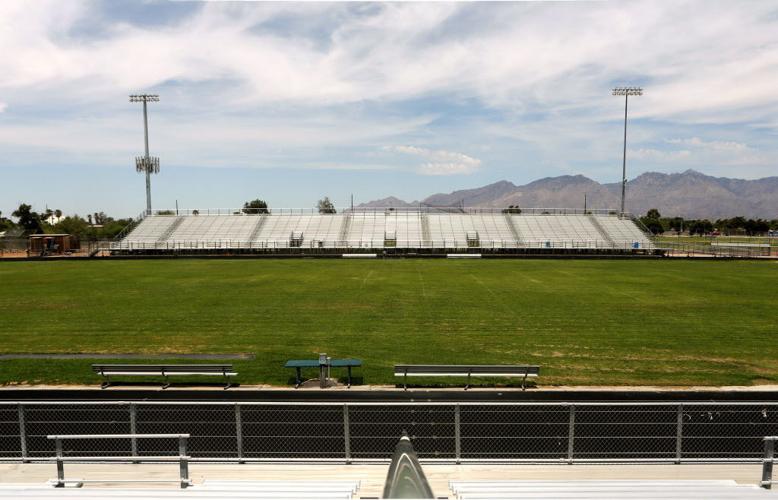
Gridiron Guide: Remember the Titans at Palo Verde stadium
School: Palo Verde
Name: Titan Stadium
Address: 1302 S. Avenida Vega
Opened: 1962
The lowdown: Palo Verde is home to two state championship teams, a former NFL rookie of the year and one of Southern Arizona’s most memorable products of all time. Longtime coach Todd Mayfield led the Titans to an unprecedented state crown in 2005, three decades after coach Van Howe saw his 1973-1974 team go 13-0 on its way to a title.
Linebacker Mark Arneson called Titan Stadium home before he went on to become an All-American with the Arizona Wildcats and the 1972 NFL Rookie of the Year while a member of the St. Louis (now Arizona) Cardinals. Adam Hall brought national attention to Palo Verde less than 10 years ago when he was named a Parade All-American.
Don’t miss: The history. From Arneson to Hall, some of Southern Arizona’s most memorable players — such as offensive lineman Jim Arneson and kicker Bill Zivic — came out of Palo Verde.
Biggest game: Palo Verde took down Cholla 21-9 in the second round of the Class 4A-II state playoffs in 2005, avenging a loss to the Chargers earlier in the season and moving one step closer to winning its second state title in program history. The Titans forced five turnovers and amassed six sacks as senior quarterback Victor Yates passed for 123 yards, rushed for another 60 and scored two touchdowns in his final game at Titan Stadium.
Performance for the ages: Hall scored three touchdowns, combined for 226 yards rushing and receiving and pulled in two interceptions to lead the way as Palo Verde took down undefeated Santa Rita in front of a jam-packed house on Halloween night in 2008. Hall ran for a 12-yard score in the first quarter and then punched it in from eight yards out once more before halftime.
His big moment came much later though, when he scored the winning touchdown on a 28-yard sprint with 3:12 left in the game and then picked off a pass to seal the win.
Quotable: “Just the history that is with it, with the 2005 team and the 1973 team. The weight room is right next to the field and you see the wall of fame, you see the history of Palo Verde on the wall and you just get this feeling that anything is possible here.” — Second-year coach Laurence Ruhf
Daniel Gaona
- Updated
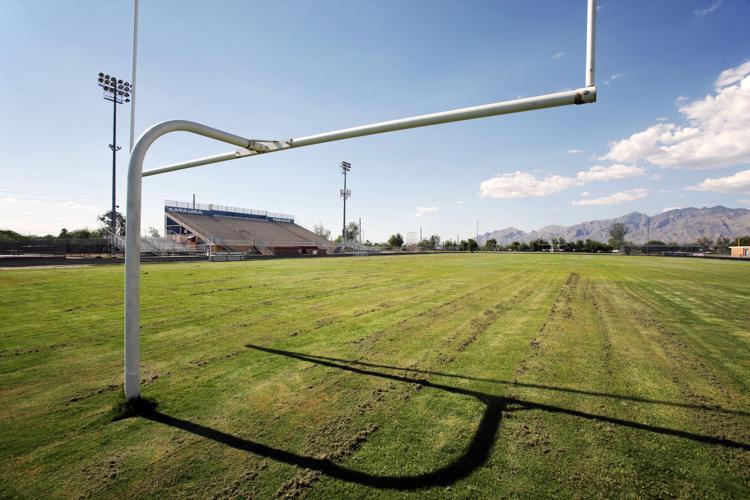
Gridiron Guide: Coach hopes to pack Catalina's stadium
School: Catalina
Name: Nicholson Stadium
Address: 3645 E. Pima St.
Opened: 1955
The lowdown: The venue is a hidden gem, the way first-year coach Zach Davila looks at it. Everything the team needs — from locker rooms to coaches’ offices — is within the cement stadium, just a few steps from the natural grass field. The interior has been upgraded with new paint and motivational signs since Davila took over last spring.
“This place has great bones,” Davila said. “We’ve been doing some touch-ups here and there, but we want to keep it as it’s been.”
Don’t miss: The sheer size of the stadium. Davila, a 25-year old Cienega product, is eager to create a student section and hopefully create a home-field advantage. Catalina has never hosted a postseason game, though the spacious stadium has been used as a neutral-site field multiple times.
Biggest game: The Trojans secured their first winning season in almost three decades with a 55-0 victory against Desert View on senior night in 2002. “We finally have got the monkey off out back,” coach Shawn Wasson said after the game. “They can’t call us losers any more.” Phillip Pickett rushed for 201 yards and three scores on 15 carries, and fellow senior Chuck Cole scored four touchdowns. Catalina won again the following week at Pueblo to finish the season 7-4 but did not qualify for the postseason.
Performance for the ages: Ray Morales rushed for a whopping 308 yards and four touchdowns in a 63-15 win against Rio Rico in 2009, the one and only time Catalina has reached the state playoffs. Morales had just 12 carries and scored on runs of 59, 24, 52 and 21 yards as the Trojans snapped a three-game losing streak and improved to 3-3. Catalina finished 5-5 and, thanks to some outside help, earned the No. 16 seed in the 4A-II state playoffs.
Quotable: “When I set foot in it, it opened my eyes. We could have this place rocking; it can hold a lot of people, and I think it made me want to work harder to fill these stands.” – Davila
Daniel Gaona
- Updated
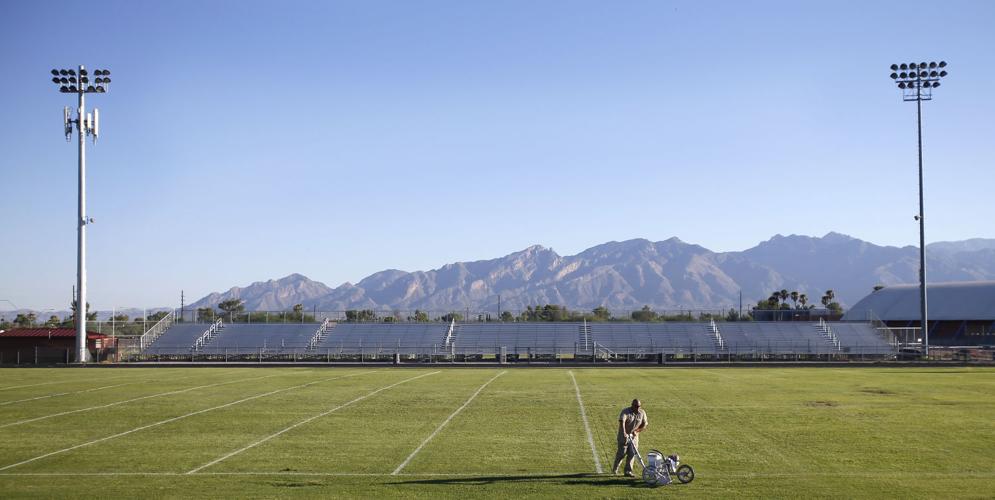
Gridiron Guide: Rincon brings 'immaculate' band on game night
School: Rincon/University
Name: None
Address: 421 N. Arcadia Ave.
Opened: 1958
The lowdown: Rincon’s stadium is one of the oldest in Southern Arizona and one of the few that has the field going east to west, rather than the customary north to south. The venue also served as the host site for a Minnesota Vikings exhibition game in the late 1970s and houses one of the best bands in Arizona. It’s also the only stadium in town with its own truck: An old-school Dodge fire engine leads the team onto the field before every home game. Second-year coach Lucius Miller, who has been with the program for 20 years, has plenty of good memories, even though the Rangers have had just three winning seasons and two playoff appearances in that span.
Don’t miss: The band. Miller isn’t shy when he talks about one of the school’s most well-known entities. “Our band is immaculate,” he said. “It takes up half our stadium for every home game so we get a lot of participation, a lot of noise. You can’t beat it.” The band has more than 200 members.
Biggest game: Rincon capped its 1998 campaign — its first winning season in more than two decades — with a dramatic 31-24 triple-overtime win against Marana. Junior quarterback Daniel Pivirotto scored two touchdowns in the fourth quarter to extend the game; first on a 4-yard interception return and then on an 11-yard run. Clyde Hardin put the Rangers ahead for good with a 1-yard soring run in the third overtime before Rincon’s defense held Marana scoreless on its possession.
Performance for the ages: Senior running back Kevionte Alexander went off for a career-high 263 yards and four touchdowns on 20 carries as Rincon took down visiting Marana in its 2012 home opener. Alexander amassed 1,646 yards and 21 touchdowns that season as the Rangers, then coached by Nate Gahn, finished 6-4, securing their first and only winning record since 2005.
Quotable: “It’s real exciting to be able to call it my own now. I called it home before, but now it’s my field, and it has a little different feel to it, a little different meaning to it.” – Miller
Daniel Gaona
- Updated
Gridiron Guide: Walden Grove's stadium growing from infancy
School: Walden Grove
Name: None
Address: 15510 S. Sahuarita Park Road
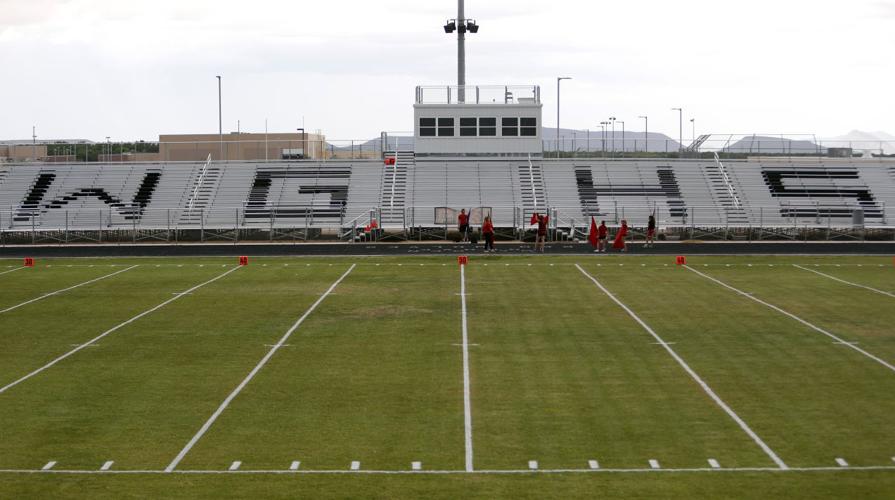
Opened: 2013. The Red Wolves played three home games at Sahuarita High in their first season of 2012.
The lowdown: Walden Grove is the newest addition to the Tucson area but has already seen a fair amount of change in a short amount of time. The natural grass field was originally part of Sahuarita Park but was rezoned when the school was built; there is still playground equipment to the east of the stadium, behind the new visiting bleachers. The venue used to seat roughly 600 people but can now hold 1,300, thanks to recent upgrades. First-year coach Chris May hopes to establish new traditions for the program, such as tailgating and having a strong student section.
Don’t miss: The newness. May appreciates the infancy of the facility and the ability to expand. Since the end of the 2014 season, the home bleachers have been practically doubled and they now display the school’s initials, “WGHS,” in large black letters. There is also a new press box atop the stands and a new locker room facility and concession stand on the northwest corner of the complex.
Biggest game: After stumbling out to a 2-4 start in 2013, the Red Wolves took down visiting Santa Rita 44-12 for their first victory on their home field. Junior quarterback Austin Elenez accounted for four touchdowns while the Walden Grove defense forced six turnovers.
Performance for the ages: Louis Joseph and Izzy Calvillo combined for 262 yards rushing and four total touchdowns as Walden Grove beat Benson 42-28 to extend a four-game winning streak last season. Calvillo scored on a 44-yard run in the first quarter after fellow senior Chis Moody returned the opening kickoff 82 yards for a touchdown. Moody, a junior, put the game out of reach in the fourth quarter when he raced to the end zone from 13 yards out.
Quotable: “Having the initials puts its stamp on it, that this is Walden Grove High School. That’s my favorite part of the stadium; it made it a high school stadium as opposed to a field with awesome bleacher seating around it.” – Hector Estrada, the school’s athletic director
Daniel Gaona
- Updated
Gridiron Guide: Desert View's Jaguar Stadium has 'potential'
School: Desert View
Name: Jaguar Stadium
Address: 4101 E. Valencia Road
Opened: 1988. Prior to that, Desert View played home games at Sunnyside in its first three seasons.
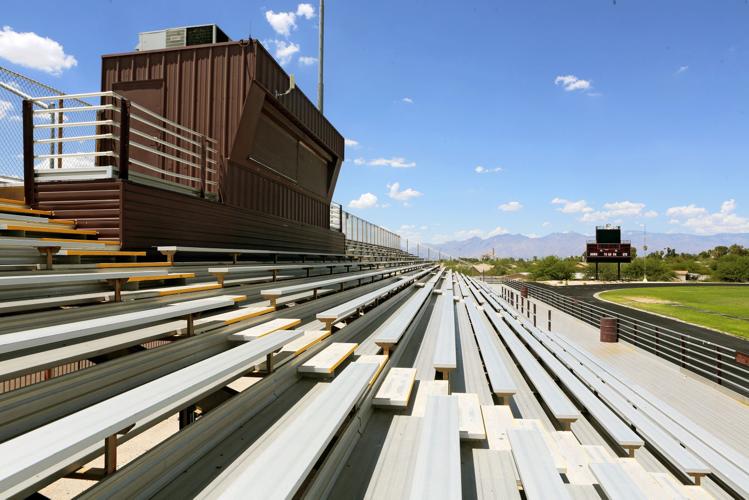
The lowdown: The 25-year-old Jaguar Stadium has housed just two winning teams in the last 18 years, but that doesn’t mean it hasn’t seen its share of memorable moments. The venue was home to Adam Rodriguez, one of Southern Arizona’s most prolific passers. The four-year starter finished with a city-record 5,774 career passing yards. The field also remains the site of Desert View’s lone win against district rival Sunnyside in 1989. Fourth-year coach Robert Bonillas believes his stadium has a lot of “potential,” especially with the recent upgrades, such as the new scoreboard with a video board. Bonillas joked that a new tradition he would like to add is to have a jaguar run down the field before the games.
Don’t miss: The scoreboard. In an effort to “add extra juice” to Friday nights, Bonillas wants to fully capitalize on using the new gadget. “When you add lights and sounds to everything, it makes it a little bit better,” he said.
Biggest game: After losing its first four games against Sunnyside, Desert View got the best of the Blue Devils in a 19-0 win in 1989; each of the previous contests had been played at Sunnyside. “When you play in your own backyard, it’s a different story,” former coach Humberto Federico said. The Jaguars capitalized on five Sunnyside turnovers and scored all 19 points in the second half, starting with a 17-yard fumble recovery for a touchdown by Duncan Thomas.
Performance for the ages: Senior running back Mike Debevoise gained 172 yards on just 13 carries and caught a 67-yard TD pass to help Desert View take down Santa Rita 21-0 on homecoming in 1996, the last time the Jaguars reached the postseason. Debevoise opened the scoring with his long reception, and later in the first quarter, had an 86-yard touchdown run. He finished the season as Southern Arizona’s leading rusher with 1,464 yards.
Quotable: “Just the lighting up of the scoreboard, seeing the stands, the kids playing in the band and all that, the kids warming up — that’s really what I look forward to.” – Bonillas
Daniel Gaona
- Updated
Gridiron Guide: Cienega's Bobcat Stadium is the place to be in Vail
School: Cienega
Name: Bobcat Stadium
Address: 12775 E. Mary Ann Cleveland Way
Opened: 2002
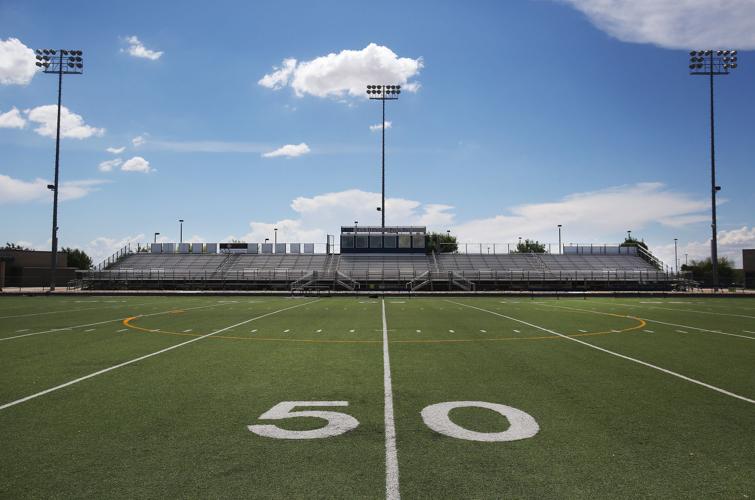
The lowdown: Cienega is one of Southern Arizona’s newest programs, but it didn’t taken long for Bobcat Stadium to become home to one of the area’s strongest powers. The winning tradition is clear from the time you walk through the gates and look up to see several banners hanging across the back of the home bleachers. Longtime coach Nemer Hassey, who stepped down after last season to become the school’s principal, never fielded a losing team and experienced several dramatic postseason victories at home, as recently as last fall. Cienega was also the first local program to have an artificial turf field 10 years ago but the wear is starting to show in some spots and it will likely need to be replaced within the next couple years.
Don’t miss: The vibe. Game nights at Cienega are hard to match; there is typically a large and lively crowd along with a certain feeling in the air that can send chills down your spine. Perhaps the reason behind the vibe is the small-town quality combined with the big-time expectations. As if the fans and the marching band don’t make enough noise, it gets even louder when a train rolls down the railroad tracks across the street during the middle of a game.
Biggest game: Cienega has faced off against Tempe Marcos de Niza just twice and both times were at home and in the state quarterfinals. In the first meeting four years ago, senior quarterback Michael Archie had a hand in three touchdowns as the Bobcats held on for a 22-21 win to reach the state semifinals for the third straight year. But this time, Cienega was finally able to break through and reach its first state championship game in program history, thanks to a 24-21 win against Ironwood Ridge the following week.
Performance for the ages: Three years removed from that one-point thriller, the Bobcats and Padres met up for an even more memorable game. This time, though, it was senior running back Francisco Dicochea who took control and helped lead Cienega to a wild 50-49 win against Marcos de Niza in double overtime. Dicochea played every down on both sides of the ball and finished with 278 yards and six touchdowns on 39 carries. His biggest moment came at the end, when he blocked a potential game-tying extra point to seal the win.
Quotable: “I always give Hassey a hard time about being in Vail and the train running through the stadium; it gets loud and you can hear it rolling down the tracks. It’s that community atmosphere.” — First-year coach Pat Nugent
Daniel Gaona
- Updated
Gridiron Guide: Sabino stadium is a serene, yet rockin' venue
School: Sabino
Name: The Saberdome
Address: 5000 N. Bowes Road
Opened: 1972
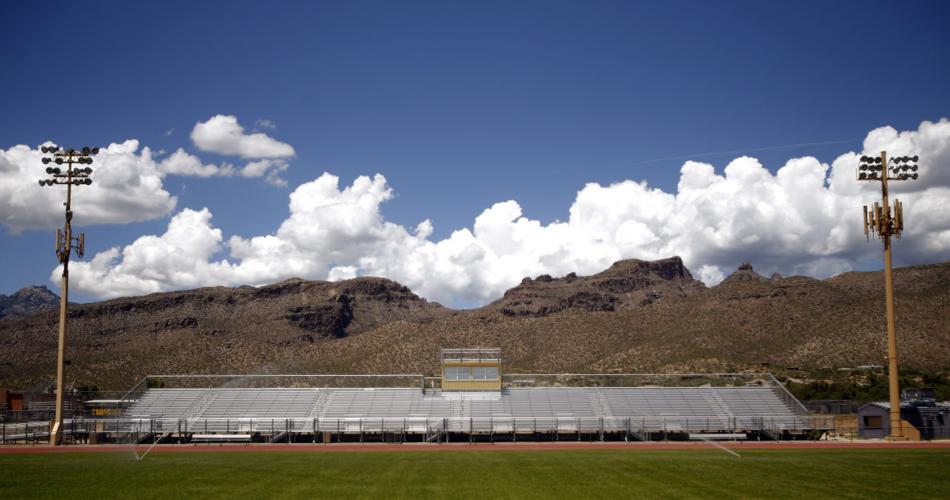
The lowdown: The Saberdome is one of the most historic venues in town and hasn’t housed a losing team since 1998. Since then, Jay Campos and Jeff Scurran, two of Southern Arizona’s most decorated coaches, have combined for numerous postseason victories, eight title game appearances and three state championships. On top of that, generations of distinguished players have called that field home, from Jeff Kiewel to Corey Hill to Mike Saffer to Brooks Reed, who starred for the Arizona Wildcats and now plays for the Atlanta Falcons. Over the last 10 years, the Saberdome has added an $85,000 press box, replaced the bleachers and put up new field goal posts. “We’re constantly doing things to try and improve the facility,” said Campos, who is entering his 13th season as Sabino’s coach.
Don’t miss: The view. From the time you turn onto Catalina Highway and head north on Harrison to get to Sabino, the view of the surrounding mountains is unbelievable. It only gets better inside the stadium with Sabino Canyon in sight. Being tucked into the Tanque Verde valley also gives the stadium an intimate feel on game night. But don’t be mistaken, things become electric once the band leads the team onto the field before kickoff.
Biggest game: Campos has endured several wild games at home but one of the most memorable has to be Sabino’s 34-31 overtime win against Phoenix Thunderbird in the 2011 Division III state quarterfinals. The victory was the team’s 11th straight and sent the Sabercats on to the semifinals for the fourth time under Campos. Senior quarterback Dallas Brown sealed the win when he ran for a 15-yard touchdown on Sabino’s first offensive play in overtime after Thunderbird was held to a field goal in its possession.
Performance for the ages: Senior running back Nathan Wize opened the 1997 season by totaling 358 all-purpose yards and scoring three touchdowns in a 38-10 win against rival Sahuaro. Wize, who went on to play at Cincinnati, rushed for 168 yards and two touchdowns in addition to returning a punt 65 yards for a score in the victory. The 5-foot-7-inch 190-pound Wize is remembered as one of Southern Arizona’s top rushers, as he finished with 3,101 yards and 51 touchdowns that season.
Quotable: “This is off the beaten path; you don’t have the traffic you hear and all that stuff. It’s just nice and quiet and once the game gets going it’s like nothing else in the world is going on besides what’s happening right here on the field.” – Campos
Daniel Gaona
- Updated
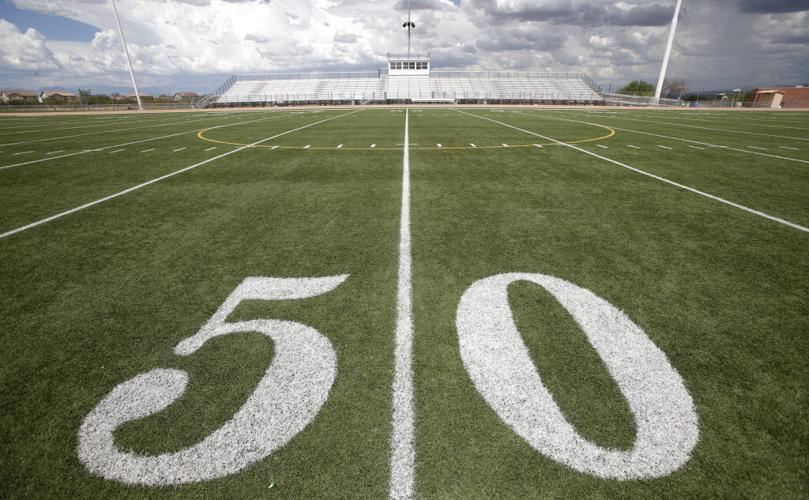
Gridiron Guide: Sahuarita leans on tradition at home field
School: Sahuarita
Name: Earl J. Kelly Stadium, Burton Tingle Field
Address: 350 W. Sahuarita Road
Opened: 1964
The lowdown: Sahuarita’s stadium remains the same as it was five decades ago, geographically speaking, but some of the elements there have changed: The school replaced its natural grass field with an artificial turf and upgraded the eastern bleachers five years ago as part of a stadium improvement project.
Around the same time Sahaurita switched its home sideline from the western to the eastern side, putting the team closer to its locker rooms.
First-year coach Rodney Day, a longtime assistant in the program, said it was strange at first to make the switch, mainly because the sun was now in their faces rather than at their backs.
Don’t miss: The Rock. Just as Notre Dame’s football team touches an iconic sign on its way out of the locker room, the Mustangs have a pregame tradition: Before the players take the field, they touch a large rock on the south end of the home bleachers.
The origins of the boulder are unknown — Day believes it came from a nearby mine because of the hole drilled through it — but it is dedicated to Burton Tingle, who has spent several decades coaching and teaching at Sahuarita. Tingle is still an assistant with the football team.
Biggest game: In 2012, two years removed from a winless season, Sahuarita held off rival Nogales at home in a back-and-forth showdown of two undefeated teams.
The Mustangs had a 14-point lead at the half, but Nogales managed to tie the game at 26 early in the forth quarter before senior Aric Howard returned a kickoff 86 yards for a touchdown to help spark Sahuarita to a 47-33 win in front of a sell-out crowd; the Mustangs went on to finish the regular season 10-0 for the first time in program history.
Performance for the ages: Senior quarterback Calvin Jenkins accounted for six touchdowns in a 42-21 win against visiting Safford in the Division IV state quarterfinals last fall. The victory, Sahuarita’s 12th in a row, sent the Mustangs to the semifinals for the third time ever.
Quotable: “Tradition is the biggest part of what we try to sell down here as a program. We’ve been building it up as we go along and we’ve been pretty successful over the past years and that success helps our tradition build.” — Day
Daniel Gaona
- Updated
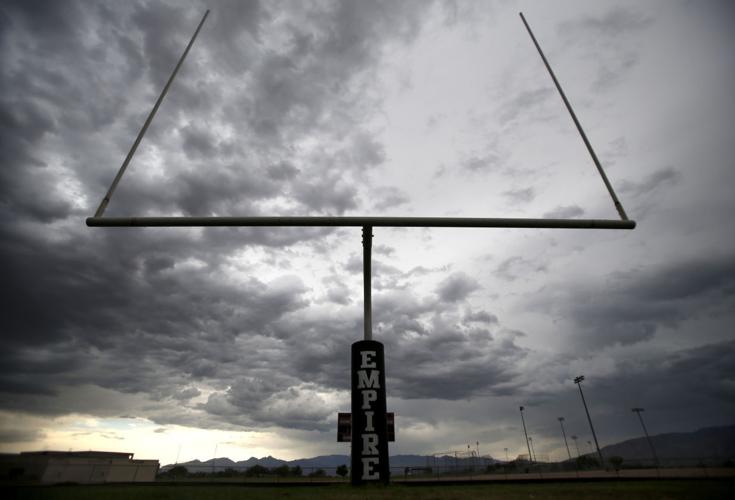
Gridiron Guide: Empire's stadium emerging into something bigger
School: Empire
Name: None
Address: 10701 E. Mary Ann Cleveland Way
Opened: 2006
The lowdown: Empire may be one of the newest and smallest schools in the Tucson area, but it still warrants a visit. Crowds are anything but small on Friday nights and students pack into the “Ravens Roost” section in the home bleachers. The stadium has undergone several upgrades since opening, including the addition of bleachers on the visitor’s side and a new public address system, and is scheduled to get a press box. Third-year coach W.T. Jeffries said the recent upgrades were made to accommodate larger crowds.
Don’t miss: The small-town feel. Empire has come a long way since it used hay bales for overflow seating in its inaugural season, but the unique vibe is still there. That will especially be the case when the Ravens host Walden Grove on Aug. 28 to open the season. Empire’s fan base, known as the Raven Nation, will host a “black-out” for the opener. That’s another Empire tradition.
Biggest game: Empire finished the regular season 9-1 in 2009 and, as a result, hosted a postseason game for the first time in program history. The Ravens won their first playoff game when they took down visiting Safford 44-18 to open the 3A state tournament. Empire’s defense forced six turnovers and senior Bryant Jeffries, the coach’s son, scored four touchdowns — two rushing, one receiving and one on a fumble recovery. Fellow senior Cody Woody gained 212 yards on 19 carries and scored a touchdown.
Performance for the ages: Sean Fitzsimmons went out in style on senior night, rushing for a state-record 516 yards and six touchdowns in an 82-55 win over Catalina two years ago. Fitzsimmons became just the second player in Arizona history to rush for more than 500 yards. He wasn’t alone in his performance that night: Fellow senior captain Chance Hatfield gained 240 yards and scored four TDs. Jeffries believes the team’s 843 rushing yards is a single-game state record.
Quotable: “We’re growing. We’re trying to become a place that people don’t want to be, as far as visitors.” – W.T. Jeffries
- Updated
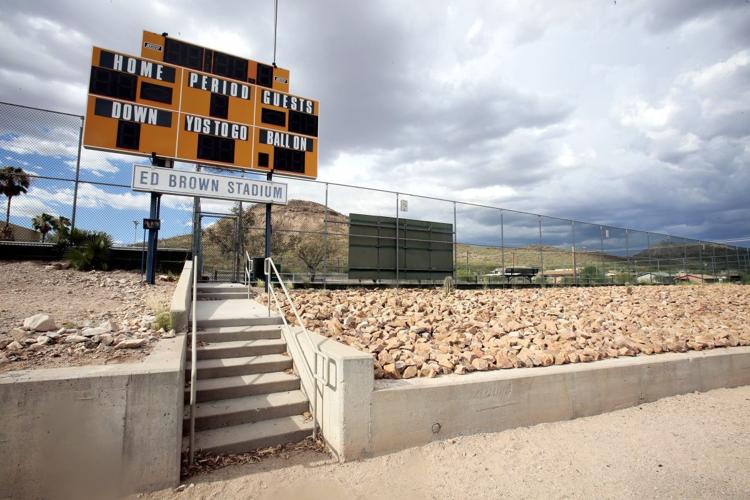
Gridiron Guide: Tumamoc towers over Cholla's Ed Brown Stadium
School: Cholla
Name: Ed Brown Stadium
Address: 2001 W. Starr Pass Blvd.
Opened: 1970. The Chargers played home games at Catalina and practiced at Kennedy Park in their inaugural season in 1969.
The lowdown: Second-year coach Virgil Henderson doesn’t shy away from Cholla’s recent struggles. In fact, he uses the everyday sight of Tumamoc Hill to the north of the stadium as something to encourage his team. The Chargers have had just one winning season since 2005; they’ve won 19 games and lost 71 since then. Still, Henderson looks back to the team’s success under coach Ed Brown, who started the program, and reminds his players that anything is possible.
Don’t miss: The burning of the “C.” Prior to taking the field on homecoming night, the team and its fans gather around the “C” statue near the entrance of the school and watch as it is lit on fire by one of the team captains. It’s something you have to witness, Henderson said, and, he’s hoping it could soon be done for all home games. “The first time I saw how that was, I had chills,” he said.
Biggest game: Cholla hosted Flagstaff Coconino in the first round of the 2005 4A-II state playoffs, making its first postseason appearance since 1988. After jumping out to a 14-point lead, the Chargers had to hold off a late push by the visiting Panthers to win 21-19 and advance to the quarterfinals for just the second time in program history. Cholla running back Kevin Dees rushed for 108 yards and two touchdowns while the Chargers limited Coconino to just 62 yards on the ground.
Performance for the ages: Vance Johnson, one of Tucson’s most notable high school athletes, helped Cholla secure its first-ever playoff berth in the 1980 regular-season finale against Pueblo. Johnson, who went on to play for the Arizona Wildcats and the NFL’s Denver Broncos, gained 216 yards on 22 carries in the 21-14 win. After being held to just 15 yards in the first half, Johnson sparked the Chargers with a game-tying touchdown pass and then a 63-yard scoring run.
Quotable: “It’s hidden; it’s a little gem that nobody really knows about. I think when people start coming back around, and seeing what we have to offer, I think they’re going to fall in love with it.” – Henderson
- Updated
Gridiron Guide: Marana's upgraded stadium worth the trip
School: Marana
Name: Tiger Pride Stadium
Address: 12000 W. Emigh Road
Opened: 1975
The lowdown: This is not your parents’ Marana football. While the stadium still has that small-town feel, a recent facelift has given it a new charm all its own. The drive down Twin Peaks might still seem like it takes forever, but the upgrades are worth the trip. The most notable item is the $1 million artificial turf field the Tigers installed before the start of the 2013 season. With the shiny new centerpiece in place, other parts of the stadium began to show their wear. Administration quickly remedied that with a new paint job, refurbished press box, improved ticket booth and logos galore.
Don’t miss: The Tigers take the long way to the field on their final pregame march before kickoff. The trek includes crossing paths with the opponent, a long, empty corridor for players to collect their thoughts and a rock to touch for good luck before entering an inflatable helmet lined with cheerleaders aimed toward the T-Unit student section and the Tiger Pride band.
Biggest game: There were plenty of blowouts during the Tigers’ undefeated Division B state championship seasons in the 1960s, but more recently, Marana’s biggest moment came in a 13-6 win against district rival Mountain View in 1998. Rion Westfall finished with 100 yards passing and 109 yards rushing, scoring both of the Tigers’ touchdowns — one through the air the other on the ground. The victory was part of a 7-4 season, which included a postseason appearance, and marked Marana’s last win in the Battle of the Boot.
Performance for the ages: That same season, in the second-to-last week, Marana beat Flowing Wells 34-17, snapping a six-game losing streak against the Caballeros. Future Arizona Wildcats safety Clay Hardt came to the rescue with 280 yards rushing and four touchdowns on 22 carries, as freshman Scotty Coxon had to make the start at quarterback because of injuries. Coxon went on to become the most prolific passer in school history.
Quotable: “I think it’s one of the prettier fields we have in town, and when you get up to the top, you can really see all of Marana. I know it’s rural, but I think it’s really pretty out there.” – Marana coach Andy Litten
- Updated
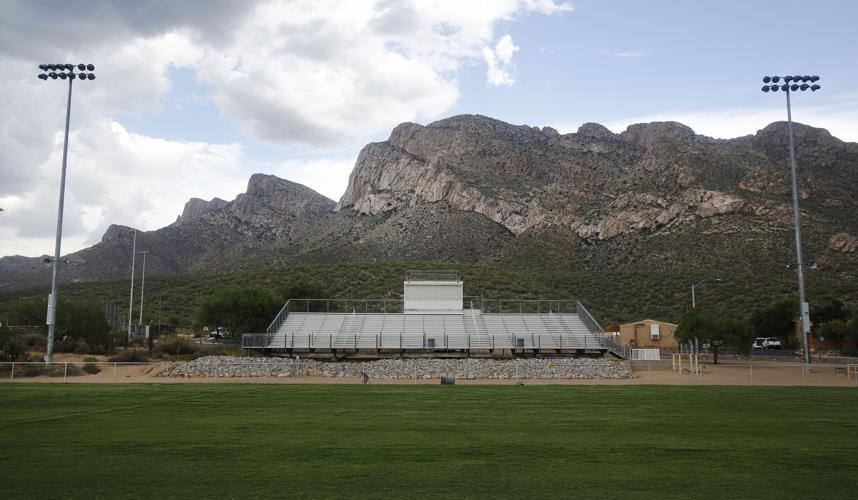
Gridiron Guide: Pusch Ridge features 'unbelievable' view
School: Pusch Ridge Christian
Name: None
Address: 9500 N. Oracle Road
Opened: 2000.
The lowdown: Several other schools in the area can brag about their view of the mountains but none compare to the scenery at Pusch Ridge. The Lions’ home field is tucked in at the base of the Santa Catalina Mountains, providing one of the most incredible backdrops in the state. Additionally, thanks to a series of donations, the school is a year removed from a $150,000 overhaul of the field, which included new grass, new goal posts, an irrigation system and fencing.
Don’t miss: Third-year coach Troy Cropp says the sense of community at home games is unlike anything else he’s seen. That is a mainly a result of the area youth team that shares the same colors and mascot, and is mostly comprised of students from Cornerstone Christian Academy, the main feeder school for Pusch Ridge. “It’s almost like we’re a small town, in the middle of Tucson, as far as family support,” Cropp said. “They come and tailgate, families of kids who are kindergarten, not even close to high school age.”
Biggest game: Pusch Ridge gave up an early touchdown but responded with 56 straight points to win its first postseason game at home in the first round of the 2009 Class 2A state playoffs.
The Lions topped visiting Morenci 56-7 behind four touchdown passes by senior quarterback Greg Schimke, who completed 13 of 24 passes for 177 yards. Senior wide receiver Trevor Cook hauled in two touchdown catches while Brett Overstreet rushed for 63 yards and two scores.
Performance for the ages: Three players surpassed 100 yards rushing each as Pusch Ridge took down visiting Chandler Valley Christian 60-42 in a wild first-round Division V playoff game last season in front of a packed house. Taylor Fitzgerald led the trio of seniors with 14 carries for 219 yards and a touchdown while Tyler Overstreet gained 121 yards and scored three times on 19 carries. In addition to six tackles and a sack, Mitch Reilly rushed 13 times for 109 yards and a touchdown in the final home game for the three of them.
Quotable: “It’s unbelievable, we have a great view. It’s a really good location, it’s probably the best location of any high school in town, as far as the view from the field.” – Cropp
Daniel Gaona
- Updated
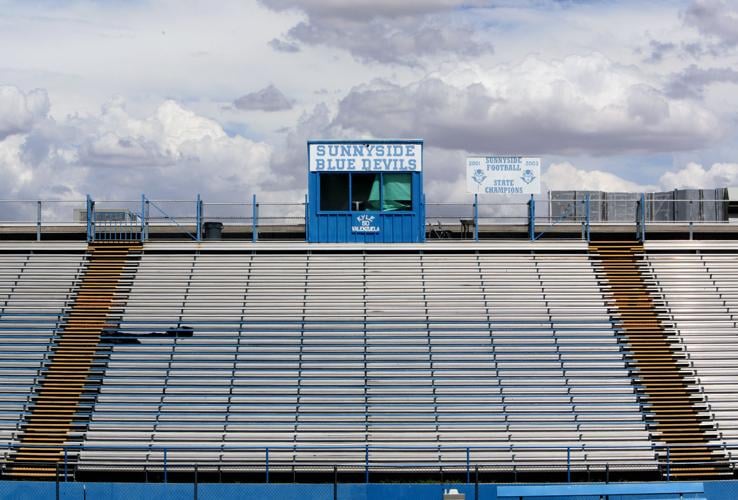
Gridiron Guide: Sunnyside a must-see, must-eat
School: Sunnyside
Name: None
Address: 1725 E. Bilby Road
Opened: 1971. When the school opened in 1955, the football field was originally further north on the campus, close to where the baseball field is now. The stadium was moved to its current location roughly 15 years later.
The lowdown: Sunnyside is a can’t-miss affair for high school football fans in Tucson. Numerous local legends have been produced on that field — from running backs Fred Sims to Philo Sanchez to Xavier Smith — and Richard Sanchez, one of the top coaches in Southern Arizona history, walked those sidelines for 18 seasons. There have been many sold-out crowds, dating to the 1980s and as recently as in 2010 in a game when the Blue Devils hosted district rival Desert View.
Don’t miss: The carne asada. Nowhere else in Tucson on Friday nights can you get fantastic burritos to enjoy while you watch football. If you haven’t tried it before, the Blue Devils have home games this season on Aug. 28, Sept. 11, Sept. 25, Oct. 16 and Oct. 30. “Great carne asada is a staple on the south side, and we brought it to the football games,” said Sunnyside coach Glenn Posey, also a former player. “It just really took off like wildfire.”
Biggest game: An estimated 8,000 fans packed into the stadium for the 2006 regular-season finale as the Blue Devils hosted Salpointe Catholic with the 5A Southern Region championship on the line. After falling into an 11-point deficit, Sunnyside rallied back for a 22-20 win against the previously unbeaten Lancers. Senior quarterback Sammy Olivas connected with fellow senior Anthony Aguilar for the go-ahead score with 7:31 left in the game. The Blue Devils finished as the 5A-II state runner-up that year.
Performance for the ages: Philo Sanchez turned in a career performance in one of his final home games. The 5-foot-7-inch, 176-pound running back rushed for a whopping 325 yards and five touchdowns on 44 carries in a 42-23 victory in a 2001 state playoff win over Prescott. Sunnyside went on to win its first state title. Sanchez finished with 2,479 yards and 31 touchdowns.
Quotable: “We’ve had a lot of great games, a lot of big wins and some huge disappointing losses here at this damn place.” – Posey
- Updated
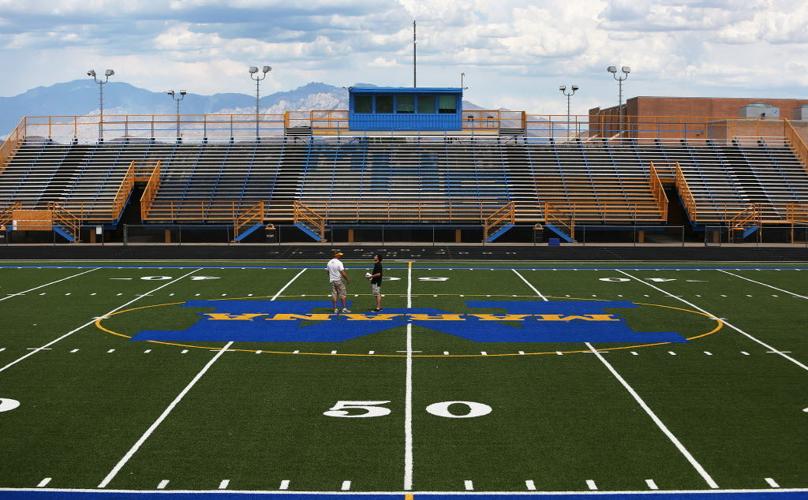
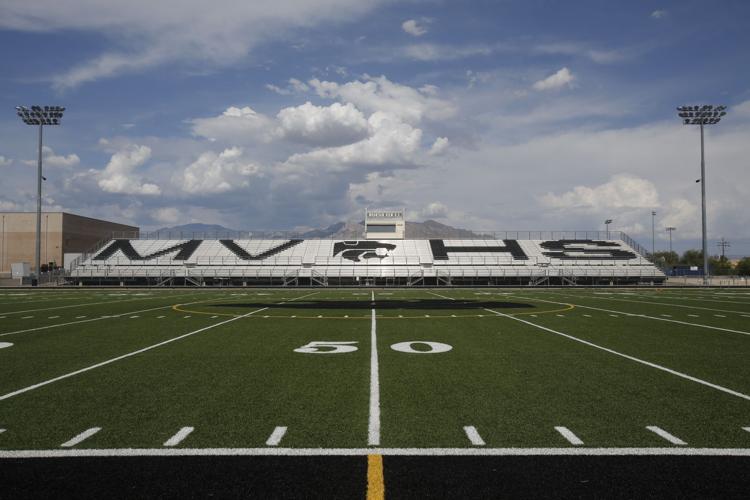
Gridiron Guide: Mountain View delivers 'festive' vibe on Fridays
School: Mountain View
Name: None, but principal Todd Garelick hopes to soon honor former coach Wayne Jones, who started the program and won a state title in 1993.
Address: 3901 W. Linda Vista Blvd.
Opened: 1988
The lowdown: There’s a reason fourth-year coach Clarence McRae believes his Mountain Lions have possibly the best facility in town. The still-new artificial turf field combined with the huge home bleachers — which are covered with the school’s initials, MVHS — can make Mountain View a frightening place for opponents to play. It is, quite simply, one of the most exciting venues to watch a game in Southern Arizona.
Don’t miss: The vibe. Even before kickoff, there is plenty of excitement with pregame festivities usually set up along the walkway to the ticket booth and stadium entrance (on homecoming night, Mountain View hosts a car show). Also, if you’re early enough, the view of the sunset from the home bleachers is worth more than a thousand words. Plus, you won’t miss Mountain View running onto the field through an inflatable tunnel, just like a college team.
Biggest game: Top-seeded and unbeaten Mountain View rallied for a 35-28 win in overtime against visiting Phoenix Paradise in the opening round of the 1993 Class 4A state playoffs before going on to win the state crown. Senior running back Kevin Schmidtke, who went on to play for the Arizona Wildcats, rushed for a whopping 254 yards on 26 carries and three touchdowns, including the game-winner on an 8-yard run.
Younger brother Gabe Schmidtke, a junior quarterback, threw two crucial second-half touchdown passes to help the Mountain Lions come back from a 21-7 deficit.
Performance for the ages: Montana-bound senior Dan Moore, a 220-pound running back, led the way as host Mountain View topped Salpointe Catholic 21-16 in 2007, giving the Mountain Lions their first win against the Lancers in six tries.
The hard-nosed Moore rushed for a game-high 173 yards and two scores in addition to catching a 68-yard touchdown pass. Mountain View rattled off 21 straight points after falling behind 10-0 in the second quarter.
Quotable: “We try to do things that make it very festive on a Friday night so kids feel like high school football is worth it.” — McRae
- Chuck Constantino Arizona Daily Star
- Updated
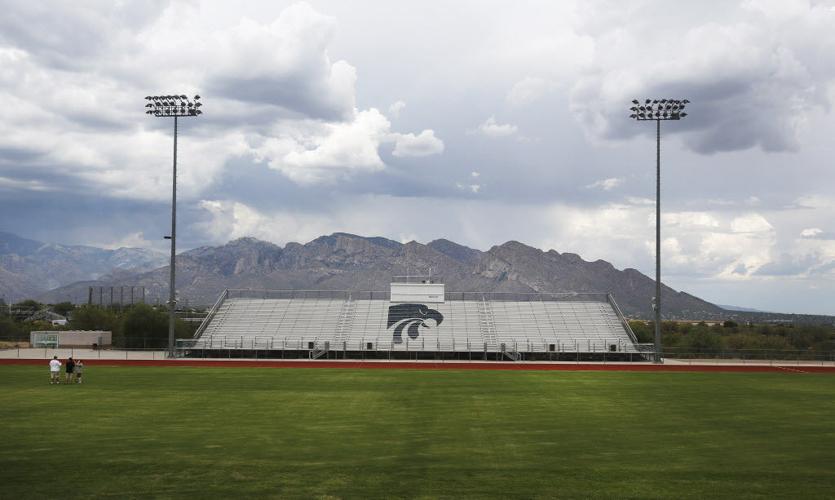
Gridiron Guide: 'Crazy' student section rocks I-Ridge's stadium
School: Ironwood Ridge
Name: None, but coach Matt Johnson would like to see that changed at some point to honor Gary Minor, the program’s first coach
Address: 2475 W. Naranja Drive
Opened: 2001
The lowdown: I-Ridge stuck with the basics when building its stadium less than 15 years ago; the simple setup is surrounded in all directions by mountain views. While the stadium might not be much to look at on its own, the trophy case and record board in the nearby gym show off the program’s success. The school recently redid the track around the field and would like to add an artificial turf field in the future.
Don’t miss: The notoriously rowdy Nighthawks Nest is among the best student sections in the state. Fans, sometimes covered in body paint, pack into the stands and wreak havoc for opponents on Friday nights.
Biggest game: There have been many big moments in the program’s short history, but its first postseason victory may be the sweetest. That came in 2006, when I-Ridge took down neighborhood rival Canyon del Oro 20-0 in the first round of the 4A-I state playoffs. The win came just a week after the Nighthawks beat CDO 14-7 on the road. I-Ridge, which snapped a three-game skid in the playoffs with the win, lost the following week to Sabino, the eventual runner-up.
Performance for the ages: Arizona-bound linebacker Jake Fischer rushed for 228 yards and two touchdowns on 25 carries to help lead I-Ridge to a 24-17 win over visiting Sunnyside in the 5A-II state quarterfinals in 2008, sending the Nighthawks to the state semifinals for the first time in program history. The victory also earned a degree of revenge against the Blue Devils, who eliminated I-Ridge in the previous season.
Quotable: “Our student section is pretty crazy. Versus CDO, students will line all the way from the parking lot, two or three deep, and when we come in they go nuts. It’s about as fun as you can get for a high school environment.” — Matt Johnson
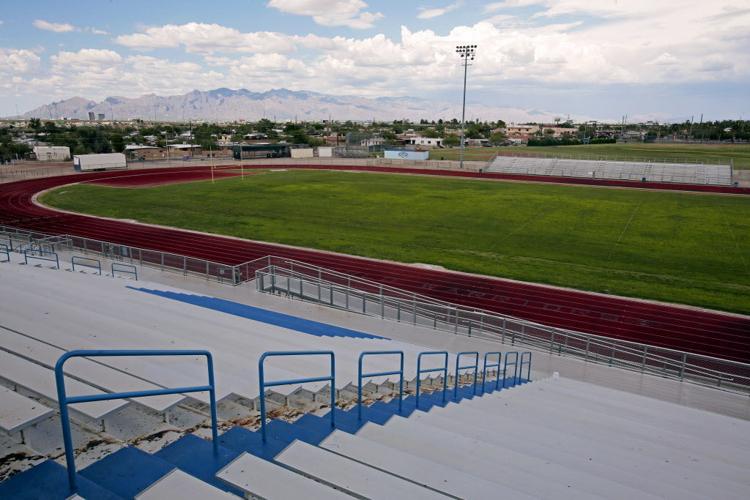
- Updated
Gridiron Guide: Pueblo's 'true stadium' remains the same
School: Pueblo
Name: Lou Farber Field
Address: 3500 S. 12th Ave.
Opened: 1956. The field is in its original location, but the stadium didn’t open until around 1960.
The lowdown: Not much has changed at Pueblo through nearly six decades of football. Everything — the field, bleachers and locker rooms underneath — is basically the same as it was from the beginning, aside from the addition of an open-air press box, some new lockers and fresh paint. Pueblo has prided itself on having one of Tucson’s best natural playing surfaces, dating back to the early days of coach Lou Farber to now, thanks to a long-standing policy of not practicing on the field. (The team holds its walk-throughs in the stadium, however.)
Don’t miss: Second-year coach Brandon Sanders, a former UA star who played in the NFL, loves the fact that his team has an all-inclusive stadium. “This is a true stadium,” he said. “Everything is so close to the field, you don’t have to do a lot of ripping and running.”
Biggest game: The undefeated Warriors took down Casa Grande with a 34-13 win the in first round of the Class AAA playoffs in 1988, marking the last time Pueblo has hosted a postseason game.
A pair of early fumbles helped the Warriors out to a 13-0 lead, less than four minutes into the opening quarter. Pueblo, then coached by Curly Santa Cruz, improved to 10-0 and advanced to the state quarterfinals, where it fell to Avondale Agua Fria, the eventual champion.
Performance for the ages: All-State quarterback Richard Martinez had a hand in three touchdowns and accounted for 19 points as Pueblo topped Catalina 20-0 at home in the 1961 regular-season finale. The win gave the Warriors their first conference title and qualified them for the for the Class AA playoffs, where they went on to beat Tempe and Phoenix St. Mary’s to win their first official state title.
Pueblo was voted co-champions with Phoenix South Mountain three years earlier.
Quotable: “We have some of the greatest alumni from Pueblo in this city, not a lot of people understand it. I didn’t know until I got here and started seeing all the alumni come back that walked through these halls have sat on these stands and played on this field. It’s amazing.” – Sanders
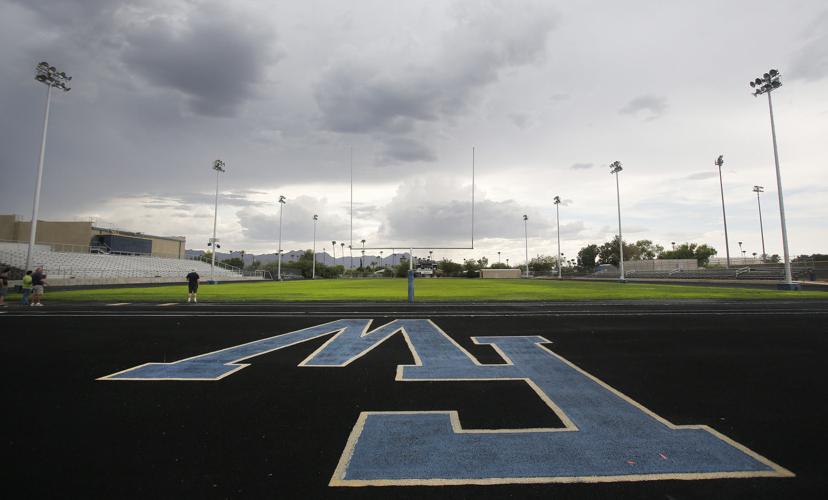
- Updated
Gridiron Guide: Flowing Wells bring an old-school feel
School: Flowing Wells
Name: John M. Mead Athletic Arena
Address: 3725 N. Flowing Wells Road
Opened: 1958
The lowdown: Flowing Wells is coming off just its second winning season since 2001, but hopes are high and the feeling in the air on Friday nights at Mead Athletic Arena this fall could be similar to those decades ago when the Caballeros were a local power and a postseason regular. Regardless of the team’s record, however, fans still come out on a weekly basis, coach Mark Brunenkant said. The venue can hold about 5,000 people and includes a moderately sized press box atop the home stands.
Don’t miss: The stadium has an old-school feel to it – in a good way. Something most spectators may not even notice is that the light posts are on the field, just inside the track. The visitors’ bleachers stretch nearly 80 yards, and the west end of the complex is bordered by a neighborhood, just on the other side of a fence. Pat Weber, the school’s athletic director, said he anticipates major renovations in the near future.
Biggest game: Senior quarterback Ken Leikem connected with tight end Ron Collins in the final seconds of regulation to finish off a 17-10 come-from-behind victory against Marana to close out the 1982 regular season. The Caballeros trailed 10-3 with 5:07 remaining before Leikem anchored a pair of touchdown drives, capped off by a 33-yard touchdown pass with just 23 seconds remaining. Flowing Wells went on to finish the season as the Class AA state runner-up.
Performance for the ages: Junior running back Dionte Flores rushed for 127 yards and four TDs in a 63-0 win against Catalina last season to help Flowing Wells to its first 5-0 start since 1994. Flores ran for a 67-yard score on the first play before the home crowd and found the end zone four more times before halftime, with the help of a 25-yard TD reception.
Quotable: “People like to be here on Friday nights. They like to watch the game and be a part of that environment and atmosphere; that’s a neat thing. We rarely see a small crowd, it’s usually packed.” – Brunenkant
Daniel Gaona
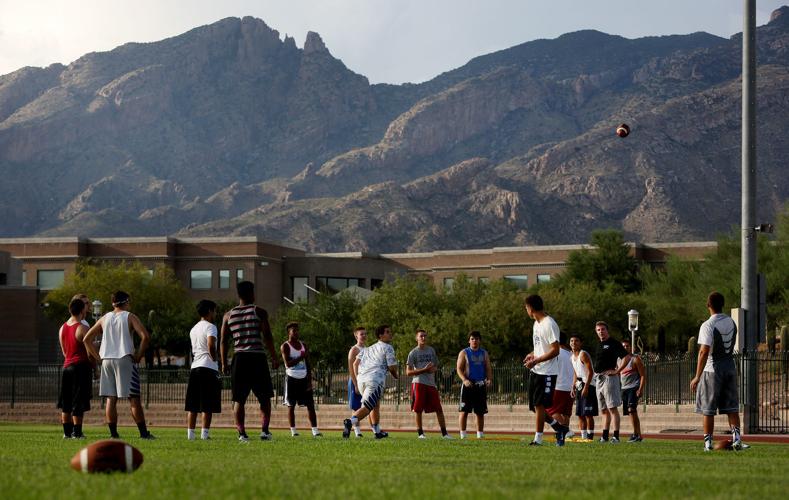
- Updated
Gridiron Guide: Foothills' unique stadium among Tucson's best
School: Catalina Foothills
Name: None.
Address: 4300 E. Sunrise Drive
Opened: 1992. The field is in its original location but the stadium was not completed until a year later.
The lowdown: Friday nights at Foothills feature more than just football. The home stands of the school’s unique stadium face west, giving fans stunning views of the city while the sun goes down beyond the Tucson Mountains in the background. Additionally, the Santa Catalina Mountains tower over the school to the north, giving another magnificent backdrop, especially from the field and the visiting bleachers. It’s arguably the nicest venue in town.
Don’t miss: While most schools have their stadiums a few extra steps away from the main campus, Foothills’ is built onto the school. Third-year coach Jeff Scurran, who won three state titles at Sabino, believes that makes the field an important part of the school.
“You walk through the center of the campus, like you do at Notre Dame, to get to the stadium,” Scurran said. “It’s completely different but it’s that same concept, that it’s just not some thing out there by itself.”
Biggest game: Having lost four straight games heading into a showdown against undefeated Sabino in 2010, it appeared as though Foothills’ season was all but over.
However, the Falcons pulled off a remarkable upset at home, beating the Sabercats 31-28 to spark a five-game winning streak that didn’t come to an end until the second round of the state playoffs. Coincidentally, Foothills traveled to Sabino in the opening round and won again, securing its first-ever postseason win.
Performance for the ages: Senior running back Ty Cruz combined for 194 yards rushing and receiving and scored three total touchdowns as Foothills held off visiting Maricopa for a 24-17 win in overtime to close out the 2013 regular season. The victory improved the Falcons’ record to 8-2 and secured a berth to the state playoffs, one season removed from going 0-10.
Quotable: “You’re a visiting person, you come here, you sit up in these stands and you look at this view, what the heck do you say? Oh my goodness, look how pretty this is.” – Scurran
Daniel Gaona
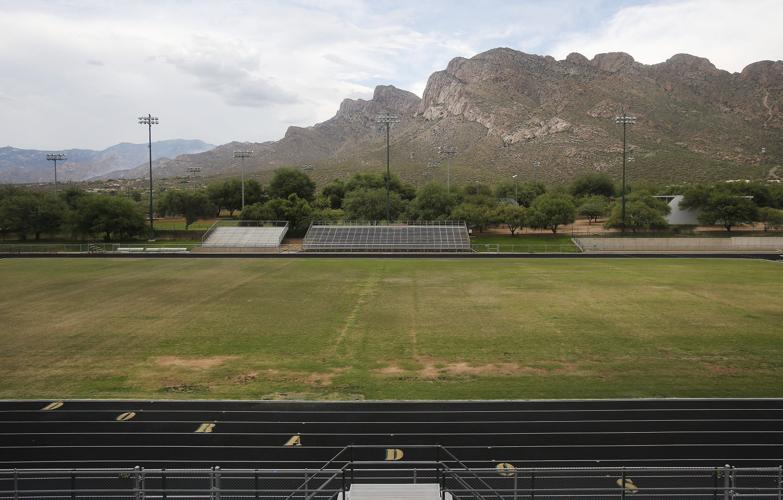
- Updated
Gridiron Guide: Dorado Stadium features a golden view
School: Canyon del Oro
Name: Dorado Stadium
Address: 25 W. Calle Concordia
Opened: 1964
The lowdown: Not much has changed in the 50 years since CDO’s stadium was built. And that’s a good thing: A great view and green surroundings make Dorado Stadium one of the top venues in the state. The program recently turned the building closest to the field into a football weight room, giving them double the space and putting all of the program’s needs in one location.
Don’t miss: The incredible view of the Santa Catalina Mountains is something special on Friday nights in the fall; even opponents can’t help but notice. CDO has long been recognized for its rowdy student section, especially for big games.
Biggest game: CDO snapped three-time defending champion Scottsdale Saguaro’s 37-game win streak on Oct. 2, 2009 with a 44-0 victory in front of a home crowd. Future Arizona Wildcats star Ka’Deem Carey led the way with 299 rushing yards and four touchdowns on 19 carries. The junior scored on three successive carries in the second half, ripping off touchdowns of 85, 45 and 57 yards. Teammate Jared Tevis, who also went on to play at the UA, finished with a game-high 13 tackles, two interceptions — one of which he returned for a touchdown — a forced fumble and a sack.
Performance for the ages: Carey, who now plays for the NFL’s Chicago Bears, set the single-game state rushing record at home later that season when he amassed 427 yards and scored six touchdowns in a 63-35 state playoff win over Glendale Apollo. The top-seeded Dorados went on to win the 4A-I state championship two weeks later, finishing off a perfect 14-0 season.
Quotable: “The greatest thing, the first thing I noticed about Dorado Stadium, is obviously that beautiful mountain. We call it our mountain.” – CDO coach Dusty Peace
- Arizona Daily Star
- Updated
Gridiron Guide: Amphi's stadium packed with history
School: Amphitheater
Name: Friedli Field
Address: 125 W. Yavapai Road
Opened: 1977. Amphi’s stadium was originally located on the west side of the school, next to the gymnasium, and had wooden bleachers.
The lowdown: Amphi’s stadium, which was dedicated to longtime coach Vern Friedli in 2001, is one of the biggest — and most historic — venues in Tucson. Because of its size and central location, the facility has served as a host site for state playoff games. Second-year coach Jorge Mendivil has been trying to rekindle the program and hopes to see the bleachers packed once again, as they used to be every Friday night when future NFL players such as Michael Bates and Riki (Gray) Ellison took the field.
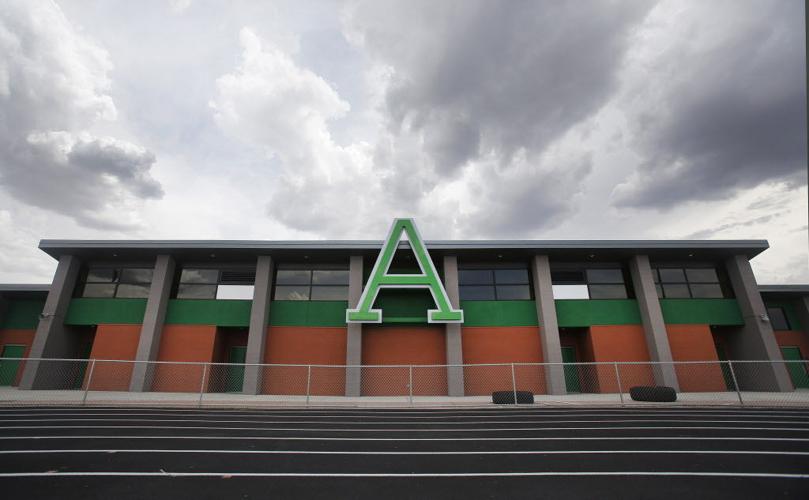
Don’t miss: The recent addition on the south end of the field includes a new snack bar, locker rooms and a weight room, something that was previously located underneath the stadium. The facade on the north side facing the field features a large green “A” that lights up at 7 p.m. each night.
Biggest game: Playing at home for the last time, Parade All-American Mario Bates leaped into the end zone for a two-yard score against Phoenix Brophy with 94 seconds remaining in the first round of the Class 5A state playoffs in 1990, securing a 36-32 win, Amphi’s 10th in a row. Bates, who went on to the NFL after playing at ASU, rushed for 256 yards and three touchdowns in the victory, as the Panthers reached the state final for the first time since 1979.
Performance for the ages: Stanford-bound senior Jon Volpe scored the go-ahead touchdown and then blocked the potential game-tying extra-point in a 21-20 overtime win against district rival Canyon del Oro in 1985. Volpe, who had a game-high 180 yards on 17 carries, rushed out of the wishbone for a 43-yard touchdown to open the extra period. CDO pulled within one point of a second overtime, but Volpe blocked the extra point to keep the top-ranked Panthers undefeated.
Quotable: “It’s just fun to walk out here on this field, the same field that Friedli walked and a lot of the great players that came out of here.” — Mendivil
Gridiron Guide: Historic Gridley Stadium still gives goosebumps
School: Tucson High
Name: Gridley Stadium
Address: 400 N. Second Ave.
Opened: 1906, though grandstands weren’t installed until 1939. Home players and fans have been located on the east side since 1987, when an addition was completed.
The lowdown: Undoubtedly the most historic venue in town, Gridley Stadium is essentially Tucson’s own Rose Bowl. It has housed numerous local legends, starting with its namesake. Rollin T. Gridley coached the Badgers to five state titles and a 32-game winning streak from 1935-47. The stadium also has been home to some of the most memorable games ever played in Tucson, both in the regular season and in the playoffs. Among the legendary players to call Gridley Stadium home were Mike Dawson, Fred Batiste, Joe Petroshus and Joel Favara, just to name a few. The Badgers installed artificial turf nearly 10 years ago; the surface will likely need to be replaced soon, fifth-year coach Justin Argraves said. The stadium has one quirk: The stands on the west side don’t line up with the current field because the previous setup had the field running up against Sixth Street to the north with Seventh Street bordering the south end zone. The Badgers enter the field from underneath the home stands near the 50-yard line, similar to a college or NFL team.
Don’t miss: The Badger T. Atop the school’s main building to the east of the stadium sits a red “T” that lights up in red and white on game nights. It was a gift from the Class of 1959 and was renovated two years ago to make it bigger and brighter. “That’s a staple for every home game,” Argraves said. “It’s been going on for a long, long time now.”
Biggest game: Tucson put together a 94-yard scoring drive in the final quarter to hold off visiting Palo Verde 28-20 in its final home game of the storied 1970 season, when the Badgers finished 12-0 and won the first of two straight state titles under coach Ollie Mayfield. After Tucson stopped Palo Verde inside their own 10, Allistaire Heartfield helped drive the Badgers down for the go-ahead touchdown, successfully converting two fourth-down attempts along the way. Heartfield plunged in for a 1-yard score with 2:26 left in the game, clinching the win and a state playoff berth for the Badgers.
Performance for the ages: Hayzel Daniels, who became Arizona’s first black All-State player, rushed for a city-record 301 yards and four touchdowns in a 32-7 win at home against Bisbee in 1925. The 5-foot-9-inch, 190-pound Daniels had a similar performance a year later. Playing in his final home game, he rushed for 300 yards and scored five touchdowns as Tucson beat Nogales 66-6.
Quotable: “I get goosebumps every time we take the field; it never gets old. Every home game that we have is a special evening here at Tucson High.” – Argraves
Daniel Gaona
Gridiron Guide: Tanque Verde set to turn on lights
School: Tanque Verde
Name: None
Address: 4201 N. Melpomene Way
Opened: 2007
The lowdown: Tucked far away on Tucson’s east side, the one-time junior high is soon to be more than just a well-maintained field with a spectacular view of the Santa Catalinas and Mount Lemmon. New this year will be state-of-the-art LED lighting for the home opener on Aug. 21. Tanque Verde had been renting portable lights, which were costly and noisy enough to distract players, coaches and fans. The Hawks are also close to breaking ground on adding 800-1,000 in bleacher seating, similar to the setup at Pusch Ridge Christian. All of the upgrades are part of a 10-year plan that’s happening five years ahead of schedule, and are just beginning. Second-year coach Jeremiah Johnson has big plans for the small school still striving for its first trip to the state playoffs.
Don’t miss: While modest, there is still plenty of pride on a Friday night out at Tanque Verde. Lawn chairs line the sidelines and an eye-catching, relatively new snack bar marks the entrance. Along with a breathtaking view of the mountains, the surrounding area was once a large mesquite forest. The charm remains.
Biggest game: The Hawks completed a 25-24 comeback win against Patagonia in 2009, scoring 13 straight points in the second half. Tanque Verde was led by senior quarterback Hunter Haynes, who completed 10 of 15 passes for 246 yards and three touchdowns. He also gained 90 yards rushing on 19 carries. Fellow seniors Ryan Pernu and Ryan South were the main beneficiaries of Haynes’ big game: Pernu finished with 131 yards and two touchdowns as South accounted for 91 yards and a score, while also hauling in four passes.
Performance for the ages: In the 2013 home opener against Mesa Sequoia, senior Benito Pimienta rushed for 312 yards and six touchdowns on just 18 carries as Tanque Verde won 48-6. Pimienta also caught eight passes for 63 yards in the victory and had a similar performance the next week when he registered 332 all-purpose yards in a 35-14 win against Eloy Santa Cruz.
Quotable: “I’m just excited to have a stadium and lights because the community, I think, wants football. They want Friday night lights, but I don’t think they’ve really had it yet. They’ve had football, but now we’re going to actually have the lights, the stadium. I think it’s going to be a very positive impact.” — Johnson
Jason Harris
Gridiron Guide: Santa Rita eager to bring success back home
School: Santa Rita
Name: None
Address: 3951 S. Pantano Road
Opened: 1973
The lowdown: A welcoming mural marks the entrance to Santa Rita’s football field, which is tucked into the northwest corner of Lincoln Park on Tucson’s east side. The venue isn’t far removed from housing some of the city’s toughest teams, when coach Jeff Scurran led the Eagles to two state title game appearances and a trip to the state semifinals from 2007 to 2009. With five different coaches and no winning seasons since then, any traditions from those times have eroded. First-year coach Felix Jamero hopes to bring those winning ways back but he’ll have to wait until the fourth week of the season to play at home because the Eagles are on the road for their first three games. What Santa Rita’s stadium might lack in modern amenities, it makes up for in history: It was home to Eric Drage and J.J. Holliday, two of the most memorable wide receivers the city has seen.
Don’t miss: Its location. The stunning view from the home side features both the Santa Catalina and Rincon Mountains. Plus, if the timing is right, you could catch a picturesque moonrise during a game.
Biggest game: Santa Rita opened 2003 with a 41-10 victory over east-side rival Palo Verde, snapping a six-game skid against the Titans and notching its first win in the series since 1994. Senior quarterback Bryan Tubaugh was intercepted on his first pass but went on to complete 8 of 15 passes for 156 yards and four TDs. Meanwhile, Santa Rita finished the season 7-4 and qualified for the state playoffs for the first time in nine years.
Performance for the ages: Senior running back AuBurá Taylor rushed for a game-high 241 yards and five touchdowns on 28 carries to help Santa Rita rally for a 38-37 win in overtime against visiting Scottsdale Coronado in the first round of the 2007 Class 4A-II state playoffs. The dramatic victory extended a nine-game winning streak and came just one year after the Eagles finished off a winless campaign in 2006. It also sent Santa Rita on to the state quarterfinals for the first time in program history.
Quotable: “I like how things look. In the forefront, we have the desert there. It’s kind of like when you’re on NCAA football. You can build your own stadium and we have that luxury of having our desert in the back.” – Jamero
Jason Harris
Gridiron Guide: Salpointe has 'first-class facility'
School: Salpointe Catholic
Name: Ed Doherty Stadium
Address: 1545 E. Copper St.
Opened: 1958. Before that, the facility existed as a field only. Salpointe in 1991 named the stadium after Doherty, who coached at the Lancers to their first state title game 10 years earlier.
The lowdown: Doherty Stadium is one of Tucson’s most storied venues, in part because of the players and coaches who have called it home. Lancers stars John Fina and Frank Garcia went on to play in the NFL, while Kris O’Dowd (USC) and John Kadous (Notre Dame) were both U.S. Army All-Americans. Doherty was the first in a line of successful coaches that continued to Pat Welchert and Dennis Bene. Both men coached Salpointe to the state finals, and Bene — a Salpointe alum — led the Lancers to their first state championship in 2013. The 57-year old stadium has seen its fair share of change: In the last 15 years, Salpointe has installed a new scoreboard, lights, goal posts, visitor’s-side bleachers and an artificial turf field. Bene said the stadium’s allure and ambiance is the same today as it was when he played there three decades ago.
Don’t miss: Salpointe’s is one of the few high school football stadiums in Arizona that doesn’t include a track, meaning spectators are right on top of the action. Want to get even closer? Savvy fans and students watch from a fence that sits just behind of the end zone.
Biggest game: One of Bene’s most memorable wins at home came in the first round of the 2005 Class 5A-I state playoffs, when the Lancers topped Catholic rival Phoenix St. Mary’s to win the coveted Ed Doherty Trophy for the first time since 1998. Junior quarterback Max Fritz scored on a short touchdown run the final minute to secure the win. “It was more than a playoff game,” Bene said. “It was years and years of history.”
Performance for the ages: Senior quarterback Tyler Graunke cemented his place in Tucson history and took down Phoenix Brophy in the same night in 2003. Graunke threw for 251 yards and four touchdowns as Salpointe beat the visiting Broncos 42-14 in the first round of the Class 5A state playoffs. Graunke broke Tucson single-season passing yardage and touchdowns records that night, and finished the season with 3,372 yards and 37 scores. Both remain the top marks in Tucson history.
Quotable: “We have a first-class facility and we have the success that goes with it, so we’ve been proud of it.” – Bene
Gridiron Guide: Sahuaro home to legendary coaches, players
School: Sahuaro
Name: None
Address: 545 N. Camino Seco
Opened: 1968
The lowdown: Some of Southern Arizona’s most accomplished coaches called Sahuaro home. So did Rodney Peete, possibly Tucson’s most prominent high school athlete of all time. The list of local legends continues on after Peete, from wide receiver John Mistler to offensive lineman Mike Ciasca. Coach Howard Breinig built Sahuaro into the power it was, leading the Cougars to four title game appearance over 12 seasons. Will Kreamer and Nemer Hassey continued the legacy that seventh-year coach Scott McKee has been trying to rekindle. The stadium itself is simple, a natural-grass field that runs east and west and is bordered with aluminum bleachers on both sides. It’s missing one touch, McKee said: The stadium should be named after Breinig.
Don’t miss: The Rick Botkin Memorial Game. For the past 37 years, Sahuaro has held an annual memorial game in honor of Botkin, a star quarterback who was killed in a car accident during the 1977 season. It’s the longest-consecutive memorial game in the country, according to school officials; this year’s event will be held on Sept. 11, when Sahuaro hosts Canyon del Oro.
Biggest game: The Sabino-Sahuaro rivalry is one of the biggest in the state and the 1998 rendition certainly did not disappoint. Junior quarterback Reggie Robertson, one of Tucson’s most prolific passers of all time, threw a pair of touchdowns in the final nine minutes and led the Cougars to a come-from-behind 20-19 win. Robertson connected with Chad Huber for the go-ahead 21-yard touchdown pass with 3:34 left. Sahuaro’s student section swarmed the field in celebration after Sabino’s final drive fell short.
Performance for the ages: Senior running back Omar Bacon gained 206 yards on just 13 carries against Sunnyside in 1994 before leaving the game with concussion-like symptoms. Sahuaro topped the Blue Devils 33-14 for its sixth straight win; it was over when Bacon broke free for a 78-yard touchdown with 6:55 left in the second quarter. Bacon and the Cougars, then coached by Breinig, went on to tie for the Class 4A state championship that season.
Quotable: “This should be Breinig Field. He’s worked hard and he made it to what it was. It would be our responsibility to try to get his name and his family’s name on it. That’d be something I’d like to have done before my days are over.” – McKee
Daniel Gaona
Gridiron Guide: Remember the Titans at Palo Verde stadium
School: Palo Verde
Name: Titan Stadium
Address: 1302 S. Avenida Vega
Opened: 1962
The lowdown: Palo Verde is home to two state championship teams, a former NFL rookie of the year and one of Southern Arizona’s most memorable products of all time. Longtime coach Todd Mayfield led the Titans to an unprecedented state crown in 2005, three decades after coach Van Howe saw his 1973-1974 team go 13-0 on its way to a title.
Linebacker Mark Arneson called Titan Stadium home before he went on to become an All-American with the Arizona Wildcats and the 1972 NFL Rookie of the Year while a member of the St. Louis (now Arizona) Cardinals. Adam Hall brought national attention to Palo Verde less than 10 years ago when he was named a Parade All-American.
Don’t miss: The history. From Arneson to Hall, some of Southern Arizona’s most memorable players — such as offensive lineman Jim Arneson and kicker Bill Zivic — came out of Palo Verde.
Biggest game: Palo Verde took down Cholla 21-9 in the second round of the Class 4A-II state playoffs in 2005, avenging a loss to the Chargers earlier in the season and moving one step closer to winning its second state title in program history. The Titans forced five turnovers and amassed six sacks as senior quarterback Victor Yates passed for 123 yards, rushed for another 60 and scored two touchdowns in his final game at Titan Stadium.
Performance for the ages: Hall scored three touchdowns, combined for 226 yards rushing and receiving and pulled in two interceptions to lead the way as Palo Verde took down undefeated Santa Rita in front of a jam-packed house on Halloween night in 2008. Hall ran for a 12-yard score in the first quarter and then punched it in from eight yards out once more before halftime.
His big moment came much later though, when he scored the winning touchdown on a 28-yard sprint with 3:12 left in the game and then picked off a pass to seal the win.
Quotable: “Just the history that is with it, with the 2005 team and the 1973 team. The weight room is right next to the field and you see the wall of fame, you see the history of Palo Verde on the wall and you just get this feeling that anything is possible here.” — Second-year coach Laurence Ruhf
Daniel Gaona
Gridiron Guide: Coach hopes to pack Catalina's stadium
School: Catalina
Name: Nicholson Stadium
Address: 3645 E. Pima St.
Opened: 1955
The lowdown: The venue is a hidden gem, the way first-year coach Zach Davila looks at it. Everything the team needs — from locker rooms to coaches’ offices — is within the cement stadium, just a few steps from the natural grass field. The interior has been upgraded with new paint and motivational signs since Davila took over last spring.
“This place has great bones,” Davila said. “We’ve been doing some touch-ups here and there, but we want to keep it as it’s been.”
Don’t miss: The sheer size of the stadium. Davila, a 25-year old Cienega product, is eager to create a student section and hopefully create a home-field advantage. Catalina has never hosted a postseason game, though the spacious stadium has been used as a neutral-site field multiple times.
Biggest game: The Trojans secured their first winning season in almost three decades with a 55-0 victory against Desert View on senior night in 2002. “We finally have got the monkey off out back,” coach Shawn Wasson said after the game. “They can’t call us losers any more.” Phillip Pickett rushed for 201 yards and three scores on 15 carries, and fellow senior Chuck Cole scored four touchdowns. Catalina won again the following week at Pueblo to finish the season 7-4 but did not qualify for the postseason.
Performance for the ages: Ray Morales rushed for a whopping 308 yards and four touchdowns in a 63-15 win against Rio Rico in 2009, the one and only time Catalina has reached the state playoffs. Morales had just 12 carries and scored on runs of 59, 24, 52 and 21 yards as the Trojans snapped a three-game losing streak and improved to 3-3. Catalina finished 5-5 and, thanks to some outside help, earned the No. 16 seed in the 4A-II state playoffs.
Quotable: “When I set foot in it, it opened my eyes. We could have this place rocking; it can hold a lot of people, and I think it made me want to work harder to fill these stands.” – Davila
Daniel Gaona
Gridiron Guide: Rincon brings 'immaculate' band on game night
School: Rincon/University
Name: None
Address: 421 N. Arcadia Ave.
Opened: 1958
The lowdown: Rincon’s stadium is one of the oldest in Southern Arizona and one of the few that has the field going east to west, rather than the customary north to south. The venue also served as the host site for a Minnesota Vikings exhibition game in the late 1970s and houses one of the best bands in Arizona. It’s also the only stadium in town with its own truck: An old-school Dodge fire engine leads the team onto the field before every home game. Second-year coach Lucius Miller, who has been with the program for 20 years, has plenty of good memories, even though the Rangers have had just three winning seasons and two playoff appearances in that span.
Don’t miss: The band. Miller isn’t shy when he talks about one of the school’s most well-known entities. “Our band is immaculate,” he said. “It takes up half our stadium for every home game so we get a lot of participation, a lot of noise. You can’t beat it.” The band has more than 200 members.
Biggest game: Rincon capped its 1998 campaign — its first winning season in more than two decades — with a dramatic 31-24 triple-overtime win against Marana. Junior quarterback Daniel Pivirotto scored two touchdowns in the fourth quarter to extend the game; first on a 4-yard interception return and then on an 11-yard run. Clyde Hardin put the Rangers ahead for good with a 1-yard soring run in the third overtime before Rincon’s defense held Marana scoreless on its possession.
Performance for the ages: Senior running back Kevionte Alexander went off for a career-high 263 yards and four touchdowns on 20 carries as Rincon took down visiting Marana in its 2012 home opener. Alexander amassed 1,646 yards and 21 touchdowns that season as the Rangers, then coached by Nate Gahn, finished 6-4, securing their first and only winning record since 2005.
Quotable: “It’s real exciting to be able to call it my own now. I called it home before, but now it’s my field, and it has a little different feel to it, a little different meaning to it.” – Miller
Daniel Gaona
Gridiron Guide: Walden Grove's stadium growing from infancy
School: Walden Grove
Name: None
Address: 15510 S. Sahuarita Park Road
Opened: 2013. The Red Wolves played three home games at Sahuarita High in their first season of 2012.
The lowdown: Walden Grove is the newest addition to the Tucson area but has already seen a fair amount of change in a short amount of time. The natural grass field was originally part of Sahuarita Park but was rezoned when the school was built; there is still playground equipment to the east of the stadium, behind the new visiting bleachers. The venue used to seat roughly 600 people but can now hold 1,300, thanks to recent upgrades. First-year coach Chris May hopes to establish new traditions for the program, such as tailgating and having a strong student section.
Don’t miss: The newness. May appreciates the infancy of the facility and the ability to expand. Since the end of the 2014 season, the home bleachers have been practically doubled and they now display the school’s initials, “WGHS,” in large black letters. There is also a new press box atop the stands and a new locker room facility and concession stand on the northwest corner of the complex.
Biggest game: After stumbling out to a 2-4 start in 2013, the Red Wolves took down visiting Santa Rita 44-12 for their first victory on their home field. Junior quarterback Austin Elenez accounted for four touchdowns while the Walden Grove defense forced six turnovers.
Performance for the ages: Louis Joseph and Izzy Calvillo combined for 262 yards rushing and four total touchdowns as Walden Grove beat Benson 42-28 to extend a four-game winning streak last season. Calvillo scored on a 44-yard run in the first quarter after fellow senior Chis Moody returned the opening kickoff 82 yards for a touchdown. Moody, a junior, put the game out of reach in the fourth quarter when he raced to the end zone from 13 yards out.
Quotable: “Having the initials puts its stamp on it, that this is Walden Grove High School. That’s my favorite part of the stadium; it made it a high school stadium as opposed to a field with awesome bleacher seating around it.” – Hector Estrada, the school’s athletic director
Daniel Gaona
Gridiron Guide: Desert View's Jaguar Stadium has 'potential'
School: Desert View
Name: Jaguar Stadium
Address: 4101 E. Valencia Road
Opened: 1988. Prior to that, Desert View played home games at Sunnyside in its first three seasons.
The lowdown: The 25-year-old Jaguar Stadium has housed just two winning teams in the last 18 years, but that doesn’t mean it hasn’t seen its share of memorable moments. The venue was home to Adam Rodriguez, one of Southern Arizona’s most prolific passers. The four-year starter finished with a city-record 5,774 career passing yards. The field also remains the site of Desert View’s lone win against district rival Sunnyside in 1989. Fourth-year coach Robert Bonillas believes his stadium has a lot of “potential,” especially with the recent upgrades, such as the new scoreboard with a video board. Bonillas joked that a new tradition he would like to add is to have a jaguar run down the field before the games.
Don’t miss: The scoreboard. In an effort to “add extra juice” to Friday nights, Bonillas wants to fully capitalize on using the new gadget. “When you add lights and sounds to everything, it makes it a little bit better,” he said.
Biggest game: After losing its first four games against Sunnyside, Desert View got the best of the Blue Devils in a 19-0 win in 1989; each of the previous contests had been played at Sunnyside. “When you play in your own backyard, it’s a different story,” former coach Humberto Federico said. The Jaguars capitalized on five Sunnyside turnovers and scored all 19 points in the second half, starting with a 17-yard fumble recovery for a touchdown by Duncan Thomas.
Performance for the ages: Senior running back Mike Debevoise gained 172 yards on just 13 carries and caught a 67-yard TD pass to help Desert View take down Santa Rita 21-0 on homecoming in 1996, the last time the Jaguars reached the postseason. Debevoise opened the scoring with his long reception, and later in the first quarter, had an 86-yard touchdown run. He finished the season as Southern Arizona’s leading rusher with 1,464 yards.
Quotable: “Just the lighting up of the scoreboard, seeing the stands, the kids playing in the band and all that, the kids warming up — that’s really what I look forward to.” – Bonillas
Daniel Gaona
Gridiron Guide: Cienega's Bobcat Stadium is the place to be in Vail
School: Cienega
Name: Bobcat Stadium
Address: 12775 E. Mary Ann Cleveland Way
Opened: 2002
The lowdown: Cienega is one of Southern Arizona’s newest programs, but it didn’t taken long for Bobcat Stadium to become home to one of the area’s strongest powers. The winning tradition is clear from the time you walk through the gates and look up to see several banners hanging across the back of the home bleachers. Longtime coach Nemer Hassey, who stepped down after last season to become the school’s principal, never fielded a losing team and experienced several dramatic postseason victories at home, as recently as last fall. Cienega was also the first local program to have an artificial turf field 10 years ago but the wear is starting to show in some spots and it will likely need to be replaced within the next couple years.
Don’t miss: The vibe. Game nights at Cienega are hard to match; there is typically a large and lively crowd along with a certain feeling in the air that can send chills down your spine. Perhaps the reason behind the vibe is the small-town quality combined with the big-time expectations. As if the fans and the marching band don’t make enough noise, it gets even louder when a train rolls down the railroad tracks across the street during the middle of a game.
Biggest game: Cienega has faced off against Tempe Marcos de Niza just twice and both times were at home and in the state quarterfinals. In the first meeting four years ago, senior quarterback Michael Archie had a hand in three touchdowns as the Bobcats held on for a 22-21 win to reach the state semifinals for the third straight year. But this time, Cienega was finally able to break through and reach its first state championship game in program history, thanks to a 24-21 win against Ironwood Ridge the following week.
Performance for the ages: Three years removed from that one-point thriller, the Bobcats and Padres met up for an even more memorable game. This time, though, it was senior running back Francisco Dicochea who took control and helped lead Cienega to a wild 50-49 win against Marcos de Niza in double overtime. Dicochea played every down on both sides of the ball and finished with 278 yards and six touchdowns on 39 carries. His biggest moment came at the end, when he blocked a potential game-tying extra point to seal the win.
Quotable: “I always give Hassey a hard time about being in Vail and the train running through the stadium; it gets loud and you can hear it rolling down the tracks. It’s that community atmosphere.” — First-year coach Pat Nugent
Daniel Gaona
Gridiron Guide: Sabino stadium is a serene, yet rockin' venue
School: Sabino
Name: The Saberdome
Address: 5000 N. Bowes Road
Opened: 1972
The lowdown: The Saberdome is one of the most historic venues in town and hasn’t housed a losing team since 1998. Since then, Jay Campos and Jeff Scurran, two of Southern Arizona’s most decorated coaches, have combined for numerous postseason victories, eight title game appearances and three state championships. On top of that, generations of distinguished players have called that field home, from Jeff Kiewel to Corey Hill to Mike Saffer to Brooks Reed, who starred for the Arizona Wildcats and now plays for the Atlanta Falcons. Over the last 10 years, the Saberdome has added an $85,000 press box, replaced the bleachers and put up new field goal posts. “We’re constantly doing things to try and improve the facility,” said Campos, who is entering his 13th season as Sabino’s coach.
Don’t miss: The view. From the time you turn onto Catalina Highway and head north on Harrison to get to Sabino, the view of the surrounding mountains is unbelievable. It only gets better inside the stadium with Sabino Canyon in sight. Being tucked into the Tanque Verde valley also gives the stadium an intimate feel on game night. But don’t be mistaken, things become electric once the band leads the team onto the field before kickoff.
Biggest game: Campos has endured several wild games at home but one of the most memorable has to be Sabino’s 34-31 overtime win against Phoenix Thunderbird in the 2011 Division III state quarterfinals. The victory was the team’s 11th straight and sent the Sabercats on to the semifinals for the fourth time under Campos. Senior quarterback Dallas Brown sealed the win when he ran for a 15-yard touchdown on Sabino’s first offensive play in overtime after Thunderbird was held to a field goal in its possession.
Performance for the ages: Senior running back Nathan Wize opened the 1997 season by totaling 358 all-purpose yards and scoring three touchdowns in a 38-10 win against rival Sahuaro. Wize, who went on to play at Cincinnati, rushed for 168 yards and two touchdowns in addition to returning a punt 65 yards for a score in the victory. The 5-foot-7-inch 190-pound Wize is remembered as one of Southern Arizona’s top rushers, as he finished with 3,101 yards and 51 touchdowns that season.
Quotable: “This is off the beaten path; you don’t have the traffic you hear and all that stuff. It’s just nice and quiet and once the game gets going it’s like nothing else in the world is going on besides what’s happening right here on the field.” – Campos
Daniel Gaona
Gridiron Guide: Sahuarita leans on tradition at home field
School: Sahuarita
Name: Earl J. Kelly Stadium, Burton Tingle Field
Address: 350 W. Sahuarita Road
Opened: 1964
The lowdown: Sahuarita’s stadium remains the same as it was five decades ago, geographically speaking, but some of the elements there have changed: The school replaced its natural grass field with an artificial turf and upgraded the eastern bleachers five years ago as part of a stadium improvement project.
Around the same time Sahaurita switched its home sideline from the western to the eastern side, putting the team closer to its locker rooms.
First-year coach Rodney Day, a longtime assistant in the program, said it was strange at first to make the switch, mainly because the sun was now in their faces rather than at their backs.
Don’t miss: The Rock. Just as Notre Dame’s football team touches an iconic sign on its way out of the locker room, the Mustangs have a pregame tradition: Before the players take the field, they touch a large rock on the south end of the home bleachers.
The origins of the boulder are unknown — Day believes it came from a nearby mine because of the hole drilled through it — but it is dedicated to Burton Tingle, who has spent several decades coaching and teaching at Sahuarita. Tingle is still an assistant with the football team.
Biggest game: In 2012, two years removed from a winless season, Sahuarita held off rival Nogales at home in a back-and-forth showdown of two undefeated teams.
The Mustangs had a 14-point lead at the half, but Nogales managed to tie the game at 26 early in the forth quarter before senior Aric Howard returned a kickoff 86 yards for a touchdown to help spark Sahuarita to a 47-33 win in front of a sell-out crowd; the Mustangs went on to finish the regular season 10-0 for the first time in program history.
Performance for the ages: Senior quarterback Calvin Jenkins accounted for six touchdowns in a 42-21 win against visiting Safford in the Division IV state quarterfinals last fall. The victory, Sahuarita’s 12th in a row, sent the Mustangs to the semifinals for the third time ever.
Quotable: “Tradition is the biggest part of what we try to sell down here as a program. We’ve been building it up as we go along and we’ve been pretty successful over the past years and that success helps our tradition build.” — Day
Daniel Gaona
Gridiron Guide: Empire's stadium emerging into something bigger
School: Empire
Name: None
Address: 10701 E. Mary Ann Cleveland Way
Opened: 2006
The lowdown: Empire may be one of the newest and smallest schools in the Tucson area, but it still warrants a visit. Crowds are anything but small on Friday nights and students pack into the “Ravens Roost” section in the home bleachers. The stadium has undergone several upgrades since opening, including the addition of bleachers on the visitor’s side and a new public address system, and is scheduled to get a press box. Third-year coach W.T. Jeffries said the recent upgrades were made to accommodate larger crowds.
Don’t miss: The small-town feel. Empire has come a long way since it used hay bales for overflow seating in its inaugural season, but the unique vibe is still there. That will especially be the case when the Ravens host Walden Grove on Aug. 28 to open the season. Empire’s fan base, known as the Raven Nation, will host a “black-out” for the opener. That’s another Empire tradition.
Biggest game: Empire finished the regular season 9-1 in 2009 and, as a result, hosted a postseason game for the first time in program history. The Ravens won their first playoff game when they took down visiting Safford 44-18 to open the 3A state tournament. Empire’s defense forced six turnovers and senior Bryant Jeffries, the coach’s son, scored four touchdowns — two rushing, one receiving and one on a fumble recovery. Fellow senior Cody Woody gained 212 yards on 19 carries and scored a touchdown.
Performance for the ages: Sean Fitzsimmons went out in style on senior night, rushing for a state-record 516 yards and six touchdowns in an 82-55 win over Catalina two years ago. Fitzsimmons became just the second player in Arizona history to rush for more than 500 yards. He wasn’t alone in his performance that night: Fellow senior captain Chance Hatfield gained 240 yards and scored four TDs. Jeffries believes the team’s 843 rushing yards is a single-game state record.
Quotable: “We’re growing. We’re trying to become a place that people don’t want to be, as far as visitors.” – W.T. Jeffries
Gridiron Guide: Tumamoc towers over Cholla's Ed Brown Stadium
School: Cholla
Name: Ed Brown Stadium
Address: 2001 W. Starr Pass Blvd.
Opened: 1970. The Chargers played home games at Catalina and practiced at Kennedy Park in their inaugural season in 1969.
The lowdown: Second-year coach Virgil Henderson doesn’t shy away from Cholla’s recent struggles. In fact, he uses the everyday sight of Tumamoc Hill to the north of the stadium as something to encourage his team. The Chargers have had just one winning season since 2005; they’ve won 19 games and lost 71 since then. Still, Henderson looks back to the team’s success under coach Ed Brown, who started the program, and reminds his players that anything is possible.
Don’t miss: The burning of the “C.” Prior to taking the field on homecoming night, the team and its fans gather around the “C” statue near the entrance of the school and watch as it is lit on fire by one of the team captains. It’s something you have to witness, Henderson said, and, he’s hoping it could soon be done for all home games. “The first time I saw how that was, I had chills,” he said.
Biggest game: Cholla hosted Flagstaff Coconino in the first round of the 2005 4A-II state playoffs, making its first postseason appearance since 1988. After jumping out to a 14-point lead, the Chargers had to hold off a late push by the visiting Panthers to win 21-19 and advance to the quarterfinals for just the second time in program history. Cholla running back Kevin Dees rushed for 108 yards and two touchdowns while the Chargers limited Coconino to just 62 yards on the ground.
Performance for the ages: Vance Johnson, one of Tucson’s most notable high school athletes, helped Cholla secure its first-ever playoff berth in the 1980 regular-season finale against Pueblo. Johnson, who went on to play for the Arizona Wildcats and the NFL’s Denver Broncos, gained 216 yards on 22 carries in the 21-14 win. After being held to just 15 yards in the first half, Johnson sparked the Chargers with a game-tying touchdown pass and then a 63-yard scoring run.
Quotable: “It’s hidden; it’s a little gem that nobody really knows about. I think when people start coming back around, and seeing what we have to offer, I think they’re going to fall in love with it.” – Henderson
Gridiron Guide: Marana's upgraded stadium worth the trip
School: Marana
Name: Tiger Pride Stadium
Address: 12000 W. Emigh Road
Opened: 1975
The lowdown: This is not your parents’ Marana football. While the stadium still has that small-town feel, a recent facelift has given it a new charm all its own. The drive down Twin Peaks might still seem like it takes forever, but the upgrades are worth the trip. The most notable item is the $1 million artificial turf field the Tigers installed before the start of the 2013 season. With the shiny new centerpiece in place, other parts of the stadium began to show their wear. Administration quickly remedied that with a new paint job, refurbished press box, improved ticket booth and logos galore.
Don’t miss: The Tigers take the long way to the field on their final pregame march before kickoff. The trek includes crossing paths with the opponent, a long, empty corridor for players to collect their thoughts and a rock to touch for good luck before entering an inflatable helmet lined with cheerleaders aimed toward the T-Unit student section and the Tiger Pride band.
Biggest game: There were plenty of blowouts during the Tigers’ undefeated Division B state championship seasons in the 1960s, but more recently, Marana’s biggest moment came in a 13-6 win against district rival Mountain View in 1998. Rion Westfall finished with 100 yards passing and 109 yards rushing, scoring both of the Tigers’ touchdowns — one through the air the other on the ground. The victory was part of a 7-4 season, which included a postseason appearance, and marked Marana’s last win in the Battle of the Boot.
Performance for the ages: That same season, in the second-to-last week, Marana beat Flowing Wells 34-17, snapping a six-game losing streak against the Caballeros. Future Arizona Wildcats safety Clay Hardt came to the rescue with 280 yards rushing and four touchdowns on 22 carries, as freshman Scotty Coxon had to make the start at quarterback because of injuries. Coxon went on to become the most prolific passer in school history.
Quotable: “I think it’s one of the prettier fields we have in town, and when you get up to the top, you can really see all of Marana. I know it’s rural, but I think it’s really pretty out there.” – Marana coach Andy Litten
Gridiron Guide: Pusch Ridge features 'unbelievable' view
School: Pusch Ridge Christian
Name: None
Address: 9500 N. Oracle Road
Opened: 2000.
The lowdown: Several other schools in the area can brag about their view of the mountains but none compare to the scenery at Pusch Ridge. The Lions’ home field is tucked in at the base of the Santa Catalina Mountains, providing one of the most incredible backdrops in the state. Additionally, thanks to a series of donations, the school is a year removed from a $150,000 overhaul of the field, which included new grass, new goal posts, an irrigation system and fencing.
Don’t miss: Third-year coach Troy Cropp says the sense of community at home games is unlike anything else he’s seen. That is a mainly a result of the area youth team that shares the same colors and mascot, and is mostly comprised of students from Cornerstone Christian Academy, the main feeder school for Pusch Ridge. “It’s almost like we’re a small town, in the middle of Tucson, as far as family support,” Cropp said. “They come and tailgate, families of kids who are kindergarten, not even close to high school age.”
Biggest game: Pusch Ridge gave up an early touchdown but responded with 56 straight points to win its first postseason game at home in the first round of the 2009 Class 2A state playoffs.
The Lions topped visiting Morenci 56-7 behind four touchdown passes by senior quarterback Greg Schimke, who completed 13 of 24 passes for 177 yards. Senior wide receiver Trevor Cook hauled in two touchdown catches while Brett Overstreet rushed for 63 yards and two scores.
Performance for the ages: Three players surpassed 100 yards rushing each as Pusch Ridge took down visiting Chandler Valley Christian 60-42 in a wild first-round Division V playoff game last season in front of a packed house. Taylor Fitzgerald led the trio of seniors with 14 carries for 219 yards and a touchdown while Tyler Overstreet gained 121 yards and scored three times on 19 carries. In addition to six tackles and a sack, Mitch Reilly rushed 13 times for 109 yards and a touchdown in the final home game for the three of them.
Quotable: “It’s unbelievable, we have a great view. It’s a really good location, it’s probably the best location of any high school in town, as far as the view from the field.” – Cropp
Daniel Gaona
Gridiron Guide: Sunnyside a must-see, must-eat
School: Sunnyside
Name: None
Address: 1725 E. Bilby Road
Opened: 1971. When the school opened in 1955, the football field was originally further north on the campus, close to where the baseball field is now. The stadium was moved to its current location roughly 15 years later.
The lowdown: Sunnyside is a can’t-miss affair for high school football fans in Tucson. Numerous local legends have been produced on that field — from running backs Fred Sims to Philo Sanchez to Xavier Smith — and Richard Sanchez, one of the top coaches in Southern Arizona history, walked those sidelines for 18 seasons. There have been many sold-out crowds, dating to the 1980s and as recently as in 2010 in a game when the Blue Devils hosted district rival Desert View.
Don’t miss: The carne asada. Nowhere else in Tucson on Friday nights can you get fantastic burritos to enjoy while you watch football. If you haven’t tried it before, the Blue Devils have home games this season on Aug. 28, Sept. 11, Sept. 25, Oct. 16 and Oct. 30. “Great carne asada is a staple on the south side, and we brought it to the football games,” said Sunnyside coach Glenn Posey, also a former player. “It just really took off like wildfire.”
Biggest game: An estimated 8,000 fans packed into the stadium for the 2006 regular-season finale as the Blue Devils hosted Salpointe Catholic with the 5A Southern Region championship on the line. After falling into an 11-point deficit, Sunnyside rallied back for a 22-20 win against the previously unbeaten Lancers. Senior quarterback Sammy Olivas connected with fellow senior Anthony Aguilar for the go-ahead score with 7:31 left in the game. The Blue Devils finished as the 5A-II state runner-up that year.
Performance for the ages: Philo Sanchez turned in a career performance in one of his final home games. The 5-foot-7-inch, 176-pound running back rushed for a whopping 325 yards and five touchdowns on 44 carries in a 42-23 victory in a 2001 state playoff win over Prescott. Sunnyside went on to win its first state title. Sanchez finished with 2,479 yards and 31 touchdowns.
Quotable: “We’ve had a lot of great games, a lot of big wins and some huge disappointing losses here at this damn place.” – Posey
Gridiron Guide: Mountain View delivers 'festive' vibe on Fridays
School: Mountain View
Name: None, but principal Todd Garelick hopes to soon honor former coach Wayne Jones, who started the program and won a state title in 1993.
Address: 3901 W. Linda Vista Blvd.
Opened: 1988
The lowdown: There’s a reason fourth-year coach Clarence McRae believes his Mountain Lions have possibly the best facility in town. The still-new artificial turf field combined with the huge home bleachers — which are covered with the school’s initials, MVHS — can make Mountain View a frightening place for opponents to play. It is, quite simply, one of the most exciting venues to watch a game in Southern Arizona.
Don’t miss: The vibe. Even before kickoff, there is plenty of excitement with pregame festivities usually set up along the walkway to the ticket booth and stadium entrance (on homecoming night, Mountain View hosts a car show). Also, if you’re early enough, the view of the sunset from the home bleachers is worth more than a thousand words. Plus, you won’t miss Mountain View running onto the field through an inflatable tunnel, just like a college team.
Biggest game: Top-seeded and unbeaten Mountain View rallied for a 35-28 win in overtime against visiting Phoenix Paradise in the opening round of the 1993 Class 4A state playoffs before going on to win the state crown. Senior running back Kevin Schmidtke, who went on to play for the Arizona Wildcats, rushed for a whopping 254 yards on 26 carries and three touchdowns, including the game-winner on an 8-yard run.
Younger brother Gabe Schmidtke, a junior quarterback, threw two crucial second-half touchdown passes to help the Mountain Lions come back from a 21-7 deficit.
Performance for the ages: Montana-bound senior Dan Moore, a 220-pound running back, led the way as host Mountain View topped Salpointe Catholic 21-16 in 2007, giving the Mountain Lions their first win against the Lancers in six tries.
The hard-nosed Moore rushed for a game-high 173 yards and two scores in addition to catching a 68-yard touchdown pass. Mountain View rattled off 21 straight points after falling behind 10-0 in the second quarter.
Quotable: “We try to do things that make it very festive on a Friday night so kids feel like high school football is worth it.” — McRae
- Chuck Constantino Arizona Daily Star
Gridiron Guide: 'Crazy' student section rocks I-Ridge's stadium
School: Ironwood Ridge
Name: None, but coach Matt Johnson would like to see that changed at some point to honor Gary Minor, the program’s first coach
Address: 2475 W. Naranja Drive
Opened: 2001
The lowdown: I-Ridge stuck with the basics when building its stadium less than 15 years ago; the simple setup is surrounded in all directions by mountain views. While the stadium might not be much to look at on its own, the trophy case and record board in the nearby gym show off the program’s success. The school recently redid the track around the field and would like to add an artificial turf field in the future.
Don’t miss: The notoriously rowdy Nighthawks Nest is among the best student sections in the state. Fans, sometimes covered in body paint, pack into the stands and wreak havoc for opponents on Friday nights.
Biggest game: There have been many big moments in the program’s short history, but its first postseason victory may be the sweetest. That came in 2006, when I-Ridge took down neighborhood rival Canyon del Oro 20-0 in the first round of the 4A-I state playoffs. The win came just a week after the Nighthawks beat CDO 14-7 on the road. I-Ridge, which snapped a three-game skid in the playoffs with the win, lost the following week to Sabino, the eventual runner-up.
Performance for the ages: Arizona-bound linebacker Jake Fischer rushed for 228 yards and two touchdowns on 25 carries to help lead I-Ridge to a 24-17 win over visiting Sunnyside in the 5A-II state quarterfinals in 2008, sending the Nighthawks to the state semifinals for the first time in program history. The victory also earned a degree of revenge against the Blue Devils, who eliminated I-Ridge in the previous season.
Quotable: “Our student section is pretty crazy. Versus CDO, students will line all the way from the parking lot, two or three deep, and when we come in they go nuts. It’s about as fun as you can get for a high school environment.” — Matt Johnson
Gridiron Guide: Pueblo's 'true stadium' remains the same
School: Pueblo
Name: Lou Farber Field
Address: 3500 S. 12th Ave.
Opened: 1956. The field is in its original location, but the stadium didn’t open until around 1960.
The lowdown: Not much has changed at Pueblo through nearly six decades of football. Everything — the field, bleachers and locker rooms underneath — is basically the same as it was from the beginning, aside from the addition of an open-air press box, some new lockers and fresh paint. Pueblo has prided itself on having one of Tucson’s best natural playing surfaces, dating back to the early days of coach Lou Farber to now, thanks to a long-standing policy of not practicing on the field. (The team holds its walk-throughs in the stadium, however.)
Don’t miss: Second-year coach Brandon Sanders, a former UA star who played in the NFL, loves the fact that his team has an all-inclusive stadium. “This is a true stadium,” he said. “Everything is so close to the field, you don’t have to do a lot of ripping and running.”
Biggest game: The undefeated Warriors took down Casa Grande with a 34-13 win the in first round of the Class AAA playoffs in 1988, marking the last time Pueblo has hosted a postseason game.
A pair of early fumbles helped the Warriors out to a 13-0 lead, less than four minutes into the opening quarter. Pueblo, then coached by Curly Santa Cruz, improved to 10-0 and advanced to the state quarterfinals, where it fell to Avondale Agua Fria, the eventual champion.
Performance for the ages: All-State quarterback Richard Martinez had a hand in three touchdowns and accounted for 19 points as Pueblo topped Catalina 20-0 at home in the 1961 regular-season finale. The win gave the Warriors their first conference title and qualified them for the for the Class AA playoffs, where they went on to beat Tempe and Phoenix St. Mary’s to win their first official state title.
Pueblo was voted co-champions with Phoenix South Mountain three years earlier.
Quotable: “We have some of the greatest alumni from Pueblo in this city, not a lot of people understand it. I didn’t know until I got here and started seeing all the alumni come back that walked through these halls have sat on these stands and played on this field. It’s amazing.” – Sanders
Gridiron Guide: Flowing Wells bring an old-school feel
School: Flowing Wells
Name: John M. Mead Athletic Arena
Address: 3725 N. Flowing Wells Road
Opened: 1958
The lowdown: Flowing Wells is coming off just its second winning season since 2001, but hopes are high and the feeling in the air on Friday nights at Mead Athletic Arena this fall could be similar to those decades ago when the Caballeros were a local power and a postseason regular. Regardless of the team’s record, however, fans still come out on a weekly basis, coach Mark Brunenkant said. The venue can hold about 5,000 people and includes a moderately sized press box atop the home stands.
Don’t miss: The stadium has an old-school feel to it – in a good way. Something most spectators may not even notice is that the light posts are on the field, just inside the track. The visitors’ bleachers stretch nearly 80 yards, and the west end of the complex is bordered by a neighborhood, just on the other side of a fence. Pat Weber, the school’s athletic director, said he anticipates major renovations in the near future.
Biggest game: Senior quarterback Ken Leikem connected with tight end Ron Collins in the final seconds of regulation to finish off a 17-10 come-from-behind victory against Marana to close out the 1982 regular season. The Caballeros trailed 10-3 with 5:07 remaining before Leikem anchored a pair of touchdown drives, capped off by a 33-yard touchdown pass with just 23 seconds remaining. Flowing Wells went on to finish the season as the Class AA state runner-up.
Performance for the ages: Junior running back Dionte Flores rushed for 127 yards and four TDs in a 63-0 win against Catalina last season to help Flowing Wells to its first 5-0 start since 1994. Flores ran for a 67-yard score on the first play before the home crowd and found the end zone four more times before halftime, with the help of a 25-yard TD reception.
Quotable: “People like to be here on Friday nights. They like to watch the game and be a part of that environment and atmosphere; that’s a neat thing. We rarely see a small crowd, it’s usually packed.” – Brunenkant
Daniel Gaona
Gridiron Guide: Foothills' unique stadium among Tucson's best
School: Catalina Foothills
Name: None.
Address: 4300 E. Sunrise Drive
Opened: 1992. The field is in its original location but the stadium was not completed until a year later.
The lowdown: Friday nights at Foothills feature more than just football. The home stands of the school’s unique stadium face west, giving fans stunning views of the city while the sun goes down beyond the Tucson Mountains in the background. Additionally, the Santa Catalina Mountains tower over the school to the north, giving another magnificent backdrop, especially from the field and the visiting bleachers. It’s arguably the nicest venue in town.
Don’t miss: While most schools have their stadiums a few extra steps away from the main campus, Foothills’ is built onto the school. Third-year coach Jeff Scurran, who won three state titles at Sabino, believes that makes the field an important part of the school.
“You walk through the center of the campus, like you do at Notre Dame, to get to the stadium,” Scurran said. “It’s completely different but it’s that same concept, that it’s just not some thing out there by itself.”
Biggest game: Having lost four straight games heading into a showdown against undefeated Sabino in 2010, it appeared as though Foothills’ season was all but over.
However, the Falcons pulled off a remarkable upset at home, beating the Sabercats 31-28 to spark a five-game winning streak that didn’t come to an end until the second round of the state playoffs. Coincidentally, Foothills traveled to Sabino in the opening round and won again, securing its first-ever postseason win.
Performance for the ages: Senior running back Ty Cruz combined for 194 yards rushing and receiving and scored three total touchdowns as Foothills held off visiting Maricopa for a 24-17 win in overtime to close out the 2013 regular season. The victory improved the Falcons’ record to 8-2 and secured a berth to the state playoffs, one season removed from going 0-10.
Quotable: “You’re a visiting person, you come here, you sit up in these stands and you look at this view, what the heck do you say? Oh my goodness, look how pretty this is.” – Scurran
Daniel Gaona
Gridiron Guide: Dorado Stadium features a golden view
School: Canyon del Oro
Name: Dorado Stadium
Address: 25 W. Calle Concordia
Opened: 1964
The lowdown: Not much has changed in the 50 years since CDO’s stadium was built. And that’s a good thing: A great view and green surroundings make Dorado Stadium one of the top venues in the state. The program recently turned the building closest to the field into a football weight room, giving them double the space and putting all of the program’s needs in one location.
Don’t miss: The incredible view of the Santa Catalina Mountains is something special on Friday nights in the fall; even opponents can’t help but notice. CDO has long been recognized for its rowdy student section, especially for big games.
Biggest game: CDO snapped three-time defending champion Scottsdale Saguaro’s 37-game win streak on Oct. 2, 2009 with a 44-0 victory in front of a home crowd. Future Arizona Wildcats star Ka’Deem Carey led the way with 299 rushing yards and four touchdowns on 19 carries. The junior scored on three successive carries in the second half, ripping off touchdowns of 85, 45 and 57 yards. Teammate Jared Tevis, who also went on to play at the UA, finished with a game-high 13 tackles, two interceptions — one of which he returned for a touchdown — a forced fumble and a sack.
Performance for the ages: Carey, who now plays for the NFL’s Chicago Bears, set the single-game state rushing record at home later that season when he amassed 427 yards and scored six touchdowns in a 63-35 state playoff win over Glendale Apollo. The top-seeded Dorados went on to win the 4A-I state championship two weeks later, finishing off a perfect 14-0 season.
Quotable: “The greatest thing, the first thing I noticed about Dorado Stadium, is obviously that beautiful mountain. We call it our mountain.” – CDO coach Dusty Peace
- Arizona Daily Star
Gridiron Guide: Amphi's stadium packed with history
School: Amphitheater
Name: Friedli Field
Address: 125 W. Yavapai Road
Opened: 1977. Amphi’s stadium was originally located on the west side of the school, next to the gymnasium, and had wooden bleachers.
The lowdown: Amphi’s stadium, which was dedicated to longtime coach Vern Friedli in 2001, is one of the biggest — and most historic — venues in Tucson. Because of its size and central location, the facility has served as a host site for state playoff games. Second-year coach Jorge Mendivil has been trying to rekindle the program and hopes to see the bleachers packed once again, as they used to be every Friday night when future NFL players such as Michael Bates and Riki (Gray) Ellison took the field.
Don’t miss: The recent addition on the south end of the field includes a new snack bar, locker rooms and a weight room, something that was previously located underneath the stadium. The facade on the north side facing the field features a large green “A” that lights up at 7 p.m. each night.
Biggest game: Playing at home for the last time, Parade All-American Mario Bates leaped into the end zone for a two-yard score against Phoenix Brophy with 94 seconds remaining in the first round of the Class 5A state playoffs in 1990, securing a 36-32 win, Amphi’s 10th in a row. Bates, who went on to the NFL after playing at ASU, rushed for 256 yards and three touchdowns in the victory, as the Panthers reached the state final for the first time since 1979.
Performance for the ages: Stanford-bound senior Jon Volpe scored the go-ahead touchdown and then blocked the potential game-tying extra-point in a 21-20 overtime win against district rival Canyon del Oro in 1985. Volpe, who had a game-high 180 yards on 17 carries, rushed out of the wishbone for a 43-yard touchdown to open the extra period. CDO pulled within one point of a second overtime, but Volpe blocked the extra point to keep the top-ranked Panthers undefeated.
Quotable: “It’s just fun to walk out here on this field, the same field that Friedli walked and a lot of the great players that came out of here.” — Mendivil
As featured on
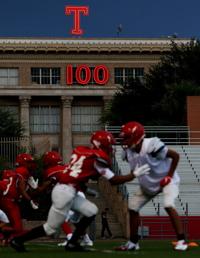
Readers picked the Canyon del Oro at Tucson High football game as Week 2's top matchup.

Vote on which game you are most interested this week.
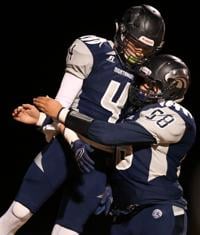
Several local players continued to shine as the postseason got underway.


View this profile on Instagram#ThisIsTucson 🌵 (@this_is_tucson) • Instagram photos and videos
Most viewed stories
-
Your Tucson weekend guide: Nearly 50 events happening April 17-19
-
Pima County Fair returns with all new rides, big name concerts and fun foods 🎡
-
It's that time of year again: Ranking some of the craziest meals at this year's Pima County Fair
-
Tucson’s Junkchella offers art, vendors and creative experiences
-
$25 challenge: Inside Warm Shape’s treasure trove of Tucson-made goods
-
New Eats! 20 new restaurants that opened up in Tucson this winter 🍽️
-
Over 70 fun events happening in Tucson in April 🎡🐰
-
A new beginning: This local Middle Eastern restaurant is starting fresh and serving up amazing meals
-
44 things to do in Tucson this weekend, April 10-12
-
Rescued mountain lion cubs settle into new home at Tucson’s Desert Museum