


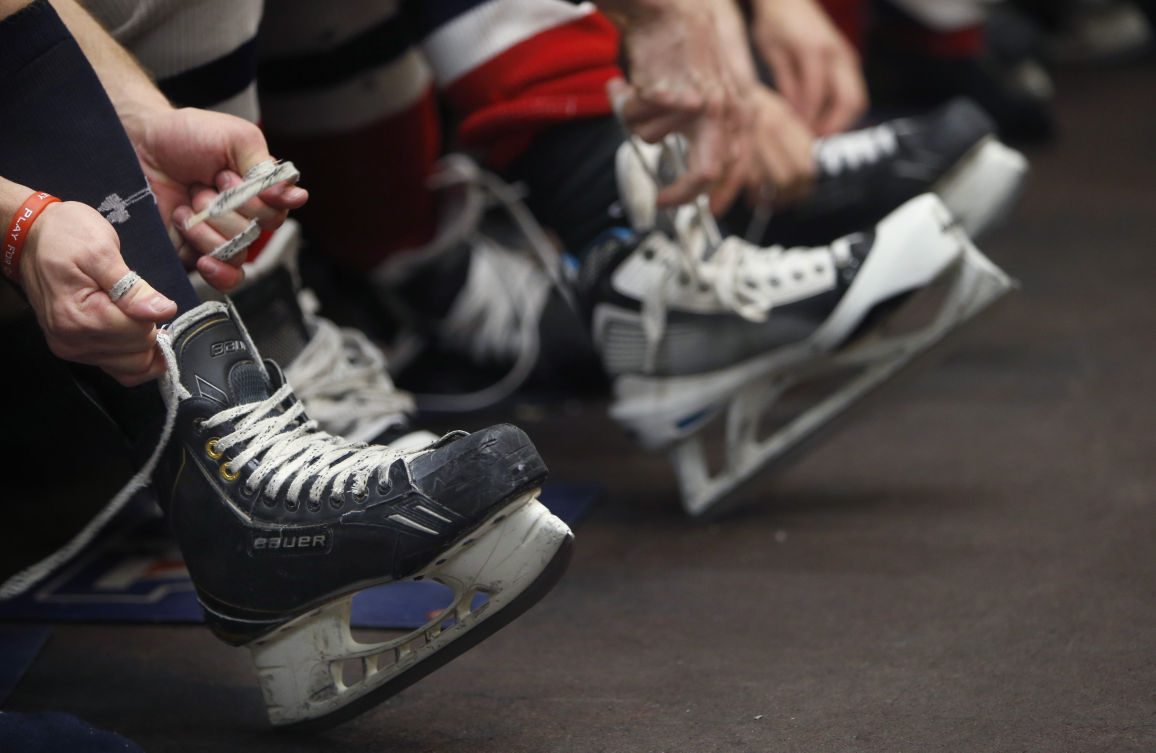
Where do hockey players come from?
Unfortunately for scouts there isn’t a player-stork that delivers fully developed major-league talent, suddenly 18 years old and ready to go. Players have to be grown, developed, nurtured, and they all have to start skating somewhere.
And when your hometown hasn’t had a public ice rink for almost a decade — I’m looking at you, Tucson — then getting started as a hockey player boils down to one precious commodity: ice.
So you’re off the hook, Tucson, if you did not know that we actually have a local hockey player launching pad. Tucson’s youth hockey organization, the Wildcat Youth Hockey Association, is entering its sixth season at the Tucson Convention Center arena.
“We’re a nonprofit run by an all-volunteer staff,” says WYHA coaching director Ryan DeJoe, who during the day is an assistant United States Attorney. “We really are a tight hockey community here in Tucson, and we work hard to create a positive experience for everyone.”
DeJoe emphasizes that the WYHA has attracted the kind of dedicated sports parents and kids that you don’t hear about often enough — the kind who are working together for the kids’ benefit rather than wasting energy screaming at refs or at each other. Perhaps the small Tucson ice community has made cooperation a necessity, but it also seems down-home sincere.
“All the groups that use the TCC ice get along really well together and cooperate,” DeJoe says. “There’s flexibility and other groups are really good about accommodating each other’s scheduling needs.”
And there are lots of scheduling needs: The TCC needs to somehow juggle the ice time for the WYHA, an adult amateur league, ice skaters, the UA club team — and now the American Hockey League’s Tucson Roadrunners. Oh, and then there’s all the other non-ice ways the TCC is used, from concerts to the weekslong gem and mineral show.
That’s a big bag of possible conflict between all the entities and agendas, and when the TCC charges about $350 an hour for ice time, then the current cooperative spirit can only help each organization survive.
The NHL’s Arizona Coyotes have also helped with fundraising opportunities and a “Rink of Dreams” event where the WYHA kids get to skate for 90 minutes, several times a year, before Coyotes games at the team’s Glendale arena. Think of those little legs pumping and big eyes looking up from the ice at an NHL arena.
Yep, that’s another way that hockey players are made.
The WYHA welcomes kids from ages 2 to 18, and forms teams based on age level (and available numbers of bodies) to practice and play games. They also have low-cost skating lessons for true beginners, and welcome Tucsonans who know absolutely nothing about skating or hockey.
And yes, they actually have had 2-year-olds learn how to skate. Presto: a hockey player is born — no player-stork needed.
DeJoe estimates that the WYHA has had several hundred kids go through their ranks in the past five years, with perhaps 10 who have skated for all of those seasons. The time is coming when kids who played in the program will advance to play college hockey and beyond — a development that has been mostly missing in Tucson for a generation.
The next step in Tucson’s hockey progress is obvious, like a flashing neon sign: a new public ice rink facility to relieve the logjam at the TCC. Youth hockey will not only explode with a new rink, but the long term survival of UA hockey could also become more possible.
You’ll see me mention this need again and again, like a mantra, until the details are finally hashed out and announced. For everybody’s sake, let’s hope the new rink is a reality before today’s 2-year-old skater is old enough to consider trying out for the Wildcats.
This season’s WYHA registration signup is Saturday, Sept. 10 at Play It Again Sports, 7963 N. Oracle Road, from 10 a.m. to 2 p.m.

