


When Bill Veeck was planning to sign Larry Doby, the American League's first Black player, to integrate his Cleveland baseball team in 1947, the club was still training in Florida.
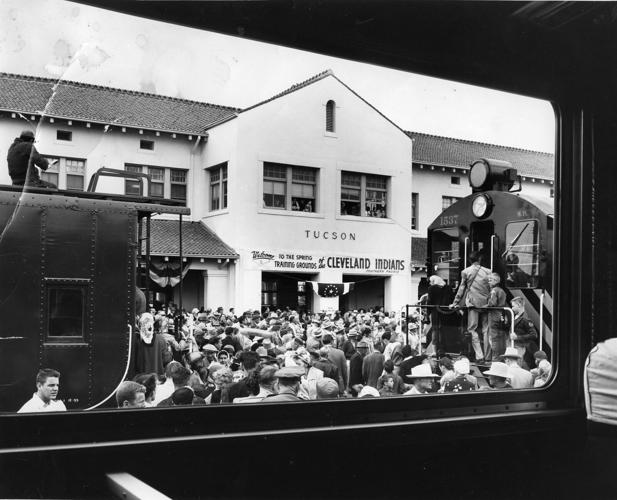
To escape the harsh racism of the South, Veeck moved his team’s spring training operation to Tucson. And with that move, Veeck helped launch what is now the Cactus League.

The Cleveland Indians arrive by train in Tucson in 1955.
While all of MLB’s teams that call Arizona their spring training home have since migrated north to the Phoenix area, Veeck is credited as the founding father of the Cactus League. He convinced the New York Giants to move to Phoenix the same year, beginning a spring training tradition in Arizona that continues today.
“March is historically a busy time in Tucson,” said Anthony Gimino, Pima County’s communications coordinator and a longtime Arizona sportswriter. “Spring training was part of the fabric of Tucson for so many years.”
Cleveland and the New York Giants made history by playing the first official Cactus League game on March 8, 1947, when the Giants beat Cleveland 3-1 at Tucson’s Randolph Park.

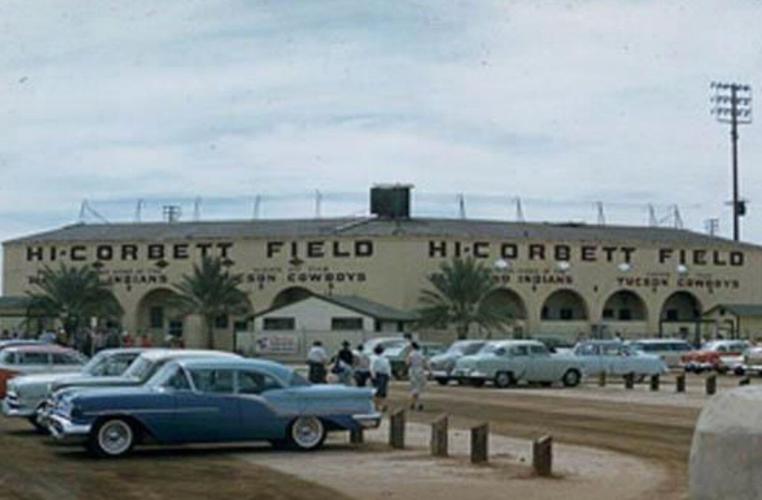
Tucson’s Hi Corbett Field was the spring training home for the Cleveland Indians and later the Colorado Rockies, and remains a memorable part of the Cactus League’s history.
The Cubs became the third Cactus League team in 1952, playing at Rendezvous Park in Mesa.
In 1951, the Yankees and the Giants swapped spring training facilities for one year, bringing legends Joe DiMaggio and Mickey Mantle to Arizona. The Giants played their games at the original Phoenix Municipal Stadium located near what is now downtown from 1947 to 1963, then moved to the new Phoenix Municipal Stadium when it opened 62 years ago in 1964 and continued playing there until 1981.
In the early days, spring training operations were far simpler.
“In the concourse behind the press box, there is a little stone building,” James Vujs, director of Phoenix Municipal Stadium said. “This was the original building. It was ticketing, it was operations, it was maintenance. And that's all you needed 62 years ago to run spring training. If you look at the building, you can see the original ticket windows are still there.”
Following Veeck’s move to Tucson, a steady stream of major league teams established spring training homes in Arizona, marking the rapid expansion of the Cactus League.
– Cleveland Indians: 1947
– New York Giants: 1947
– Chicago Cubs: 1952
– Oakland Athletics: 1969
– Milwaukee Brewers: 1971
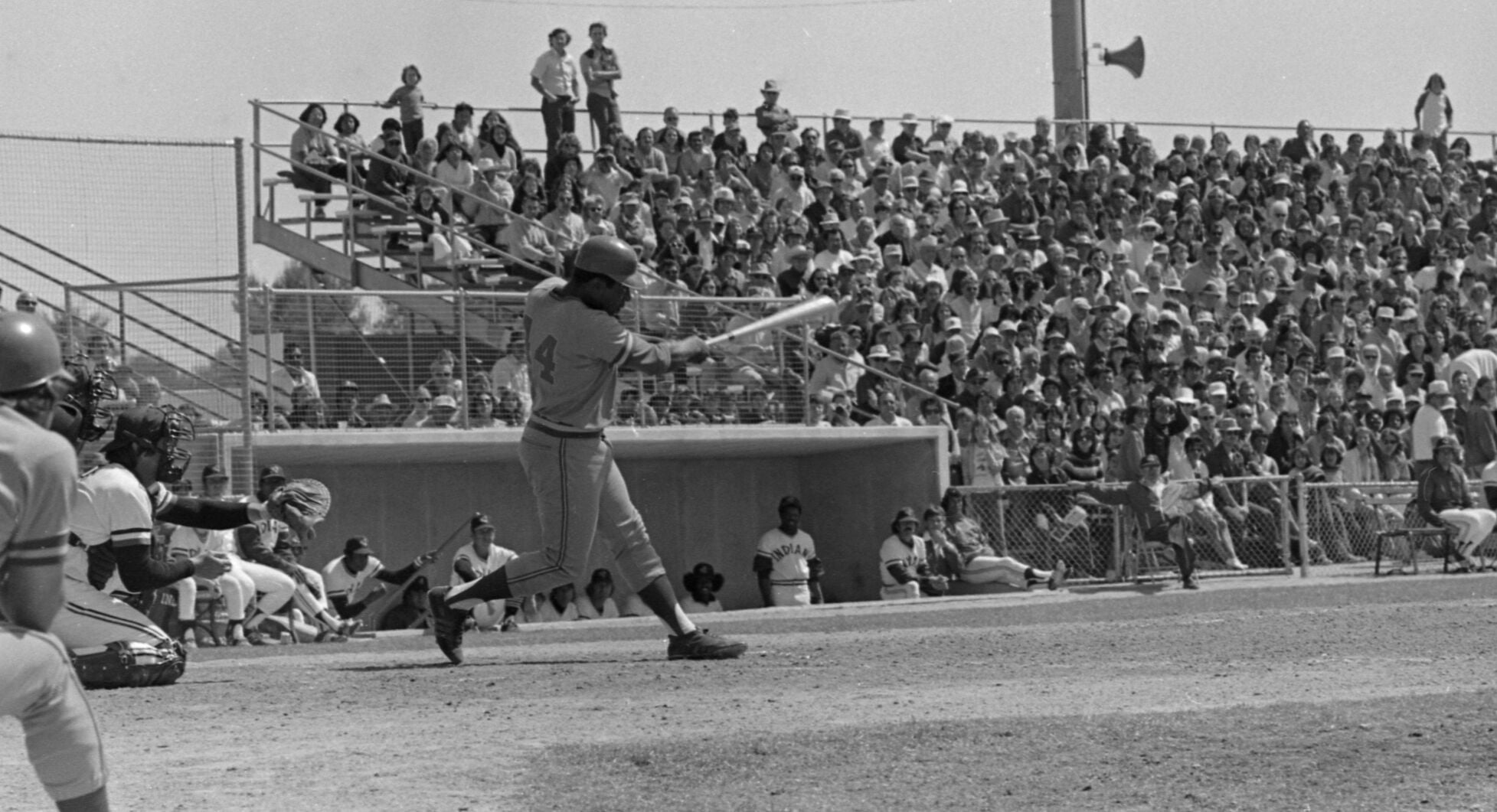
Hank Aaron of the Milwaukee Brewers gets a base hit during a Spring training game against the Cleveland Indians at Hi Corbett Field in Tucson on March 23, 1975, a year after he broke Babe Ruth's home run record.
– Seattle Mariners: 1977
– San Diego Padres: 1969
– Los Angeles Angels: 1993
– Colorado Rockies: 1993
– Arizona Diamondbacks: 1998
– Chicago White Sox: 1998
– Kansas City Royals: 2003
– Texas Rangers: 2003
– Los Angeles Dodgers: 2009
In February 1998, the Arizona Diamondbacks moved into the newly opened Kino Veterans Memorial Stadium, which at the time was called Tucson Electric Park.
Over time, as new teams joined the Cactus League, not only the way that the facilities operated changed, but where teams played became a big factor as teams began to centralize in the Phoenix area, leaving Tucson.
However, the Baltimore Orioles once trained and played games in Yuma, and the San Diego Padres headquartered there from 1969-93. The Giants played in Phoenix, but their headquarters were at Francisco Grande in Casa Grande for 20 springs. Inevitably, players grew tired of traveling so far, and the camps became more centralized.
“You can tell over the years as major league players grew bigger salaries and grew more important and had more say, you knew those superstars hated that bus ride down to Tucson,” Gimino said. “It doesn't seem like that big of a deal, but they just didn't like hopping on that bus two hours each way.”
On March 31, 1992, the team that paved the way for the Cactus League played its final game, defeating the Chicago Cubs 8-2. Cleveland returned to Florida for 1993 spring training, playing at Chain of Lakes Park in Winter Haven.
By 2007, the Rockies, D-backs and White Sox were the only teams to train in Tucson as an inevitable exit to the Valley loomed over their heads.
“There was just so much history that I guess maybe you have to be of a certain age,” Gimino said. “But to think that one time Mickey Mantle, Joe DiMaggio, Ted Williams, , Bob Feller, all the parade of Hall of Famers that came through here in the '50s, '60s and even through the '90s.”
On March 27, 2008, the White Sox played their final game in Tucson, losing to the Diamondbacks 8-4 in front of more than 7,000 fans.
“The agreement had been settled, in 2008 I think we knew the White Sox wanted to leave, and then the Diamondbacks and Rockies. The writing was on the wall,” Gimino said.
The D-backs and the Rockies played the final spring training game on March 31, 2010, at Hi Corbett Field, ending a run that spanned more than six decades.
“It's something Tucson residents seem to miss,” Gimino said. “Some of the older timers in town seem to miss that spring training atmosphere.”
By 2012, all 15 Cactus League teams had centralized in the Phoenix area, leaving behind the place where the Cactus League was born.

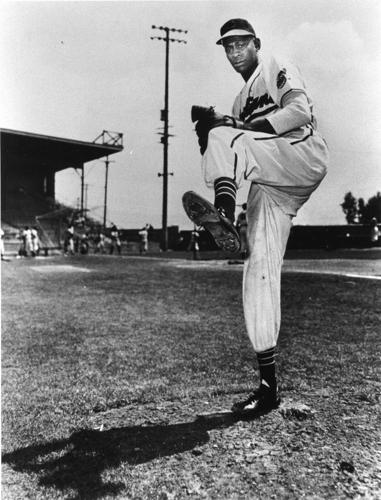
Cleveland Indians baseball player Satchel Paige in 1948 in Tucson.
But the memories remain.“I don't think spring training is what it is today without Tucson at the table very early on, being a welcoming party, and being open-minded to how that's going to transition to the greater good,” Blake Eager, executive director of Southern Arizona Sports, Tourism, & Film Authority said. “I don't think the Cactus League and the Grapefruit League exist without Tucson.”




