


It’s time to kick the dust off your boots, Tucson. The annual La Fiesta de los Vaqueros Tucson Rodeo is back for its 101st year this weekend.
The first day of the Tucson Rodeo kicks off at 10 a.m. Saturday, when the gates officially open at the Tucson Rodeo Grounds near East Irvington Road and South Sixth Avenue.
Starting at noon Saturday and Sunday, the rodeo’s youngest cowboys and cowgirls, ages 4-6, will participate in sheep-riding during the first event of the day: Mutton Bustin’. At 12:30 p.m., the Junior Rodeo begins, where participants ages 7-13 will compete in steer riding, barrel racing and roping events.
The rest of the weekend’s afternoons are filled with bareback riding, steer wrestling, team roping, saddle bronc riding, tie-down roping, barrel racing and bull riding. The weekend’s events run from 2 to 4 p.m. on Saturday and Sunday.
Following a three-day break after Sunday, the Tucson Rodeo bucks back into action on Thursday, Feb. 26, until March 1.

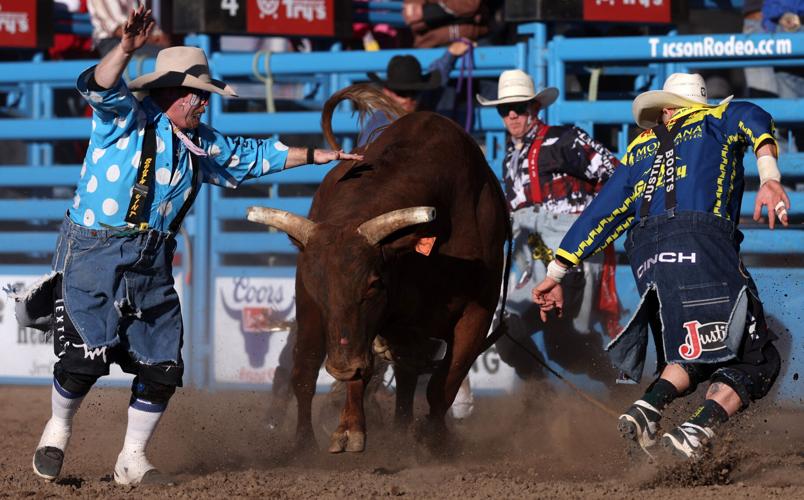
Bull fighters Wacy Munsell, left, Nathan Harp and Dusty Tuckness team up to keep Redlicious Meats Aces High off balance after the bull tossed Ky Hamilton on the closing day of La Fiesta de los Vaqueros in Tucson on Feb. 23, 2025.
Tickets start at $20 (before fees) and can be purchased online at tucsonrodeo.com/ticketinfo.
In addition to rodeo days, the annual Rodeo Parade is set to roll around Tucson’s south side starting at 9 a.m. on Feb. 26. This year's grand marshal is Tucson Appliance Company owner Chris Edwards.
The parade begins at South 12th Avenue and West Drexel Road. The route will head east on Drexel Road to South Nogales Highway and then head north until concluding at Irvington Road.
Tucson's wild west tradition
The Tucson Rodeo has been a staple in the Old Pueblo since its inception in 1925.
The event, which later became known as La Fiesta de los Vaqueros, was conceptualized by Leighton Kramer, who was originally from Pennsylvania but moved to Tucson and “was among the first to understand and profit from the growing value of Tucson real estate,” the Arizona Daily Star reported last year.

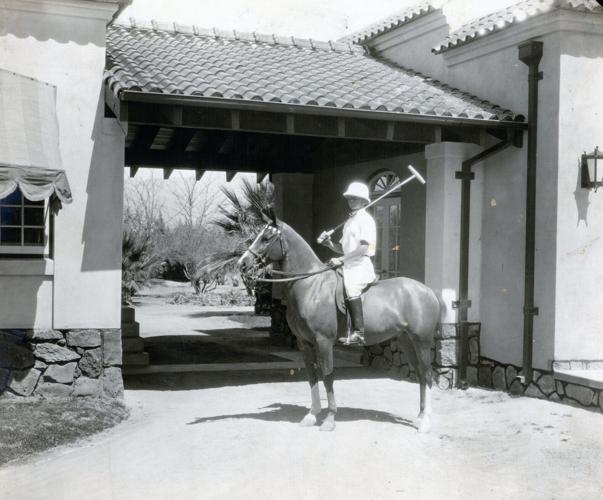
Frederick Leighton Kramer poses in his polo uniform in an undated photo. The Tucson transplant organized the city's first rodeo and parade in 1925 as a fundraiser to send his polo club to a competition in New Jersey.
Kramer purchased land east of North Campbell Avenue and north of East Elm Street and built Rancho Santa Catalina in 1924.
He later developed the idea of hosting a rodeo for various reasons, including raising money for the Arizona Polo Association, where he was president of the club and as a way to improve tourism in Tucson during winter.
Kramer hosted the first rodeo at Kramer Field, which he owned, in the Catalina Vista neighborhood.
Ahead of the first rodeo, Tucsonans were excited for the event.
“The city is taking on a truly rodeo appearance. Stores are displaying their cowboy togs in windows, with heavy stock of saddles and chaps … and colored handkerchiefs in profusion,” the Tucson Citizen reported in 1925. “On every corner, one hears nothing but rodeo. Old-timers tell about the days that were, when contests were held on nearby ranches on Sundays and all the countryside gathered to root for their favorite. Tucson has spared no expense to make this rodeo a success.”
Eventually, the Tucson Rodeo outgrew its initial space and moved to the old Tucson municipal airport, which later became the Tucson Rodeo Grounds.
The rest is history.
Since its inception, the Tucson Rodeo has sold over 4 million tickets, the Star reported last year.

