



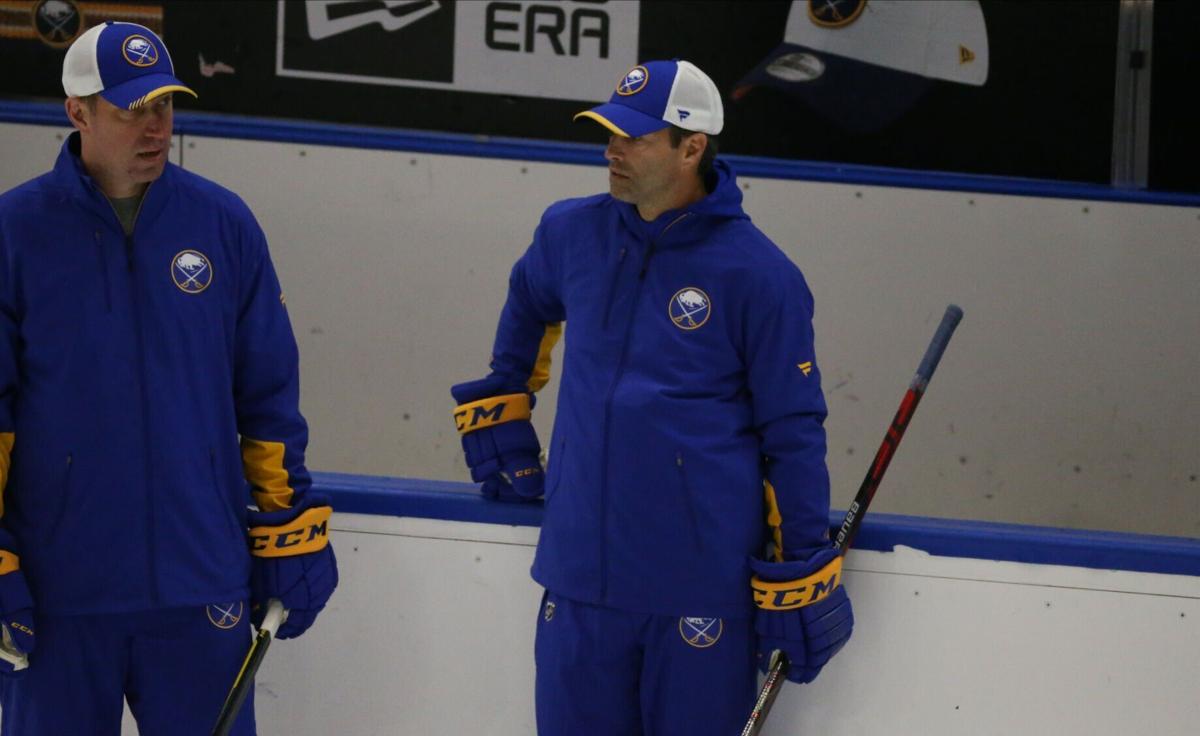
ROCHESTER – Michael Peca couldn’t hold back the emotion if he tried.
His eyes welled with tears and his passion for the city of Buffalo poured out as he addressed a room full of Buffalo Sabres prospects in September.
Inside the NHL: The issues facing each side of Owen Power's Olympic decision
This wasn’t a typical rah-rah coach’s speech. It was the firsthand account of a retired National Hockey League player who witnessed how triumphs on the ice can inspire hope in a region where, for many, the winters darken when their beloved Sabres struggle.
“It ended up getting emotional,” said Peca, now 47 and an assistant coach with the Rochester Americans. “I got a little teary-eyed talking about it. That happens when I talk about things that mean a lot to me.”
This city and its NHL franchise are dear to Peca. While the two-time Selke Trophy winner played for six different teams during his 14-year career, he and his family made their home in Western New York. He helped grow youth hockey through his work with the Buffalo Jr. Sabres, first serving as head coach before running the organization as general manager and director of hockey operations. Peca also is a board member with the Sabres' alumni association.

The club's legendary announcer will join the franchise's revered players as honorees in KeyBank Center.
Peca could have gone elsewhere to start his professional coaching career. He spent part of the 2020-21 season as a player development coach with the Washington Capitals, training the club’s taxi squad during the pandemic-shortened season. However, Peca had professional relationships with Sabres general manager Kevyn Adams and Rochester coach Seth Appert.
And there’s arguably no franchise in the NHL where Peca can make the greatest impact. The Sabres’ 10-year playoff drought is the longest in franchise history and he has a prominent role in the development of talented prospects who will be needed in Buffalo, including Jack Quinn, JJ Peterka, Mattias Samuelsson and Peyton Krebs, among others.
When some of those players gathered in Buffalo for the Prospect Challenge in the fall, Peca wanted to ensure they understood their place in the city.
“It’s important that players understand this team means so much to the people of Buffalo,” Peca told The Buffalo News. “We know what the winters are like in Buffalo. It can get gray, and people look for something a little bit better on a day-to-day basis to cheer them up, and sports can do that. The hockey team has done that. It’s a blue-collar town and they want guys to work hard. The message to the guys was basically, we have to put work ahead of skill. You’ve got to make sure you understand you’re playing for more than yourself.
“It’s, ‘Give the city and the fans the respect they deserve by putting on that jersey.’ There’s something to putting on this jersey. It’s not just allowing you to play in the National Hockey League. It’s not just allowing you to make a lot of money. It’s giving you a great responsibility and opportunity to make peoples’ lives happy.”

The Buffalo Sabres' defense moved closer to full strength Friday with Robert Hagg and Jacob …
Peca understands why any fan in Buffalo would be skeptical or jaded. Between the Sabres and Buffalo Bills, the city’s loyal supporters have endured unimaginable sports heartbreak. Peca was there for one of those tragic moments.
A dynamic two-way center who scored 20-plus goals on four occasions, Peca was captain of the Sabres when they reached the Stanley Cup Final in 1999, the franchise’s first appearance in the championship series since 1975. After totaling a career-high 27 goals during the regular season, Peca delivered 13 points in 21 playoff games that spring. He was a key player in the Sabres’ run to Game 6 of the Stanley Cup Final, when they lost to the Dallas Stars on the controversial no-goal call.
From 1995 through 2000, Peca appeared in 363 regular-season games for Buffalo, totaling 96 goals and 217 points. Upon retiring from the NHL following the 2008-09 season, Peca began to watch from afar as his former team struggled to execute its rebuild.
He felt the anguish of his friends and fellow fans. Moments that inspired hope were quickly followed by a bitter dose of reality.
“Even in my conversations with people, I’ve had a unique perspective the last 12 years of being a fan and seeing what the organization has gone through," Peca said. "The ups, more downs and this rollercoaster it’s been on. I think as a person, the things I bring and the things I’m passionate about, fit perfectly for this organization at this particular time to be here in Rochester with Seth and Mike (Weber). Not just getting guys to the National Hockey League, but developing players that can help this organization win a championship.”
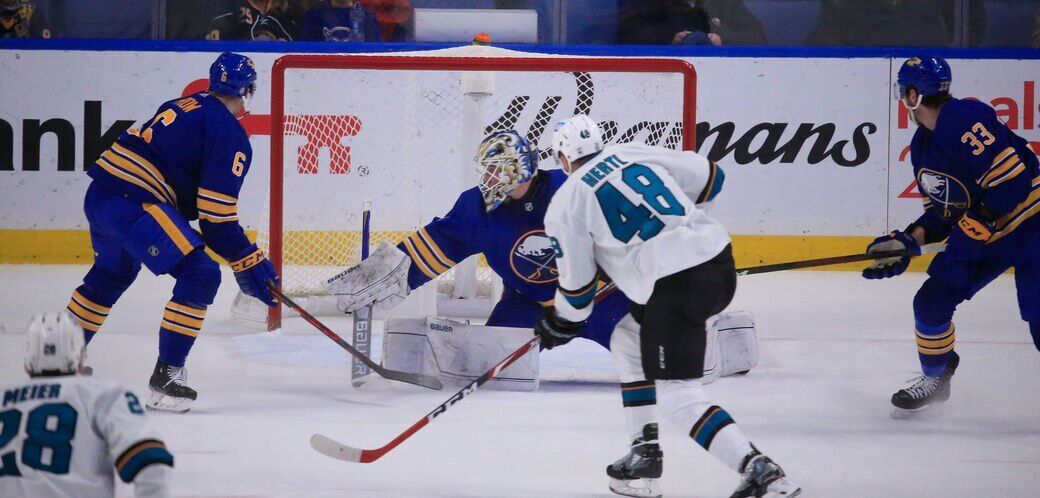
The Sabres seem to be heading in the right direction with this rebuild, but it would still be nice to see a modicum of positive results here, writes Mike Harrington.
Appert, Peca and Weber, now an assistant coach who played defense for the Sabres and their minor-league affiliates from 2007-16, deserve credit for the success found by Amerks players upon reaching the NHL this season. Winger Brett Murray carved out a role as a power forward, Krebs made the seamless transition to centering for the Sabres when Dylan Cozens entered Covid-19 protocol, Peterka has used his remarkable speed to impact the game in his NHL debut and Casey Fitzgerald had an impressive first game on defense.
The success, Appert and Peca said, is the product of talented players and a collaborative approach by the coaching staff. Appert isn’t afraid to delegate to either assistant coach. Peca runs a power play that entered Friday ranked first in the American Hockey League, while Weber has helped prepare Fitzgerald and Samuelsson for the NHL. The Amerks are second in the North Division, despite enduring injuries, a flu outbreak, Covid-19 cases and recalls to Buffalo.
While Appert can speak to his team about how his coaching impacted the many talented players at the USA Hockey National Team Development Program, his assistant coaches experienced what it takes to reach the NHL and stay there.
“I did not live it as a player,” Appert said. “I don’t want to pretend that I did. Michael Peca and Mike Weber have. Pecs lived it at a high level. He was a captain of multiple franchises in the National Hockey League. He’s obviously a Sabres legend. He can talk to the players about the little intricacies and the things that separate players at that level. How he was able to make himself so valuable in the NHL.”
Peca beamed when describing what he has experienced since joining the Sabres in August. He expressed confidence in Adams’ approach to building a winner and the talent throughout the organization. He commended Appert’s leadership. But nothing evoked more emotion from Peca following a recent morning skate than when he was asked about his players and the city of Buffalo.
“The thing that excites me are kids like Peyton Krebs, JJ Peterka, Jack Quinn, Mattias Samuelsson and these prospects,” he said. “They’re workers by nature. Tremendously skilled and tremendous hockey IQ, but they’re workers by nature. I think that’s a perfect fit for where this organization needs to go and the identity it needs to continue to rebuild.”

