



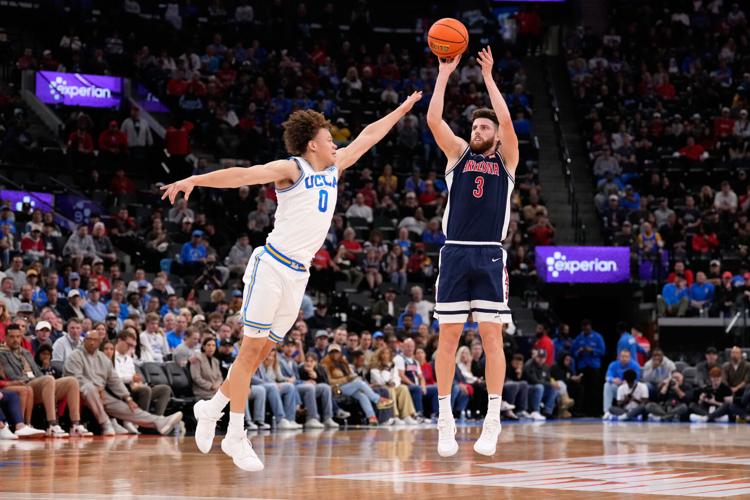

The way Arizona men's basketball coach Tommy Lloyd put it last month, the Wildcats’ games against Florida and UCLA could have easily gone different directions and UConn was playing without two starters when Arizona pulled out the biggest win of its season on Nov. 19.
“So let's not act like we've got all the world's problems solved,” Lloyd said that night.
But by beating those three teams en route to another undefeated November — the fourth in Lloyd's five seasons at UA — the Wildcats entered the early conversations about Final Four contenders and revealed some things about themselves.
Here’s five of them:
1. Jaden Bradley is more efficient than ever
Second among Arizona players only to Pelle Larsson in overall efficiency as a sophomore in 2023-24, when he came off the bench behind Kylan Boswell, Bradley struggled to stay at the same level while playing 68% more minutes last season.
In averaging 34.1 minutes overall and 36.3 in Big 12 games last season, Bradley’s efficiency, as measured by college basketball data guru Evan Miyakawa, dropped from 6.85 in 2023-24 to 6.12, the 126th best mark in the nation.
This season, Bradley averaged 35.2 minutes in UA’s big three games, but his efficiency has jumped to 7.43, the 19th-best mark in Division I. However, those overall efficiency numbers include UA’s uncompetitive four home games, and Bradley is averaging just 27.1 minutes overall.
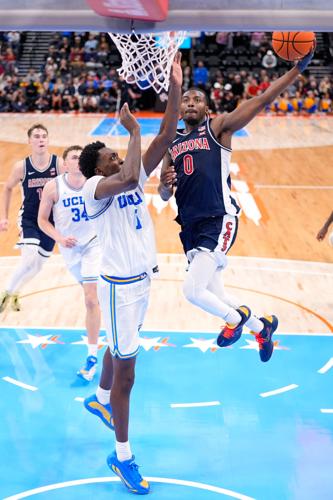
On top of Bradley’s metrics are the intangibles the Wildcats have seen repeatedly, most notably the composed demeanor while he sank 9 of 10 free throws against Florida and especially the confidence he's shown in taking the ball to the basket for scores or to attract fouls late against UCLA and UConn.
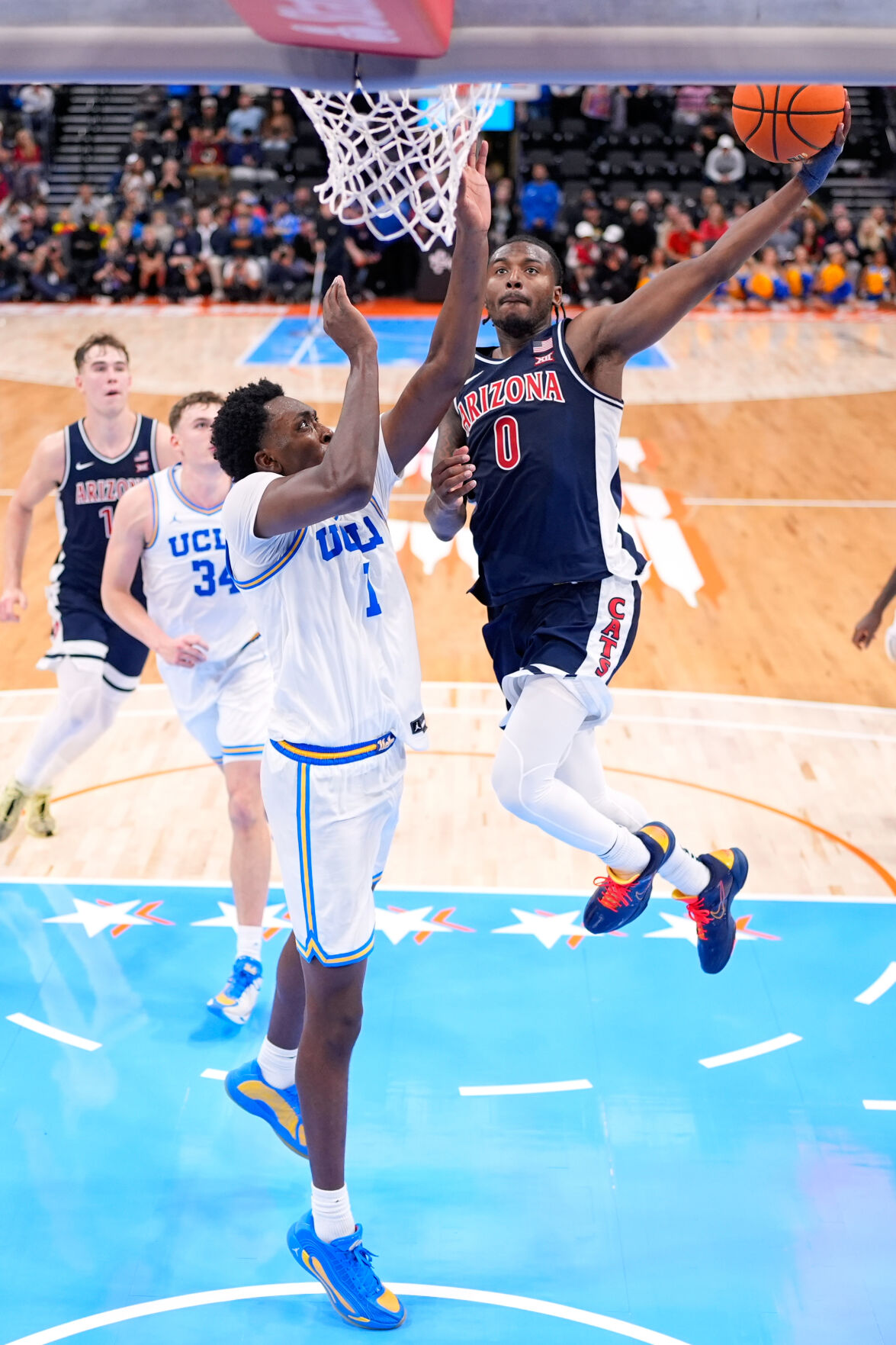
Arizona guard Jaden Bradley, right, shoots as UCLA forward Xavier Booker defends during the second half of a Hall of Fame Series game Nov. 14, 2025, in Inglewood, Calif.
“When you have a point guard who is selfless and also a baller and who has big enough cojones to take and make those shots at the end of a game, it's pretty special,” Lloyd said after the UConn game. “We have that in him, and it's really cool to see him grow into that role.”
2. Koa Peat may be even better than advertised
There is an old adage in college basketball that you never really know how good a freshman is until he gets out there, no matter what sort of credibility he brought in from high school, Peach Jam or the McDonald’s All-American Game.
And Peat did bring in plenty of cred, in the form of four Arizona high school championships, three Gatorade Arizona Player of the Year awards, a McDonald’s appearance and four gold medals from helping lead USA Basketball in major FIBA junior events.
“I’ve got them on display in my living room in Chandler,” Peat said of his golds, the last he won while playing under Lloyd for USA in the FIBA U19 World Cup last summer.
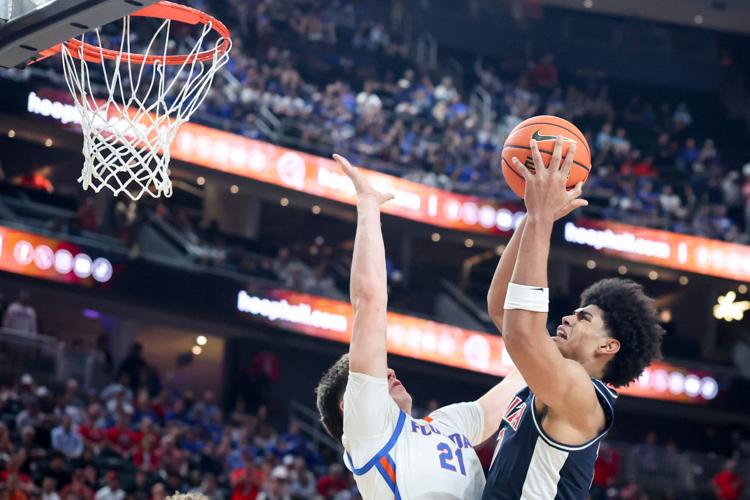
But then Peat blew the doors off in his college debut: 30 points, seven rebounds and 12 trips to the free throw line against defending national champion Florida of all teams, in Las Vegas.

Arizona forward Koa Peat shoots against Florida forward Alex Condon during a Nov. 3, 2025, game in Las Vegas.
Peat struggled against UCLA, with four fouls and six turnovers in 21 minutes, but he had 16 points and 12 rebounds while the Wildcats pounded UConn inside in their 71-67 win on Nov. 19 in Storrs, Conn.
With enough basketball IQ and quickness to move his 6-8, 235-pound frame into place at the right time, Peat has also scored in double figures despite playing significantly fewer minutes in UA’s home games. He's also boosted his scoring and that of his teammates via offensive rebounds: Peat’s 11.8% offensive rebounding percentage — the times he scoops up missed Arizona shots when he’s on the floor — ranks 165th nationally.
3. Brayden Burries is getting time
A major reason Lloyd has cited for not playing backup guard Evan Nelson more often is the fact that half of the Wildcats’ eight-player rotation is freshmen.
“I could be giving him more minutes, and that's my fault. I'll own that,” Lloyd said of Nelson. “But the purpose behind it is we have four freshmen and we're trying to get those guys ready for some tough upcoming games, trying to get them ready for a tough conference.”
More than anybody, Brayden Burries is the one who could benefit the most. Starting at shooting guard, Burries has shifted to the point when Bradley is out, soaking up minutes that might otherwise go to Nelson, the starting point guard at Harvard last season.
Burries’ production during UA’s big three early games suggests he’ll need extra developmental time before Big 12 play begins next month. Against Florida, UCLA and UConn combined, Burries averaged just 4.0 points while shooting 21.1% from the field (1 of 7 from 3-point range) while matching his five assists with five turnovers.

Arizona guard Brayden Burries (5) eyes the basket as Denver guard Julius Rollins (8) and Denver forward Gabe Oldham (32) defend in the second half during a game at McKale Center on Nov. 24, 2025. Arizona won 103-73.
“Brayden just needs at-bats,” Lloyd said after Burries had 20 points, six rebounds and five assists against Denver on Nov. 24. “He just needs to continue to get at bats and take swings, and he'll figure it out.”
4. Awaka and Krivas can play together
One of the bigger questions entering this season was what Lloyd would do with center Motiejus Krivas coming back from a foot injury, Peat arriving as a much-heralded power forward and Tobe Awaka coming back from a season in which he became an honorable mention all-Big 12 pick while playing mostly at center.
That’s three starters for two post spots, two of whom operate best as centers.
Even if Awaka could find a way to work in and around Krivas at power forward, instead of consistently operating in the low post as he did last season, using them together would mean Peat is on the bench.
But while Krivas was at his most dominant during a game Awaka did not play in, collecting 17 rebounds in an Oct. 18 exhibition game against Saint Mary’s, Krivas (rated No. 93 nationally in overall efficiency) and Awaka (108) have become Arizona’s second and third most efficient players behind Bradley.

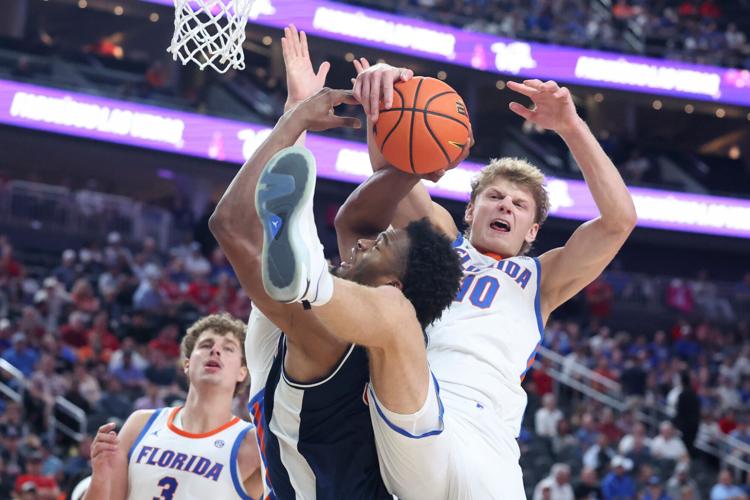
Arizona forward Tobe Awaka, center, and Florida forward Thomas Haugh (10) contest for a rebound during the second half, Nov. 3, 2025, in Las Vegas.
Awaka leads the nation in defensive rebounding percentage (33.9), while both players are a major reason why Arizona ranks 10th nationally in offensive rebounding percentage at 41.0. Awaka ranks third nationally at 24.1% while Krivas is 26th at 16.8%.

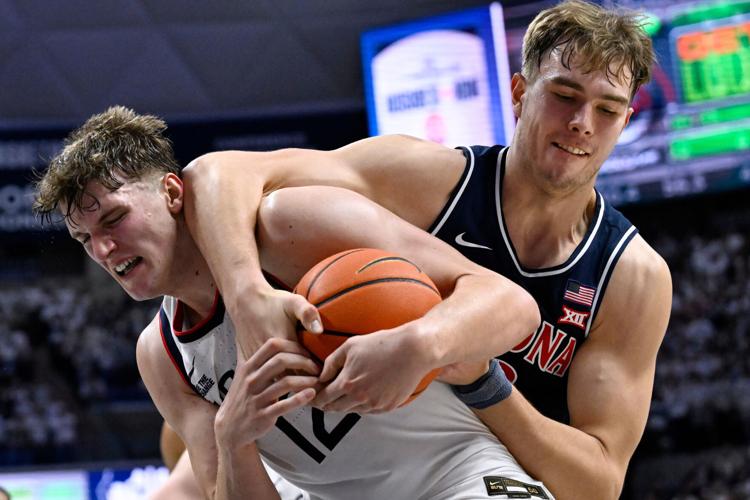
UConn center Eric Reibe, left, and Arizona center Motiejus Krivas fight for a rebound in the second half, Nov. 19, 2025, in Storrs, Conn.
While complementing Krivas’ defense and rebounding after the Lithuanian freshman scored 20 points on Norfolk State, Lloyd gushed about Awaka, who has cited his faith for helping accept his reserve role this season.
“Tobe is obviously a warrior. He's a beast and he really impacts these games,” Lloyd said. “The beautiful thing about him is he's one of those guys you don't have to run plays for. He finds the ball, he finds opportunities, and that's really valuable. It's just a great insurance policy.”
5. They’re kinda odd
Two days after Arizona beat UConn to jump into the national conversation, a story posted to SB Nation and Yahoo Sports saying that “Arizona’s bizarre playing style” was producing the game’s best résumé at that point.
Judging by the numbers, that much was true. In a game that values the 3-point shot, the Wildcats rank 359th — seventh to last in Division I — in the number of 3s taken as a percentage of overall field goals taken.
That is, the Wildcats launch only 26.8% of their shots beyond the arc, and they weren’t particularly good at the few they have taken in big games: Collectively against Florida, UCLA and UConn, Arizona hit only 10 of 34 3-pointers (29.4%).

Arizona guard Anthony Dell’Orso, right, shoots as UCLA guard Trent Perry defends during the first half of a Hall of Fame Series game Nov. 14, 2025, in Inglewood, Calif.
But context is mandatory here. Not only do the Wildcats have the aforementioned power post trio of Krivas, Awaka and Peat, but Florida’s defensive style played into Peat’s hands while the Wildcats took 38 free throws in that game. UConn, meanwhile, played UA without leading scorer and rebounder Tarris Reed.
Those factors are big reasons why Arizona took only five 3s against Florida and just 10 at UConn.
But upon returning home from Connecticut to face Denver on Nov. 24, the Wildcats launched 61% of their shots from 3-point range, hitting 12 of 27 for a 44.4% mark.
So what will their shot chart ultimately look like? What sort of shooting team will Arizona become this season?
“I have no idea, to be honest with you,” Lloyd said. “I wouldn't even know how to answer that. Obviously, we value free throws … We value paint points. But that doesn't mean we're not going to shoot 3s.
“I don't have a set formula. It's more of a possession-by-possession thing to define great team shots, whatever those may be.”

