



The last time Arizona’s defense played as well as it has so far this season, Mike Stoops was the Wildcats’ coach.
You have to go back to 2010 — 11 iPhones ago — to find the last time a UA defense did some of the things it has done through three games.
We’ll get to those things shortly in this Stanford Week edition of “Cats Stats.” We’ll also attempt to answer the question that looms over Johnny Nansen’s revamped, seemingly improved defensive unit:
How long will this prosperity last?

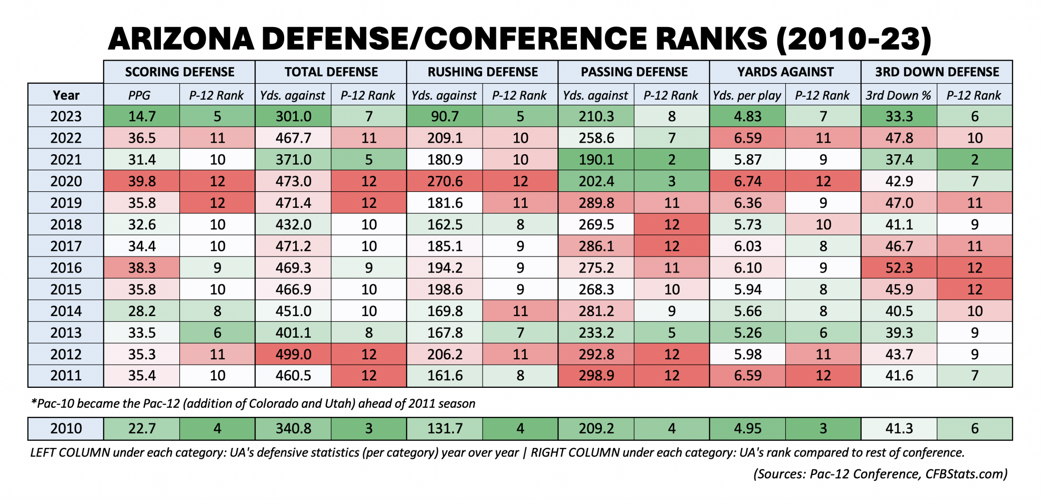
Let’s start with the numbers, as we always do. Entering Week 4, Arizona is allowing 14.7 points per game, 301 total yards per game, 90.7 rushing yards per game and 4.83 yards per play.
Over the previous 12 seasons — full seasons, mind you — the Wildcats never came close to any of those figures. These are their best defensive numbers in those categories between 2011 and ’22:

- Points per game: 28.2 (2014)
- Total yards per game: 371.0 (2021)
- Rushing yards per game: 161.6 (2011)
- Yards per play: 5.26 (2013)

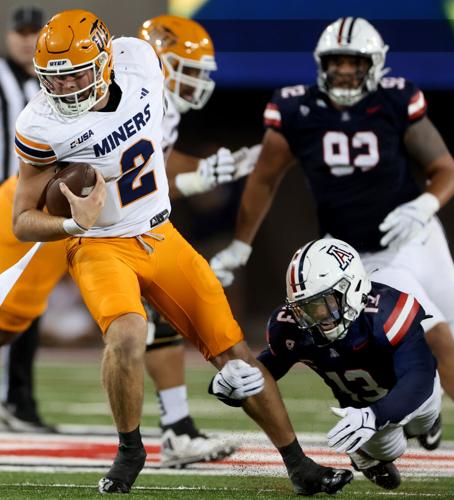
Arizona defensive back Martell Irby (13) flushes UTEP quarterback Gavin Hardison out of the pocket and into a sack during the Wildcats’ win at Arizona Stadium on last Saturday.
Arizona ranked in the bottom third of the Pac-12 in most of those categories for most of those years. Currently, the Wildcats are no worse than seventh in any of them.
The fact that they’re only fifth in the Pac in points and rushing yards allowed underscores the nature of nonconference play: For the most part, the opponents you face out of your league aren’t as good as the ones you’ll face in your league.
In that context, Utah’s defense is by far the most impressive in the conference so far. The Utes rank second in the Pac-12 in points allowed, total defense and rushing defense despite having faced two Power Five opponents.
Stanford, meanwhile, is the only team to have faced one of the league’s eight ranked programs. No. 5 USC scored 56 points against the Cardinal, inflating their points allowed to a conference-worst 36.7 per game.
Arizona will face seven of those teams in a row after its visit to Stanford on Saturday. Six of them are ranked in the top 28 in the nation in total offense and in the top 20 in scoring. The only exception is Utah, which hasn’t had the services of starting quarterback Cam Rising. He could make his season debut Saturday.

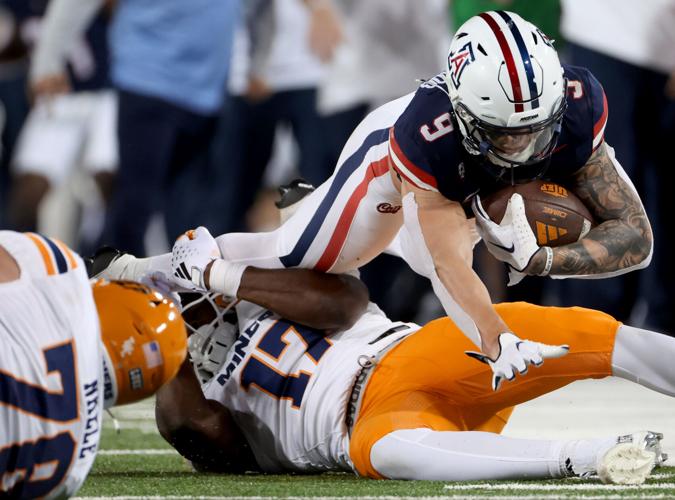
Arizona safety Gunner Maldonado (9) dives over UTEP tight end Judah Ezinwa (17) after scooping up a Miners fumble in the fourth quarter of the Wildcats’ win last Saturday in Tucson.
After matchups with Caleb Williams, Michael Penix Jr., Cameron Ward, Shedeur Sanders and others, Arizona’s defensive profile will take a hit. The numbers will change, and not in a good way. The current pace is simply unsustainable.
But a more apples-to-apples comparison than the one we’ve used so far — small sample size vs. full-season results — provides reason for optimism.
Through three games last year, Arizona’s defense seemed to be on the upswing. But the numbers weren’t nearly as remarkable as this year’s set.
Entering Pac-12 play in 2022, the Wildcats were yielding 29 points per game; their current mark is just over half that. They were allowing 355 yards per game, 54 more than the current number; 186.3 rushing yards per game, more than double the current amount; and 5.63 yards per play, nearly a yard more than the current figure.
Is it a perfect comparison? No. But it’s pretty good. Each sample includes a common opponent, Mississippi State, although the Bulldogs radically changed their offense in the interim; a Group of Five opponent (San Diego State, UTEP); and an FCS opponent (North Dakota State, NAU).

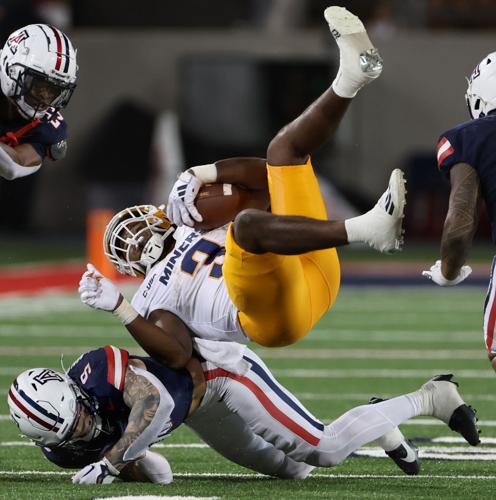
Arizona safety Gunner Maldonado (9) sends UTEP running back Deion Hankins (3) flying, ending his run in the third quarter of the Wildcats’ win over the Miners last Saturday.
If Arizona’s defense were to “get worse” in conference play to the same degree it did a year ago, it’d still be better in most respects than any UA defense since 2010.
It didn’t take long last year to realize that the Wildcats’ defensive performance in nonconference play might have been a false positive. They surrendered 49 points and 354 rushing yards in a Week 4 clunker at Cal.
Stanford’s offense doesn’t look particularly imposing on paper. Then again, neither did that of the Golden Bears.
Here are few other notes from our research on Arizona’s defense since 2010:
• The ’10 defense — which featured Ricky Elmore, Brooks Reed, Paul Vassallo, Jake Fischer, Justin Washington, Robert Golden and Trevin Wade, among others — was truly the last one to stop opponents with any regularity. That unit limited foes to 22.7 points per game, 340.8 yards per game, 131.7 rushing yards per game, 209.2 passing yards per game and 4.95 yards per play. Those figures all ranked in the top four of the then-Pac-10.

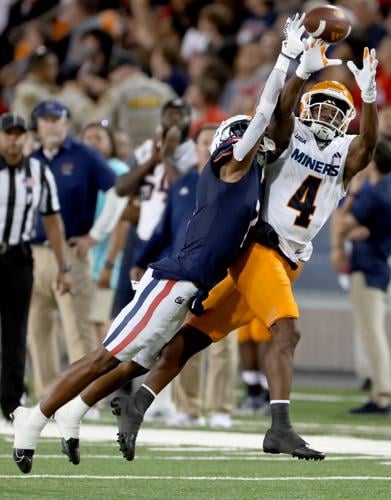
Arizona cornerback Ephesians Prysock (7) puts the pressure on UTEP wide receiver Kelly Akharaiyi (4), foiling his reception attempt in the third quarter of the Wildcats’ win at Arizona Stadium.
• The 2013 defense was, by several measures, the best of the Rich Rodriguez era — which wasn’t exactly known for stout defense. That unit — led by Fischer, Marquis Flowers, Jared Tevis, Tra’Mayne Bondurant, Sione Tuihalamaka and a freshman by the name of Scooby Wright — posted Arizona’s lowest yards allowed per game (401.1) from 2011-20 and its lowest yards per play (5.26) from 2011-22.
• When we recently wrote about Don Brown’s win at New Mexico State as the head coach for UMass, someone on X/Twitter contended that Arizona’s defense didn’t improve when Brown was its coordinator. That is simply not true. The 2021 unit is the only UA defense to allow fewer than 400 yards per game from 2011-22. It yielded 31.4 points per game, the second-lowest figure during that span, and that includes multiple defensive and special-teams touchdowns by the opposition.
• Pac-12 quarterbacking changed and improved dramatically from 2021 to ’22. The league leader in passing yards per game in ’21 was USC’s Kedon Slovis at 239.2 yards per game. (Slovis currently is with his third school, BYU, which will be one of Arizona’s Big 12 foes next year.) Last year eight Pac-12 quarterbacks topped that figure, including transfers Penix, Williams, Ward and Bo Nix.
• We have yet to discuss third-down defense, one of the drivers of Arizona’s stinginess so far. The Wildcats are limiting opponents to a 33.3% conversion rate, which would be their lowest mark in at least 15 years. But beware: It was also at 33.3% entering Week 4 last season. Arizona finished at 48%, its second-worst figure from 2010-22.
VIDEO: Arizona sophomore linebacker Jacob Manu currently leads the Pac-12 in tackles. (Video by Justin Spears / Arizona Daily Star)

