




Author Jonny Garza Villa is one of the featured romance writers at this year's Tucson Festival of Books.
Editors Note: The Q&A event at Martha Cooper Library on Friday, March 13, has been canceled, but you can still see Jonny Garza Villa at the Tucson Festival of Books this weekend.
Tucson Festival of Books attendees can celebrate the culture, heritage and stories of Tucson’s Latinx and BIPOC communities with Pima County Public Library and Nuestras Raíces.
The special programming begins ahead of this weekend’s festival, with a Q&A with author Jonny Garza Villa on Friday, March 13, from 3 to 4:30 pm at Martha Cooper Library, 1377 N. Catalina Ave.
Garza Villa will present and discuss their latest book, "Futbolista", a college age romance featuring a futbolista, or goalkeeper for a university team, and his story of self discovery and acceptance.
“It's a really great collaboration with the pride affinity team, and we're really excited that Johnny was able to do this, and that we're able to host this event,” said Samantha Neville, Latinx services librarian for Pima County Public Library. “To be in community, and to make the library a space for meeting people, having shared experiences, being able to share the love of books and celebrate cultura, it’s a really great thing that we’re able to do.”
When asked about his journey as an author, Garza Villa said they have always been drawn to storytelling.
“I tend to call myself a storyteller more so than an author. I grew up being surrounded by incredible storytellers like my grandfather, uncles and those sort of people who will tell about their upbringing, funny little moments in their lives, during dinner,” they said. “And that's sort of what I try, and hope to do in my books — bring the reader to this sort of metaphorical, symbolic dining table with these characters, and get to experience their lives and stories and find a meaning and similar experiences, and value in what they're going through.”
Garza Villa is an award-winning author of contemporary young adult romances, and has received the International Latino Book Award for their book "Ander & Santi Were Here" and the Stonewall Book Award for "Canto Contigo".
“I love writing romance centering queer, BIPOC (Black, Indigenous and People of Color) characters, and getting to write that new adult age of 18-19, to 25, where we are adults, but our brains are still fully forming and leaning what it is to be independent and quote, unquote, adult for the first time, while also falling in love and figuring out who you are,” they said. “I really found power and value in writing stories about queer, Chicanx Texans growing up and coming of age, and falling in love, and getting to be messy in a place that really tries not to acknowledge our existence, at best, and at worst, is trying to erase those existences.”
Their books, Garza Villa said, are written for people who maybe haven't seen their identities represented in books before, and who yearn to see LGBTQ+ and BIPOC characters getting to exist as themselves, and find their happily-ever-after.
“I still, even now, five years later, get young people — and even young at heart — telling me that one of my books is the first book where they've seen a queer Mexican American protagonist,” they said. “I think writing contemporary YA that centers on what it is to exist as a queer, brown, Mexican person today, is such a vital thing. Showing that we exist and that our existence is powerful.”
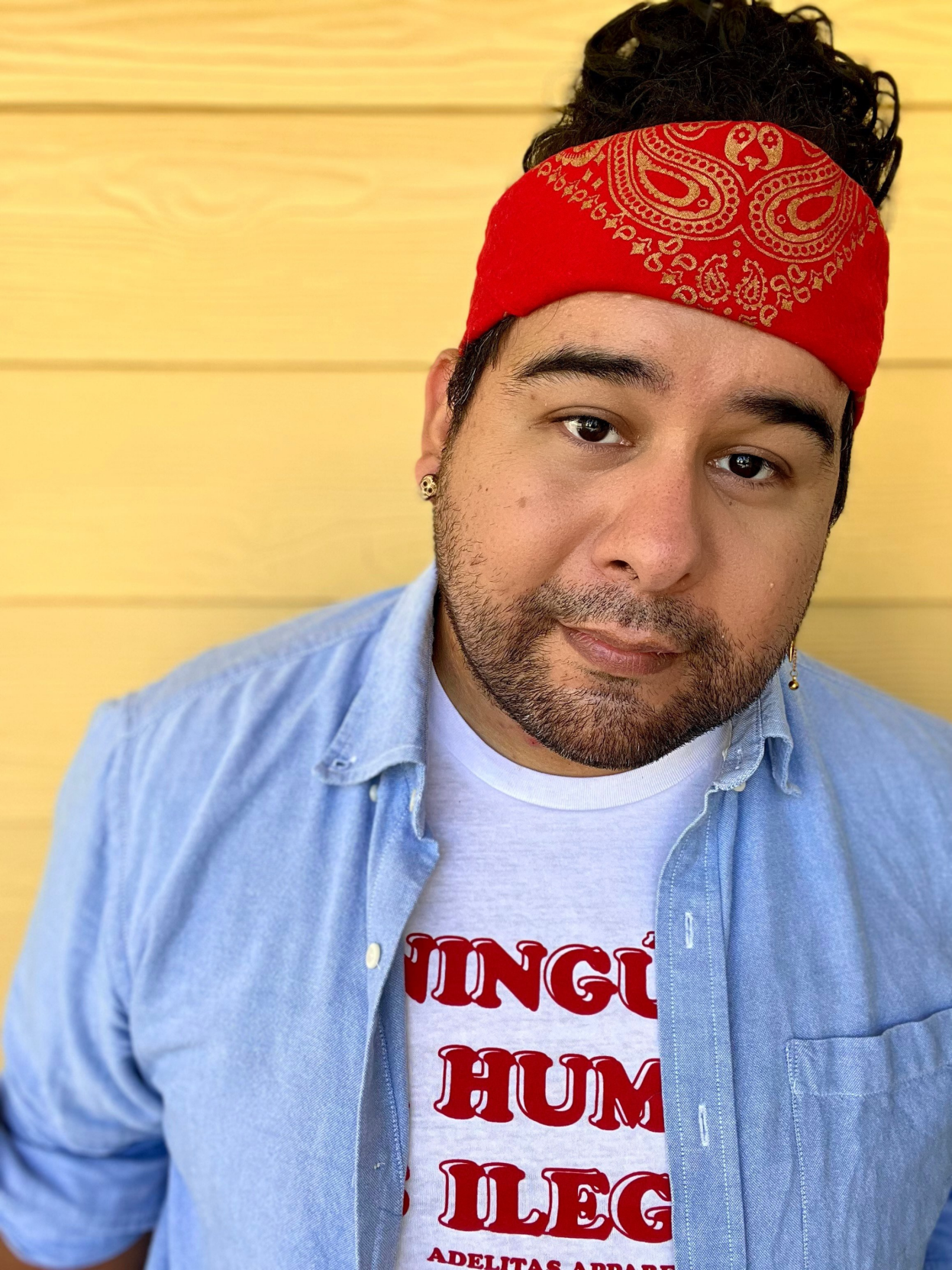
Author Jonny Garza Villa will be discussing their newest book, "Futbolista," at the Pima County Public Library on Friday, March 13 ahead of the Tucson Festival of Books.
"Futbolista" is Garza Villa’s fourth book, and first new adult release.
“'Futbolista' is a college age romance starring a protagonist named Gabriel Piña, who is the titular futbolista, a goalkeeper for his college university team in Corpus Christi, Texas, and he sort of arrives at college thinking he knows everything there is to know about himself,” they said. “Then he attends his very first college party, where, for not the first time, he kisses a boy who's trying to get out of a drinking game, and this guy ends up being a philosophy classmate of his.”
The story, Garza Villa said, follows Gabriel as he learns to recognize his own greatness, and understand that he brings something to the pitch that is uniquely valuable.
“He starts having these conflicting feelings, ‘is there a space for me as someone who is bisexual but also dreams of playing professionally?’” Garza Villa said.
In addition to the Friday Q&A, Villa Garza will be speaking at three romance panels over the weekend, including “Why Not Both? Writing Romance for Teens and Adults,” “Ay Amor!: Latinxs in Love,” and “Don’t Want You to Want Me.”
“One is going to be a panel on writing across age groups, which I think will be really fun — getting to talk with two other authors who write both young adult and adult novels and are really great in doing both, so I think that'll be a really fun conversation,” they said. “To be in community with those two, and then getting to talk about writing like Latino romance.”
“The last one is about the sort of forbidden-ness of romances sometimes, and what it means to engage in romances that you have to hide,” Garza Villa said. “And how that creates this juicy drama.”
During the festival, the Nuestras Raíces Committee will host 10 panels at its designated stage, consisting of 28 authors over the span of that weekend, said Mary Pastrana, community engagement manager of Latinx services.
“We uplift a lot of our Latino authors, artists, and so on, but we also want to bring in Indigenous authors and BIPOC authors to our stage, and this year, we have about eight Indigenous authors that will be coming to our stage,” she said.
The “Indigenous Storytellers Panel” will feature Julian Brave NoiseCat, Brandon Hobson and Cynthia Leitich Smith.
“We have one bilingual panel this year, and it's called 'Borderlore, Narrativas de la Frontera,' and that is going to be paneled by Luis Alberto Urrea,” the well-known novelist, Pastrana said.
The library’s Many Nations team will also have kids crafts at the Nuestras Raíces tent for families, and a curated collection of books for youths by Indigenous authors at the book giveaway table.
“Our committee celebrates and honors the culture, voice and linguistic heritage of our Latinx and Spanish speaking communities here in Pima County,” Pastrana said. “Seeing that intersectionality come together and bring both our culture and identities and experiences, is really important for our community, because I think a lot of them have those same experiences and same stories. So we're really glad that we're able to offer this opportunity to our community.”

