


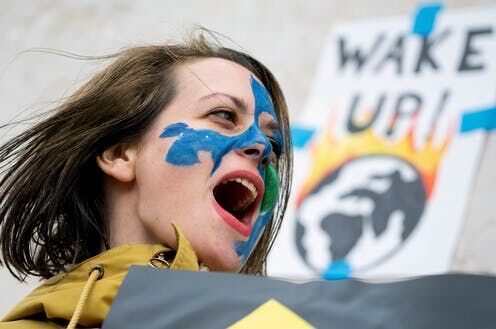
Personal action is important. Collective action that encourages systemic change can go even farther. Joe Klamar/AFP via Getty Images
Our species is in a race with climate change, and a lot of people want to know, “Can I really make a difference?”
The question concerns what’s known as agency. Its meaning is complex, but in a nutshell it means being able to do what you set out to do and believing you can succeed.
How well people exercise their agency will determine the severity of global warming – and its consequences.
The evidence is clear that people are changing the climate dramatically. But human actions can also affect the climate for the better by reducing fossil fuel burning and carbon emissions. It’s not too late to avert the worst effects of climate change, but time is running out.
Despite abundant technical agency, humanity is alarmingly short of psychological agency: belief in one’s personal ability to help. A 10-country survey study in the Lancet, a British medical journal, found that more than half of young people ages 16-25 feel afraid, sad, anxious, angry, powerless and helpless about climate change.
As professors, we bring complementary perspectives to the challenges of taking action on climate change. Tom Bateman studies psychology and leadership, and Michael Mann is a climate scientist and author of the recent book “The New Climate War.”
Believing ‘I can do this’
Human activities – particularly relying on coal, oil and natural gas for energy – have dramatically affected the climate, with dire consequences.
As greenhouse gases from burning fossil fuel use accumulate in the atmosphere, they warm the planet. Rising global temperatures have fueled worsening heat waves, rising sea levels and more intense storms that become increasingly harder to adapt to. A new report from the Intergovernmental Panel on Climate Change describes some of the dangerous disruptions already underway, and how they are putting people and the environment at risk.
Just like humans can choose to drive gas-guzzlers, they can also choose to act in ways that influence the climate, air quality and public health for the better. Scientific knowledge and countless opportunities for action make that agency possible.
A key part of agency is one’s belief, when faced with a task to perform, a situation to manage, or a long-term goal like protecting the climate, that “I can do this.” It’s known as self-efficacy.

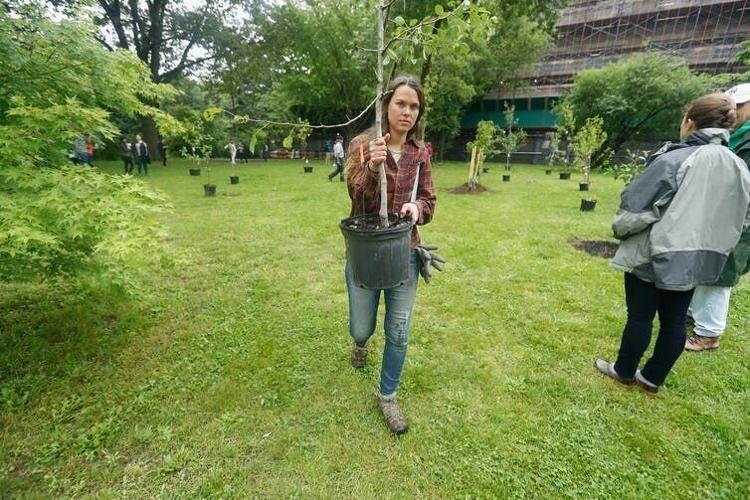
A coordinator for a tree-planting non-profit organization participates in an event at a New York high school. John Lamparski/Getty Images
This may be the most important psychological factor in predicting how well people will cope with both climate change and COVID-19, recent online survey data from Europe indicate. People feeling adequate agency are more likely to persevere, rebound from setbacks and perform at high levels.
With climate change, a high sense of self-efficacy strengthens a person’s willingness to reduce carbon emissions (mitigation) and prepare for climate-related disasters (adaptation). Studies confirm this for actions including volunteering, donating, contacting elected officials, saving energy, conserving water during extreme weather, and more.
How to boost your sense of agency
To build agency for something that can feel as daunting as climate change, focus first on the facts. In the case of climate change: Greenhouse gas emissions cause the most harm, and people can help far more than they realize.
Successful agency has four psychological drivers, all of which can be strengthened with practice:
1) Intentionality: “I choose my climate goals and actions for high impact.”
Deciding to act with purpose — knowing what you intend to do — is far more effective than thinking “My heart’s in the right place, I just have to find the time.”
In the big picture, one’s highest climate efficacy is in participating in larger efforts to stop fossil fuel use. People can set specific ambitious goals for reducing personal and household energy use and join others in collective actions.
2) Forethought: “I am looking ahead and thinking strategically about how to proceed.”
Knowing your goals, you can think strategically and develop an action plan. Some plans support relatively simple goals involving individual lifestyle changes, such as adjusting consumption and travel patterns. Wider reaching actions can help change systems – such as long-term activities that advocate for climate-friendly policies and politicians, or against policies that are harmful. These include demonstrations and voter campaigns.
3) Self-regulation: “I can manage myself over time to optimize my efforts and effectiveness.”
Worrying about the future is becoming a lifelong task — off and on for some, constant for others. Climate change will cause disasters and scarcities, disrupt lives and careers, heighten stress and harm public health. Seeing progress and working with others can help relieve stress.
4) Self-reflection: “ I will periodically assess my effectiveness, rethink strategies and tactics, and make necessary adjustments.”
It’s difficult to imagine a greater need for lifelong learning than as we navigate decades of climate change, its many harms and efforts by fossil fuel companies to obscure the facts. Reflection – or, more precisely, keeping up with the latest science, learning and adapting – is vital as the future keeps presenting new challenges.
Personal agency is only the first step
Even seemingly minor first steps can help reduce carbon emissions and lead to paths of greater action, but individual actions are only part of the solution. Big polluters often urge consumers to take small personal actions, which can deflect attention from the need for large-scale policy interventions.
Individual agency should be seen as a gateway for group efforts that can more quickly and effectively change the trajectory of climate change.
“Collective agency” is another form of agency. A critical mass of people can create societal [tipping points] that pressure industry and policymakers to move more quickly, safely and equitably to implement policies that reduce greenhouse gas emissions.

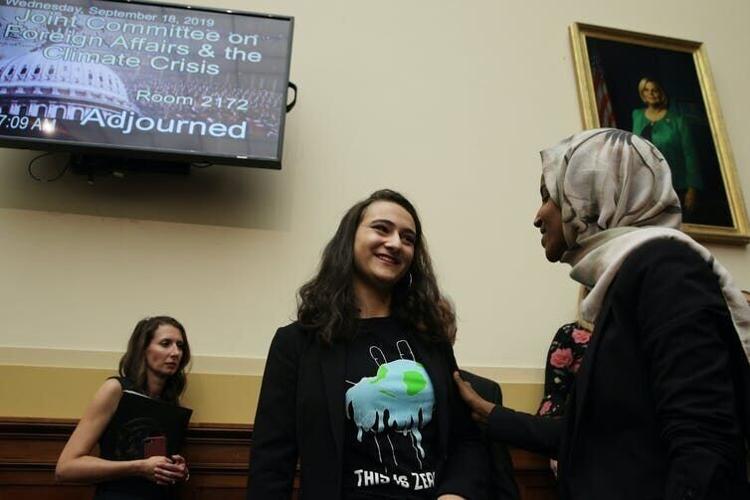
Jamie Margolin, founder of the climate activism group This Is Zero Hour, speaks with members of Congress in 2019. Alex Wong/Getty Images
Helping to elect local, state and national officials who support protecting the climate, and influencing investors and leaders of corporations and associations, can also create a sense of agency, known as “proxy agency.”
[Over 150,000 readers rely on The Conversation’s newsletters to understand the world. Sign up today.]
Together, these efforts can rapidly improve humanity’s capacity to solve problems and head off disasters. Fixing the world’s climate mess requires both urgency and a sense of agency to create the best possible future.
Michael E Mann receives grant funding for climate research from the National Science Foundation, Department of Energy, National Oceanographic and Atmospheric Administration.
Thomas S. Bateman does not work for, consult, own shares in or receive funding from any company or organization that would benefit from this article, and has disclosed no relevant affiliations beyond their academic appointment.
This article is republished from The Conversation under a Creative Commons license.

Photos: Climate change impacts around the world
UN Climate Report
Updated
FILE - Bruce McDougal watches embers fly over his property as the Bond Fire burns through the Silverado community in Orange County, Calif., on Dec. 3, 2020. The United Nations on Monday, Feb. 28, 2022, released a new report on climate change. (AP Photo/Noah Berger, File)
UN Climate Report
Updated
FILE - Mohamed Mohamud, a ranger from the Sabuli Wildlife Conservancy, looks at the carcass of a giraffe that died of hunger near Matana Village, Wajir County, Kenya, Monday, Oct. 25, 2021. The United Nations on Monday, Feb. 28, 2022, released a new report on climate change. (AP Photo/Brian Inganga, File)
UN Climate Report
Updated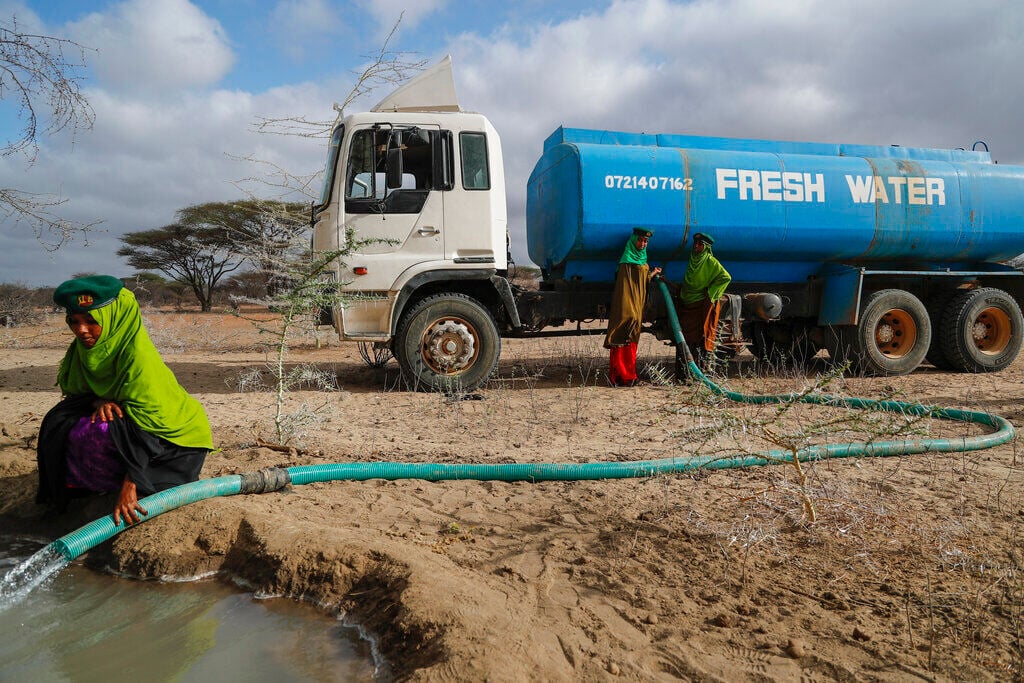
FILE - Rangers from the Sabuli Wildlife Conservancy supply water from a tanker for wild animals in the conservancy in Wajir County, Kenya, Oct. 26, 2021. The United Nations on Monday, Feb. 28, 2022, released a new report on climate change. (AP Photo/Brian Inganga, File)
UN Climate Report
Updated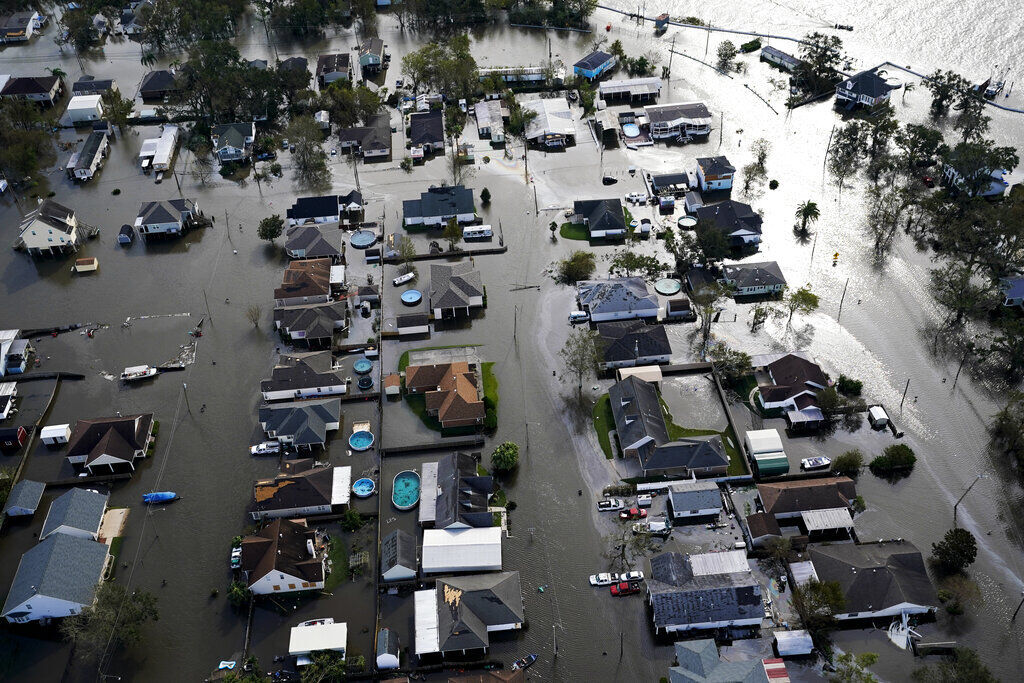
FILE - Homes are flooded in the aftermath of Hurricane Ida, Monday, Aug. 30, 2021, in Jean Lafitte, La. The United Nations on Monday, Feb. 28, 2022, released a new report on climate change. (AP Photo/David J. Phillip, File)
UN Climate Report
Updated
FILE - A youngster, with an eye drawn on her hand to show she is watching and 1.5 for countries to keep warming below 1.5 degrees Celsius, takes part in a Fridays for Future climate protest inside a plenary corridor at the SEC (Scottish Event Campus) venue for the COP26 U.N. Climate Summit, in Glasgow, Scotland, Wednesday, Nov. 10, 2021. The United Nations on Monday, Feb. 28, 2022, released a new report on climate change. (AP Photo/Alberto Pezzali, File)
UN Climate Report
Updated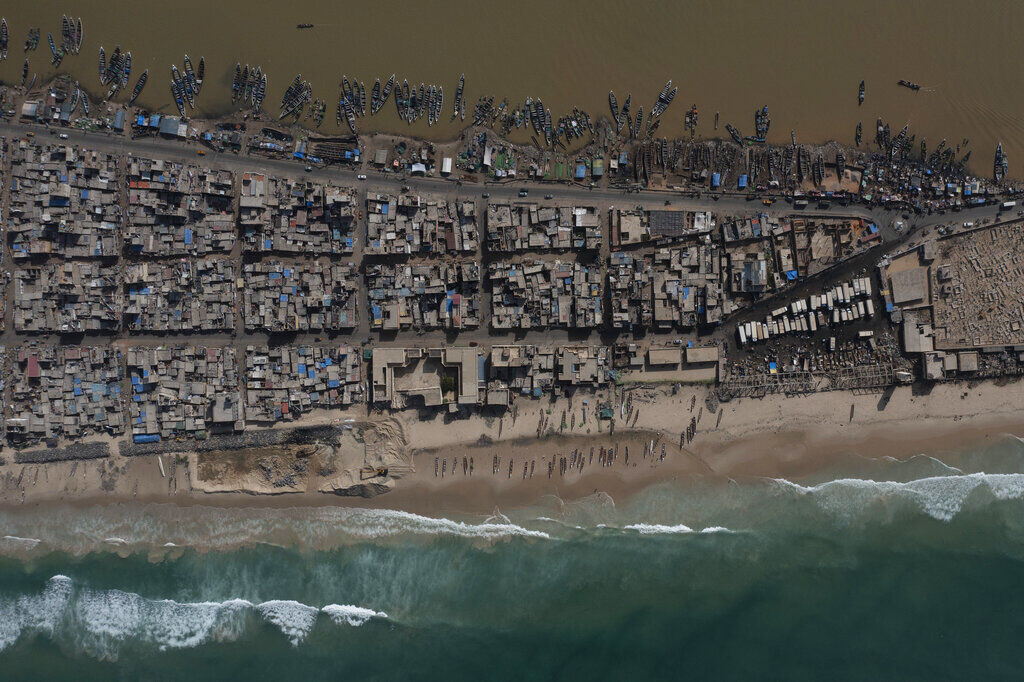
FILE - Houses lay between the Senegal river, top, and the Atlantic Ocean beach that has been affected by erosion in Saint Louis, Senegal, Wednesday, Nov. 3, 2021. The United Nations on Monday, Feb. 28, 2022, released a new report on climate change. (AP Photo/Leo Correa, File)
UN Climate Report
Updated
FILE - Shayanne Summers holds her dog, Toph, while wrapped in a blanket after several days of staying in a tent at an evacuation center at the Milwaukie-Portland Elks Lodge, Sunday, Sept. 13, 2020, in Oak Grove, Ore. The United Nations on Monday, Feb. 28, 2022, released a new report on climate change. (AP Photo/John Locher, File)
UN Climate Report
Updated
FILE - Roots are photographed near the old village of Aceredo in northwestern Spain, Friday, Feb. 11, 2022. The United Nations on Monday, Feb. 28, 2022, released a new report on climate change. (AP Photo/Emilio Morenatti, File)
UN Climate Report
Updated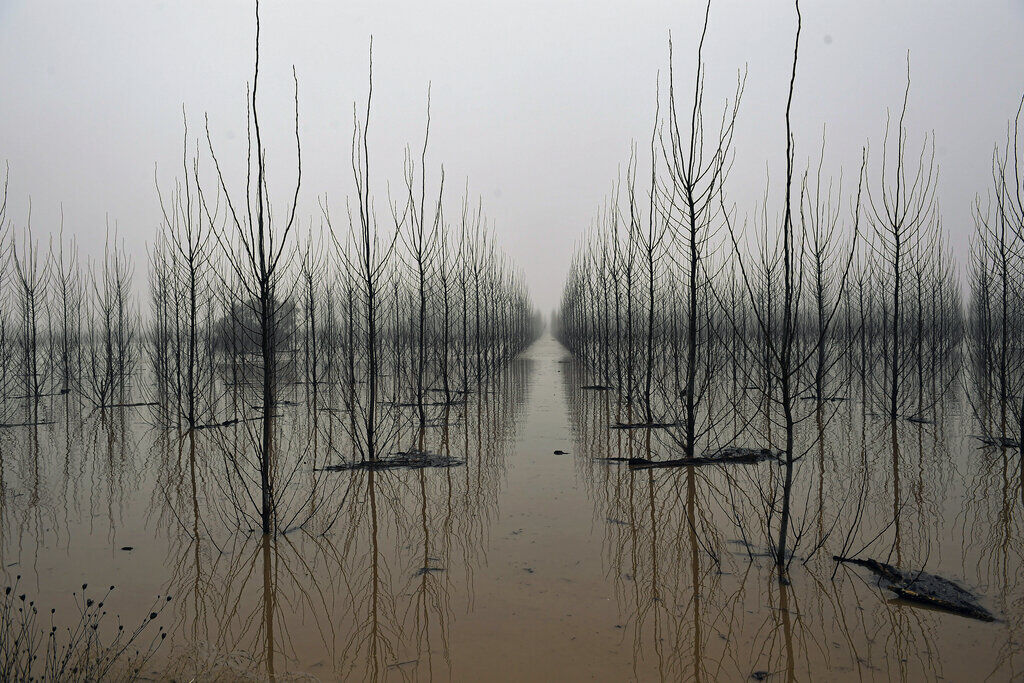
FIL E- Fog covers the landscape in a flooded area near the Ebro River in the small village of Alcala de Ebro, Aragon province, northern Spain, Dec. 13, 2021. The United Nations on Monday, Feb. 28, 2022, released a new report on climate change. (AP Photo/Alvaro Barrientos, File)
UN Climate Report
Updated
FILE - Climate activists take part in a demonstration outside the venue of the COP26 U.N. Climate Summit in Glasgow, Scotland, Friday, Nov. 12, 2021. The United Nations on Monday, Feb. 28, 2022, released a new report on climate change. (AP Photo/Scott Heppell, File)
UN Climate Report
Updated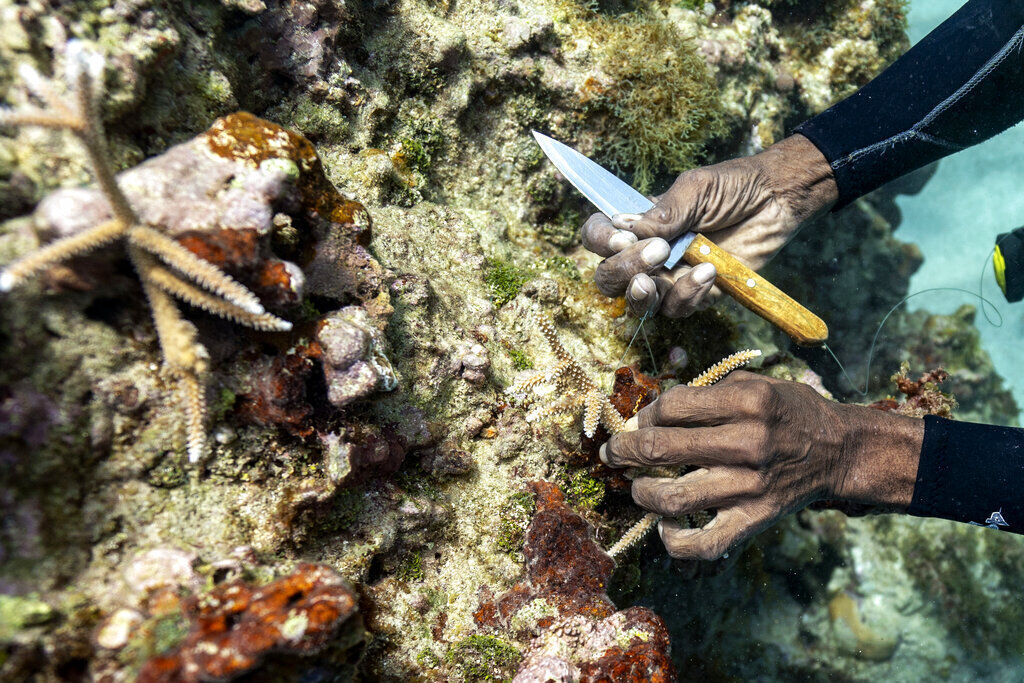
FILE - Diver Everton Simpson plants staghorn harvested from a coral nursery inside the the White River Fish Sanctuary Tuesday, Feb. 12, 2019, in Ocho Rios, Jamaica. Simpson uses bits of fishing line to tie clusters of staghorn coral onto rocky outcroppings, a temporary binding until the coral's limestone skeleton grows and fixes itself onto the rock. The goal is to jumpstart the natural growth of a coral reef. (AP Photo/David J. Phillip, File)
UN Climate Report
Updated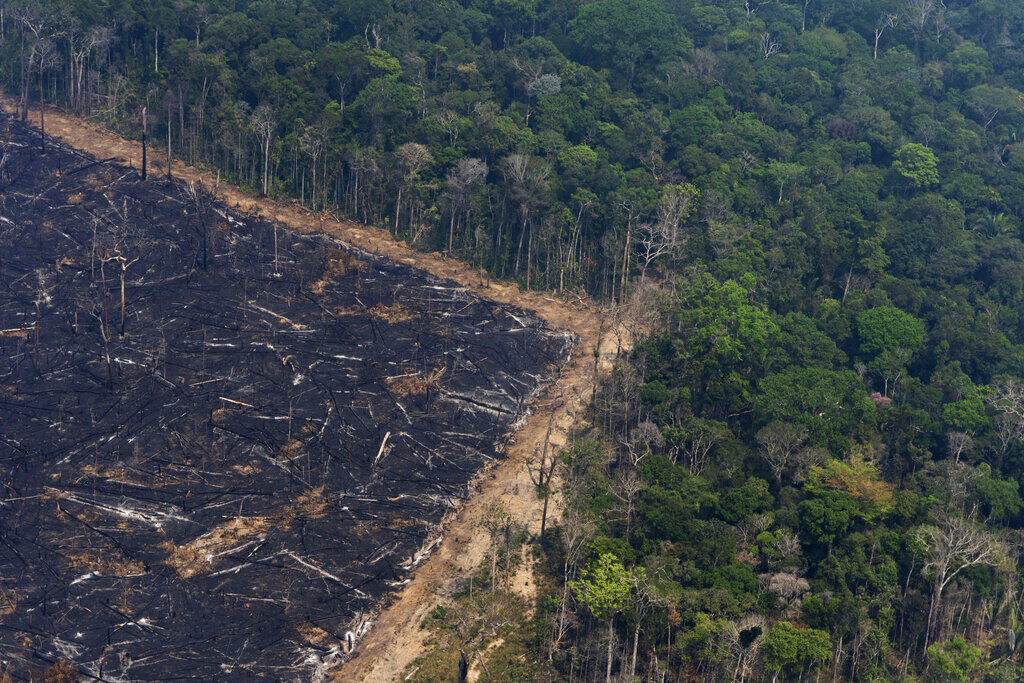
FILE - Jungle stands next to an area that was burnt due to wildfires near Porto Velho, Brazil, Friday, Aug. 23, 2019. The United Nations on Monday, Feb. 28, 2022, released a new report on climate change. (AP Photo/Victor R. Caivano, File)
UN Climate Report
Updated
FILE - Yvonne Lacobon hugs a dog beside Tommy Williams at Williams' home damaged by Hurricane Ida, Saturday, Sept. 4, 2021, in Dulac, La. The United Nations on Monday, Feb. 28, 2022, released a new report on climate change. (AP Photo/John Locher, File)

