

That noted philosopher, Robin Williams, once suggested that college can destroy almost anyone’s love of poetry.
“Hours of boring analysis, dissection and criticism will see to that,” he said, and while the line was fiction — Williams was playing an English teacher in the movie, “Dead Poets Society” — there was at least some truth to it, too.
To the rescue comes the University of Arizona Poetry Center, which will soon be the home of the Sealey Challenge.
A fun, free-spirited invitation to read a book of poetry each day in August, the challenge was created by American poet Nicole Sealey in 2017. It has grown from having one single participant — Sealey — into a social-media phenomenon that now engages thousands of poetry lovers all over the world.
The Poetry Center will provide promotional and logistical support for the Sealey Challenge this summer and start managing the program from Tucson next year.
“For us, it’s a perfect fit,” Poetry Center Director Tyler Meier said. “We have the largest stand-alone poetry library in the country. We think about poetry all the time, and we’re always trying to grow the community of people who read it. This is right up our alley.”

Sealey
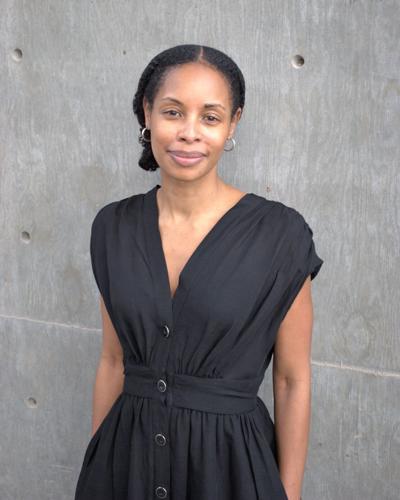
Sealey, who was born in the Virgin Islands and raised in Apopka, Florida, has become a distinctive new voice in American poetry. She is a former director of the Cave Canem Foundation, which works to de-marginalize African American writers. Her first book, “Ordinary Beast,” explored the Black experience in the United States.
The challenge began when Sealey, touring to promote the book, realized she’d become a poet who no longer read poetry.
She decided to read one book a day, every day, in August. When Sealy mentioned her plan to colleagues and friends, they decided to join her … soon touching a nerve across the poetry world.
“Nicole was our Poet in Residence this spring,” Meier recalled. “When she was here, we talked about the challenge and how much it had grown. She wasn’t sure how much longer it could be managed by one or two people. At some point, she wondered if she might bring it here.”
When this year’s challenge begins on Aug. 1, thousands of readers will begin posting “shelfies” with their books on social media, each using the hashtag #thesealeychallenge or #sealeychallenge.
“Facebook and Instagram are probably the most common sites,” Meier said, “but there are so many platforms now — and so many circles of readers — it’s pretty impossible to know just how many people are doing it. The one easy answer is ‘a lot.’”
There is no registration page. No one keeps score. There will be no grand prize.
“The only reward is knowing you’ve just enriched your own life with poetry,” said Sarah Kortemeier, the Poetry Center’s library director. “Nicole’s hope is that you might discover books and ideas you never thought about before. It’s meant to be a time of discovery, I think.”
She admits the challenge will be counter-intuitive for some. “Some of us read poetry deeply and thoughtfully, doing a deep dive on every book we read. This an invitation to read broadly. This is different, for sure.”
Consider it speed dating with poets.
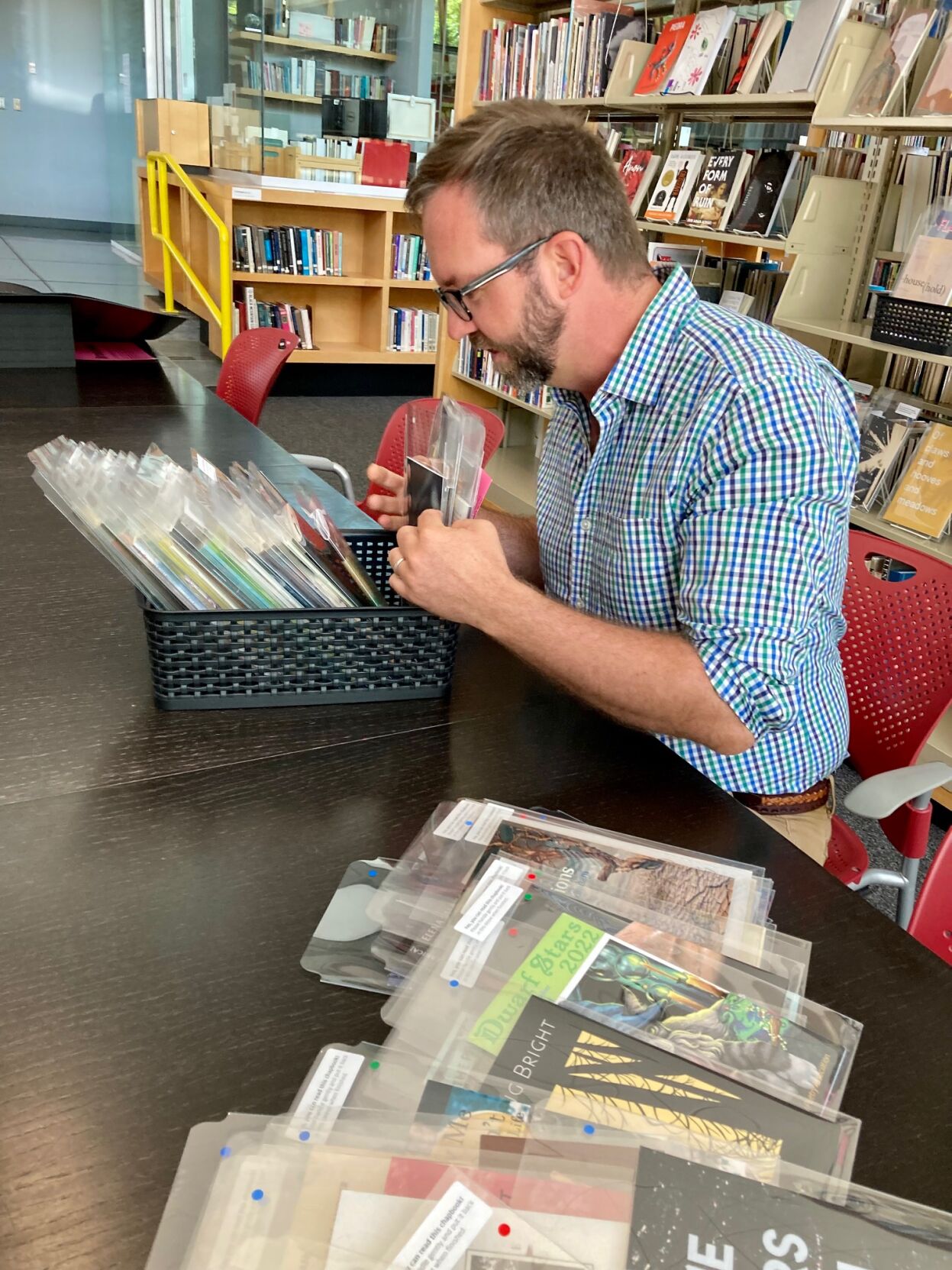
For those living in Tucson, the Poetry Center will happily serve as a matchmaker. The library, 1508 E. Helen St., will be open from 9 a.m. to 5 p.m., Tuesday through Friday, throughout the month of August. Staff members will be on hand to offer suggestions and curate books matching your interests.
The Poetry Center library does not check books out, but readers are welcome to pull one from the collection and read it while there.
“Just getting your hands on 31 books of poetry will be a challenge for a lot of people,” Meier noted. “If you can’t come here, it might be a good time to dust off your library card.”
Since the Sealey Challenge is intended to be fun, it is totally within the rules to read a children’s book, a sonnet, or a poem about sports.
Meier has another suggestion: “Chapbooks. We have hundreds of short chapbooks and we’ll have them out,” he said. “Give yourself some easy days next month. Why not say, ‘Today, I need a 16-page thing instead of an 85-page thing.’ It will be easier to stay on track.”
The Poetry Center is planning book-swap read-alongs Aug. 16 and Aug. 30 at the Tucson Hop Shop, 3230 N. Dodge Blvd. Both will go from 4 to 6 p.m.
Then there’s this: Sealey’s new book, “The Ferguson Report: An Erasure,” will be released Aug. 15.
“We forget that it’s possible to read a book of poems in an hour,” Meier said. “We forget how much poetry is around us all the time. I think that’s why this idea has taken on a life of its own. And if we spend less time on a screen and more time in a book next month, what’s wrong with that?”
FOOTNOTES
The Poetry Center and Arizona Public Media will host a free public screening of their Tucson poet series July 18 at 5 p.m. at the Loft Cinema, 3233 E. Speedway. With help from the center, Arizona Illustrated selected six short poems by local authors. The program then created visualizations of each. All six segments will be shown, free of charge.
The Poetry Center’s next Summer Social will feature poet Gretchen E. Henderson on Aug. 23. Doors open at 5 p.m. in the Century Room at Hotel Congress, 311 E. Congress.
The next Tucson Festival of Books will be held March 9-10, festival officials announced last week. It will be the 15th Tucson book festival since it debuted in spring 2009. It has become the second-largest literary event in the United States, with 300 authors and audiences totaling 125,000 people. The only one larger: The Los Angeles Times Festival of Books held each April at USC.
A sound recording of Richard Shelton, the late University of Arizona writing professor and poet, reading his poem "Whatever Became of Me" on Sept. 13, 1978.

