


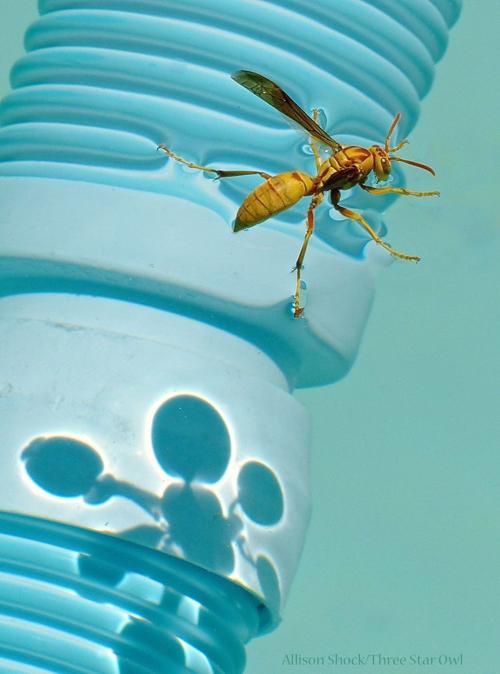
Q: For several weeks we have had what I call “golden wasps” flying around our house. On occasion two or three have made it into the house. They haven’t been aggressive, just flying around. Recently, we have noticed many of them trying to build a nest in our carport. The largest we have seen before getting rid of it has been about the size of a golf ball.
These insects have a distinctive wasp body, completely yellow (more of a golden yellow) and their wings are dark colored. We are for live-and-let-live with the wildlife in our area but we don’t think we want these guys living in the carport. Any suggestions would be most welcome.
A: Your golden wasps are paper wasps also known as Polistes flavus. They are members of the Vespidae family of wasps and not usually aggressive unless defending their nest. Their hanging paper nests are constructed each year using bits of bark and other similar material. These insects will make nests wherever they see a good site that protects their family from the environment and has nearby food sources.
It’s difficult to deter them without putting up screens to block their entrance so you might have to keep up the removal, at least in the early spring until they establish nests elsewhere. Because they nest on annual cycle the mated queens that overwintered nearby will typically stay with one nest until the end of the year, adding more cells to lay more eggs as their family grows. It’s good that you are fine with them living elsewhere because they are beneficial predators of some of our pest insects.
Peter L. Warren is the Forest Health Program Coordinator for the Arizona Department of Forestry and Fire Management. Questions, photos and videos may be emailed to tucsongardensage@gmail.com

