


Garden Sage: Little bugs leave scars; pesky bees; mesquite twig girdler
- Updated
Answers to your gardening questions from an expert in Southern Arizona.
- By Peter L. Warren Special to the Arizona Daily Star
- Updated
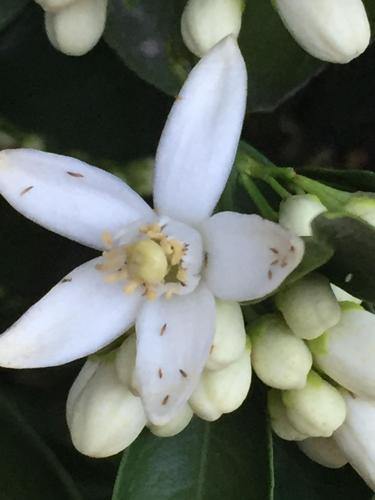
Question: We saw these little bugs/insects on our friend’s orange tree in Tucson — near the Oracle and River roads area — and wondered what they were, and if harmful or not. First saw them about three weeks ago, and last saw them (not so many) about a week ago.
Answer: These insects are called thrips. They can be pests when they feed on flower, fruit and leaf buds. Their feeding causes very small damaged areas but as the flowers, leaves and fruit grow, the areas become larger and appear as discoloration or distortion on the plant surface. Typically, we don’t recommend treating for them because the damage often occurs before we notice them and they don’t affect the taste of the fruit or the ability of the leaves to photosynthesize. If you were selling your fruit to a grocery store, it would be important to spray the trees because shoppers won’t often buy fruit that have scars on the rind.
Peter L. Warren is the Forest Health Program Coordinator for the Arizona Department of Forestry and Fire Management. Questions, photos and videos may be emailed to tucsongardensage@gmail.com
- By Peter L. Warren Special to the Arizona Daily Star
- Updated
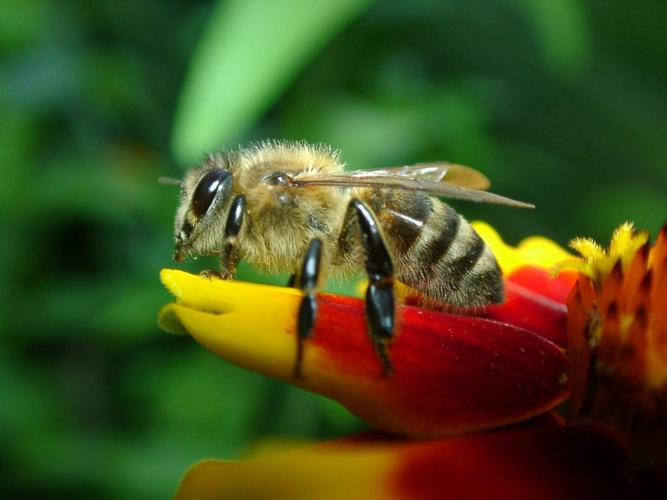
Question: I was at my doctor’s office and noticed a guy spraying pesticide on flowering plants with bees. I asked in the doctor’s office and they said the bees were flying around the door and bothering some of the patients as they came and went so they called this guy to spray the bees. Isn’t there another way to fix this besides killing the bees?
Answer: Yes, there is a way to fix it. The bees are attracted to nectar and pollen so you must remove the food source or they will return. Unfortunately, what sometimes happens is an uninformed client asks for help from a pesticide applicator that either can’t or isn’t willing to think critically about the situation. In this case, the applicator treated the symptom instead of the problem. He may have killed some bees but more will return later. Hopefully they will not continue to pay this applicator to kill more bees when they return. Pesticide applicators aren’t all this bad. Most applicators are trained to think about the entire landscape as an ecosystem and to watch out for non-target organisms, including beneficial insects like bees. This is a good teaching moment for the doctor office as well. Bees are not aggressive unless defending their home so their presence on flowers doesn’t necessarily equate to a dangerous situation. There are some pesticide applicators that are also beekeepers or at least have knowledge of bees and their behavior. I recommend seeking someone like this to deal with bee problems.
Peter L. Warren is the Forest Health Program Coordinator for the Arizona Department of Forestry and Fire Management. Questions, photos and videos may be emailed to tucsongardensage@gmail.com

- By Peter L. Warren Special to the Arizona Daily Star
- Updated
Question: I am interested in identifying this unknown garden visitor. I originally ID’d it as a native bee but after closer inspection, I am not sure if this is a bee.
Answer: Your visitor is a bee mimic sometimes called a bee fly. It is a member of the fly order (Diptera) and the family Bombyliidae. As larvae, these insects are parasites of other insects. As adults, we generally see them feeding on nectar and pollen. They can’t harm humans and are not considered to be pests.
Peter L. Warren is the Forest Health Program Coordinator for the Arizona Department of Forestry and Fire Management. Questions, photos and videos may be emailed to tucsongardensage@gmail.com

- By Peter L. Warren Special to the Arizona Daily Star
- Updated
Question: In the paper recently there was an article about blooming palo verde trees, and a claim that the reason for the bountiful flowers this year was due to additional carbon dioxide in the atmosphere. This struck me a totally ludicrous. My take is timely winter rains are the cause of bountiful flowers on any plant any year, not additional carbon dioxide!
Answer: In many plants the primary factors affecting flowering are day length, light intensity, temperature, soil moisture, and plant nutrition. Carbon dioxide in the atmosphere plays a critical role in photosynthesis and plant growth. If levels are too low, plant growth shuts down. In response to concerns about elevated carbon dioxide levels in the future associated with climate change, studies have been done to determine how these elevated levels will affect plant growth in the future. Some of this research found that plants grown at elevated carbon dioxide levels show earlier and higher production of flowers, fruits, and seeds. Keep in mind these studies were done at artificially elevated carbon dioxide levels . In the article you mentioned the quote from a local doctor said “The reason we see palo verdes become so lush is that there is more carbon dioxide in the atmosphere.”
Although we are currently experiencing the highest levels in many years, it would be difficult to show we had more flowers this year than last year based on increased levels of carbon dioxide. The more likely explanation is a combination of timely winter rains, as you mentioned, and a warm spring.
Peter L. Warren is the Forest Health Program Coordinator for the Arizona Department of Forestry and Fire Management. Questions, photos and videos may be emailed to tucsongardensage@gmail.com

- By Peter L. Warren Special to the Arizona Daily Star
- Updated
Q: I have a big mesquite tree that we planted in our front yard about 30 years ago and it has looked good except for the mistletoe, which we trim off every year.
Now the bark is peeling off. Do you know why that’s happening and is here anything we can do to stop it?
A: Bark peeling is sometimes a sign of drought. We are in the midst of a 20-plus year drought and even tough mesquites will eventually succumb to that if not given supplemental water.
This is especially true of trees in our landscapes because they are often placed in situations where they would not grow naturally.
Peter L. Warren is the Forest Health Program Coordinator for the Arizona Department of Forestry and Fire Management. Questions, photos and videos may be emailed to tucsongardensage@gmail.com
- By Peter L. Warren Special to the Arizona Daily Star
- Updated
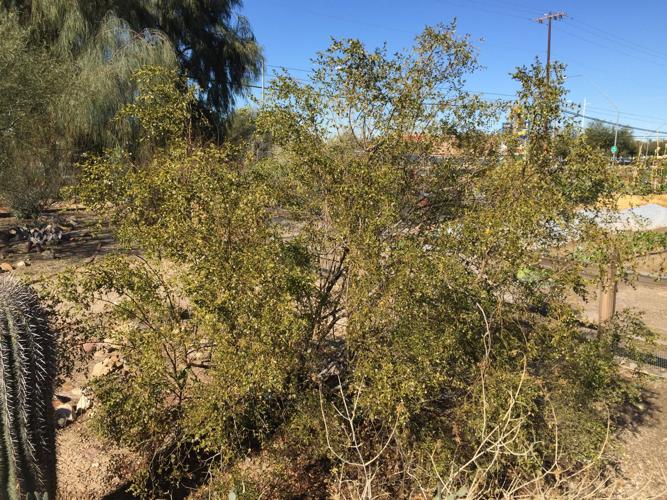
Q: My lot in Picture Rocks has lots of creosote plants, a couple of which I need to remove for access. I was wondering, since creosote used to be a wood preserver, is it safe to chip up the branches (for me and other plants in the yard) safe to compost and so on?
A: Yes, it is safe to use creosote as a mulch or compost. Once any trees and shrubs are chipped for mulch or ground up for compost, they are organic matter like any other plant and will eventually provide a slow release nitrogen source for your garden or landscape.
In the short term, mulch is a good way to moderate temperature extremes in root zones and maintain soil moisture a bit longer than bare soil.
Peter L. Warren is the Forest Health Program Coordinator for the Arizona Department of Forestry and Fire Management. Questions, photos and videos may be emailed to tucsongardensage@gmail.com

- By Peter L. Warren Special to the Arizona Daily Star
- Updated
Q: A mesquite tree beside my driveway is getting new leaves, but I noticed a couple of dead branches among the greenery. They snapped off easily at a point where they appeared to have been neatly girdled. Does some kind of critter do that, and why?
A: Yes, the critter is commonly known as the mesquite twig girdler (Oncideres rhodostica). It is a long-horned beetle, about an inch long, that is native to our area and not considered to be a pest.
The female of the species does the girdling and then lays her eggs out beyond the girdle. The larvae feed on the nutritious cambium layer under the bark.
The nice way to think of this damage is as nature’s way of pruning your tree.
Peter L. Warren is the Forest Health Program Coordinator for the Arizona Department of Forestry and Fire Management. Questions, photos and videos may be emailed to tucsongardensage@gmail.com

- By Peter L. Warren Special to the Arizona Daily Star
- Updated
Q: Seedpods drop from trees in the parking lot in front of the Target store in Oro Valley, but we have been unable to identify what kind of trees they are. Can you help?
Answer: Your seedpods are from the Australian bottle tree (Brachychiton populneus). This is a large evergreen shade tree that can reach 60 feet in height.
These trees do well in full sun in our arid environment with sufficient water. T
he seedpods are sometimes considered messy because they decay very slowly and can be numerous on the ground.
Peter L. Warren is the Forest Health Program Coordinator for the Arizona Department of Forestry and Fire Management. Questions, photos and videos may be emailed to tucsongardensage@gmail.com
- By Peter L. Warren Special to the Arizona Daily Star
- Updated
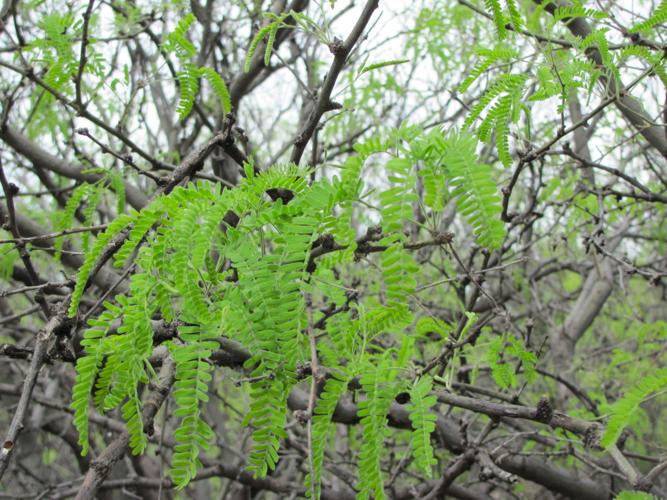
Q: We bought what we believe to be an Arizona mesquite around April of last year. It was transplanted right away and watered about once a week, as the nursery worker said it didn’t need much water.
Fast forward to around September or October and the leaves started to turn yellow and brown. New leaves were still growing, and they were coming in green.
During the winter the leaves fell and we’re still waiting for new leaves to grow.
After checking for green under the bark and seeing if the branches snap off, it seems as though the little tree is still alive — barely. Any tips on getting it to grow or how to keep it alive?
A: It seems you took care of the tree properly although I am not sure how much water you gave it. Mesquites normally shed some leaves in the fall but they also shed leaves if they are too dry. If your tree is still bare now, it may not have received enough water.
Assuming it is still alive, the best you can do is to water it properly. That means once every two to three weeks now that the tree is established. The water should reach a depth of 24 inches and drip irrigation around the root zone is best.
Peter L. Warren is the Forest Health Program Coordinator for the Arizona Department of Forestry and Fire Management. Questions, photos and videos may be emailed to tucsongardensage@gmail.com
- By Peter L. Warren Special to the Arizona Daily Star
- Updated
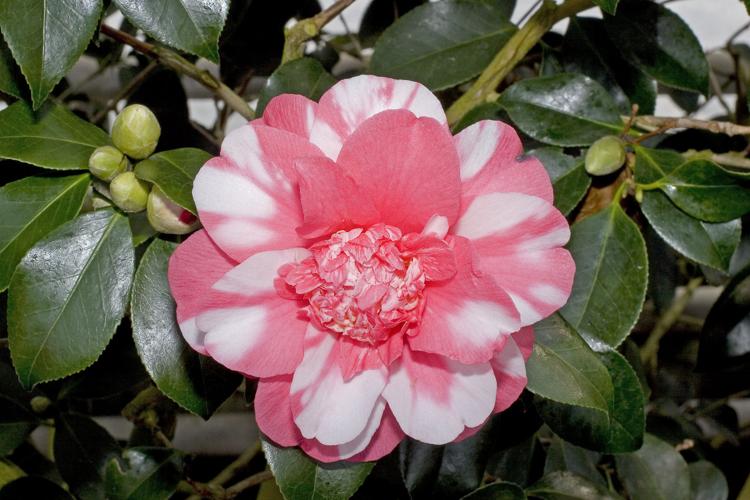
Q: I planted last November in a raised planter three of these camellias. Two of the three are dying. The leaves dried from the top down. There are still some leaves alive/pliable on the bottom of the shrub. The third camellia is doing well. They get morning sun and are shaded most of the rest of the day.
My local nursery told me to deep water them, as they don’t like our soil in Tucson. I am currently continuing to water once a week but more deeply. Is there any chance of saving them at this point?
A: Camellias are not ideal plants for the desert but you can grow them if you are careful. The soil here is too alkaline for these plants so they are best grown in containers or raised beds where you can keep the soil pH on the acidic side. They also need well-drained soil with a good amount of organic matter. They don’t survive in direct sun, which may partially explain the dried leaves. Even morning sun might be too much, depending on how long they are exposed. They do better in filtered shade and protected from western exposure as you are doing. The watering advice you received is correct in the amount if the soil is drying out that quickly, although watering does nothing to affect soil pH. Plants in containers and raised beds often dry out quicker than those planted in the ground so you might need to monitor the situation more closely to determine how often to water. Small containers often need water every day.
To save your remaining plant, I recommend you make sure it is not receiving too much sun, double check the soil moisture and adjust your irrigation accordingly, and amend the soil with sulphur to lower the pH as needed. Testing your soil at a reputable lab will help determine how much sulphur to add to reach the desired pH value.
Peter L. Warren is the Forest Health Program Coordinator for the Arizona Department of Forestry and Fire Management. Questions, photos and videos may be emailed to tucsongardensage@gmail.com
- By Peter L. Warren Special to the Arizona Daily Star
- Updated
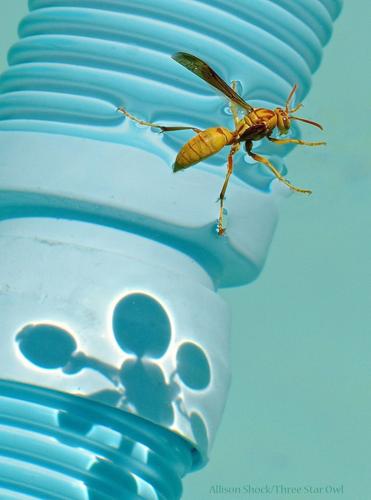
Q: For several weeks we have had what I call “golden wasps” flying around our house. On occasion two or three have made it into the house. They haven’t been aggressive, just flying around. Recently, we have noticed many of them trying to build a nest in our carport. The largest we have seen before getting rid of it has been about the size of a golf ball.
These insects have a distinctive wasp body, completely yellow (more of a golden yellow) and their wings are dark colored. We are for live-and-let-live with the wildlife in our area but we don’t think we want these guys living in the carport. Any suggestions would be most welcome.
A: Your golden wasps are paper wasps also known as Polistes flavus. They are members of the Vespidae family of wasps and not usually aggressive unless defending their nest. Their hanging paper nests are constructed each year using bits of bark and other similar material. These insects will make nests wherever they see a good site that protects their family from the environment and has nearby food sources.
It’s difficult to deter them without putting up screens to block their entrance so you might have to keep up the removal, at least in the early spring until they establish nests elsewhere. Because they nest on annual cycle the mated queens that overwintered nearby will typically stay with one nest until the end of the year, adding more cells to lay more eggs as their family grows. It’s good that you are fine with them living elsewhere because they are beneficial predators of some of our pest insects.
Peter L. Warren is the Forest Health Program Coordinator for the Arizona Department of Forestry and Fire Management. Questions, photos and videos may be emailed to tucsongardensage@gmail.com
- By Peter L. Warren Special to the Arizona Daily Star
- Updated
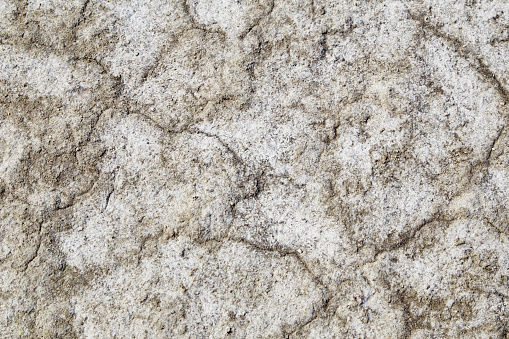
Q: We had a mountain laurel tree planted in March of 2016. Thought we followed the instructions for watering before leaving for Minnesota in May. While we were gone it was watered by the drip system. On our return in October the leaves were light green so took a sample to Civano Nursery and they said it showed that there was too much salt from not being watered deep enough. They recommended watering on a slow drip for ⅔ hours once a week, which we’ve been doing. The leaves are still pale green, not showing any improvement. Now we’re wondering if there’s any way to save the tree. Do you have any advice for us?
A: Given our salty soil and the salt contained in fertilizers, it is certainly possible your tree has an excess of salt in the root zone. A soil test would confirm this diagnosis but watering it deeply might confirm as well. The watering schedule they suggest is good for newly planted trees. Since your tree has been in the ground for a year, you can back it off a bit and water deeper. Established Texas mountain laurel trees should be watered deeply every two or three weeks to a depth of 24 to 36 inches to effectively wash the salt through the root zone. Because not all drip systems are created equal, it would be good to measure the water depth with a soil probe to make sure the running time is correct. A soil probe can be as simple as a piece of rebar that you push into the ground after irrigating to see how deep the water went. Dry soil will provide more resistance than the wet stuff and that’s how you will know when to pull out and measure the depth.
Peter L. Warren is the Forest Health Program Coordinator for the Arizona Department of Forestry and Fire Management. Questions, photos and videos may be emailed to tucsongardensage@gmail.com

- By Peter L. Warren Special to the Arizona Daily Star
- Updated
Q: What can we do to save the life of our beloved cactus! It started in December with some of the brown spots and now it is spreading. It has always been protected for frost with Styrofoam cups on tips and a burlap wrap. We have noticed other cacti (Mexican Fence Post) here in Saddlebrooke have the same markings. Any help would be greatly appreciated.
A: Brown spots on cacti may be caused by a few different things including too much sun on newly planted cacti, damage from animals, frost, hail, some pesticides, and diseases. The spots on your cacti appear to be fungal lesions that sometimes occur when we have cool, wet weather as we did this winter. The damage is usually cosmetic and won’t cause the death of the plant but it is also irreversible so it will remain as a scar. Now that summer-like weather has begun you should see less of this disease occurring in your neighborhood.
Q: We had a mountain laurel tree planted in March of 2016. Thought we followed the instructions for watering before leaving for Minnesota in May. While we were gone it was watered by the drip system. On our return in October the leaves were light green so took a sample to Civano Nursery and they said it showed that there was too much salt from not being watered deep enough. They recommended watering on a slow drip for ⅔ hours once a week, which we’ve been doing. The leaves are still pale green, not showing any improvement. Now we’re wondering if there’s any way to save the tree. Do you have any advice for us?
A: Given our salty soil and the salt contained in fertilizers, it is certainly possible your tree has an excess of salt in the root zone. A soil test would confirm this diagnosis but watering it deeply might confirm as well. The watering schedule they suggest is good for newly planted trees. Since your tree has been in the ground for a year, you can back it off a bit and water deeper. Established Texas mountain laurel trees should be watered deeply every two or three weeks to a depth of 24 to 36 inches to effectively wash the salt through the root zone. Because not all drip systems are created equal, it would be good to measure the water depth with a soil probe to make sure the running time is correct. A soil probe can be as simple as a piece of rebar that you push into the ground after irrigating to see how deep the water went. Dry soil will provide more resistance than the wet stuff and that’s how you will know when to pull out and measure the depth.
Peter L. Warren is the Forest Health Program Coordinator for the Arizona Department of Forestry and Fire Management. Questions, photos and videos may be emailed to tucsongardensage@gmail.com

- By Peter L. Warren Special to the Arizona Daily Star
- Updated
Q: I wrote earlier in the week about those pesky bugs that attack our Texas mountain laurel every year, and they have already started attacking this year. I am including a photo of the critter so that you might recommend something specific to get rid of them. There are too many to hand pick and they move really fast when trying to get away.
A: The critter is Uresiphita reversalis, aka the genista caterpillar. They typically feed on new growth at the ends of branches on Texas mountain laurel. I recommend a spray of Bt (Bacillus thuringiensis) where they are feeding. Bt is a naturally occurring soil bacterium that causes disease in certain insects. Bt is considered ideal for pest management because of its specificity and because of its lack of toxicity to humans or the natural enemies of many plant pests. There are different strains of Bt, each with specific toxicity to particular types of insects so be sure to choose the strain that is labeled for caterpillar pests.
Peter L. Warren is the Forest Health Program Coordinator for the Arizona Department of Forestry and Fire Management. Questions, photos and videos may be emailed to tucsongardensage@gmail.com
- Peter L. Warren Special to the Arizona Daily Star
- Updated
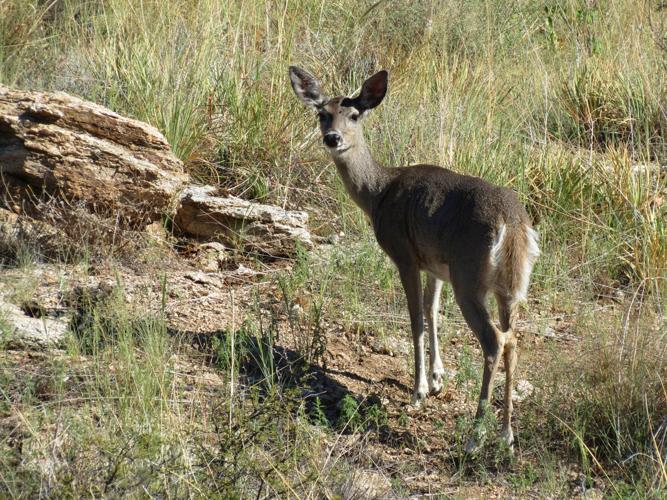
Q: I have a problem with deer entering our yard and eating the flowers in our patio container pots. I have tried a spray-on repellent, but it hasn’t worked. A fence is not possible. Any suggestions?
A: Fencing is the gold standard for protecting plants from deer. Otherwise, it is a bit more of a challenge. Some people use repellents with limited success because the deer either get used to the smell or the repellent wears off. If you want to try other repellents, some people hang small cloth bags with fragrant soap in them from outside branches. Others use various types of predator urine. You could also get a big dog that will bark at the deer as needed. Another tactic is to alter your landscape so the plants are difficult to access. This might be accomplished by putting the containers behind something else that blocks the deer. If there is enough other food nearby, they may see it’s too much trouble and change their route.
Peter L. Warren is the Forest Health Program Coordinator for the Arizona Department of Forestry and Fire Management. Questions, photos and videos may be emailed to tucsongardensage@gmail.com
- Peter L. Warren Special to the Arizona Daily Star
- Updated
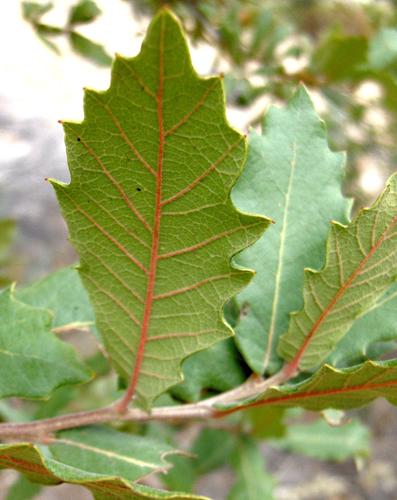
Q: We are contemplating purchasing a home in Green Valley. There is a beautiful white oak in the front yard about 15 feet away from the home. There is a root lifting the brick pavers. How or what should I do to make sure the roots aren’t going under the foundation. Also, could I dig up that root and cut it so it doesn’t do any more damage, without hurting the tree?
A: The Arizona white oak (Quercus arizonica) is a beautiful tree, but unfortunately someone planted it too close to the house. The mature size of that species can be as wide as 50 feet. The problem you described could get worse as the tree matures. You should probably hire a certified arborist to take a look at the tree and determine the gravity of the situation. Some companies have an air spade to temporarily blow away the surface soil to get a better sense of where the roots are and which ones are expendable, if any. Some roots are critical to the stability of the tree so you wouldn’t want to cut away one that is preventing the tree from falling over.
Peter L. Warren is the Forest Health Program Coordinator for the Arizona Department of Forestry and Fire Management. Questions, photos and videos may be emailed to tucsongardensage@gmail.com
- Peter L. Warren Special to the Arizona Daily Star
- Updated
Q: I use Jobe spikes to fertilize my fruit and nut trees. Last year I fertilized in mid-February and when I went to fertilize again at the end of May, I noticed the February spikes were not used up. I use drip irrigation and put the spikes near the emitters. How long do I need to wait between refertilizing with the spikes?
A: It depends. Fertilizers in a solid spike or granular form are going to dissolve as a result of exposure to water and warm temperatures. The manufacturer typically recommends applying them at the drip line of your trees so that rain falling off the tree or drip irrigation properly installed there will help dissolve the fertilizer. If we have a cooler spring or not much winter rain, it’s possible the spikes will last longer than advertised. Also, you probably don’t need to fertilize throughout the year. Mature trees don’t need much fertilizer and they are able to get many nutrients from the soil. A late winter application will likely suffice for the year.
Peter L. Warren is the Forest Health Program Coordinator for the Arizona Department of Forestry and Fire Management. Questions, photos and videos may be emailed to tucsongardensage@gmail.com
- By Peter L. Warren Special to the Arizona Daily Star
- Updated
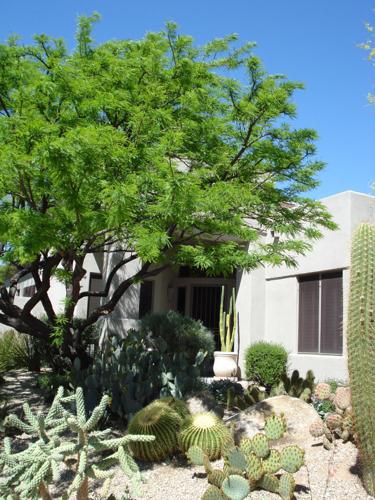
Q: I have an area about 15 feet by 12 feet that is bordered on two sides by sidewalk on the south side of my house. I have an 8-year-old thornless mesquite tree planted in this area. I am worried about the possibility of the roots damaging the sidewalks. Should I remove this tree? If I do, what type of tree would you recommend for that size area that would not harm the sidewalks? This area is next to my front patio and I would like to have some shade for it.
A: Thornless mesquite trees are a South American hybrid also known as the Chilean mesquite. The mature size of this tree is approximately 30 feet by 30 feet and that is only the above-ground size. The roots may spread twice as far, so your sidewalk is in jeopardy.
Small trees that could fit this space include kidneywood, Texas mountain laurel, Arizona rosewood, little leaf ash, and leather-leaf acacia. These may not give the shade you desire.
A few slightly larger trees that might fit are Texas ebony, palo blanco, and cascalote. I am sure there are others, so it would be good to visit our local nurseries to see what they have available.
Peter L. Warren is the Forest Health Program Coordinator for the Arizona Department of Forestry and Fire Management. Questions, photos and videos may be emailed to tucsongardensage@gmail.com
- By Peter L. Warren Special to the Arizona Daily Star
- Updated
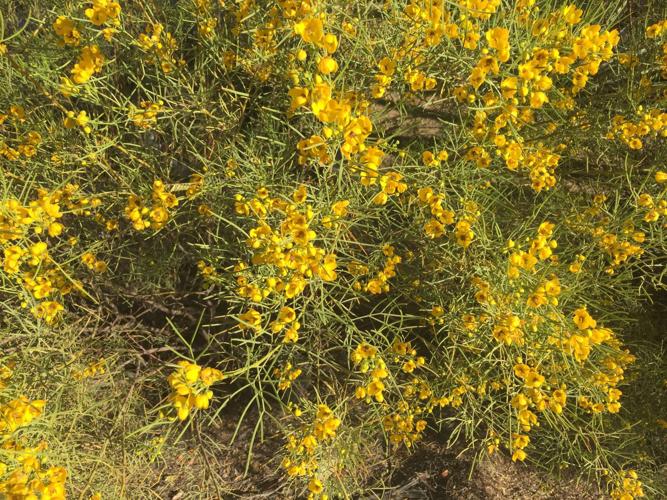
Q: I have three of these in my yard, plus three that came up recently in disturbed ground. What is it?
A: Your plants are called Senna phyllodinea, or desert Senna or silver leaf cassia. It is native to Australia and does well here. It can propagate by seed. The slender silver leaves are a good desert adaptation for reflecting the sun and reducing exposure to it. They can grow into a large shrub of 6 feet by 6 feet if allowed. The fragrant yellow flowers in February are a welcome sight for many.
Peter L. Warren is the Forest Health Program Coordinator for the Arizona Department of Forestry and Fire Management. Questions, photos and videos may be emailed to tucsongardensage@gmail.com
- By Peter L. Warren Special to the Arizona Daily Star
- Updated
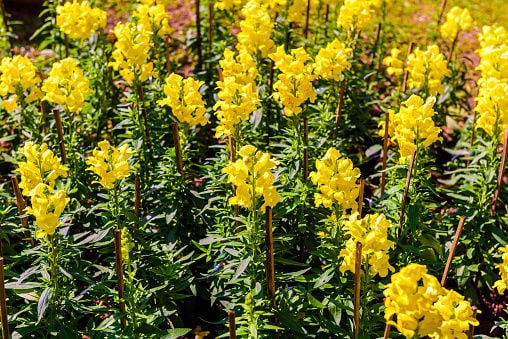
Q: Some of my snapdragons are covered with dark spots and it seems to be spreading to neighboring plants. What can I do to stop this problem?
A: From examining your plant sample, the problem is a disease called snapdragon rust that is caused by the fungus Puccinia antirrhini. This is a widespread pathogen that has been around since the 1800s. Small, yellow spots on the leaves are the first indication. Unless you are paying close attention, you won’t notice the yellow spots until they mature into chocolate-brown pustules. The spores that emerge from these pustules are spread by wind mostly but also possibly by rain and insects. The infection and incubation of these spores occurs best when temperatures are between 50 and 75 degrees, and that is what we have been experiencing in recent weeks.
Once temperatures exceed 90 degrees or so, the spores cannot survive. Infested plants can be removed and destroyed to reduce the immediate source of spores. There are also fungicides available to manage the rust if removing the plants isn’t in the plan. Look for products labeled for managing rust on landscape plants. Rust-resistant varieties of snapdragons are available. Planting them with space between to allow for air circulation is helpful, as is making sure to use drip irrigation rather than overhead sprinklers.
Peter L. Warren is the Forest Health Program Coordinator for the Arizona Department of Forestry and Fire Management. Questions, photos and videos may be emailed to tucsongardensage@gmail.com
- By Peter L. Warren Special to the Arizona Daily Star
- Updated
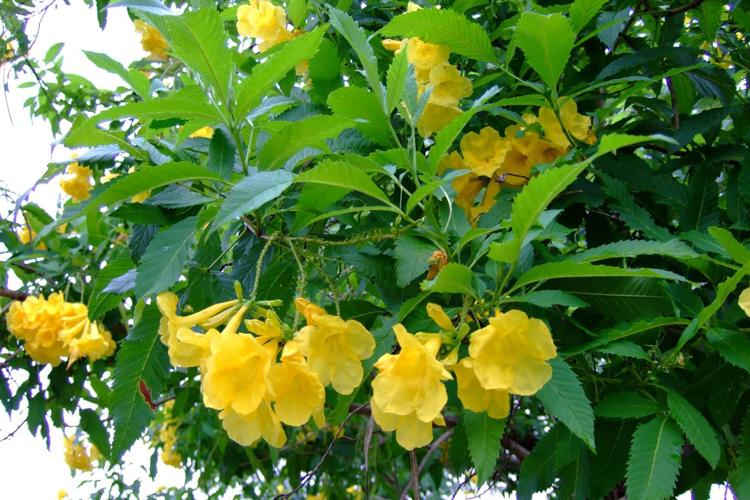
Q: I live in Tucson. Alkaline soil, lots of sun, not much rain. I have found contradictory info on fertilizing Tecomas. Local websites either say “responds well to regular fertilizer,” “fertilize with ammonium sulfate” or “this plant particularly hates (fertilizer).” Does anyone have a decisive answer from a reliable source?
A: Tecoma stans, aka yellow bells, has a reputation as a tough plant that needs little help once established, except for occasional pruning and pest management. Although I couldn’t find any research detailing its exact needs, all plants need water and nutrients.
If you want to have your soil tested by a laboratory, many of them will make fertilizer recommendations based on the results and which plants you are planning to grow. If you would rather experiment without a soil test, I recommend a slow release tree and shrub fertilizer in the spring and also recommend regularly scheduled drip irrigation every two or three weeks unless it is raining.
You can use composted manure or another organic material that has been composted as a slow-release fertilizer. In the end, your plants will help you figure out their needs by how well they appear and grow. For example, plants that begin to have yellow leaves with green veins are often showing a sign of nutrient deficiency. Taking a look at your landscape plants once a week or so to see if problems are occurring is one of the cornerstones of integrated pest management and a great way to catch problems before they get out of hand.
Peter L. Warren is the Forest Health Program Coordinator for the Arizona Department of Forestry and Fire Management. Questions, photos and videos may be emailed to tucsongardensage@gmail.com
- By Peter L. Warren Special to the Arizona Daily Star
- Updated
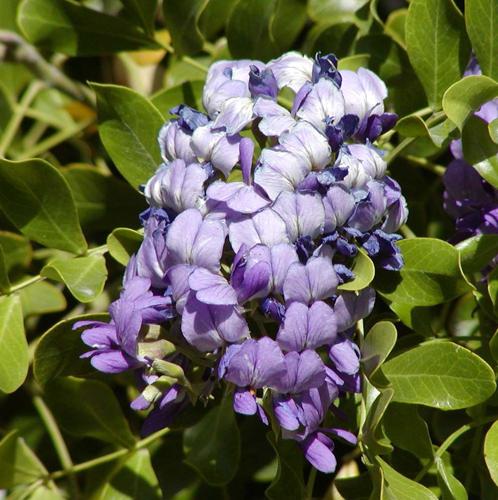
Q: I have had two mountain laurel bushes for 15 years . Suddenly last fall, one dropped its leaves. The stems were green and it is starting to bloom and add some new leaves. The other bush had some white places, not sure if there was an aphid attack, I did not notice a lot of this white on the bad plant.
A: Texas mountain laurel (Calia secundiflora) are fairly tough plants and have only a few minor insect problems that may cause limited defoliation or distortion from feeding.
Losing all the leaves as you describe is likely some sort of environmental stress. Consider what irrigation your plants receive since that is a limiting factor for most plants. Dropping leaves and blossoms is a normal reaction to lack of water. Leaves are where water vapor leaves a plant so to reduce the amount of water escaping; the plant may drop its leaves. It’s good to see the leaves are growing back. It’s possible the plant will grow much better with all the rain we’ve had along with continued irrigation through the warmer months.
Peter L. Warren is the Forest Health Program Coordinator for the Arizona Department of Forestry and Fire Management. Questions, photos and videos may be emailed to tucsongardensage@gmail.com

- By Peter L. Warren Special to the Arizona Daily Star
- Updated
Q: I have been collecting compost material in my kitchen then burying it directly in my garden for several years. I didn’t plant a garden this year but still bury fruits and vegetables. This year I discovered what I think are grubs. How can I get rid of them?
A: The grubs are in your soil because you made it so nice for them. These beetles do best in soil rich in organic matter because they feed on it and so the adult beetles will lay eggs where they find good soil or directly into compost piles. You can get rid of them if your garden is small and you don’t mind sifting through the dirt.
Peter L. Warren is the Forest Health Program Coordinator for the Arizona Department of Forestry and Fire Management. Questions, photos and videos may be emailed to tucsongardensage@gmail.com
- By Peter L. Warren Special to the Arizona Daily Star
- Updated
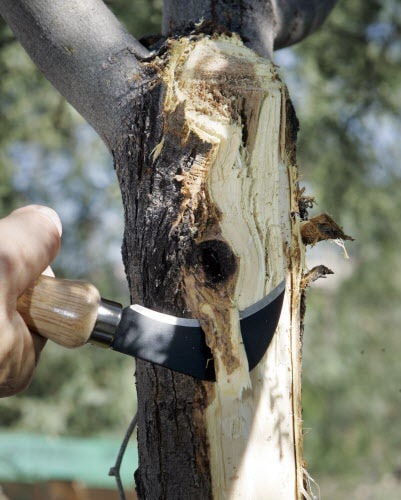
Q: I had some lower branches trimmed from my ponderosa pine in December. How long will it take for the sap to quit flowing?
A: Sap flowing from a tree wound is part of its defense system . The sap flow will continue until the vessels clog and the tree seals the wound. There is no need for anything to be applied. Applying something to the wound is not good for the tree. It used to be a common practice to paint pruning wounds but it turns out trees do a better job of sealing their own wounds and the paint sometimes hinders that process.
Peter L. Warren is the Forest Health Program Coordinator for the Arizona Department of Forestry and Fire Management. Questions, photos and videos may be emailed to tucsongardensage@gmail.com
- By Peter L. Warren Special to the Arizona Daily Star
Question: We saw these little bugs/insects on our friend’s orange tree in Tucson — near the Oracle and River roads area — and wondered what they were, and if harmful or not. First saw them about three weeks ago, and last saw them (not so many) about a week ago.
Answer: These insects are called thrips. They can be pests when they feed on flower, fruit and leaf buds. Their feeding causes very small damaged areas but as the flowers, leaves and fruit grow, the areas become larger and appear as discoloration or distortion on the plant surface. Typically, we don’t recommend treating for them because the damage often occurs before we notice them and they don’t affect the taste of the fruit or the ability of the leaves to photosynthesize. If you were selling your fruit to a grocery store, it would be important to spray the trees because shoppers won’t often buy fruit that have scars on the rind.
Peter L. Warren is the Forest Health Program Coordinator for the Arizona Department of Forestry and Fire Management. Questions, photos and videos may be emailed to tucsongardensage@gmail.com
- By Peter L. Warren Special to the Arizona Daily Star
Question: I was at my doctor’s office and noticed a guy spraying pesticide on flowering plants with bees. I asked in the doctor’s office and they said the bees were flying around the door and bothering some of the patients as they came and went so they called this guy to spray the bees. Isn’t there another way to fix this besides killing the bees?
Answer: Yes, there is a way to fix it. The bees are attracted to nectar and pollen so you must remove the food source or they will return. Unfortunately, what sometimes happens is an uninformed client asks for help from a pesticide applicator that either can’t or isn’t willing to think critically about the situation. In this case, the applicator treated the symptom instead of the problem. He may have killed some bees but more will return later. Hopefully they will not continue to pay this applicator to kill more bees when they return. Pesticide applicators aren’t all this bad. Most applicators are trained to think about the entire landscape as an ecosystem and to watch out for non-target organisms, including beneficial insects like bees. This is a good teaching moment for the doctor office as well. Bees are not aggressive unless defending their home so their presence on flowers doesn’t necessarily equate to a dangerous situation. There are some pesticide applicators that are also beekeepers or at least have knowledge of bees and their behavior. I recommend seeking someone like this to deal with bee problems.
Peter L. Warren is the Forest Health Program Coordinator for the Arizona Department of Forestry and Fire Management. Questions, photos and videos may be emailed to tucsongardensage@gmail.com
- By Peter L. Warren Special to the Arizona Daily Star
Question: I am interested in identifying this unknown garden visitor. I originally ID’d it as a native bee but after closer inspection, I am not sure if this is a bee.
Answer: Your visitor is a bee mimic sometimes called a bee fly. It is a member of the fly order (Diptera) and the family Bombyliidae. As larvae, these insects are parasites of other insects. As adults, we generally see them feeding on nectar and pollen. They can’t harm humans and are not considered to be pests.
Peter L. Warren is the Forest Health Program Coordinator for the Arizona Department of Forestry and Fire Management. Questions, photos and videos may be emailed to tucsongardensage@gmail.com
- By Peter L. Warren Special to the Arizona Daily Star
Question: In the paper recently there was an article about blooming palo verde trees, and a claim that the reason for the bountiful flowers this year was due to additional carbon dioxide in the atmosphere. This struck me a totally ludicrous. My take is timely winter rains are the cause of bountiful flowers on any plant any year, not additional carbon dioxide!
Answer: In many plants the primary factors affecting flowering are day length, light intensity, temperature, soil moisture, and plant nutrition. Carbon dioxide in the atmosphere plays a critical role in photosynthesis and plant growth. If levels are too low, plant growth shuts down. In response to concerns about elevated carbon dioxide levels in the future associated with climate change, studies have been done to determine how these elevated levels will affect plant growth in the future. Some of this research found that plants grown at elevated carbon dioxide levels show earlier and higher production of flowers, fruits, and seeds. Keep in mind these studies were done at artificially elevated carbon dioxide levels . In the article you mentioned the quote from a local doctor said “The reason we see palo verdes become so lush is that there is more carbon dioxide in the atmosphere.”
Although we are currently experiencing the highest levels in many years, it would be difficult to show we had more flowers this year than last year based on increased levels of carbon dioxide. The more likely explanation is a combination of timely winter rains, as you mentioned, and a warm spring.
Peter L. Warren is the Forest Health Program Coordinator for the Arizona Department of Forestry and Fire Management. Questions, photos and videos may be emailed to tucsongardensage@gmail.com
- By Peter L. Warren Special to the Arizona Daily Star
Q: I have a big mesquite tree that we planted in our front yard about 30 years ago and it has looked good except for the mistletoe, which we trim off every year.
Now the bark is peeling off. Do you know why that’s happening and is here anything we can do to stop it?
A: Bark peeling is sometimes a sign of drought. We are in the midst of a 20-plus year drought and even tough mesquites will eventually succumb to that if not given supplemental water.
This is especially true of trees in our landscapes because they are often placed in situations where they would not grow naturally.
Peter L. Warren is the Forest Health Program Coordinator for the Arizona Department of Forestry and Fire Management. Questions, photos and videos may be emailed to tucsongardensage@gmail.com
- By Peter L. Warren Special to the Arizona Daily Star
Q: My lot in Picture Rocks has lots of creosote plants, a couple of which I need to remove for access. I was wondering, since creosote used to be a wood preserver, is it safe to chip up the branches (for me and other plants in the yard) safe to compost and so on?
A: Yes, it is safe to use creosote as a mulch or compost. Once any trees and shrubs are chipped for mulch or ground up for compost, they are organic matter like any other plant and will eventually provide a slow release nitrogen source for your garden or landscape.
In the short term, mulch is a good way to moderate temperature extremes in root zones and maintain soil moisture a bit longer than bare soil.
Peter L. Warren is the Forest Health Program Coordinator for the Arizona Department of Forestry and Fire Management. Questions, photos and videos may be emailed to tucsongardensage@gmail.com
- By Peter L. Warren Special to the Arizona Daily Star
Q: A mesquite tree beside my driveway is getting new leaves, but I noticed a couple of dead branches among the greenery. They snapped off easily at a point where they appeared to have been neatly girdled. Does some kind of critter do that, and why?
A: Yes, the critter is commonly known as the mesquite twig girdler (Oncideres rhodostica). It is a long-horned beetle, about an inch long, that is native to our area and not considered to be a pest.
The female of the species does the girdling and then lays her eggs out beyond the girdle. The larvae feed on the nutritious cambium layer under the bark.
The nice way to think of this damage is as nature’s way of pruning your tree.
Peter L. Warren is the Forest Health Program Coordinator for the Arizona Department of Forestry and Fire Management. Questions, photos and videos may be emailed to tucsongardensage@gmail.com
- By Peter L. Warren Special to the Arizona Daily Star
Q: Seedpods drop from trees in the parking lot in front of the Target store in Oro Valley, but we have been unable to identify what kind of trees they are. Can you help?
Answer: Your seedpods are from the Australian bottle tree (Brachychiton populneus). This is a large evergreen shade tree that can reach 60 feet in height.
These trees do well in full sun in our arid environment with sufficient water. T
he seedpods are sometimes considered messy because they decay very slowly and can be numerous on the ground.
Peter L. Warren is the Forest Health Program Coordinator for the Arizona Department of Forestry and Fire Management. Questions, photos and videos may be emailed to tucsongardensage@gmail.com
- By Peter L. Warren Special to the Arizona Daily Star
Q: We bought what we believe to be an Arizona mesquite around April of last year. It was transplanted right away and watered about once a week, as the nursery worker said it didn’t need much water.
Fast forward to around September or October and the leaves started to turn yellow and brown. New leaves were still growing, and they were coming in green.
During the winter the leaves fell and we’re still waiting for new leaves to grow.
After checking for green under the bark and seeing if the branches snap off, it seems as though the little tree is still alive — barely. Any tips on getting it to grow or how to keep it alive?
A: It seems you took care of the tree properly although I am not sure how much water you gave it. Mesquites normally shed some leaves in the fall but they also shed leaves if they are too dry. If your tree is still bare now, it may not have received enough water.
Assuming it is still alive, the best you can do is to water it properly. That means once every two to three weeks now that the tree is established. The water should reach a depth of 24 inches and drip irrigation around the root zone is best.
Peter L. Warren is the Forest Health Program Coordinator for the Arizona Department of Forestry and Fire Management. Questions, photos and videos may be emailed to tucsongardensage@gmail.com
- By Peter L. Warren Special to the Arizona Daily Star
Q: I planted last November in a raised planter three of these camellias. Two of the three are dying. The leaves dried from the top down. There are still some leaves alive/pliable on the bottom of the shrub. The third camellia is doing well. They get morning sun and are shaded most of the rest of the day.
My local nursery told me to deep water them, as they don’t like our soil in Tucson. I am currently continuing to water once a week but more deeply. Is there any chance of saving them at this point?
A: Camellias are not ideal plants for the desert but you can grow them if you are careful. The soil here is too alkaline for these plants so they are best grown in containers or raised beds where you can keep the soil pH on the acidic side. They also need well-drained soil with a good amount of organic matter. They don’t survive in direct sun, which may partially explain the dried leaves. Even morning sun might be too much, depending on how long they are exposed. They do better in filtered shade and protected from western exposure as you are doing. The watering advice you received is correct in the amount if the soil is drying out that quickly, although watering does nothing to affect soil pH. Plants in containers and raised beds often dry out quicker than those planted in the ground so you might need to monitor the situation more closely to determine how often to water. Small containers often need water every day.
To save your remaining plant, I recommend you make sure it is not receiving too much sun, double check the soil moisture and adjust your irrigation accordingly, and amend the soil with sulphur to lower the pH as needed. Testing your soil at a reputable lab will help determine how much sulphur to add to reach the desired pH value.
Peter L. Warren is the Forest Health Program Coordinator for the Arizona Department of Forestry and Fire Management. Questions, photos and videos may be emailed to tucsongardensage@gmail.com
- By Peter L. Warren Special to the Arizona Daily Star
Q: For several weeks we have had what I call “golden wasps” flying around our house. On occasion two or three have made it into the house. They haven’t been aggressive, just flying around. Recently, we have noticed many of them trying to build a nest in our carport. The largest we have seen before getting rid of it has been about the size of a golf ball.
These insects have a distinctive wasp body, completely yellow (more of a golden yellow) and their wings are dark colored. We are for live-and-let-live with the wildlife in our area but we don’t think we want these guys living in the carport. Any suggestions would be most welcome.
A: Your golden wasps are paper wasps also known as Polistes flavus. They are members of the Vespidae family of wasps and not usually aggressive unless defending their nest. Their hanging paper nests are constructed each year using bits of bark and other similar material. These insects will make nests wherever they see a good site that protects their family from the environment and has nearby food sources.
It’s difficult to deter them without putting up screens to block their entrance so you might have to keep up the removal, at least in the early spring until they establish nests elsewhere. Because they nest on annual cycle the mated queens that overwintered nearby will typically stay with one nest until the end of the year, adding more cells to lay more eggs as their family grows. It’s good that you are fine with them living elsewhere because they are beneficial predators of some of our pest insects.
Peter L. Warren is the Forest Health Program Coordinator for the Arizona Department of Forestry and Fire Management. Questions, photos and videos may be emailed to tucsongardensage@gmail.com
- By Peter L. Warren Special to the Arizona Daily Star
Q: We had a mountain laurel tree planted in March of 2016. Thought we followed the instructions for watering before leaving for Minnesota in May. While we were gone it was watered by the drip system. On our return in October the leaves were light green so took a sample to Civano Nursery and they said it showed that there was too much salt from not being watered deep enough. They recommended watering on a slow drip for ⅔ hours once a week, which we’ve been doing. The leaves are still pale green, not showing any improvement. Now we’re wondering if there’s any way to save the tree. Do you have any advice for us?
A: Given our salty soil and the salt contained in fertilizers, it is certainly possible your tree has an excess of salt in the root zone. A soil test would confirm this diagnosis but watering it deeply might confirm as well. The watering schedule they suggest is good for newly planted trees. Since your tree has been in the ground for a year, you can back it off a bit and water deeper. Established Texas mountain laurel trees should be watered deeply every two or three weeks to a depth of 24 to 36 inches to effectively wash the salt through the root zone. Because not all drip systems are created equal, it would be good to measure the water depth with a soil probe to make sure the running time is correct. A soil probe can be as simple as a piece of rebar that you push into the ground after irrigating to see how deep the water went. Dry soil will provide more resistance than the wet stuff and that’s how you will know when to pull out and measure the depth.
Peter L. Warren is the Forest Health Program Coordinator for the Arizona Department of Forestry and Fire Management. Questions, photos and videos may be emailed to tucsongardensage@gmail.com
- By Peter L. Warren Special to the Arizona Daily Star
Q: What can we do to save the life of our beloved cactus! It started in December with some of the brown spots and now it is spreading. It has always been protected for frost with Styrofoam cups on tips and a burlap wrap. We have noticed other cacti (Mexican Fence Post) here in Saddlebrooke have the same markings. Any help would be greatly appreciated.
A: Brown spots on cacti may be caused by a few different things including too much sun on newly planted cacti, damage from animals, frost, hail, some pesticides, and diseases. The spots on your cacti appear to be fungal lesions that sometimes occur when we have cool, wet weather as we did this winter. The damage is usually cosmetic and won’t cause the death of the plant but it is also irreversible so it will remain as a scar. Now that summer-like weather has begun you should see less of this disease occurring in your neighborhood.
Q: We had a mountain laurel tree planted in March of 2016. Thought we followed the instructions for watering before leaving for Minnesota in May. While we were gone it was watered by the drip system. On our return in October the leaves were light green so took a sample to Civano Nursery and they said it showed that there was too much salt from not being watered deep enough. They recommended watering on a slow drip for ⅔ hours once a week, which we’ve been doing. The leaves are still pale green, not showing any improvement. Now we’re wondering if there’s any way to save the tree. Do you have any advice for us?
A: Given our salty soil and the salt contained in fertilizers, it is certainly possible your tree has an excess of salt in the root zone. A soil test would confirm this diagnosis but watering it deeply might confirm as well. The watering schedule they suggest is good for newly planted trees. Since your tree has been in the ground for a year, you can back it off a bit and water deeper. Established Texas mountain laurel trees should be watered deeply every two or three weeks to a depth of 24 to 36 inches to effectively wash the salt through the root zone. Because not all drip systems are created equal, it would be good to measure the water depth with a soil probe to make sure the running time is correct. A soil probe can be as simple as a piece of rebar that you push into the ground after irrigating to see how deep the water went. Dry soil will provide more resistance than the wet stuff and that’s how you will know when to pull out and measure the depth.
Peter L. Warren is the Forest Health Program Coordinator for the Arizona Department of Forestry and Fire Management. Questions, photos and videos may be emailed to tucsongardensage@gmail.com
- By Peter L. Warren Special to the Arizona Daily Star
Q: I wrote earlier in the week about those pesky bugs that attack our Texas mountain laurel every year, and they have already started attacking this year. I am including a photo of the critter so that you might recommend something specific to get rid of them. There are too many to hand pick and they move really fast when trying to get away.
A: The critter is Uresiphita reversalis, aka the genista caterpillar. They typically feed on new growth at the ends of branches on Texas mountain laurel. I recommend a spray of Bt (Bacillus thuringiensis) where they are feeding. Bt is a naturally occurring soil bacterium that causes disease in certain insects. Bt is considered ideal for pest management because of its specificity and because of its lack of toxicity to humans or the natural enemies of many plant pests. There are different strains of Bt, each with specific toxicity to particular types of insects so be sure to choose the strain that is labeled for caterpillar pests.
Peter L. Warren is the Forest Health Program Coordinator for the Arizona Department of Forestry and Fire Management. Questions, photos and videos may be emailed to tucsongardensage@gmail.com
- Peter L. Warren Special to the Arizona Daily Star
Q: I have a problem with deer entering our yard and eating the flowers in our patio container pots. I have tried a spray-on repellent, but it hasn’t worked. A fence is not possible. Any suggestions?
A: Fencing is the gold standard for protecting plants from deer. Otherwise, it is a bit more of a challenge. Some people use repellents with limited success because the deer either get used to the smell or the repellent wears off. If you want to try other repellents, some people hang small cloth bags with fragrant soap in them from outside branches. Others use various types of predator urine. You could also get a big dog that will bark at the deer as needed. Another tactic is to alter your landscape so the plants are difficult to access. This might be accomplished by putting the containers behind something else that blocks the deer. If there is enough other food nearby, they may see it’s too much trouble and change their route.
Peter L. Warren is the Forest Health Program Coordinator for the Arizona Department of Forestry and Fire Management. Questions, photos and videos may be emailed to tucsongardensage@gmail.com
- Peter L. Warren Special to the Arizona Daily Star
Q: We are contemplating purchasing a home in Green Valley. There is a beautiful white oak in the front yard about 15 feet away from the home. There is a root lifting the brick pavers. How or what should I do to make sure the roots aren’t going under the foundation. Also, could I dig up that root and cut it so it doesn’t do any more damage, without hurting the tree?
A: The Arizona white oak (Quercus arizonica) is a beautiful tree, but unfortunately someone planted it too close to the house. The mature size of that species can be as wide as 50 feet. The problem you described could get worse as the tree matures. You should probably hire a certified arborist to take a look at the tree and determine the gravity of the situation. Some companies have an air spade to temporarily blow away the surface soil to get a better sense of where the roots are and which ones are expendable, if any. Some roots are critical to the stability of the tree so you wouldn’t want to cut away one that is preventing the tree from falling over.
Peter L. Warren is the Forest Health Program Coordinator for the Arizona Department of Forestry and Fire Management. Questions, photos and videos may be emailed to tucsongardensage@gmail.com
- Peter L. Warren Special to the Arizona Daily Star
Q: I use Jobe spikes to fertilize my fruit and nut trees. Last year I fertilized in mid-February and when I went to fertilize again at the end of May, I noticed the February spikes were not used up. I use drip irrigation and put the spikes near the emitters. How long do I need to wait between refertilizing with the spikes?
A: It depends. Fertilizers in a solid spike or granular form are going to dissolve as a result of exposure to water and warm temperatures. The manufacturer typically recommends applying them at the drip line of your trees so that rain falling off the tree or drip irrigation properly installed there will help dissolve the fertilizer. If we have a cooler spring or not much winter rain, it’s possible the spikes will last longer than advertised. Also, you probably don’t need to fertilize throughout the year. Mature trees don’t need much fertilizer and they are able to get many nutrients from the soil. A late winter application will likely suffice for the year.
Peter L. Warren is the Forest Health Program Coordinator for the Arizona Department of Forestry and Fire Management. Questions, photos and videos may be emailed to tucsongardensage@gmail.com
- By Peter L. Warren Special to the Arizona Daily Star
Q: I have an area about 15 feet by 12 feet that is bordered on two sides by sidewalk on the south side of my house. I have an 8-year-old thornless mesquite tree planted in this area. I am worried about the possibility of the roots damaging the sidewalks. Should I remove this tree? If I do, what type of tree would you recommend for that size area that would not harm the sidewalks? This area is next to my front patio and I would like to have some shade for it.
A: Thornless mesquite trees are a South American hybrid also known as the Chilean mesquite. The mature size of this tree is approximately 30 feet by 30 feet and that is only the above-ground size. The roots may spread twice as far, so your sidewalk is in jeopardy.
Small trees that could fit this space include kidneywood, Texas mountain laurel, Arizona rosewood, little leaf ash, and leather-leaf acacia. These may not give the shade you desire.
A few slightly larger trees that might fit are Texas ebony, palo blanco, and cascalote. I am sure there are others, so it would be good to visit our local nurseries to see what they have available.
Peter L. Warren is the Forest Health Program Coordinator for the Arizona Department of Forestry and Fire Management. Questions, photos and videos may be emailed to tucsongardensage@gmail.com
- By Peter L. Warren Special to the Arizona Daily Star
Q: I have three of these in my yard, plus three that came up recently in disturbed ground. What is it?
A: Your plants are called Senna phyllodinea, or desert Senna or silver leaf cassia. It is native to Australia and does well here. It can propagate by seed. The slender silver leaves are a good desert adaptation for reflecting the sun and reducing exposure to it. They can grow into a large shrub of 6 feet by 6 feet if allowed. The fragrant yellow flowers in February are a welcome sight for many.
Peter L. Warren is the Forest Health Program Coordinator for the Arizona Department of Forestry and Fire Management. Questions, photos and videos may be emailed to tucsongardensage@gmail.com
- By Peter L. Warren Special to the Arizona Daily Star
Q: Some of my snapdragons are covered with dark spots and it seems to be spreading to neighboring plants. What can I do to stop this problem?
A: From examining your plant sample, the problem is a disease called snapdragon rust that is caused by the fungus Puccinia antirrhini. This is a widespread pathogen that has been around since the 1800s. Small, yellow spots on the leaves are the first indication. Unless you are paying close attention, you won’t notice the yellow spots until they mature into chocolate-brown pustules. The spores that emerge from these pustules are spread by wind mostly but also possibly by rain and insects. The infection and incubation of these spores occurs best when temperatures are between 50 and 75 degrees, and that is what we have been experiencing in recent weeks.
Once temperatures exceed 90 degrees or so, the spores cannot survive. Infested plants can be removed and destroyed to reduce the immediate source of spores. There are also fungicides available to manage the rust if removing the plants isn’t in the plan. Look for products labeled for managing rust on landscape plants. Rust-resistant varieties of snapdragons are available. Planting them with space between to allow for air circulation is helpful, as is making sure to use drip irrigation rather than overhead sprinklers.
Peter L. Warren is the Forest Health Program Coordinator for the Arizona Department of Forestry and Fire Management. Questions, photos and videos may be emailed to tucsongardensage@gmail.com
- By Peter L. Warren Special to the Arizona Daily Star
Q: I live in Tucson. Alkaline soil, lots of sun, not much rain. I have found contradictory info on fertilizing Tecomas. Local websites either say “responds well to regular fertilizer,” “fertilize with ammonium sulfate” or “this plant particularly hates (fertilizer).” Does anyone have a decisive answer from a reliable source?
A: Tecoma stans, aka yellow bells, has a reputation as a tough plant that needs little help once established, except for occasional pruning and pest management. Although I couldn’t find any research detailing its exact needs, all plants need water and nutrients.
If you want to have your soil tested by a laboratory, many of them will make fertilizer recommendations based on the results and which plants you are planning to grow. If you would rather experiment without a soil test, I recommend a slow release tree and shrub fertilizer in the spring and also recommend regularly scheduled drip irrigation every two or three weeks unless it is raining.
You can use composted manure or another organic material that has been composted as a slow-release fertilizer. In the end, your plants will help you figure out their needs by how well they appear and grow. For example, plants that begin to have yellow leaves with green veins are often showing a sign of nutrient deficiency. Taking a look at your landscape plants once a week or so to see if problems are occurring is one of the cornerstones of integrated pest management and a great way to catch problems before they get out of hand.
Peter L. Warren is the Forest Health Program Coordinator for the Arizona Department of Forestry and Fire Management. Questions, photos and videos may be emailed to tucsongardensage@gmail.com
- By Peter L. Warren Special to the Arizona Daily Star
Q: I have had two mountain laurel bushes for 15 years . Suddenly last fall, one dropped its leaves. The stems were green and it is starting to bloom and add some new leaves. The other bush had some white places, not sure if there was an aphid attack, I did not notice a lot of this white on the bad plant.
A: Texas mountain laurel (Calia secundiflora) are fairly tough plants and have only a few minor insect problems that may cause limited defoliation or distortion from feeding.
Losing all the leaves as you describe is likely some sort of environmental stress. Consider what irrigation your plants receive since that is a limiting factor for most plants. Dropping leaves and blossoms is a normal reaction to lack of water. Leaves are where water vapor leaves a plant so to reduce the amount of water escaping; the plant may drop its leaves. It’s good to see the leaves are growing back. It’s possible the plant will grow much better with all the rain we’ve had along with continued irrigation through the warmer months.
Peter L. Warren is the Forest Health Program Coordinator for the Arizona Department of Forestry and Fire Management. Questions, photos and videos may be emailed to tucsongardensage@gmail.com
- By Peter L. Warren Special to the Arizona Daily Star
Q: I have been collecting compost material in my kitchen then burying it directly in my garden for several years. I didn’t plant a garden this year but still bury fruits and vegetables. This year I discovered what I think are grubs. How can I get rid of them?
A: The grubs are in your soil because you made it so nice for them. These beetles do best in soil rich in organic matter because they feed on it and so the adult beetles will lay eggs where they find good soil or directly into compost piles. You can get rid of them if your garden is small and you don’t mind sifting through the dirt.
Peter L. Warren is the Forest Health Program Coordinator for the Arizona Department of Forestry and Fire Management. Questions, photos and videos may be emailed to tucsongardensage@gmail.com
- By Peter L. Warren Special to the Arizona Daily Star
Q: I had some lower branches trimmed from my ponderosa pine in December. How long will it take for the sap to quit flowing?
A: Sap flowing from a tree wound is part of its defense system . The sap flow will continue until the vessels clog and the tree seals the wound. There is no need for anything to be applied. Applying something to the wound is not good for the tree. It used to be a common practice to paint pruning wounds but it turns out trees do a better job of sealing their own wounds and the paint sometimes hinders that process.
Peter L. Warren is the Forest Health Program Coordinator for the Arizona Department of Forestry and Fire Management. Questions, photos and videos may be emailed to tucsongardensage@gmail.com


View this profile on Instagram#ThisIsTucson 🌵 (@this_is_tucson) • Instagram photos and videos
Most viewed stories
-
Over 40 exciting events to check out this weekend! 🌱
-
'Salsa Daddy' coming to the Tucson book festival
-
OaxaRico opened their first brick-and-mortar, serving up delicious mole and gorditas
-
Nearly 90 fun events happening in March! 🌺
-
$25 challenge kicks off at Tucson’s Pop Cycle
-
Over 40 events happening in Tucson March 11-15 📖☘️
-
Tucson's St. Patrick's Day events start Saturday with festival ☘️
-
Tucson volunteers slay buffelgrass to save saguaros
-
Dante's Kitchen is getting 'sexy' menu redo
-
5 places in Tucson where you can get mouthwatering birria tacos 🌮