


A Benson-based mental-health network is threatening to tear down a key Tucson community institution that it helped build 16 years ago.
Southeastern Arizona Behavioral Health Services Inc. is asking a Pima County Superior Court judge to dissolve the Tucson-based Community Partnership of Southern Arizona.
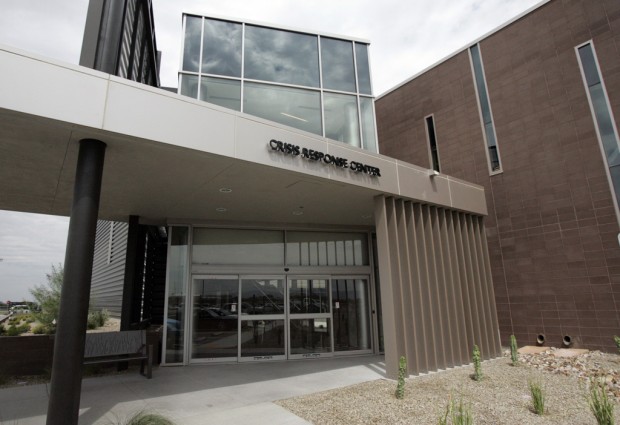
The community partnership oversees the treatment of people with serious mental illness or substance-abuse problems in Pima County, funneling tax money to clinics and monitoring their performance. The partnership also operates the new Crisis Response Center on East Ajo Way, part of a $57 million behavioral-health complex.
At an Aug. 22 hearing, Judge Jan Kearney called the lawsuit a "matter of significant community interest" that should be handled "with all feasible speed."
SEABHS (pronounced "see-bus"), as the Benson-based network is known, alleges in its lawsuit that the community partnership has gone on a reckless spending spree, paying exorbitant salaries and spending excessively on travel and community grants.
"Hundreds of thousands of dollars of taxpayers' money was given away by CPSA in FY 2009 and FY 2010 for sponsorships and gifts to other organizations," the lawsuit alleges. It goes on to say the partnership has tried to "rob" SEABHS of its $20 million share in the community partnership.
But the lawsuit also coincides with a period of serious financial decline for SEABHS and comes with this offer: We'll settle the case and leave the community partnership intact if it pays us $20 million.
That stuck out to Aaron Dorfman, executive director of the National Committee for Responsive Philanthropy in Washington, D.C., when asked to review the case.
"Everything in there is designed to create leverage for some sort of settlement, so they (SEABHS) can get the money and part ways," Dorfman said.
Partnership's birth
In the mid-1990s, SEABHS officials helped create the community partnership to solve a problem.
A series of nonprofit agencies had run up deficits working as the Regional Behavioral Health Authority for Pima County - the state contractor that funnels tax money to agencies that provide mental-health and substance-abuse treatment. So Southern Arizona social-service agencies, including SEABHS, created their own authority instead.
SEABHS was one of three groups to chip in about $500,000 each, and the Community Partnership of Southern Arizona was born in 1995. Every three years since then, it has won the contract to handle state funding for the treatment of seriously mentally ill people in Pima County. The partnership took in $303 million in fiscal year 2009.
"It's certainly been a powerful improvement over the organization that it replaced," said Tom Donovan, a longtime behavioral-health leader in Tucson and current CEO of COPE Community Services. "It's done a much, much better job of bringing best-practice activities into the local system, as well as the traditional (Regional Behavioral Health Authority) responsibilities of planning, contracting, quality oversight and compliance monitoring."
For 15 years, one of the beneficiaries was SEABHS, which received money from the partnership to do state-funded behavioral-health treatment in Cochise, Graham, Greenlee and Santa Cruz counties. SEABHS reached a maximum of 435 full-time-equivalent employees at the beginning of 2010, says the annual Star 200 survey of Southern Arizona employers.
But the seeds of its decline had been planted. Dissident board member Marcelino Varona Jr. began raising questions in 2009 about a $150,000 personal loan that had been made to SEABHS' CEO, Dana Johnson, and not repaid. He also questioned why SEABHS had bought more than 100 cars, including high-priced ones for some officials.
In December 2009, Neal Cash, CEO of the community partnership, sent SEABHS a letter demanding it change its financial practices or lose its contract. In February 2010, the board removed Varona, a lighting-rod ex-mayor of Nogales, as a member.
"allegations are bogus"
The worst news for SEABHS came in March 2010: For the first time since 1995, the community partnership lost the contract as the behavioral-health authority for the four counties that SEABHS served, though the partnership kept its contract for Pima County. The winning bidder for SEABHS' turf, a for-profit company called Cenpatico, brought in agencies from other parts of Arizona where it worked. At the same time, the state cut funding for behavioral-health services.
SEABHS' share of the area's behavioral-health business shrunk. Its workforce dropped by 60 percent in 2010, to 170 by the time 2011 began.
That, SEABHS alleges, is when community-partnership officials tried to cut them out of a share of the partnership that they're due. In October 2010, the lawsuit says, partnership officials tried to pressure a SEABHS representative on the partnership board to let SEABHS be eliminated as a one-third owner of the partnership. The board member didn't sign on.
Since the latest IRS filing shows that the community partnership has net assets of $60.7 million, SEABHS estimates it is due about $20 million. Under the laws governing nonprofit organizations, the money would have to go toward SEABHS' charitable mission.
The whole lawsuit is based on falsehoods, the community partnership said in a written statement.
"In addition to providing a comprehensive system of services for people with mental health and substance abuse challenges, CPSA has also reinvested hundreds of thousands of dollars each year in the community to support other nonprofit organizations, social service agencies and and community events that are aligned with CPSA's mission," the partnership said in a written statement.
The allegations, said partnership board member H. Clarke Romans "are so bogus it's unbelievable."
Michael Vent, the former head of both SEABHS and the community partnership, was dismayed to hear of the legal conflict.
"I have respect for both CPSA and SEABHS," said Vent, now head of Jewish Family and Children's Services in Phoenix. "My hope would be they can come to some reconciliation so they can continue to provide service."
Contact reporter Tim Steller at 807-8427 or tsteller@azstarnet.com

