



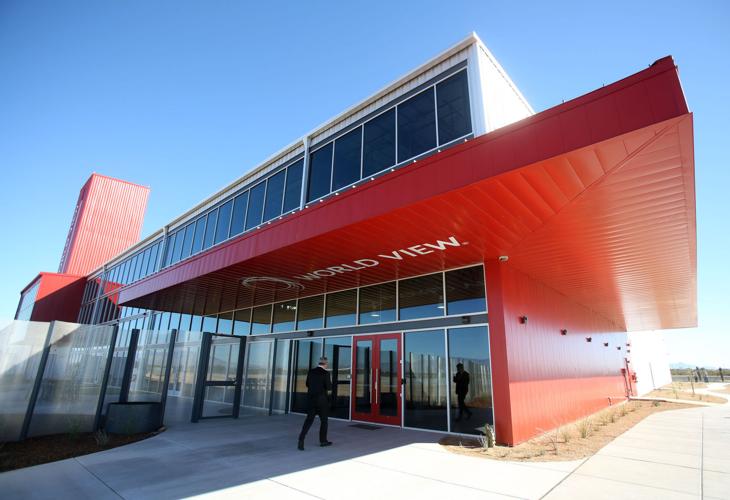

World View Enterprises unveiled the new, $15 million headquarters for its stratospheric balloon business south of Tucson International Airport on Wednesday.
The company also revealed plans for its first stratospheric balloon flight from the co-located Spaceport Tucson in the next couple of months — undaunted by a pending lawsuit challenging the company’s lease-purchase deal for the property from Pima County.
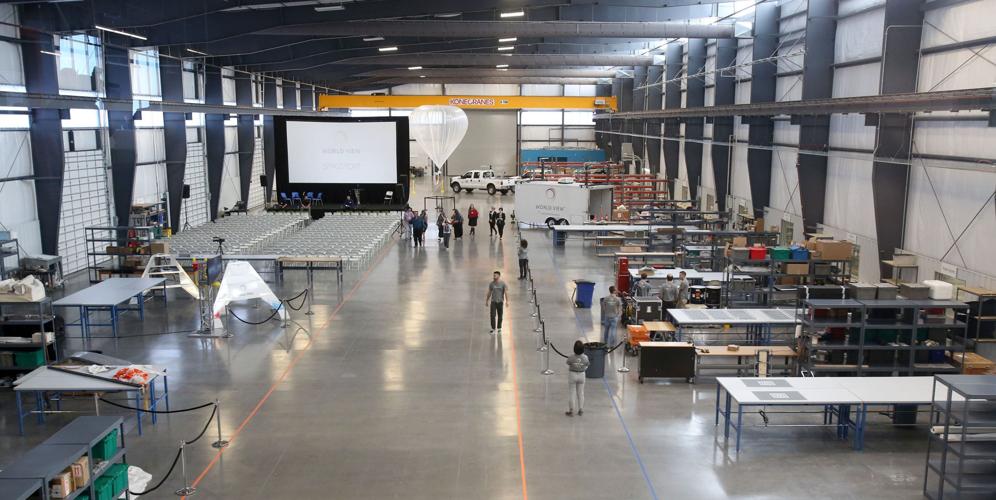
Jane Poynter, CEO of World View and co-founder of the company with husband Taber MacCallum, said the 142,000-square-foot building on Aerospace Parkway was built in about a year from its initial concepts for stratospheric flight.
The building features open office spaces and “mission control” area with a wall of windows overlooking a round concrete launch pad 700 feet in diameter for Spaceport Tucson, which World View will manage for the county.
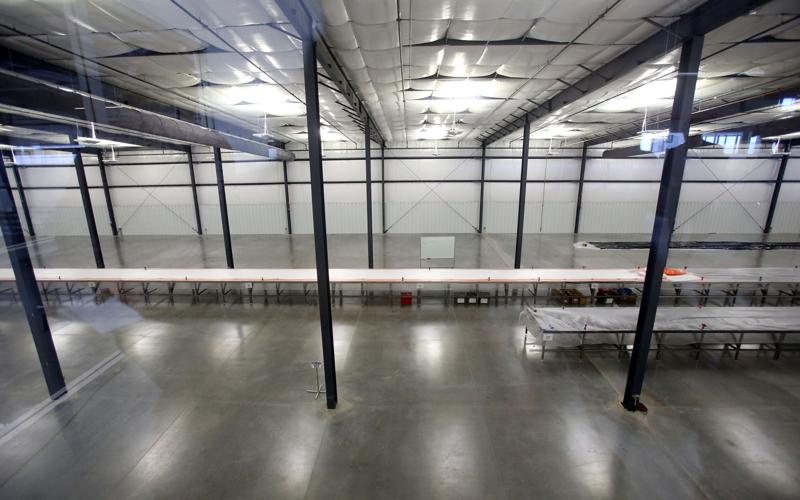
It also features a 100-foot tower to test parafoils — parachutes that fill with air to bring payloads back to earth under control — and a balloon manufacturing area with 600-foot tables to assemble balloons.
World View is already offering balloon-launched “Stratollites” — unmanned remotely piloted craft that can carry imaging or other research and commercial payloads to the stratosphere, a thin atmospheric layer below space.
The company also plans to eventually offer human flights as part of the experience market, at an initial price of $75,000 per ride. World View set several records for a high-altitude human jump when it flew Google executive Alan Eustace to the stratosphere and back in 2014.
World View already has launched more than 50 Stratollites for commercial customers from sites such as small regional airports, for customers including NASA, Northrop Grumman and the Department of Defense.
The company employs just under 100 workers and plans to hire as many as 400 as it expands, Poynter said.
The company’s most recent Stratollite flight was earlier this month, when World View and Ball Aerospace launched a collaborative Stratollite remote sensing mission from a site near Benson, MacCallum said.
The mission demonstrated the platform’s capability as a high-altitude imaging platform, successfully demonstrating the platform for a wide variety of remote sensing applications, the company said.
Alan Stern, World View’s chief scientist and a former NASA space programs chief, said the Stratollites provide a much more affordable, persistent platform for research and commercial sensing tasks than space satellites.
“Here, you’ve opened up all new applications for research and commercial,” Stern said.
MacCallum said the company tentatively plans to launch its first stratopsheric balloon from the Spaceport Tucson launch pad in the next couple of months.
He said the company is undeterred by the pending lawsuit against Pima County filed by the Goldwater Institute, challenging World View’s lease-purchase deal.
The lawsuit alleges the deal, which allows World View to pay off the $15 million construction cost over 30 years, is an illegal giveaway of taxpayer money. If the county loses, it could be forced to renegotiate the lease at market rates.
“We pretty much have a fair-market lease with the county right now,” MacCallum said.
Meanwhile, the company continues to prepare for space-tourism flights, which still face a approval process by the Federal Aviation Administration.
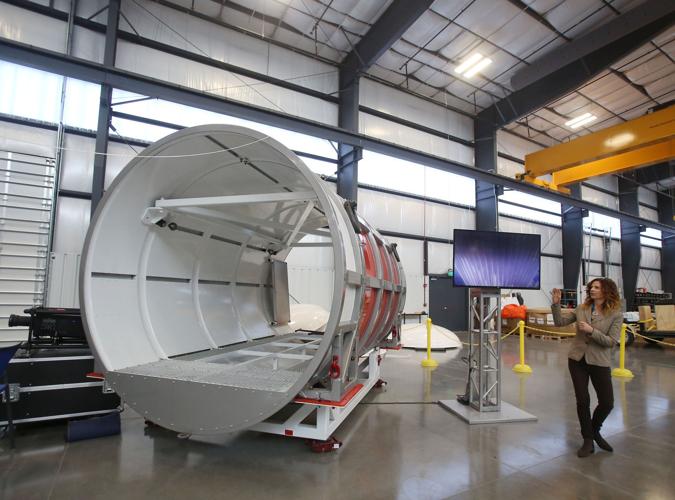
The company has built a prototype of its Voyager space capsule, which it will use for full-scale testing, Poynter said.
Astronaut Mark Kelly, director of flight crew operations, said skeptics shouldn’t discount the lure of stratospheric travel, recounting how he saw the Earth from space for the first time some 16 years ago.
“It really changes your ideas and your thoughts about the Earth and humanity,” he said.

