

Hansen's Sunday Notebook: Invoking student fee would be fiscal game-changer at Arizona
- Updated
Star sports columnist Greg Hansen offers his opinion on recent sports news.
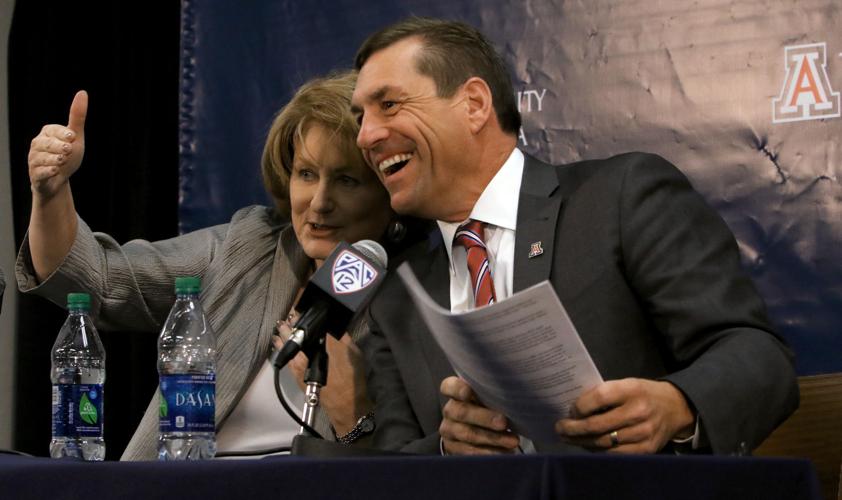
In the process of Greg Byrne’s departure from Arizona, he met with Tucsonan Mike Lude and asked for counsel.
Was it time to go?
Even though Byrne didn’t disclose his landing spot, Lude knew it would take a school like Alabama to turn the athletic director’s head.
“I told him he had done just about everything he could do at Arizona,” said Lude, the former athletic director at Washington and Auburn, and a former mentor/colleague to Byrne’s father, Bill, the athletic director at Oregon from 1984 to 1992.
Arizona offered to match Byrne’s $900,000-a-year salary at Alabama, but he chose to leave. It was a no-brainer.
In my opinion, Lude, Stanford’s Ted Leland and Arizona’s Cedric Dempsey have been the Pac-12’s three premier ADs of the modern years. Greg Byrne was on a path to join them.
Byrne leaned heavily on his mentors while in Tucson, especially former Oregon football coach and AD Rich Brooks and, of course, Lude, who has lived in Tucson since retiring.
One of the few things Byrne didn’t accomplish in his 6½ seasons in Tucson was to implement an athletic fee for students, one that could raise in excess of $5 million a year. Arizona pays about $7.5 million a year in athletic debt service; the student fee would be a fiscal game-changer.
Washington and Arizona are the only public universities in the league not to raise money through a student fee. Arizona State has realized about $10 million per year from a student athletic fee.
UA administrators have been envious of ASU’s ability to apply a $75-per-semester student fee; some insist Sun Devils president Michael Crow applied some hocus-pocus to get the deal passed by the Arizona Board of Regents two years ago. I’ve said similar things.
But in documents Crow’s office supplied to the Star last week, that’s not the case.
ASU’s initial proposal to implement an athletic fee came from the student government Council of Presidents, consisting of five members: the presidents of the Tempe Campus, Downtown Campus, West Campus and Polytechnic Campus, as well as a president elected by graduate students.
Their proposal included provisions to provide free admission to sports events for all students, and to improve their game-day experience, among other things. After making the proposal to Crow, the COP held a series of public student forums to solicit comment and feedback from students. After that, Crow and the Board of Regents approved.
Arizona will need to follow a similar course under incoming AD Dave Heeke, who takes office April 1. Heeke will work with presumptive new UA president Robert C. Robbins on following ASU’s lead to implement a student fee.
The fee might be the most important issue Heeke tackles in his early UA days.
Heeke becomes just the second Pac-12 AD hired from a Mid-American Conference school, Central Michigan. The first was Lude, who left Kent State to turn Washington into the league’s most powerful, and profitable, football program of a 12-year period from 1981-92.
Small world. Good karma.
- Greg Hansen Arizona Daily Star
- Updated
Brian Peabody coached his 500th career victory in early December. He produced state championships at Green Fields Country Day School in 1991 and at Ironwood Ridge in 2008.
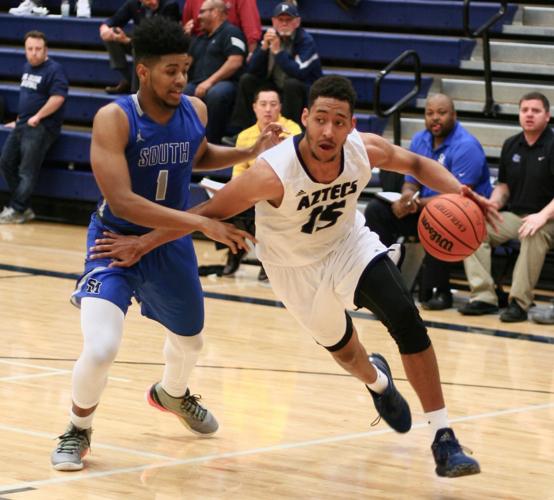
But the Sahuaro High School grad told me that Friday’s classic 102-99 victory over No. 1-ranked Phoenix College was “the sweetest victory of my career.”
The Aztecs, who averaged 101 points this year, thus won the NJCAA Region I, Division II championship and will play in the national finals beginning March 21 in Danville, Illinois.
PCC is 21-11. It plays in what many junior college insiders consider the most difficult league in NJCAA men’s hoops.
“People have no idea how hard the grind is,” said Peabody, whose top player, Empire High School grad Deion James, was selected the Region I, Division II championship game’s MVP a week after being the ACCAC co-player of the year. James scored 27 points and had 12 rebounds in Friday’s game.
A year ago, James was sitting on the end of the bench at a bad North Carolina A&T team. After the NJCAA finals, he will begin to sift through scholarship offers from Colorado State, Utah State, UNLV, Fresno State and others. Last week, UCLA assistant coach David Grace called the Pima coaching staff to get an update on James.
Peabody’s career victory total is now 513. That’s probably his new favorite number.

Palo Verde High School grad Bryce Cotton completed his third year in pro basketball with an exclamation mark. He led the Perth Wildcats to the championship of the Australia’s National Basketball League, scoring 45 points in the championship-clinching game last week. Cotton also led the league in scoring at 23.1 per game. Since leaving Palo Verde, Cotton has been an all-conference guard at Providence, and spent time playing for the Phoenix Suns, Memphis Grizzlies and Utah Jazz, as well as in China and Turkey.
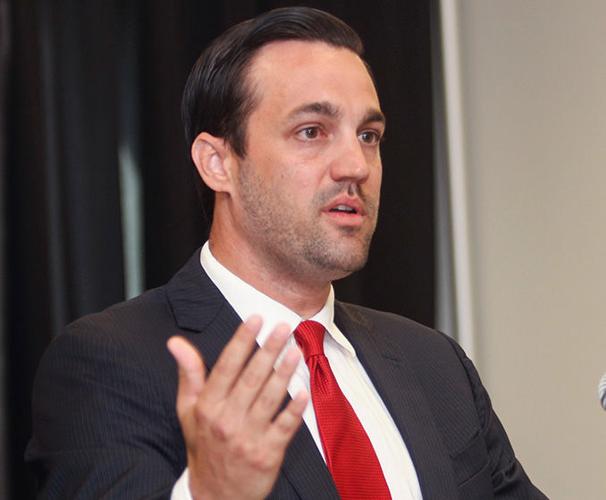
In his second season as head coach of the NBA D-League’s Rio Grande Valley Vipers, ex-Catalina Foothills standout Matt Brase — Lute Olson’s grandson — was selected February’s Coach of the Month. The Vipers, who are led by former Oregon State guard Gary Payton II, are 54-36 in Brase’s two seasons. They are bidding for a second consecutive year in the playoffs.
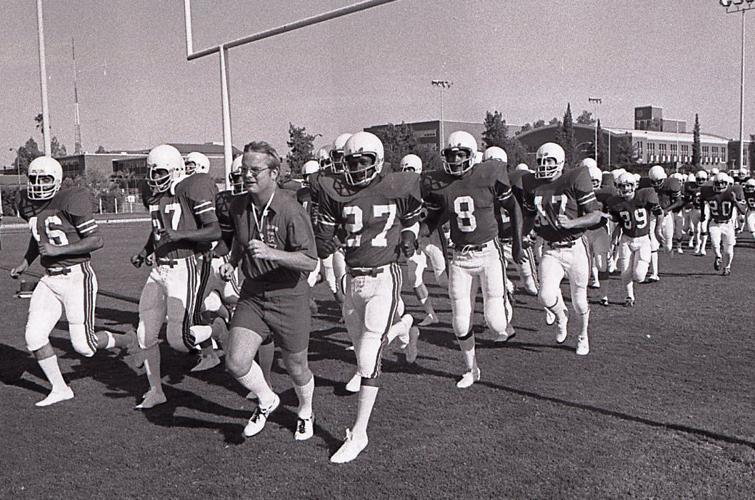
Jim Young’s first UA football team (1973) finished 8-3, the first winning season at Arizona since 1968. The core of that team would go 18-4 the following two seasons. But sadly, so many of those star-level players from that era died as younger men: Theo Bell, Ransom Terrell, Mike Dawson, Brian Murray and Jim Upchurch. Last week, linebacker Wally Brumfield, 64, died in Tucson of brain cancer. He worked for Tucson Electric Power . Those who watched Young’s powerful WAC teams have long spoken about Brumfield’s 1973 performance against Wyoming in which he made 23 tackles and forced two fumbles, one for a touchdown.
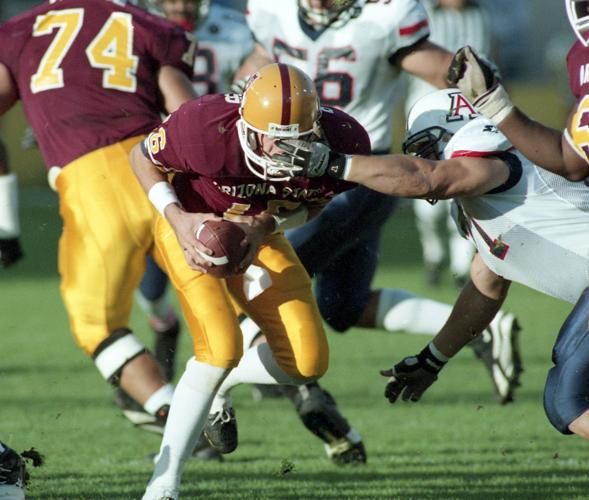
Arizona’s Desert Swarm era All-Pac-10 defensive lineman Chuck Osborne died in 2012. He was only 38. Medical examiners recently concluded he died of causes related to CTE — chronic traumatic encephalopathy — or, a brain injury, probably related to his football career. The Santa Clarita Valley Signal in California last week reported that Osborne’s final years were marked by obesity and depression as it detailed the time leading to his death.
- Greg Hansen Arizona Daily Star
- Updated
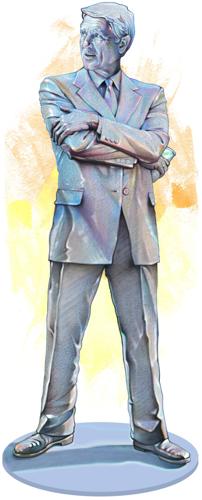
I’ve been critical of the UA for its tardiness in building and putting on display a statue of Lute Olson. But when I got a look at the ASU statue of football coaching icon Frank Kush last week, it became obvious that there is more to it than just building a statue. The Kush monument is almost obscured behind a mesquite tree between Wells Fargo Arena and Sun Devil Stadium. The lettering is sun-bleached. If you’re not looking for it, you’ll miss it. Kush, 88, delivered ASU sports to national prominence in the 1970s. If you’re going to honor a cornerstone of your athletic department, shouldn’t you give it your best shot?
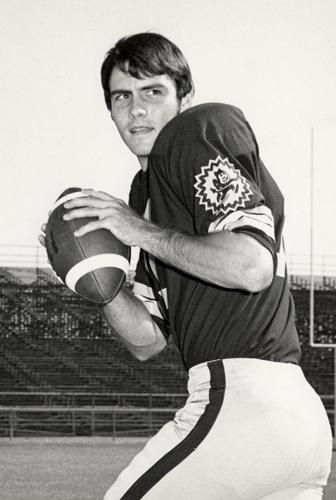
One thing the Sun Devils got right last week was adding 1970s quarterback star Danny White to Todd Graham’s football program. White is returning to campus as a consultant and Sun Devil Club ambassador. It’s a smart move; Sun Devil football has no real personality except a coach yelling at people on the sidelines. Similarly, Arizona could use a personality boost in football, as Rich Rodriguez is not a get-out-in-the-community type of figure. For two years, Arizona has not capitalized on a spring football marketing window, eschewing a traditional spring-capping ballgame, a message that is received as “look away, there’s nothing to see here.” I suspect new AD Dave Heeke will put that on his list of must-fix projects.
- Greg Hansen Arizona Daily Star
- Updated
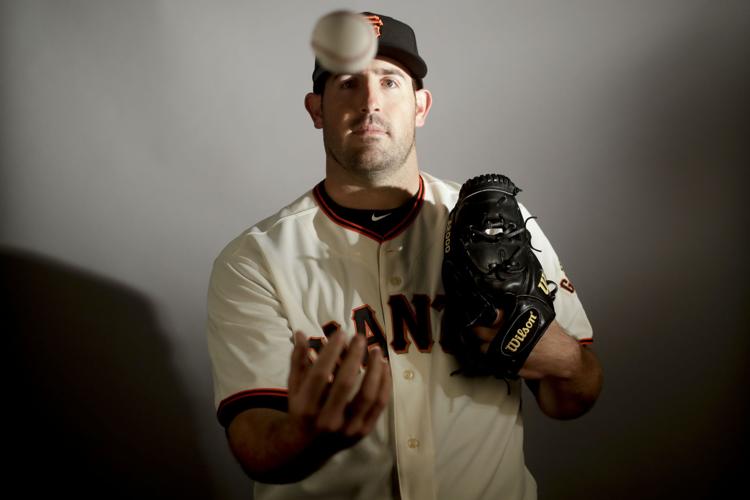
Salpointe Catholic grad Dan Slania got his first action in a MLB spring training game last week, pitching 2⅓ innings for the San Francisco Giants. He allowed one hit and no runs. Slania, who pitched at Notre Dame, is likely to open the season at Triple-A Sacramento.
- Greg Hansen Arizona Daily Star
- Updated
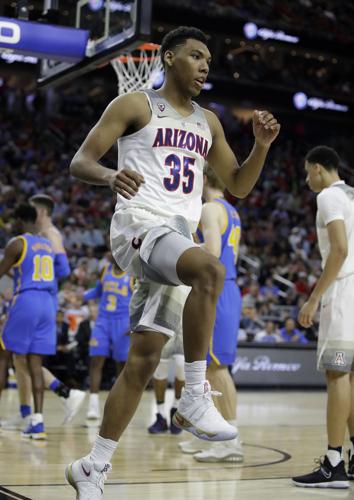
In the age of social media and online media content, the reality of modern local television — its decline in ratings and earnings — was apparent at the Pac-12 Tournament. For the first time, no Tucson TV outlet, not Channel 4, 9 or 13, sent a representative to Las Vegas. It’s not cheap. Many of the 12,000 or so UA fans who attended games at T-Mobile Arena spent as much (or more) than $2,000 for the week.

- Greg Hansen Arizona Daily Star
- Updated
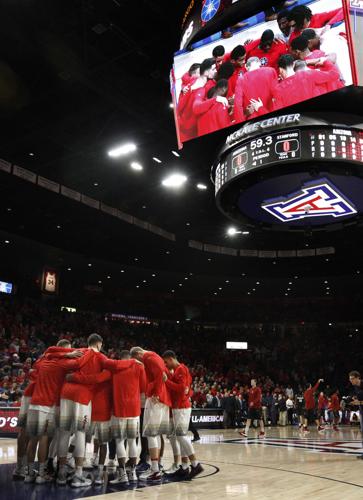
After gathering positive momentum with a successful Nova Home Loans Arizona Bowl II in December, Tucson’s bowl game is not standing pat.
With last week’s speculation that the American Sports Network, which syndicated the game to scores of TV stations, will cease operations, it’s likely Arizona Bowl III will move to a major carrier, perhaps the CBS Sports Network or something of that level.
In addition, the December game played at Arizona Stadium will soon introduce a new executive director, Alan Young, who has been CEO of the Phoenix-based Arizona Sports and Entertainment Commission. Young has been involved in the first two games in Tucson.
That means Mike Feder, one of the top sports operatives in Tucson history, will become director of sales and marketing, which is his strength. Young’s expertise will apply to the next cycle of bowl contracts, in which the Arizona Bowl hopes to position itself to step up to Power 5 Conference affiliations.
The Arizona Bowl drew 33,878 for its 2016 game, Air Force v. South Alabama, which was more than the established Phoenix-based Cactus Bowl drew for Baylor-Boise State. The Tucson game, led by attorney Ali Farhang, is ambitious enough to reach 40,000 in the near future.
- Greg Hansen Arizona Daily Star
- Updated
The NCAA Tournament won’t be back in Tucson any time in the near future. Next year’s first-weekend sites in the West will be San Diego and Boise. This year it’s Salt Lake City and Sacramento.
McKale Center has been a host-site for 12 NCAA Tournaments, from 1974 to 2011. This is the longest period in which Tucson hasn’t been in the rotation.
Some insist that first-weekend games in Tucson put Arizona at a greater risk of being sent to a faraway site and that it is a competitive disadvantage.
But is it really?
The last two times Arizona played host, 2005 and 2011, the Wildcats reached the Elite Eight. When McKale was a host site in 1997, they won the national championship.
The $30 million makeover at McKale, with improved fan amenities, makes it a perfect place to play Round of 64 and Round of 32 games. I’ve gone to first-weekend NCAA sites 40 times in my newspaper career, and the ambiance and collegiate atmosphere of Tucson and McKale rank near the top.
In the process of Greg Byrne’s departure from Arizona, he met with Tucsonan Mike Lude and asked for counsel.
Was it time to go?
Even though Byrne didn’t disclose his landing spot, Lude knew it would take a school like Alabama to turn the athletic director’s head.
“I told him he had done just about everything he could do at Arizona,” said Lude, the former athletic director at Washington and Auburn, and a former mentor/colleague to Byrne’s father, Bill, the athletic director at Oregon from 1984 to 1992.
Arizona offered to match Byrne’s $900,000-a-year salary at Alabama, but he chose to leave. It was a no-brainer.
In my opinion, Lude, Stanford’s Ted Leland and Arizona’s Cedric Dempsey have been the Pac-12’s three premier ADs of the modern years. Greg Byrne was on a path to join them.
Byrne leaned heavily on his mentors while in Tucson, especially former Oregon football coach and AD Rich Brooks and, of course, Lude, who has lived in Tucson since retiring.
One of the few things Byrne didn’t accomplish in his 6½ seasons in Tucson was to implement an athletic fee for students, one that could raise in excess of $5 million a year. Arizona pays about $7.5 million a year in athletic debt service; the student fee would be a fiscal game-changer.
Washington and Arizona are the only public universities in the league not to raise money through a student fee. Arizona State has realized about $10 million per year from a student athletic fee.
UA administrators have been envious of ASU’s ability to apply a $75-per-semester student fee; some insist Sun Devils president Michael Crow applied some hocus-pocus to get the deal passed by the Arizona Board of Regents two years ago. I’ve said similar things.
But in documents Crow’s office supplied to the Star last week, that’s not the case.
ASU’s initial proposal to implement an athletic fee came from the student government Council of Presidents, consisting of five members: the presidents of the Tempe Campus, Downtown Campus, West Campus and Polytechnic Campus, as well as a president elected by graduate students.
Their proposal included provisions to provide free admission to sports events for all students, and to improve their game-day experience, among other things. After making the proposal to Crow, the COP held a series of public student forums to solicit comment and feedback from students. After that, Crow and the Board of Regents approved.
Arizona will need to follow a similar course under incoming AD Dave Heeke, who takes office April 1. Heeke will work with presumptive new UA president Robert C. Robbins on following ASU’s lead to implement a student fee.
The fee might be the most important issue Heeke tackles in his early UA days.
Heeke becomes just the second Pac-12 AD hired from a Mid-American Conference school, Central Michigan. The first was Lude, who left Kent State to turn Washington into the league’s most powerful, and profitable, football program of a 12-year period from 1981-92.
Small world. Good karma.
Brian Peabody coached his 500th career victory in early December. He produced state championships at Green Fields Country Day School in 1991 and at Ironwood Ridge in 2008.
But the Sahuaro High School grad told me that Friday’s classic 102-99 victory over No. 1-ranked Phoenix College was “the sweetest victory of my career.”
The Aztecs, who averaged 101 points this year, thus won the NJCAA Region I, Division II championship and will play in the national finals beginning March 21 in Danville, Illinois.
PCC is 21-11. It plays in what many junior college insiders consider the most difficult league in NJCAA men’s hoops.
“People have no idea how hard the grind is,” said Peabody, whose top player, Empire High School grad Deion James, was selected the Region I, Division II championship game’s MVP a week after being the ACCAC co-player of the year. James scored 27 points and had 12 rebounds in Friday’s game.
A year ago, James was sitting on the end of the bench at a bad North Carolina A&T team. After the NJCAA finals, he will begin to sift through scholarship offers from Colorado State, Utah State, UNLV, Fresno State and others. Last week, UCLA assistant coach David Grace called the Pima coaching staff to get an update on James.
Peabody’s career victory total is now 513. That’s probably his new favorite number.
Palo Verde High School grad Bryce Cotton completed his third year in pro basketball with an exclamation mark. He led the Perth Wildcats to the championship of the Australia’s National Basketball League, scoring 45 points in the championship-clinching game last week. Cotton also led the league in scoring at 23.1 per game. Since leaving Palo Verde, Cotton has been an all-conference guard at Providence, and spent time playing for the Phoenix Suns, Memphis Grizzlies and Utah Jazz, as well as in China and Turkey.
In his second season as head coach of the NBA D-League’s Rio Grande Valley Vipers, ex-Catalina Foothills standout Matt Brase — Lute Olson’s grandson — was selected February’s Coach of the Month. The Vipers, who are led by former Oregon State guard Gary Payton II, are 54-36 in Brase’s two seasons. They are bidding for a second consecutive year in the playoffs.
Jim Young’s first UA football team (1973) finished 8-3, the first winning season at Arizona since 1968. The core of that team would go 18-4 the following two seasons. But sadly, so many of those star-level players from that era died as younger men: Theo Bell, Ransom Terrell, Mike Dawson, Brian Murray and Jim Upchurch. Last week, linebacker Wally Brumfield, 64, died in Tucson of brain cancer. He worked for Tucson Electric Power . Those who watched Young’s powerful WAC teams have long spoken about Brumfield’s 1973 performance against Wyoming in which he made 23 tackles and forced two fumbles, one for a touchdown.
Arizona’s Desert Swarm era All-Pac-10 defensive lineman Chuck Osborne died in 2012. He was only 38. Medical examiners recently concluded he died of causes related to CTE — chronic traumatic encephalopathy — or, a brain injury, probably related to his football career. The Santa Clarita Valley Signal in California last week reported that Osborne’s final years were marked by obesity and depression as it detailed the time leading to his death.
I’ve been critical of the UA for its tardiness in building and putting on display a statue of Lute Olson. But when I got a look at the ASU statue of football coaching icon Frank Kush last week, it became obvious that there is more to it than just building a statue. The Kush monument is almost obscured behind a mesquite tree between Wells Fargo Arena and Sun Devil Stadium. The lettering is sun-bleached. If you’re not looking for it, you’ll miss it. Kush, 88, delivered ASU sports to national prominence in the 1970s. If you’re going to honor a cornerstone of your athletic department, shouldn’t you give it your best shot?
One thing the Sun Devils got right last week was adding 1970s quarterback star Danny White to Todd Graham’s football program. White is returning to campus as a consultant and Sun Devil Club ambassador. It’s a smart move; Sun Devil football has no real personality except a coach yelling at people on the sidelines. Similarly, Arizona could use a personality boost in football, as Rich Rodriguez is not a get-out-in-the-community type of figure. For two years, Arizona has not capitalized on a spring football marketing window, eschewing a traditional spring-capping ballgame, a message that is received as “look away, there’s nothing to see here.” I suspect new AD Dave Heeke will put that on his list of must-fix projects.
Salpointe Catholic grad Dan Slania got his first action in a MLB spring training game last week, pitching 2⅓ innings for the San Francisco Giants. He allowed one hit and no runs. Slania, who pitched at Notre Dame, is likely to open the season at Triple-A Sacramento.
In the age of social media and online media content, the reality of modern local television — its decline in ratings and earnings — was apparent at the Pac-12 Tournament. For the first time, no Tucson TV outlet, not Channel 4, 9 or 13, sent a representative to Las Vegas. It’s not cheap. Many of the 12,000 or so UA fans who attended games at T-Mobile Arena spent as much (or more) than $2,000 for the week.
After gathering positive momentum with a successful Nova Home Loans Arizona Bowl II in December, Tucson’s bowl game is not standing pat.
With last week’s speculation that the American Sports Network, which syndicated the game to scores of TV stations, will cease operations, it’s likely Arizona Bowl III will move to a major carrier, perhaps the CBS Sports Network or something of that level.
In addition, the December game played at Arizona Stadium will soon introduce a new executive director, Alan Young, who has been CEO of the Phoenix-based Arizona Sports and Entertainment Commission. Young has been involved in the first two games in Tucson.
That means Mike Feder, one of the top sports operatives in Tucson history, will become director of sales and marketing, which is his strength. Young’s expertise will apply to the next cycle of bowl contracts, in which the Arizona Bowl hopes to position itself to step up to Power 5 Conference affiliations.
The Arizona Bowl drew 33,878 for its 2016 game, Air Force v. South Alabama, which was more than the established Phoenix-based Cactus Bowl drew for Baylor-Boise State. The Tucson game, led by attorney Ali Farhang, is ambitious enough to reach 40,000 in the near future.
The NCAA Tournament won’t be back in Tucson any time in the near future. Next year’s first-weekend sites in the West will be San Diego and Boise. This year it’s Salt Lake City and Sacramento.
McKale Center has been a host-site for 12 NCAA Tournaments, from 1974 to 2011. This is the longest period in which Tucson hasn’t been in the rotation.
Some insist that first-weekend games in Tucson put Arizona at a greater risk of being sent to a faraway site and that it is a competitive disadvantage.
But is it really?
The last two times Arizona played host, 2005 and 2011, the Wildcats reached the Elite Eight. When McKale was a host site in 1997, they won the national championship.
The $30 million makeover at McKale, with improved fan amenities, makes it a perfect place to play Round of 64 and Round of 32 games. I’ve gone to first-weekend NCAA sites 40 times in my newspaper career, and the ambiance and collegiate atmosphere of Tucson and McKale rank near the top.
Tags


View this profile on Instagram#ThisIsTucson 🌵 (@this_is_tucson) • Instagram photos and videos
Most viewed stories
-
Nearly 50 fun events happening in the month of January! ✨
-
New eats! 10 new restaurants that opened in Tucson this fall
-
What a delicious year: the best meals I ate in Tucson in 2025 💖
-
Horchata lattes and breakfast burritos: Tucson's Barista del Barrio opens 2nd location
-
Free and fun events to check out this January!
-
Tucson's twin winter music festivals kick off this weekend 🎵
-
Looking ahead to Tucson's new and cool for '26
-
Glitter and boas: Dress up '70s style for ABBA tribute show at the Rialto 🪩✨
-
Create the icy dessert of your dreams at this new frozen yogurt spot 🍨
-
23 exciting events to start your new year, January 2-4 2026! 🪩✨