

Garden Sage - Snacking on bougainvilleas; probing for water; stressing with beetles
- Updated
Answers to your gardening questions from an expert in Southern Arizona.

- By Peter L. Warren Special to the Arizona Daily Star
- Updated
Q: We purchased our home in Tucson Estates a few years ago. As part of the landscaping, there are bougainvillea plants along a fencerow. Every summer we have battled some kind of an insect that eats the green leaves. When we begin to have the cooler temps, the insects seem to be fewer and the plants finally begin to blossom a lovely red. With our recent warm temperatures, the insects are back in abundance. I’d really like to get on top of this before next spring so that we can have healthy plants and blossoms. Is there any hope? If so, what can we do?
A: There are two known caterpillar pests of bougainvillea. Disclisioprocta stellate, aka the bougainvillea looper and the somber carpet moth, is a moth originally from Africa that is now found commonly in Hawaii and the southern United States. The adult is a small brown moth and the caterpillar is also brown and small. Loopers crawl by arching their body into a loop shape so they are easy to identify while moving. Asciodes gordialis, aka the bougainvillea caterpillar moth, is also a small brown or tan moth found in the southern states. The caterpillar is green and doesn’t loop while crawling. Both of these insects will disappear in the cool part of the year and resume activity in the warm times. Identifying them would be useful and probably fun for me so I would like to know when they begin feeding again in the spring if you don’t mind. To manage them, you will use the same strategy. You can look for caterpillars now and whenever you start to see new damage and pick them off the leaves. They are helpless off the plants. You can also spray the leaves with Bacillus thuringiensis (Bt) labeled for caterpillar pests to kill the ones you overlooked. Looking more often when you notice new damage will help. There will be periods of time when they are less active when a quick weekly examination will suffice. The insect in the photo you sent is a green lacewing and is a beneficial insect that might help with your pest management. For this reason, the Bt is a good choice because it will harm only caterpillars.
Peter L. Warren is the urban horticulture agent for the Pima County Cooperative Extension and the University of Arizona. Email questions and photos to tucsongardensage@gmail.com

- By Peter L. Warren Special to the Arizona Daily Star
- Updated
Q: Please — when you tell someone to water a tree down about 4 feet — will you please use other parameters? How am I supposed to know when something is wet down to 4 feet? Dig a hole? I didn’t read it today, and I can’t say that you are responsible for this — but many times past over the years I have had the same reaction. It’s just that today I am finally taking the time to write and your email address is handy!
A: Watering depth can be measured in several ways including some fairly sophisticated devices, calculating the output from your drip irrigation emitters, and by using a soil probe. The soil probe is the least complex and the least expensive. This device can be as simple as a piece of rebar with a handle and a pointed end. These probes are sold in a variety of garden shops and even our Cooperative Extension office sells them to benefit the Master Gardener Program. Some are as cheap as $5 and others are a bit more expensive. By pushing the probe into the soil after irrigating you can tell approximately how deep your water is going. The dry soil will provide more resistance than wet soil so you can stop pushing when it becomes more difficult and measure how much of your probe is in the soil. It’s not as much fun as math but it can help you adjust your irrigation practices.
Peter L. Warren is the urban horticulture agent for the Pima County Cooperative Extension and the University of Arizona. Email questions and photos to tucsongardensage@gmail.com
- By Peter L. Warren Special to the Arizona Daily Star
- Updated
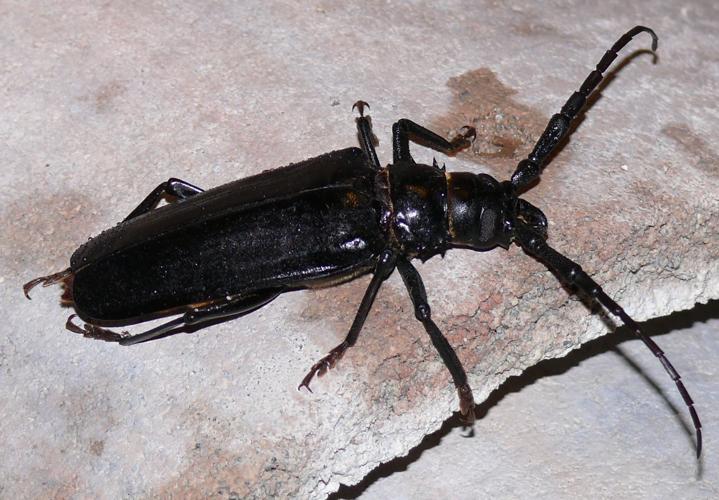
Q: My yard has a palo verde borer beetle infestation. I have personally smashed/stepped on/killed this many the last three years: 2014 – 54, 2015 — 53 (June 18-July 21), 2016 — 66 (June 19-July 31). I documented how many per night. And documented male/female numbers.Front yard has a 12-year-old Desert Museum palo verde with the most infestation. It lost a quarter of its branches this fall. Backyard has a 30-plus-year-old ash tree. In 2016, 28 of the 66 were from the ash. I tried two applications of beneficial nematodes (September 2015 and April 2016) with no reduction. Any help and suggestions are welcomed.
A: Palo verde beetles are typically an indicator of a stressed tree. They are often found when dead palo verde trees are removed but they are rarely responsible for the death of trees. Trees often die of multiple causes including the many environmental factors they are exposed to in our landscapes. It is usually these stresses and other factors unrelated to the beetles that cause tree death, even when the beetle larvae are present feeding on the roots. My suggestion is to make sure you are doing everything you can to care for your trees. This will go a long way toward protecting them from an early death. Beneficial nematodes are a wonderful thing in the right circumstances but there is no research I am aware of that shows they have any affect on palo verde beetle populations.
Peter L. Warren is the urban horticulture agent for the Pima County Cooperative Extension and the University of Arizona. Email questions and photos to tucsongardensage@gmail.com
- By Peter L. Warren Special to the Arizona Daily Star
- Updated
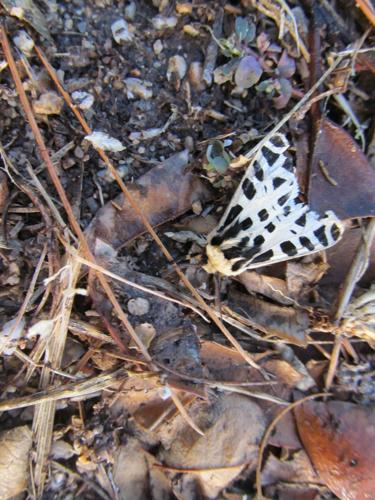
Q: I don’t know if this new visitor is a positive or negative for the vegetable garden.
A: Your visitor is the Mexican tiger moth (Notarctia proxima). I couldn’t say if it is positive or negative for your garden without more information about where you found it and what, if anything, it could have been eating.
The tiger moths can have a diverse diet and have been known to be problematic on certain plants. This species hasn’t been studied as much as its more famous relatives the fall webworm, the banded woollybear caterpillar, and the invasive gypsy moth so there isn’t as much information about what plants it might like.
Peter L. Warren is the urban horticulture agent for the Pima County Cooperative Extension and the University of Arizona. Email questions and photos to tucsongardensage@gmail.com
- By Peter L. Warren Special to the Arizona Daily Star
- Updated
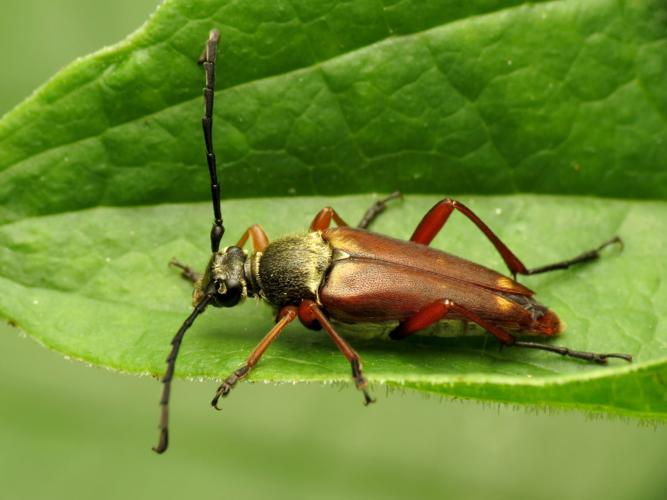
Q: Any idea what these beetles are?
A: These beetles are commonly known as flower longhorns because they are seen feeding on nectar and pollen from flowers. They are from the Cerambycidae family of beetles and called longhorn beetles due to their long antennae.
Larvae of this type feed on dead, moist wood and adults lay their eggs there. This beetle is not considered to be a pest.
Some other longhorn beetles are considered pests so it’s important to check if you see them on trees and shrubs.
- By Peter L. Warren Special to the Arizona Daily Star
- Updated
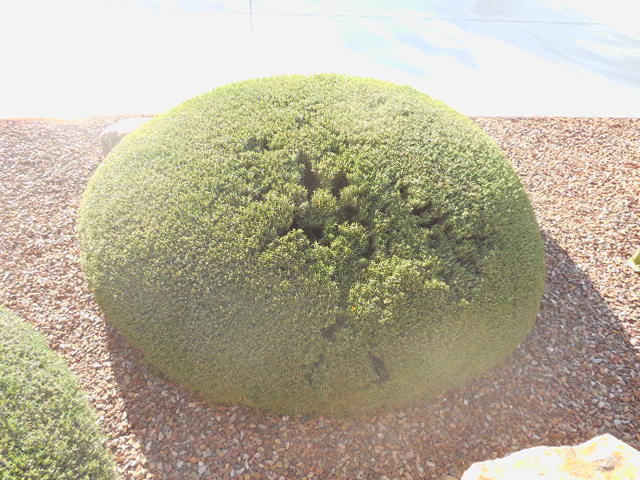
Q: I have a deck that overlooks a wash. For years, I have been trying to plant various things in pots on the deck, but most of them get eaten by pack rats. The only plants that have survived are rosemary, lavender and geranium.
Do you have any other recommendations for flowering plants that pack rats would reject? Or effective pesticides? Or unusual ways to approach the pack rat problem?
Among the things I have done is to hire someone who is quite knowledgeable, but have seen limited success. The last thing he said to me was to give up planting on pots in my deck.
A: Predicting what animals will not eat is difficult. If the weather is dry and their favorite plants dry up, pack rats and other animals will eat what’s available.
The fragrant plants they avoided on your deck are a clue to their preferences but I wouldn’t expect them to avoid anything in a pinch. There are rodenticides you can use but they are not effective in the long term because they only take out a few rats and don’t solve the overall problem. Pesticides are also poison for any other animal so you would need to be careful to protect pets and other wildlife.
The best strategy for pack rat management includes nest removal, trapping and habitat modification to limit food sources so they won’t reestablish nearby.
Living next to a wash puts you at a disadvantage because you can only manage so many potential nest sites. In any case, modifying your landscape is not a one-and-done solution.
The nesting sites will grow back and must be maintained for long-term effectiveness. Keep an eye out for places they might make a nest.
We humans create a lot of containers and things with nice cavities in them that are just right for a nest. If pack rats are able to access plants on your deck, then they will probably be back.
You might consider using containers that have slippery sides so they are unable to climb into the plants. Some folks use metal troughs designed for watering livestock and they seem to work.
Peter L. Warren is the urban horticulture agent for the Pima County Cooperative Extension and the University of Arizona. Email questions and photos to tucsongardensage@gmail.com
- By Peter L. Warren Special to the Arizona Daily Star
- Updated
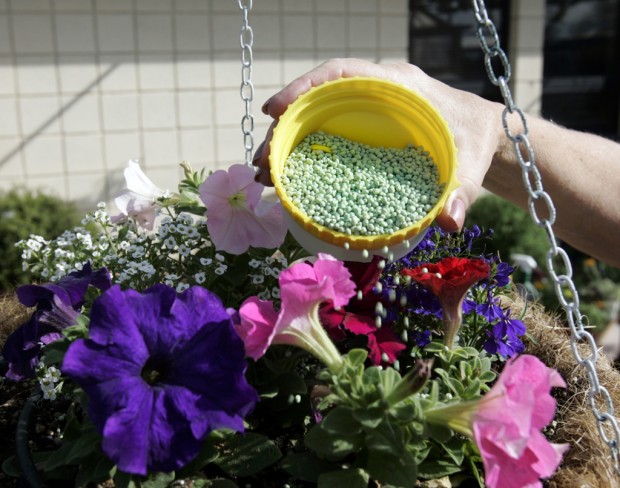
Q: Would you please tell me when you advise starting to fertilize citrus this year and what product you recommend. We live just south of Sunrise Drive — not sure what the elevation is—about 2,800 feet I think.
A: The first date for fertilizing citrus is in the January/February time frame. How much you use is dependent on the size of the tree.
To determine the appropriate amount it would be wise to check the publication “Citrus Fertilization Chart for Arizona” (az1671) that can be accessed through your favorite search engine on the internet at tucne.ws/h3r.
There are some products labeled as citrus fertilizer so you could look for them where you shop.
Peter L. Warren is the urban horticulture agent for the Pima County Cooperative Extension and the University of Arizona. Email questions and photos to tucsongardensage@gmail.com
- By Peter L. Warren Special to the Arizona Daily Star
- Updated
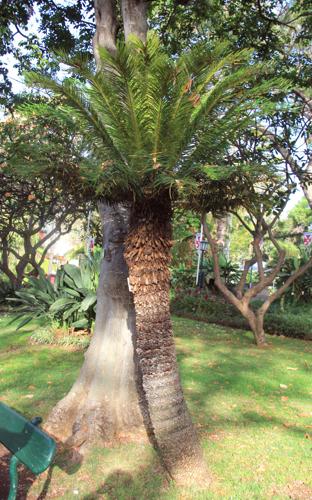
Q: I have attached photos of our problem sago. This plant is over 20 years old, growing in a pot inside a sheltered south-facing entryway. We have re-potted it several times but the size and weight are more than we can deal with now. It has been a beautiful focal point to our entry way but now is falling over the pot onto a fountain and has become more of a problem than a pleasure.
What is the lifespan of sago? I hate to destroy this plant but can’t think of any way to salvage it.
A: Sago (Cycas revoluta) can live hundreds of years and their mature size, if properly maintained, can be 6 to 10 feet tall and too large for a container.
They are very slow growers and at the rate of about one inch per year can be maintained in containers for a long time.
If you have a place in your landscape where it could be planted in the ground, you might be able to enjoy this plant for years to come. Although in their native subtropical habitat they can be grown in full sun, the best spot in our area would be at least partially shady to prevent sun burning of the fronds by the afternoon sun and in well-drained soil with a good amount of organic matter.
Peter L. Warren is the urban horticulture agent for the Pima County Cooperative Extension and the University of Arizona. Email questions and photos to tucsongardensage@gmail.com
- By Peter L. Warren Special to the Arizona Daily Star
- Updated
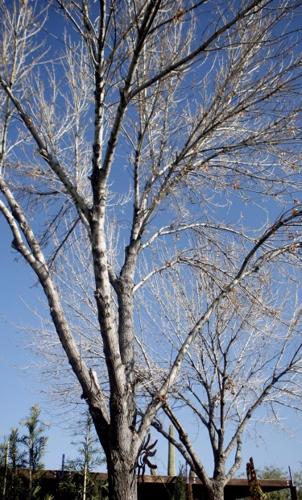
Q: I have an ash tree that is now going on 4 years old. The woodpeckers have never bothered it but now they are beginning to peck at it. It attracts ants, which are beneficial to the woodpeckers, and I usually let nature take it’s course but should I be concerned about these holes? Are they just superficial and will not harm the tree? I could wrap it but I’m thinking the birds will just move to other areas of the tree.
A: A few woodpecker holes are not a big deal. If they return to the same tree every year the damage could be a problem over the long haul. Sapsuckers will drill small holes to feed on sap and the sap may attract insects.
Your idea for wrapping the tree where the damage is occurring may have some benefit as it may drive them to other nearby trees instead of the one you want to protect. Burlap is a suitable material to try as a wrap. Other materials good for excluding birds include hardware cloth and plastic netting.
It’s not a good idea to leave the wrap on all year as it can trap moisture and cause decay of the bark so it’s good to observe when the birds are active so you can protect your tree at the appropriate times.
Peter L. Warren is the urban horticulture agent for the Pima County Cooperative Extension and the University of Arizona. Email questions and photos to tucsongardensage@gmail.com
- By Peter L. Warren Special to the Arizona Daily Star
- Updated
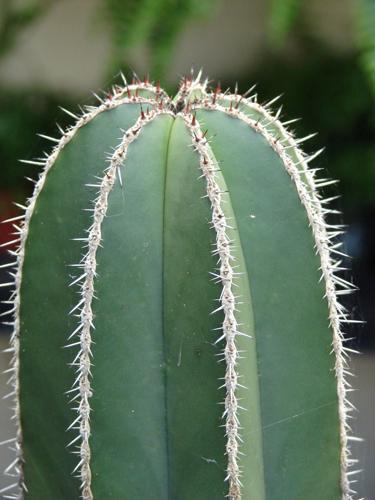
Q: I have a question regarding a Mexican fence post cactus we have planted in our landscaping. We remodeled our patio two years ago and had this cactus transplanted to a different location in the patio. In the last several months, the plant has a brownish tint and we are wondering what is the cause and what we should do about it.
The cactus still feels firm; the soil was treated for grubs in the summer; the plant is on light irrigation—same schedule as prior to transplanting. We also lightly fertilize all our plants in the spring.
We are located in the Catalina foothills in the Northeast part of Tucson. Do you think it is getting too much or too little water?
A: The Mexican fencepost cactus (Pachycereus marginatus) is a tough plant but there are always a few things that could go wrong.
When transplanting cacti it is best to orient them in the same direction as they were originally planted. Plants develop a tolerance for the amount of sun they receive on each side and facing them in a new direction may cause them to become sunburned.
The brown color of your cacti looks like sunburn so this is a potential cause of the discoloration. The cacti may recover from this, time will tell.
Another potential problem is rot caused by a fungus that may have entered through a wound in the transplant process. Because you aren’t able to detect any softening of the exterior this is only a possibility.
Once again, time will tell. Another potential problem is the soil where it is planted. Cacti do best in well-drained soil and suffer from overwatering if the soil holds its water too well. Irrigation for cacti should be light, as in once every two weeks in the summer and every three weeks in the spring and fall. No irrigation should be applied in the winter season or during the monsoon season.
Overall, it would be good to keep an eye on the situation to see if the damaged area is spreading, remaining the same, or getting better. These cacti don’t have a common grub problem so you might discontinue treating for them.
Peter L. Warren is the urban horticulture agent for the Pima County Cooperative Extension and the University of Arizona. Email questions and photos to tucsongardensage@gmail.com
- By Peter L. Warren Special to the Arizona Daily Star
- Updated
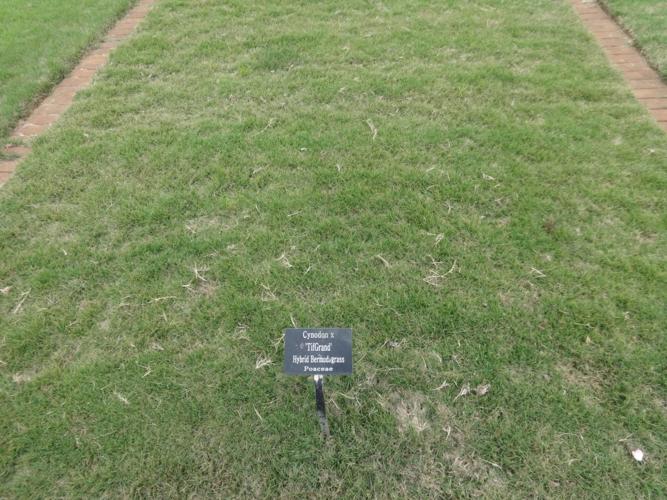
Q: My bermuda grass is becoming dormant. I read an article some time ago that suggests that during winter months one should water the grass about once every 14 days. This will supposedly keep the roots alive. Do you agree with this or do you have another suggestion?
A: Yes, I agree. Even though bermuda grass is dormant during the winter it still requires irrigation (½ inch every two to three weeks) to keep the soil moist and prevent winter desiccation. Of course winter rains may cover this so it would be wise to monitor the situation so as not to overwater.
Peter L. Warren is the urban horticulture agent for the Pima County Cooperative Extension and the University of Arizona. Questions and photos may be emailed to tucsongardensage@gmail.com
- By Peter L. Warren Special to the Arizona Daily Star
- Updated
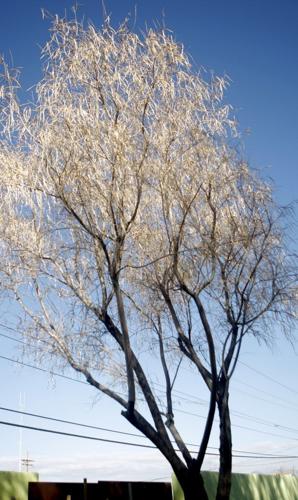
Q: I am looking for the amount of water used by trees. I am assisting a committee in our 50-year-plus homeowners association to determine how much water the established trees are using. If there is a web page or some other compilation I would be grateful. These trees are the main ones: mesquite, oaks, palo verde, ironwood; these multi-branched shrubs are fillers such as Texas ranger varieties, native feather dusters, oleander, and jojoba.
A: How much the plants are using is hard to determine. While some research has been done in this area on crop plants, we don’t have as much information for landscape plants. We have some broad guidelines for watering trees and shrubs based on plant type, their status as native or non-native, and whether they are well adapted to the desert. Google “Landscape Watering by the Numbers” to see a helpful publication on this topic. The actual needs will be dependent on our overall climate, microclimates where they are planted, and the size of the plants. By following general guidelines for the plant, using a soil probe to ensure water is reaching the correct depth, and looking for signs of desiccation or overwatering, you should be able to get a sense of how much water is required.
Peter L. Warren is the urban horticulture agent for the Pima County Cooperative Extension and the University of Arizona. Questions and photos may be emailed to tucsongardensage@gmail.com
- By Peter L. Warren Special to the Arizona Daily Star
- Updated
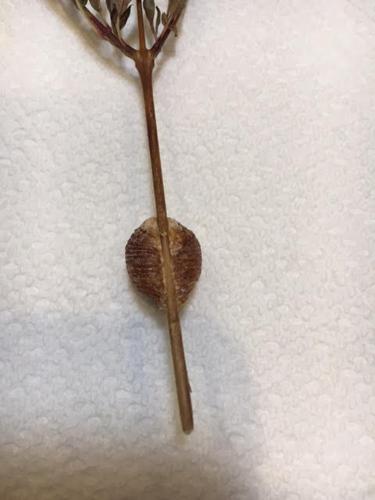
Q: Several of these growths appeared on a shrub in my yard. Any thoughts on what it might be?
A: These are praying mantis egg cases, aka ootheca. After mating, female mantids lay their eggs in a foamy mass on trees and shrubs where their young will be close to something to eat when they emerge. The egg case, while soft at first, hardens into what you found and can contain up to 400 eggs. Mantids survive the winter as eggs in the ootheca and hatch in the spring, emerging as wingless nymphs. Mantids are predators and they require food soon after emerging. Finding none, they may begin to eat each other. So if you decide to keep your mantid eggs to watch them hatch you might want to also find a suitable food source for when they are ready. What happens this time of year is the accidental mantid colony on Christmas trees. The egg cases are often well hidden in the foliage and not always apparent when we are out selecting the family Christmas tree. If they should hatch in your house, they might be goners unless you can get them to a place outdoors where the weather outside isn’t frightful and that has a population of tiny insects.
Peter L. Warren is the urban horticulture agent for the Pima County Cooperative Extension and the University of Arizona. Questions and photos may be emailed to tucsongardensage@gmail.com
- By Peter L. Warren Special to the Arizona Daily Star
- Updated
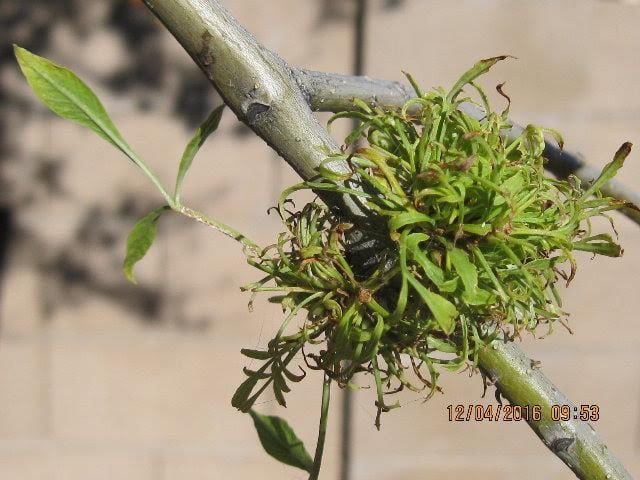
Q: I have three Arizona ash trees that are 10 years old. This past year they have looked like this (see photo). I have been trying to figure this out. I went to a few nurseries and got different answers and remedies: not enough water and not enough fertilizer. I water them once a week for one hour until I get over an inch of water in my rain gauge. I use shrub and tree fertilizer but I still have the problem. What is your opinion on this?
A: Your ash trees are displaying what is commonly called a witch’s broom. The normal growth of the tree has been interrupted, producing tiny leaves together in bunches from the same location we expect leaves. The causes of this are not always clear. Some possible problems could be a fungal infection, herbicide exposure or other environmental condition, mites feeding on the trees, and microorganisms called phytoplasmas that may be vectored by insects such as leafhoppers. In some cases, the trees will grow out of this and in others you might need to manage the situation. If you want me to examine a cutting for mites, etc., then please let me know.
Peter L. Warren is the urban horticulture agent for the Pima County Cooperative Extension and the University of Arizona. Questions and photos may be emailed to tucsongardensage@gmail.com
- By Peter L. Warren Special to the Arizona Daily Star
Q: We purchased our home in Tucson Estates a few years ago. As part of the landscaping, there are bougainvillea plants along a fencerow. Every summer we have battled some kind of an insect that eats the green leaves. When we begin to have the cooler temps, the insects seem to be fewer and the plants finally begin to blossom a lovely red. With our recent warm temperatures, the insects are back in abundance. I’d really like to get on top of this before next spring so that we can have healthy plants and blossoms. Is there any hope? If so, what can we do?
A: There are two known caterpillar pests of bougainvillea. Disclisioprocta stellate, aka the bougainvillea looper and the somber carpet moth, is a moth originally from Africa that is now found commonly in Hawaii and the southern United States. The adult is a small brown moth and the caterpillar is also brown and small. Loopers crawl by arching their body into a loop shape so they are easy to identify while moving. Asciodes gordialis, aka the bougainvillea caterpillar moth, is also a small brown or tan moth found in the southern states. The caterpillar is green and doesn’t loop while crawling. Both of these insects will disappear in the cool part of the year and resume activity in the warm times. Identifying them would be useful and probably fun for me so I would like to know when they begin feeding again in the spring if you don’t mind. To manage them, you will use the same strategy. You can look for caterpillars now and whenever you start to see new damage and pick them off the leaves. They are helpless off the plants. You can also spray the leaves with Bacillus thuringiensis (Bt) labeled for caterpillar pests to kill the ones you overlooked. Looking more often when you notice new damage will help. There will be periods of time when they are less active when a quick weekly examination will suffice. The insect in the photo you sent is a green lacewing and is a beneficial insect that might help with your pest management. For this reason, the Bt is a good choice because it will harm only caterpillars.
Peter L. Warren is the urban horticulture agent for the Pima County Cooperative Extension and the University of Arizona. Email questions and photos to tucsongardensage@gmail.com
- By Peter L. Warren Special to the Arizona Daily Star
Q: Please — when you tell someone to water a tree down about 4 feet — will you please use other parameters? How am I supposed to know when something is wet down to 4 feet? Dig a hole? I didn’t read it today, and I can’t say that you are responsible for this — but many times past over the years I have had the same reaction. It’s just that today I am finally taking the time to write and your email address is handy!
A: Watering depth can be measured in several ways including some fairly sophisticated devices, calculating the output from your drip irrigation emitters, and by using a soil probe. The soil probe is the least complex and the least expensive. This device can be as simple as a piece of rebar with a handle and a pointed end. These probes are sold in a variety of garden shops and even our Cooperative Extension office sells them to benefit the Master Gardener Program. Some are as cheap as $5 and others are a bit more expensive. By pushing the probe into the soil after irrigating you can tell approximately how deep your water is going. The dry soil will provide more resistance than wet soil so you can stop pushing when it becomes more difficult and measure how much of your probe is in the soil. It’s not as much fun as math but it can help you adjust your irrigation practices.
Peter L. Warren is the urban horticulture agent for the Pima County Cooperative Extension and the University of Arizona. Email questions and photos to tucsongardensage@gmail.com
- By Peter L. Warren Special to the Arizona Daily Star
Q: My yard has a palo verde borer beetle infestation. I have personally smashed/stepped on/killed this many the last three years: 2014 – 54, 2015 — 53 (June 18-July 21), 2016 — 66 (June 19-July 31). I documented how many per night. And documented male/female numbers.Front yard has a 12-year-old Desert Museum palo verde with the most infestation. It lost a quarter of its branches this fall. Backyard has a 30-plus-year-old ash tree. In 2016, 28 of the 66 were from the ash. I tried two applications of beneficial nematodes (September 2015 and April 2016) with no reduction. Any help and suggestions are welcomed.
A: Palo verde beetles are typically an indicator of a stressed tree. They are often found when dead palo verde trees are removed but they are rarely responsible for the death of trees. Trees often die of multiple causes including the many environmental factors they are exposed to in our landscapes. It is usually these stresses and other factors unrelated to the beetles that cause tree death, even when the beetle larvae are present feeding on the roots. My suggestion is to make sure you are doing everything you can to care for your trees. This will go a long way toward protecting them from an early death. Beneficial nematodes are a wonderful thing in the right circumstances but there is no research I am aware of that shows they have any affect on palo verde beetle populations.
Peter L. Warren is the urban horticulture agent for the Pima County Cooperative Extension and the University of Arizona. Email questions and photos to tucsongardensage@gmail.com
- By Peter L. Warren Special to the Arizona Daily Star
Q: I don’t know if this new visitor is a positive or negative for the vegetable garden.
A: Your visitor is the Mexican tiger moth (Notarctia proxima). I couldn’t say if it is positive or negative for your garden without more information about where you found it and what, if anything, it could have been eating.
The tiger moths can have a diverse diet and have been known to be problematic on certain plants. This species hasn’t been studied as much as its more famous relatives the fall webworm, the banded woollybear caterpillar, and the invasive gypsy moth so there isn’t as much information about what plants it might like.
Peter L. Warren is the urban horticulture agent for the Pima County Cooperative Extension and the University of Arizona. Email questions and photos to tucsongardensage@gmail.com
- By Peter L. Warren Special to the Arizona Daily Star
Q: Any idea what these beetles are?
A: These beetles are commonly known as flower longhorns because they are seen feeding on nectar and pollen from flowers. They are from the Cerambycidae family of beetles and called longhorn beetles due to their long antennae.
Larvae of this type feed on dead, moist wood and adults lay their eggs there. This beetle is not considered to be a pest.
Some other longhorn beetles are considered pests so it’s important to check if you see them on trees and shrubs.
- By Peter L. Warren Special to the Arizona Daily Star
Q: I have a deck that overlooks a wash. For years, I have been trying to plant various things in pots on the deck, but most of them get eaten by pack rats. The only plants that have survived are rosemary, lavender and geranium.
Do you have any other recommendations for flowering plants that pack rats would reject? Or effective pesticides? Or unusual ways to approach the pack rat problem?
Among the things I have done is to hire someone who is quite knowledgeable, but have seen limited success. The last thing he said to me was to give up planting on pots in my deck.
A: Predicting what animals will not eat is difficult. If the weather is dry and their favorite plants dry up, pack rats and other animals will eat what’s available.
The fragrant plants they avoided on your deck are a clue to their preferences but I wouldn’t expect them to avoid anything in a pinch. There are rodenticides you can use but they are not effective in the long term because they only take out a few rats and don’t solve the overall problem. Pesticides are also poison for any other animal so you would need to be careful to protect pets and other wildlife.
The best strategy for pack rat management includes nest removal, trapping and habitat modification to limit food sources so they won’t reestablish nearby.
Living next to a wash puts you at a disadvantage because you can only manage so many potential nest sites. In any case, modifying your landscape is not a one-and-done solution.
The nesting sites will grow back and must be maintained for long-term effectiveness. Keep an eye out for places they might make a nest.
We humans create a lot of containers and things with nice cavities in them that are just right for a nest. If pack rats are able to access plants on your deck, then they will probably be back.
You might consider using containers that have slippery sides so they are unable to climb into the plants. Some folks use metal troughs designed for watering livestock and they seem to work.
Peter L. Warren is the urban horticulture agent for the Pima County Cooperative Extension and the University of Arizona. Email questions and photos to tucsongardensage@gmail.com
- By Peter L. Warren Special to the Arizona Daily Star
Q: Would you please tell me when you advise starting to fertilize citrus this year and what product you recommend. We live just south of Sunrise Drive — not sure what the elevation is—about 2,800 feet I think.
A: The first date for fertilizing citrus is in the January/February time frame. How much you use is dependent on the size of the tree.
To determine the appropriate amount it would be wise to check the publication “Citrus Fertilization Chart for Arizona” (az1671) that can be accessed through your favorite search engine on the internet at tucne.ws/h3r.
There are some products labeled as citrus fertilizer so you could look for them where you shop.
Peter L. Warren is the urban horticulture agent for the Pima County Cooperative Extension and the University of Arizona. Email questions and photos to tucsongardensage@gmail.com
- By Peter L. Warren Special to the Arizona Daily Star
Q: I have attached photos of our problem sago. This plant is over 20 years old, growing in a pot inside a sheltered south-facing entryway. We have re-potted it several times but the size and weight are more than we can deal with now. It has been a beautiful focal point to our entry way but now is falling over the pot onto a fountain and has become more of a problem than a pleasure.
What is the lifespan of sago? I hate to destroy this plant but can’t think of any way to salvage it.
A: Sago (Cycas revoluta) can live hundreds of years and their mature size, if properly maintained, can be 6 to 10 feet tall and too large for a container.
They are very slow growers and at the rate of about one inch per year can be maintained in containers for a long time.
If you have a place in your landscape where it could be planted in the ground, you might be able to enjoy this plant for years to come. Although in their native subtropical habitat they can be grown in full sun, the best spot in our area would be at least partially shady to prevent sun burning of the fronds by the afternoon sun and in well-drained soil with a good amount of organic matter.
Peter L. Warren is the urban horticulture agent for the Pima County Cooperative Extension and the University of Arizona. Email questions and photos to tucsongardensage@gmail.com
- By Peter L. Warren Special to the Arizona Daily Star
Q: I have an ash tree that is now going on 4 years old. The woodpeckers have never bothered it but now they are beginning to peck at it. It attracts ants, which are beneficial to the woodpeckers, and I usually let nature take it’s course but should I be concerned about these holes? Are they just superficial and will not harm the tree? I could wrap it but I’m thinking the birds will just move to other areas of the tree.
A: A few woodpecker holes are not a big deal. If they return to the same tree every year the damage could be a problem over the long haul. Sapsuckers will drill small holes to feed on sap and the sap may attract insects.
Your idea for wrapping the tree where the damage is occurring may have some benefit as it may drive them to other nearby trees instead of the one you want to protect. Burlap is a suitable material to try as a wrap. Other materials good for excluding birds include hardware cloth and plastic netting.
It’s not a good idea to leave the wrap on all year as it can trap moisture and cause decay of the bark so it’s good to observe when the birds are active so you can protect your tree at the appropriate times.
Peter L. Warren is the urban horticulture agent for the Pima County Cooperative Extension and the University of Arizona. Email questions and photos to tucsongardensage@gmail.com
- By Peter L. Warren Special to the Arizona Daily Star
Q: I have a question regarding a Mexican fence post cactus we have planted in our landscaping. We remodeled our patio two years ago and had this cactus transplanted to a different location in the patio. In the last several months, the plant has a brownish tint and we are wondering what is the cause and what we should do about it.
The cactus still feels firm; the soil was treated for grubs in the summer; the plant is on light irrigation—same schedule as prior to transplanting. We also lightly fertilize all our plants in the spring.
We are located in the Catalina foothills in the Northeast part of Tucson. Do you think it is getting too much or too little water?
A: The Mexican fencepost cactus (Pachycereus marginatus) is a tough plant but there are always a few things that could go wrong.
When transplanting cacti it is best to orient them in the same direction as they were originally planted. Plants develop a tolerance for the amount of sun they receive on each side and facing them in a new direction may cause them to become sunburned.
The brown color of your cacti looks like sunburn so this is a potential cause of the discoloration. The cacti may recover from this, time will tell.
Another potential problem is rot caused by a fungus that may have entered through a wound in the transplant process. Because you aren’t able to detect any softening of the exterior this is only a possibility.
Once again, time will tell. Another potential problem is the soil where it is planted. Cacti do best in well-drained soil and suffer from overwatering if the soil holds its water too well. Irrigation for cacti should be light, as in once every two weeks in the summer and every three weeks in the spring and fall. No irrigation should be applied in the winter season or during the monsoon season.
Overall, it would be good to keep an eye on the situation to see if the damaged area is spreading, remaining the same, or getting better. These cacti don’t have a common grub problem so you might discontinue treating for them.
Peter L. Warren is the urban horticulture agent for the Pima County Cooperative Extension and the University of Arizona. Email questions and photos to tucsongardensage@gmail.com
- By Peter L. Warren Special to the Arizona Daily Star
Q: My bermuda grass is becoming dormant. I read an article some time ago that suggests that during winter months one should water the grass about once every 14 days. This will supposedly keep the roots alive. Do you agree with this or do you have another suggestion?
A: Yes, I agree. Even though bermuda grass is dormant during the winter it still requires irrigation (½ inch every two to three weeks) to keep the soil moist and prevent winter desiccation. Of course winter rains may cover this so it would be wise to monitor the situation so as not to overwater.
Peter L. Warren is the urban horticulture agent for the Pima County Cooperative Extension and the University of Arizona. Questions and photos may be emailed to tucsongardensage@gmail.com
- By Peter L. Warren Special to the Arizona Daily Star
Q: I am looking for the amount of water used by trees. I am assisting a committee in our 50-year-plus homeowners association to determine how much water the established trees are using. If there is a web page or some other compilation I would be grateful. These trees are the main ones: mesquite, oaks, palo verde, ironwood; these multi-branched shrubs are fillers such as Texas ranger varieties, native feather dusters, oleander, and jojoba.
A: How much the plants are using is hard to determine. While some research has been done in this area on crop plants, we don’t have as much information for landscape plants. We have some broad guidelines for watering trees and shrubs based on plant type, their status as native or non-native, and whether they are well adapted to the desert. Google “Landscape Watering by the Numbers” to see a helpful publication on this topic. The actual needs will be dependent on our overall climate, microclimates where they are planted, and the size of the plants. By following general guidelines for the plant, using a soil probe to ensure water is reaching the correct depth, and looking for signs of desiccation or overwatering, you should be able to get a sense of how much water is required.
Peter L. Warren is the urban horticulture agent for the Pima County Cooperative Extension and the University of Arizona. Questions and photos may be emailed to tucsongardensage@gmail.com
- By Peter L. Warren Special to the Arizona Daily Star
Q: Several of these growths appeared on a shrub in my yard. Any thoughts on what it might be?
A: These are praying mantis egg cases, aka ootheca. After mating, female mantids lay their eggs in a foamy mass on trees and shrubs where their young will be close to something to eat when they emerge. The egg case, while soft at first, hardens into what you found and can contain up to 400 eggs. Mantids survive the winter as eggs in the ootheca and hatch in the spring, emerging as wingless nymphs. Mantids are predators and they require food soon after emerging. Finding none, they may begin to eat each other. So if you decide to keep your mantid eggs to watch them hatch you might want to also find a suitable food source for when they are ready. What happens this time of year is the accidental mantid colony on Christmas trees. The egg cases are often well hidden in the foliage and not always apparent when we are out selecting the family Christmas tree. If they should hatch in your house, they might be goners unless you can get them to a place outdoors where the weather outside isn’t frightful and that has a population of tiny insects.
Peter L. Warren is the urban horticulture agent for the Pima County Cooperative Extension and the University of Arizona. Questions and photos may be emailed to tucsongardensage@gmail.com
- By Peter L. Warren Special to the Arizona Daily Star
Q: I have three Arizona ash trees that are 10 years old. This past year they have looked like this (see photo). I have been trying to figure this out. I went to a few nurseries and got different answers and remedies: not enough water and not enough fertilizer. I water them once a week for one hour until I get over an inch of water in my rain gauge. I use shrub and tree fertilizer but I still have the problem. What is your opinion on this?
A: Your ash trees are displaying what is commonly called a witch’s broom. The normal growth of the tree has been interrupted, producing tiny leaves together in bunches from the same location we expect leaves. The causes of this are not always clear. Some possible problems could be a fungal infection, herbicide exposure or other environmental condition, mites feeding on the trees, and microorganisms called phytoplasmas that may be vectored by insects such as leafhoppers. In some cases, the trees will grow out of this and in others you might need to manage the situation. If you want me to examine a cutting for mites, etc., then please let me know.
Peter L. Warren is the urban horticulture agent for the Pima County Cooperative Extension and the University of Arizona. Questions and photos may be emailed to tucsongardensage@gmail.com
Tags


View this profile on Instagram#ThisIsTucson 🌵 (@this_is_tucson) • Instagram photos and videos
Most viewed stories
-
Nearly 90 fun events happening in March! 🌺
-
Surprise! Wildflower season is starting early. Here's where to find the best blooms 🌼
-
Jamie vs Sonoran Dogs: The very delicious ending to the Sonoran Dog Trail
-
39 fun events to check out February 27 - March 1!
-
Conservation park for endangered animal could open south of Tucson
-
New owner saves Tucson's oldest bookstore from closing
-
4th Ave. is getting cheesier: A new quesadilla spot is now open!