

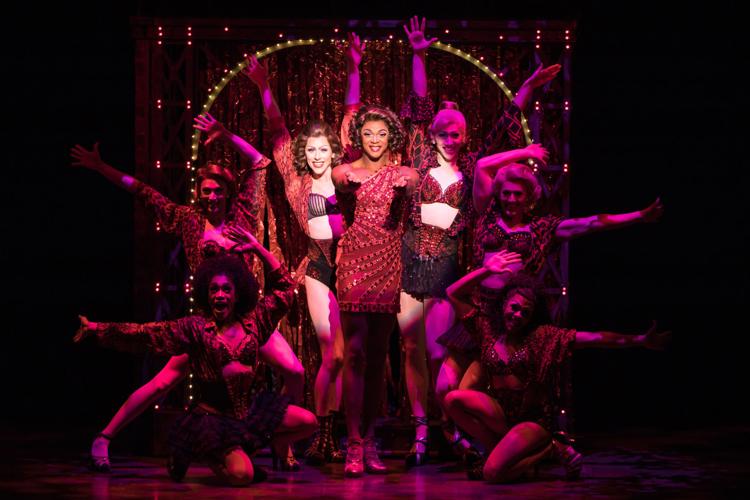
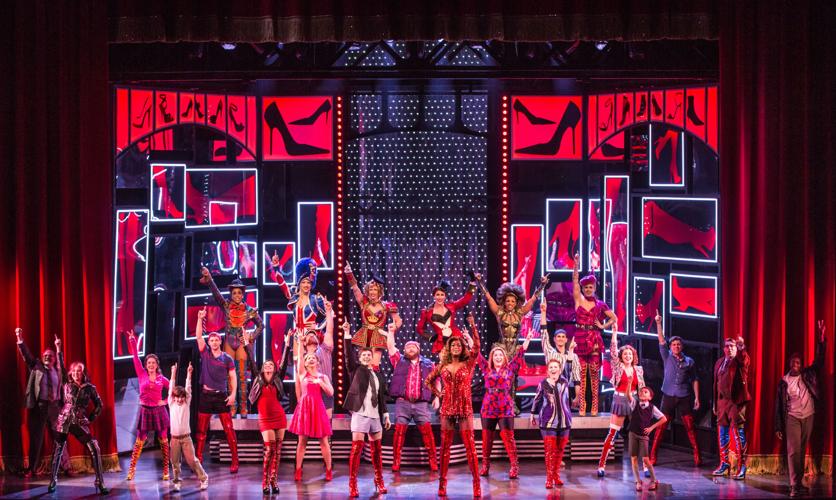

A failing British shoe company gave birth to one of the hottest tickets on Broadway.
“Kinky Boots,” which Broadway in Tucson brings to Centennial Hall next week, started as a 1999 BBC documentary about Steve Pateman, who was struggling with his family’s custom shoe business.
A woman who sells glamour wear for transgenders called and asked Pateman if he could make thigh-high, stiletto-heel boots in men’s sizes. Pateman didn’t know the market, but he knew there might be business there. He agreed. And BBC found compelling documentary material.
The story caught the eye of filmmakers, who embellished it, inserted an outrageous, big-hearted drag queen named Lola, who helps Charlie, the struggling shoemaker, find purpose for his business, his employees and his life. It was a small indie hit.
Then came the idea for the Broadway musical, with a few big names heading up the creative team: Cyndi Lauper wrote the music and lyrics, Harvey Fierstein penned the book and Jerry Mitchell directed.
The rest is musical theater history: Tryouts opened in Chicago in 2012, it transferred to Broadway in 2013, broke box office expectations, recouped its investment in a fast 30 weeks, was nominated for 13 Tony awards, won six of them, was an award-winning hit in London, and has been staged in Japan, Australia, Canada, South Korea and Sweden. And, of course, it’s still going strong on Broadway.
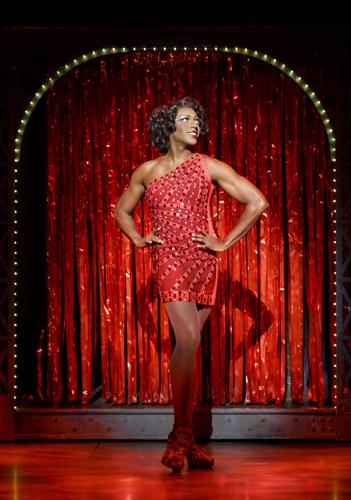
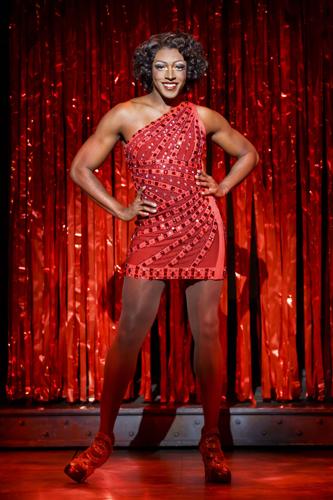
Playing Simon, who transforms into Lola, the drag queen, is no easy feat — just putting on those boots would daunt many an actor.
But when Timothy Ware first saw the production at the Chicago tryouts, he knew it was a role he wanted.
And he got it: He was the stand-in for Tony-winning Billy Porter in the Broadway production, stepping in for the actor close to 200 times.
He’s zipping up the boots for a limited time in this road show.
He talked to the Star about the play, the role, and how he learned to walk in those boots.
Why he wanted the role: “When I saw it in Chicago, I said, ‘Wow, it’s rare to find a piece of musical theater that allows an actor to act. That’s where my strength lies. … I am not the best singer, but I love to chew on some text. I saw the piece as a way to tap into the singing and dancing, but also the acting — to transform. And I liked the story arc of Lola: To find the difference between Lola the performer and Simon, who has to deal with the reality of the world and deal with his relationship with his father and his father’s inability to accept him. … Though I didn’t relate to being in drag, I could relate to the heart and the journey in the story.”
On doing drag: “I never wore heels or did drag growing up, so it was an out-of-body experience, but in a strange way very liberating. … Playing the role liberated me and gave me a freedom that I can carry through my everyday life, not just on stage.”
Learning to walk in high, high heels: “When I joined the company, they gave me training heels — 2-inch shoes. They ate my feet up. It was a challenge for me to graduate to 6-inch stilettos; it took some time. I even had to change my posture — men’s shoulders are more hunched. I had to change my posture to not look like a linebacker. One day, I looked down at my chest and realized with breasts, I had to lift. That changed everything.”
Why the musical became a hit: “I think there’s so much that captivates people. ... I don’t think people know what to expect. I think they believe it’s a show with drag queens, and they realize when they leave it’s a show about humanity, about accepting yourself, then accepting others. It speaks to the climate of dissonance that we are living in, and it reminds people of their inner child. As children, we don’t have preconceived notions, we are less judgmental because we haven’t been taught to be judgmental.
“There’s a childlikeness that you tap into — unless you are a stone-cold expletive, you can’t help but leave changed or moved or reaffirmed. It’s the idea of love and acceptance, and that it’s possible and it’s our obligations as humans to embrace one another and love one another and put an effort into understanding those who are different.”

