


It’s been more than 400 years since Shakespeare’s “Macbeth” was first staged.
But Matt Bowdren, who is directing The Rogue Theatre’s production of the tragedy, feels that in some ways it’s ripped out of today’s headlines.
“Scattered throughout this play are little scenes of attendants of Macbeth who really love their country and are trying to puzzle out what to believe,” says Bowdren. “I can’t help but think of the White House. Throughout, you see the people of the country try to reclaim what’s theirs. … It’s horrible what Macbeth does, but ultimately the citizens take their own power back.”
Here’s the lowdown on the play:
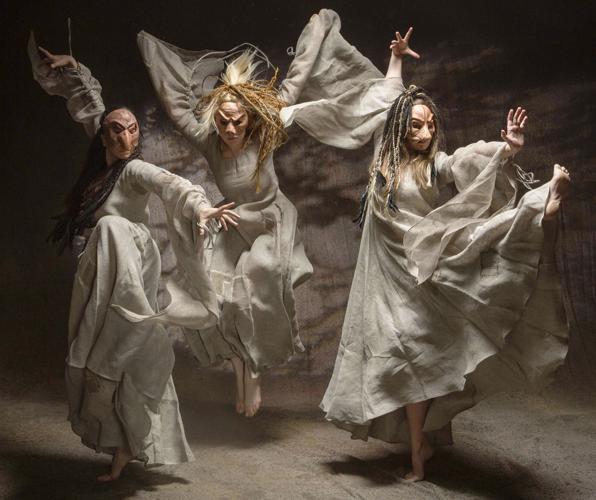
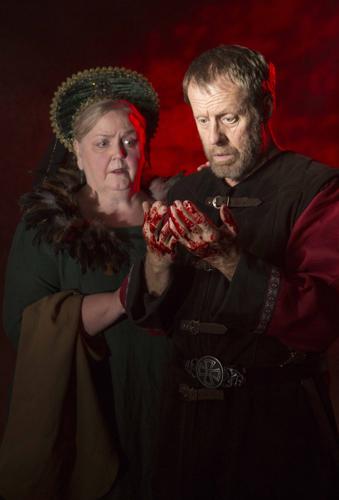
The plot: Three witches predict that Macbeth, a Scottish general, will become king of Scotland. That suits this ambitious guy well. It suits his wife well, too: She encourages him to kill King Duncan and to grab the throne. One murder leads to another and then another, and on they go. He’s feeling guilty about all this, but hey, he’s got to keep his enemies at bay. He becomes a royal tyrant. Civil war isn’t far off. Nor is madness; it grips Macbeth and his wife.
The play is dark and foreboding and speaks eloquently to the corruption of power.
The language: Well, it’s Shakespeare. You can’t get much more gorgeous language than that. Among the “Macbeth” lines that have lives outside of the play: “Life is a tale told by an idiot, full of sound and fury, signifying nothing;” “What’s done is done;” “Out damned spot;” “Out, out, brief candle;” “Something wicked this way comes.” We could go on — the play is loaded with some of Shakespeare’s finest quotes.
The director’s take: Bowdren says the magical force of the witches, or Lady Macbeth’s relentlessly urging her husband to kill to gain the throne, are often blamed for Macbeth’s behavior.
He says nope, not their fault. Macbeth himself has to own his behavior.
“I think it’s important to realize he’s to blame. … Ultimately, he is violent and ruthless and knows better, but he picks a darker path. He can’t be a victim; he’s truly at fault.”
Shakespeare isn’t always easy, admits Bowdren. “There’s always a danger that it’s removed, that there’s a missing step between audience and actor.”
That danger doesn’t exist with “Macbeth.
The play “is so direct,” he says. “Every speech really penetrates to the audience. What’s exciting about watching ‘Macbeth’ is it is not safe. There are some pieces missing; it’s not a traditional Shakespeare. It’s bloody and violent and passionate.”
And, he adds, most of us might see ourselves in Macbeth.
“We all have this darkness in us,” he says. “We are often faced with dark choices. What stops us (and doesn’t stop Macbeth) from doing those things?”

