


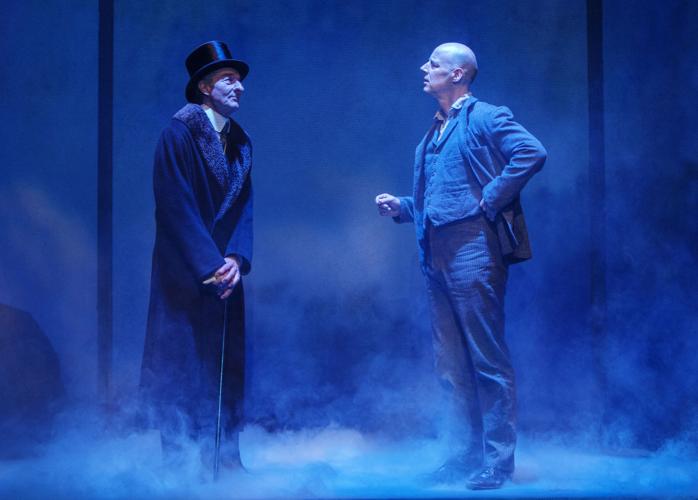

It was a dark and stormy stage.
“Holmes & Watson,” which Arizona Theatre Company opened Friday, began with cracks of thunder and flashes of lightning.
What followed was the most elaborate and riveting game of “What’s My Line” ever.
Here’s what we loved about it:
The script: The Jeffrey Hatcher play — this ATC production is the world premiere — is tight and clever and full of suspense — and has enough red herrings to feed a family of 40.
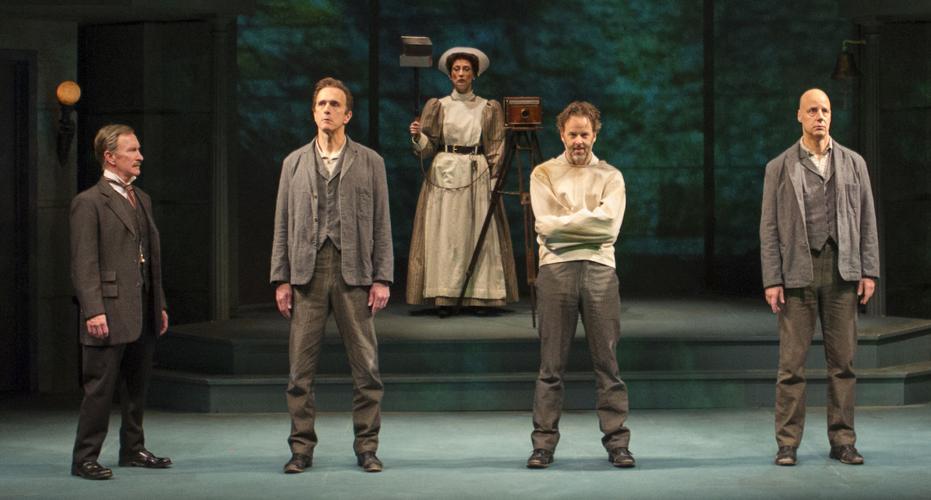
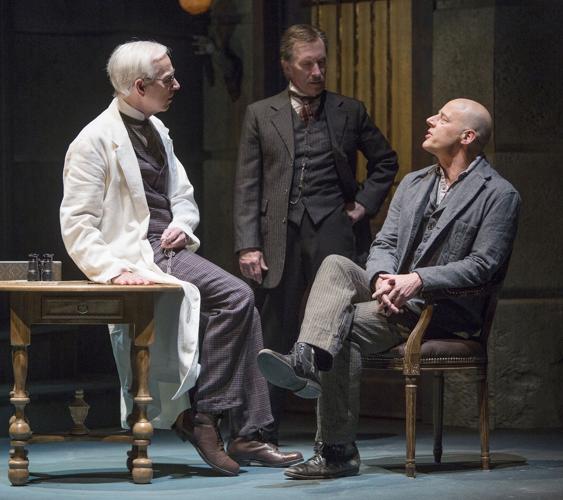
Three men are locked up in an asylum isolated on a rocky island. They all claim to be Sherlock Holmes. That’s surprising, considering Holmes was supposed to have died three years before in a to-the-death struggle with his nemesis, Professor Moriarty.
Holmes’ sidekick, Watson, is summoned to determine which — if any — is the real detective. There are enough twists and turns to keep the audience off balance. And just enough humor to keep them laughing. That’s important — laughter is needed to balance the considerable amount of suspense.
The direction: This is the last play David Ira Goldstein will helm as ATC’s artistic director. He is stepping down after 25 years with the company — an almost unheard of amount of time for someone in that position. He is going out on a very high note. Goldstein has shaped a play that moves swiftly, is often tense and is always riveting.
The acting: To a person, this cast was perfect. Philip Goodwin’s Dr. Evans, the head of the asylum, was stoic and precise — just what one would expect of a physician. Stephen D’Ambrose took on several roles, giving each distinction. Noah Racey, James Michael Reilly and Remi Sandri played the “I’m Holmes” characters. While they were vastly different, they all displayed characteristics that seem to define the calabash pipe-smoking detective. And they did this without that pipe or deerstalker hat.
R. Hamilton Wright shaped a Watson that had a warmth and a cleverness associated with the character, and Carrie Paff’s Matron — she would bring Dr. Evans’ sherry and discipline any unseemly behavior with a stern look — had a Frau Blücher (from Mel Brooks’ “Young Frankenstein”) air about her. She was a hoot. This was a tight cast that worked together with purpose and enormous talent.
The scene setters: Jeffrey Elias Teeter created projected images that put the audience right in the heart of the action. Whether it was a train rushing into a station, spitting steam and squealing brakes, or sea-sick worthy waves on an angry sea, he added a dimension that made the play that much more thrilling — and visually intriguing. Don Darnutzer’s lighting design underscored the tension, John Ezell’s scenic design gave us a dark and dangerous-looking asylum worthy of the suspense, and Roberta Carlson’s music set the mood
The rats: That’s right, rats. Three times a snow-white rat scurried across the back of the stage, underscoring the dank creepiness of the asylum — and no doubt giving Goldstein a certain amount of glee at the opportunity to insert one in the play (he’s used rats to good effect in a few other plays he’s directed; one almost stole the show in his 2011 production of “The Mystery of Irma Vep”).
“Holmes & Watson” is fun, lots of fun. This is the last play in ATC’s 50th season. And it’s ending with a must-see.

