

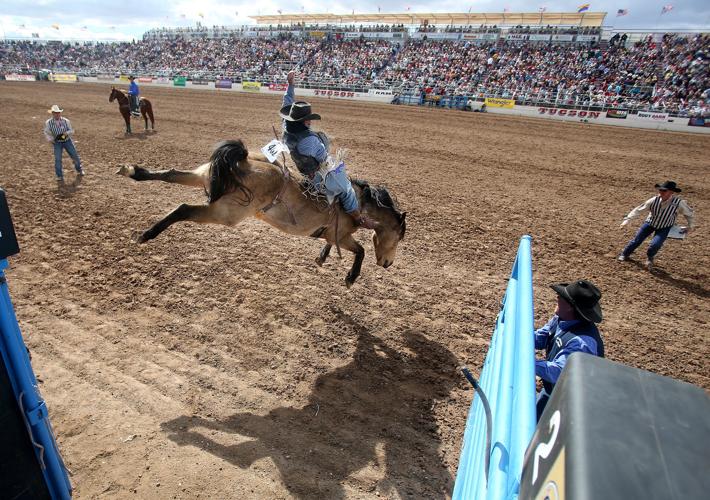


Sure, there’s livestock and cowfolk ropin’ and ridin’ at the Tucson Rodeo.
But after two days wandering around the Rodeo Grounds, we discovered there is so much more — car sales, a kissing booth, blown glass, T-shirts, kids — lots of kids — and even a booth where facials are given along with the promise to wipe out any wrinkles you might have. Honest.
Here are some highlights:
The smells
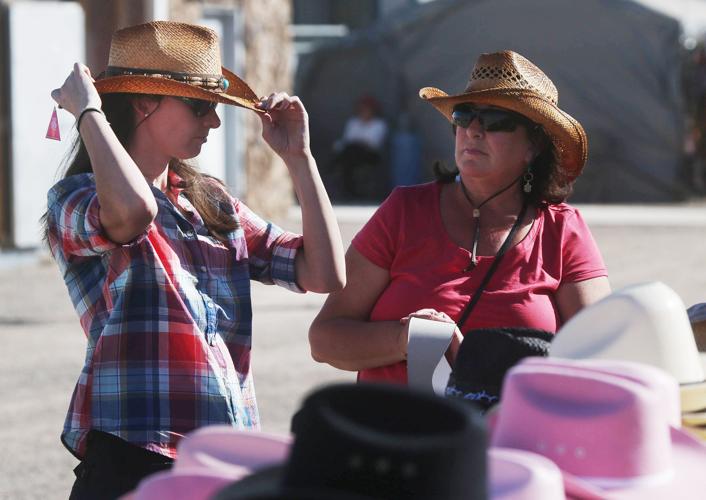
The aroma of cigar smoke mingling with cow dung wafts over the area behind the east bleachers, where booths line the walkway and rodeo-goers and performers stroll. Each step brings a different experience—cotton candy, leather, a musky perfume worn by a couple of women in cowboy hats, tight jeans and boots. There’s an earthy, comforting feel to the scents floating around the grounds.
The jeans
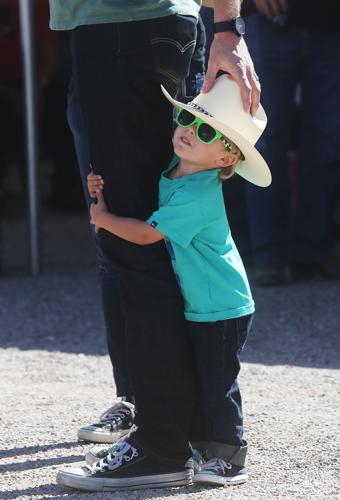
Cowboys take great pride in their jeans. Many have them professionally cleaned, starched, and with a perfect crease down the leg.
“It looks good,” explains Travis Reay, an Alberta, Canada-based steer wrangler of few words sitting high atop his horse.
Gary Williams, the general manager of the rodeo, says it’s more than that. Starched jeans “repel dirt,” he explains.
Williams’ jeans are so starched they feel like cardboard. He has a couple closets full of jeans just like the spotless ones he has on, with a crease that nearly stands at attention. And he rarely wears a pair more than once before he sends them off to the cleaners again. But, he pointed out, he could and they would still be relatively clean.
Creased and starched jeans seems to be the cowboy’s uniform. And Reay is right: they look good.
The animals
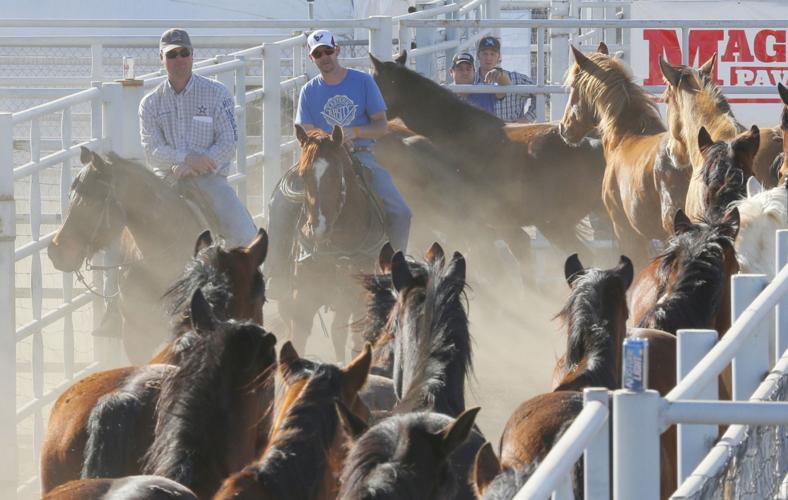
Bennie Beutler wanders around where the livestock are penned waiting their turn to throw a cowboy. When they are in the chute, Beutler stands on the gate, helping to ready them for the competition. This is his business: Beutler’s family has been providing the livestock for the Tucson Rodeo since 1952.
“There are six semi-trucks of them,” which includes about 100 bucking horses and 60 bulls, he says. Beutler brings the animals from his family’s business, Beutler & Sons Rodeo Company, in Elk City, Oklahoma. He does this for rodeos around the country and Canada. How does the Old Pueblo rodeo compare to the others?
“They don’t make ‘em better than Tucson,” he says. Most rodeos have smaller arenas and have become nighttime entertainment. Not here.
“Tucson has a big arena, and still does rodeo the way it was done in the ’50s and ’60s,” he says. The daytime, this-is-serious-business vibe suits him well.
The mercado
The booths that line the area outside the arena have the most glorious mish-mash of offerings.
The unexpected: The Marines recruit from a big black trailer with the words “Marines move toward the sounds of chaos” in big white letters splashed across the side. There’s a chin-up bar set up in front of the trailer, and a muscular Marine in a black T-shirt and camouflage pants makes pull ups look easy. They hope to inspire recruits from here every year, says Staff Sgt. Christopher Maynard. The actual enlistment paperwork is done elsewhere. “It’s a process to do that.”
Nearby, Robert Sanders fuses a tiny glass humming bird. He sells horses, penguins, rabbits and pigs, all small, delicate and made of glass. Oddly, he says, the humming birds are more popular than the horses. And on occasion he gets asked to make a replica of a particular horse. “I just need a picture and a couple of hours,” he says.
The expected: The booth with the official rodeo merchandise is stacked with shirts of all styles. The most popular, 9-year-old Griffin Wedman explains, are the tank tops, the Henley and the pink short sleeves. Griffin volunteers at the booth — he has for three years. And he’s good at it, he says. He’s motivated: his softball team gets 10 percent of what he sells. “I’ve raised $56 so far,” he says proudly on the rodeo’s second day.
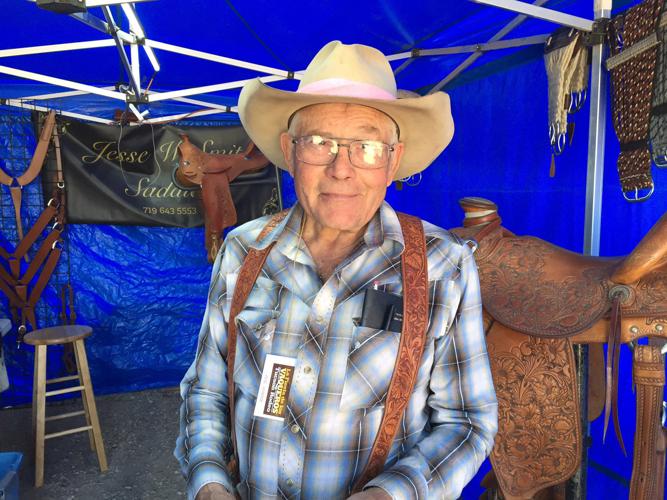
The breathtaking: The enticing smell of leather draws crowds towards this booth, filled with gorgeous, hand-tooled saddles with intricate designs. Jesse W. Smith rarely gets a chance to rest in his lone chair.
“Everything he does is beautiful,” says Rosie Reeve, who looks over the saddles as her husband orders a new belt. They make a point to stop by and visit Smith when he brings his leatherworks to the rodeo. He has done so for 16 years.
“You aren’t going to find anything like these in a store,” says Reeve.
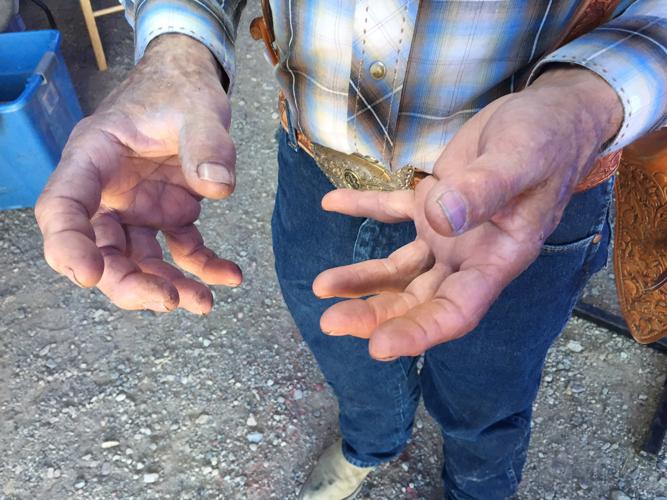
Smith lives in Colorado and has made saddles for 50 years. He’ll be 77 in April, he says, and has no interest in slowing down.
“Why would I quit?” he asks, using his rough, strong hands to make a point. “I love what I’m doing.”
The head-scratching: A woman leans back in a chair as Talor Zalach smears white cream over her face. “It removes lines,” he says when an onlooker inquires about what is going on. Selling Forever Young cosmetics, he pulls up before-and-after pictures on his cellphone. It’s hard to tell the before from the after, but he swears it could make one beautiful.
The kissing booth: Toward the south end of the mercado is a “Kissing Booth” sign. But it’s not what one might think.
A miniature donkey and a miniature horse sit in a small corral. “We ask people to kiss the ass,” says Theresa Warnell with a laugh. “If they do, they get a taffy kiss.”
There’s a purpose behind it — she and Steve Boice run the 8-year-old Horse’n Around Rescue Ranch and Foundation, which cares for rescue horses on about 1,500 acres in Hereford. They hope the kissing booth attracts volunteers and donations.
She pulls out an album of photos and proudly points to before-and-after pictures. Horses previously skin and bone, injured and neglected, blossom under their care. Many of them are then adopted out, she says; some are too injured, or too old, to be adopted and stay at the ranch, which has an all-volunteer staff.
“We’ve rescued about 104 horses, and adopted about 43,” she says, drawing animals from around the state. “We do all we can to make the horses healthy and comfortable.”
The soundtrack
In a booth high above the rodeo arena, Chuck Lopeman stands in front of his laptop and selects the music that’ll keep the crowd going and give a boost to the competitors. Miley Cryus’ “Wrecking Ball,” Queen’s “We Will Rock You,” Mark Ronson’s and Bruno Mars’ “Uptown Funk” blast across the arena. If it’ll jazz up the crowd, Lopeman spins it.
A decade ago he built homes in Red Bluff, California where he still lives. But a friend asked him to spin records for a local rodeo, then another and another. These days, he’s on the road about 200 days a year, playing music that revs up crowds around the country. He says he has anywhere from “8,000 to 80,000” tunes on his computer.
“I use a lot of ’80s rock ‘n’ roll,” he says before Sunday’s competition. “And I’ve been listening to some hip hop—I want music that makes the toes tap.”
Switching from homebuilder to record spinner was a no-brainer. “The interest rate doesn’t govern my career now,” he says.
The cowkids
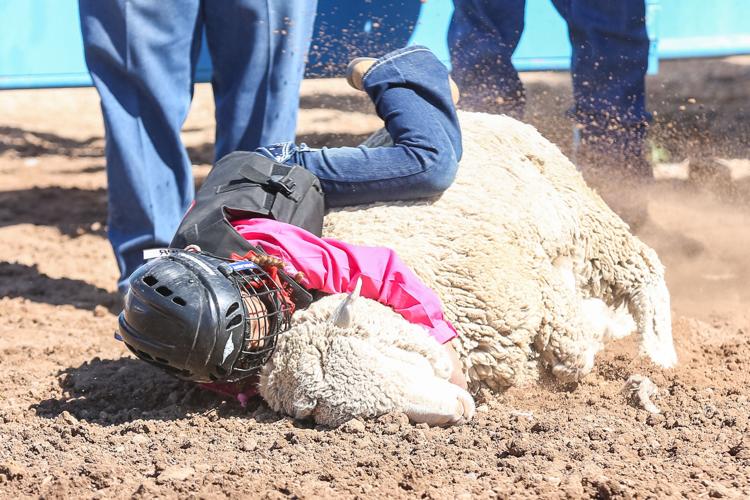
Mutton bustin’ has kids trying their hand at riding sheep. Most barely hold on as surprisingly rambunctious sheep try to toss them.
Many of the kids are decked out in cowpoke duds and not bothering to contain their excitement. One by one, they fly off just a few seconds after the chute opens. Some fall even faster, their heads protected by helmets.
Then there was Hailey Henrikson, a 6-year-old first-grader at Open Doors Community School. Last year, she was one of those who slipped off a second into the run. Not about to let that happen again, she clings to a sheep, bouncing up and down. “I just held on tight,” she says, after earning the winning score of 95.
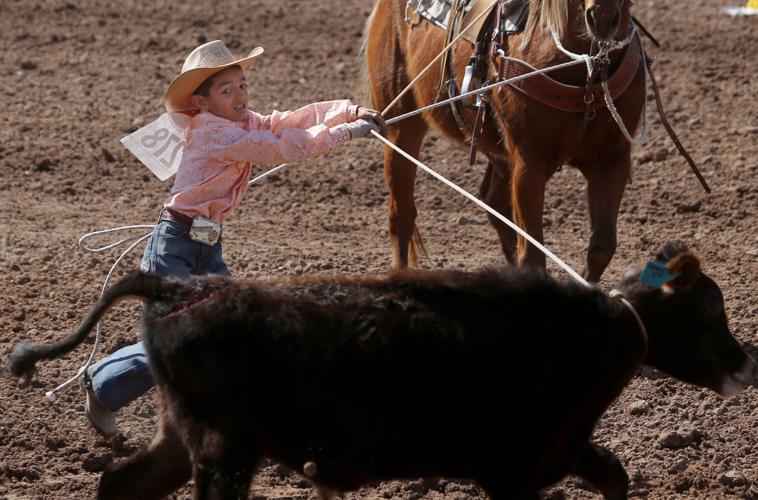
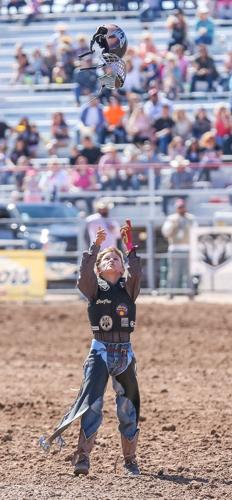
Wyatt Parker, 12, is a more serious competitor. He has been riding steers for three years. He came from Camp Verde to compete in the Junior Rodeo. As his turn approaches, he stands by the chute eying the small steer he’ll be riding. His chaps have turquoise blue fringe and his Western shirt is neatly tucked into his pressed and starched jeans.
He climbs on, steadies himself, and gives the nod for the chute to open. The steer bucks. Wyatt holds on for several seconds before the steer wins. He picks himself up, dusts off his chaps, throws his helmet in the air and raises his arms to encourage cheering. Then he strolls off the field like a cowboy champ.
The clowns
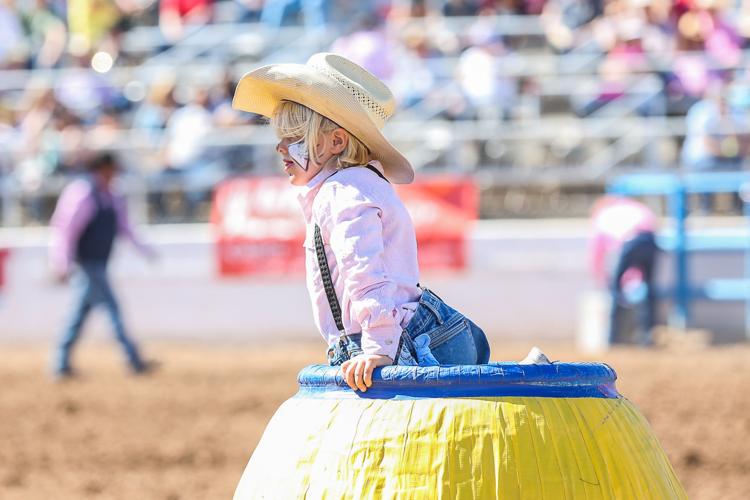
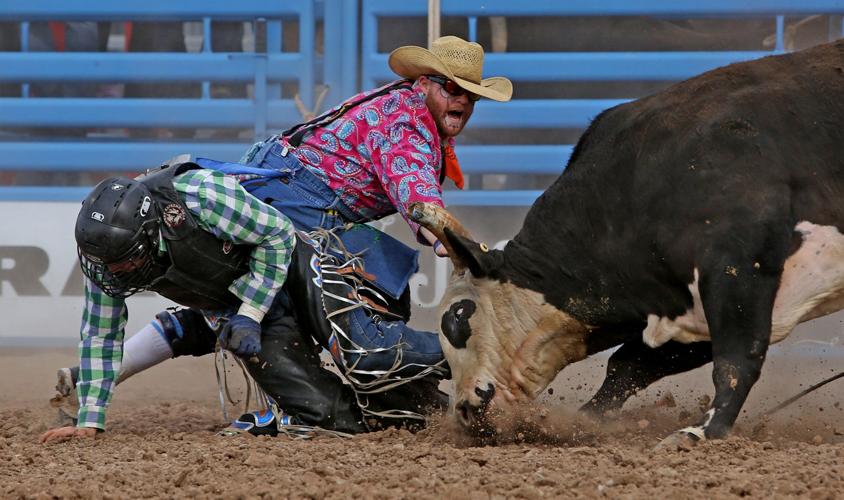
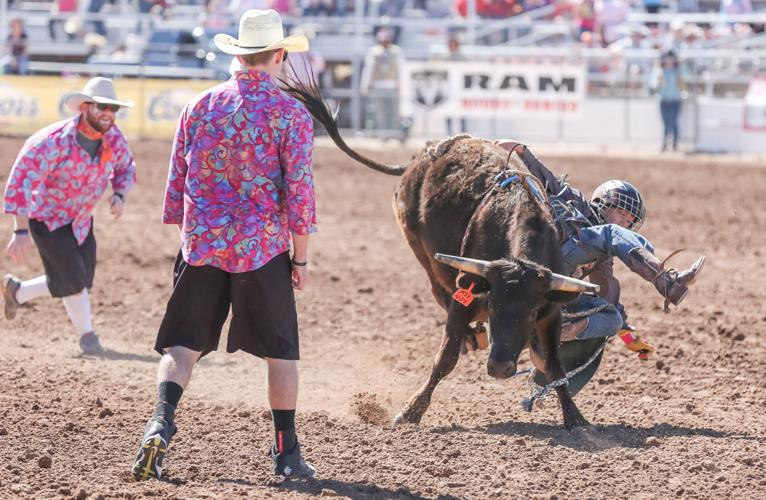
Clowning is serious business at a rodeo — it is their job to distract the bull once a rider gets bucked off. They wave their hands, run around, climb into a barrel and taunt the massive bulls so that they go after them rather than the riders scrambling to their feet.
It’s a family business for Wacey Munsell, who has been a rodeo clown for 13 years. Sure, he’s broken a shoulder, injured a leg—but “it comes with the job.” The trick to good clowning—besides guts—is knowing how to read the animals, and knowing the rodeo game, he says.
And that’s just what Brock Payne is learning—the game. The 5 year old is ready to assist the clowns for the junior competition. A cowboy hat covers his white-blonde hair, and clown makeup his face: white triangles outlined in black cover his cheeks, the number 86 in the center of each. That’s the number of his uncle, Jeremy Payne, who is competing in the rodeo. A black cross is drawn on his chin, a peace sign on the tip of his nose.
Why does he do it? “I like to be funny,” he explains.
He takes to the field with confidence when the mutton riding begins. When a run ends, Brock flies across the field, herding the sheep off to the side. They pay attention. Adults are there to help with the herding, but he doesn’t seem to need it.
And when the junior steer riding competition begins, Brock is right there, standing in the barrel, just waiting for that steer to come his way.
He likes playing to the crowd, which cheers him on.
Little Brock may be funny, but he has guts, too.

