



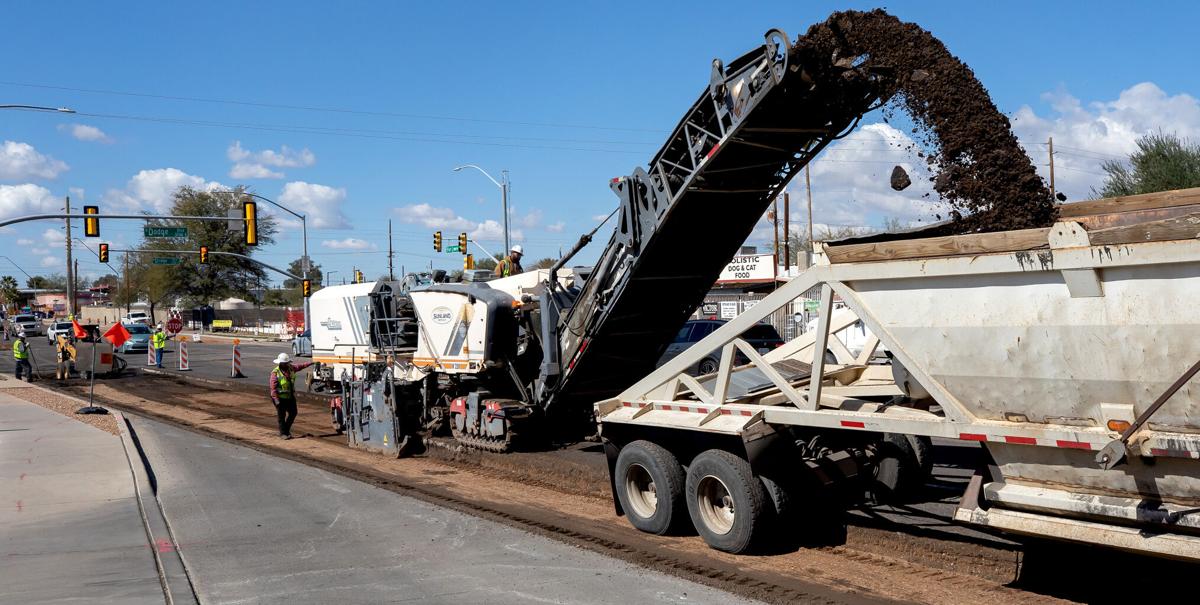
Tucsonans made a $100 million investment in the city’s crumbling roads when they approved Proposition 101 five years ago, a ballot initiative that uses a half-cent sales tax to fund the projects.
It’s set to expire soon and city officials are asking voters to extend the 2017 tax by approving Prop. 411 in May. The new initiative would generate about $590 million to fix local streets over the next 10 years and its failure at the ballot box could kill repaving efforts in Tucson for the foreseeable future.
Ahead of the May election, many voters said they want to know how the Prop. 101 money was used before they greenlight an extension of the sales tax for another decade.
About 60% of the money collected since 2017 hasn't been spent and less than half of the 900 miles of planned road work has been completed — though officials said everything is going according to plan.
There haven’t been any project delays and all of the repaving efforts are expected to wrap up by summer 2023, city officials said. The sales tax has also generated an extra $6 million than the city anticipated, so even more streets may be repaved than were promised five years ago.
“We are going to fulfill the obligation to the voters,” said Michael Graham, a Department of Transportation and Mobility spokesman. “We’re completing not only what voters approved, but we’re going to do more because there’s a surplus of funds.”
The reason why just 40% of the Prop. 101 projects have been finished to date is because construction didn’t actually begin until early 2019, according to staffers who said Tucson hadn’t saved enough tax money to begin executing the plan before then.
Gaps between when an initiative is passed and when construction happens are typical for projects that depend on new external revenue streams, like a sales tax, rather than money that’s pulled from the city’s general fund budget.
“We didn’t start the roadway improvement projects on Day 1 because we had to generate funds to pay for the improvement packages,” Graham said. “Instead of building one roadway segment at a time, we lump three to four segments in a package.”
Lumping projects together can also prolong the time it takes for residents to notice their tax dollars being put to work because it creates bursts of construction in certain areas, rather than a continuous stream of repaving throughout the city.
Tucson lumps the projects to save money because it allows construction contractors to finish the work for less. The companies don’t have to haul equipment back and forth to repave different roads in the same area, for example, and they can buy materials like asphalt in bulk.
Issues with utility companies also pushed certain road repaving efforts to the back of the Prop. 101 program during planning, officials said. Tucson Water may have to replace underground piping near the roadway, for example, which would have forced the city to tear up new pavement if it was laid too soon.
“With all of the projects, there are design elements that need to take place prior to roadway improvements being made,” said Erica Frazelle, a Transportation Department spokeswoman. “For instance, Silverbell Road from St. Mary’s Road to Congress Street, utility work needed to take place prior to the start of road improvements. There’s a lot of coordination with utility companies that take place, but the work will be completed within the Prop. 101 program.”
The lion’s share of remaining Prop. 101 roadwork is expected to be done this summer and officials said it will all be completed within the next 17 months at the very latest. Tucsonans can keep an eye on the city’s progress online, though the website isn’t updated in real time.
Prop. 411, the extension of the 2017 sales tax, is expected to have a much greater impact on city streets than Prop. 101 even when the first package is complete, however.
The money from the new initiative will be spent exclusively on local road work and safety upgrades — while the bulk of Prop. 101 funds went to public safety resources — and it’s expected to generate nearly six times more funding for street repair, which officials said is enough to fix nearly every residential road in Tucson without raising taxes beyond the 2017 level.
City voters will choose whether to pass Prop. 411 during the special election on May 17, 2022.

