


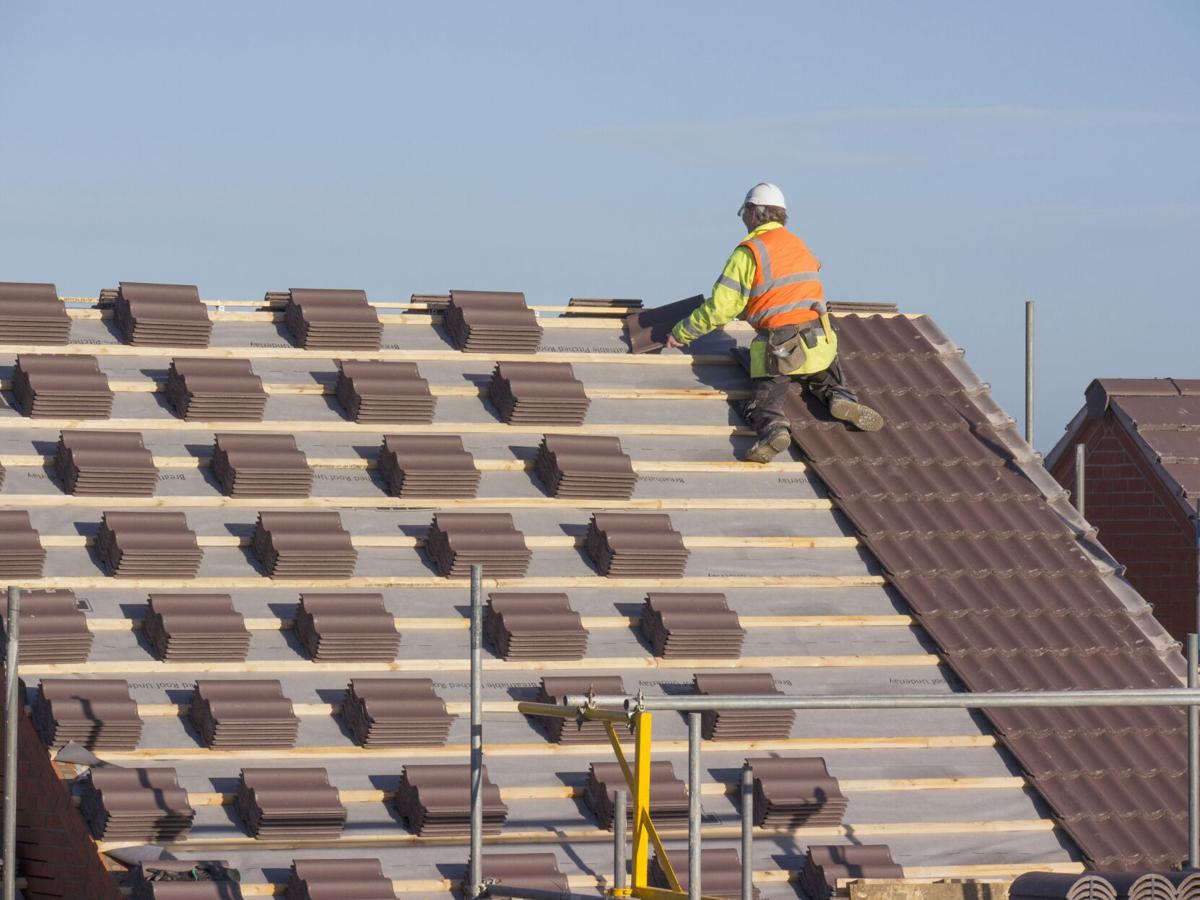
Question: What can go wrong with my roof?
Answer: Other than simple wear and tear on any roof, these are just a few issues that can shorten your roof’s longevity.
Original construction was not performed 100% correctly: a tile might not be straight or connected correctly or flashing could be installed incorrectly.
Hazardous weather events could cause damage from debris or wind upending that tile or shingle.
Roof ventilation is inadequate. This is common in homes that are more than 30 years old. Building codes since the late 1980s have required sufficient ventilation.
Q: What can I do to care for my roof?
A: “Take care of your roof,” says Rosie on the House certified partner, Tyler Johnson of Johnson Roofing. As with anything else we have, the best way to increase the life of your roof is through regular maintenance and timely repairs.
Let’s look at each of these circumstances.
Original construction. Climbing on the roof to inspect the work is out of most people’s wheelhouses. Even if we could get on the roof, would we know what to look for? Johnson tells us that might be the primary reason to enter into a maintenance contract. Typically, these contracts provide for an annual inspection of your roof and all its related components. An inspector will look at the condition of your main roofing material, be that shingle, tile or foam, along with flashing, roof penetrations and condition of the tile underlayment where observable. A report will be presented and will include the cost for repairs or maintenance issues that need to be addressed. Johnson also mentions roof inspections can be a one-time event or on an as-needed basis. You decide.
Damage from hazardous weather. In Arizona, we are known for potentially powerful and damaging storms. Hail damage can cause widespread damage to a roof. Often the entire roof will require replacement. Damage from wind-driven debris or just the wind, is often more localized on your roof. A loosened tile or shingle can usually be replaced without much hassle. Following a major storm, walk around your house and look for signs of damage. You might find a piece of roofing material on the ground, though you can’t see the whole roof.
Roof ventilation can be an invisible malady that infects the roof system. Improper ventilation may occur in homes older than 30 years, but Johnson suggests if your home is 10 years old or older, you should consider having someone inspect the ventilation.
The purpose of ventilation is to regulate the temperature of the attic and humidity control. There are specific calculations in residential building codes that determine the correct amount of ventilation needed for an attic. The calculations are based on the attic’s square footage and the type of ventilation used. Passive ventilation requires more surface area for a vent than a mechanical, or fan-driven vent. Having a roofing professional do the calculations for you is the best course of action.
The temperature in attic spaces can exceed 200F. High temperatures can damage roofing material from shingles to underlayment. In some cases, plywood underlayment or roof deck can become delaminated, causing poor support for roof materials leading to potential failure.
Humidity buildup can lead to mold development and moisture damage that is difficult to catch.
Q: What is roof flashing?
A: Flashing is a piece of metal or specialty fabric that allows your roof to function in areas where shingle or tiles are not designed for. The goal is to create continuous protection for your home by assuring water courses its way off your roof. Once water gets past the barrier that is your roof, the damage grows along with the cost to fix it.
Common locations for these products are roof penetrations for piping or duct work from the HVAC unit, where roofs abut walls or a chimney, and where differently sloping roofs meet what is commonly called a valley.
Q: What can I do when things go from bad to worse on my roof?
A: A common mistake homeowners make is not fixing their roof in a timely fashion. A broken tile, a missing shingle and clogged gutters are bad enough. When repairs are not taken care of for months or even years, the damage will get worse. Once water gets past the barrier that is your roof, the damage grows along with the cost to fix it. Johnson tells the tale of a roof with a missing shingle he drove past every day for months. The missing shingle was not replaced for several months. When it was fixed, what should have been a simple replacement, turned into about 400 square feet of roofing along with roof sheathing that had to be torn out due to the unchecked damage.
The moral here is to fix it when it breaks. The old saying, “An ounce of prevention is worth a pound of cure” is true here. In the case of your roof, it could mean the difference of a few dollars or thousands of dollars.
Walk around your home and look at your roof. If something is out of place, call a professional roofer, licensed by the Arizona Registrar of Contractors for a free inspection.
Tucson Water: Landscaping Scheduling

