

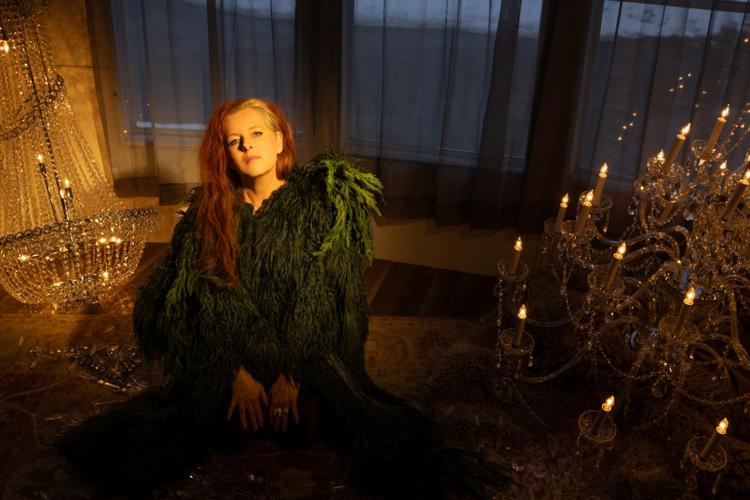
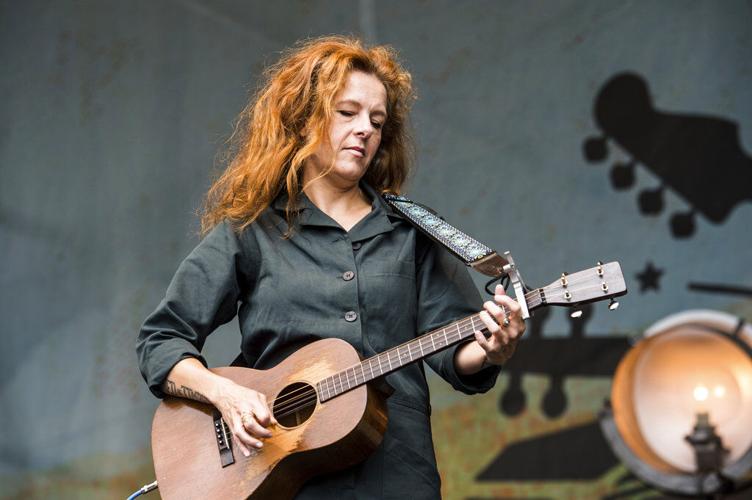

Neko Case heard the news as she was driving home from spending six weeks in Phoenix with her longtime sideman Jon Rauhouse.
Donny Gerrard had died.
Case didn’t even know that he was sick.
“He wasn’t somebody I was really close to, but he’d been part of my life my whole life,” she said.
“He had this incredible voice and he played with Mavis Staples ... and that is how I met him,” she recalled during a phone call in late September.
“He did everything from Mavis Staples to singing in (the 1970s Canadian pop band) Skylark to singing all over Elton John records. He was just this incredible vocalist, and he didn’t need the spotlight. He really just wanted to make stuff better and just sing. And he was such a sweet, person. I played with him a few times, and he was just such a generous, sweet guy.”
His death in early February 2022 hit Case “really, really hard,” and within weeks, she lost another friend, Canadian singer-songwriter Dallas Good of The Sadies. In February 2024, Dexter Romweber of the seminal rockabilly roots band Flat Duo Jets was also gone.
“I was just like, this is a generation of people we’re going to be losing, and I can’t bear it,” said Case, who called Tucson home from 2004-09 before moving to Virginia.
Case mentioned both men and their influences in her memoir “The Harder I fight, the More I Love You,” released in late January. But she poured her grief and remembrances into “Neon Grey Midnight Green,” her just-released ninth and arguably most personal studio album. She brings the album tour to the Rialto Theatre on Friday, Nov. 7; tickets are sold out.
“Neon Grey Midnight Green” is not a ballad-heavy, heart-hurting homage as much as it is a celebration of music and the people who make it.
“I want to celebrate them before they go. My friend Dallas passed away way too young and my friend Dexter passed away way too young,” said the 55-year-old Case. “And they were just things that were really hard to take. And I just thought, we really need to celebrate people while they’re living and, you know, when they pass on. But I just wanted to celebrate the ones living and dead, not just people who passed.”
Case recorded the album with a full band at her Carnassial Sound studio in Vermont, where she has lived the past 15 years. She also recorded vocal tracks in Oregon and had Tom Hagerman of Devotchka record the PlainsSong Chamber Orchestra in Colorado. The ensemble’s lush string passages are prominent in the opening track “Destination.”
“If you’re making orchestra pads by either using a synthesizer or keyboard or multitracking someone, there’s a sound that’s different about many people playing together at the same time,” Case said. “And I really, really wanted to capture that because it is a tribute to musicians, and I wanted to remind people what musicians sound like all together in a large group.”
This is Case’s first album since she released 2018’s “Hell-On,” which included collaborations with k.d. lang, Laura Veirs and Mark Lanegan. It also featured Rauhouse and Tucson’s own Joey Burns of Calexico playing upright bass, cello and other instruments.
Tucson and Arizona musicians have been regular contributors to Case’s music since she found herself in Tucson in 2004. Much of her breakthrough 2009 album “Middle Cyclone,” which earned Case Grammy nominations for Best Contemporary Folk Album and Best Recording Package, was recorded at WaveLab Studios with Calexico’s Burns and Joey Convertino and Howe Gelb of Giant Sand.
Convertino is back on “Neon Grey Midnight Green,” contributing the full band pop outro to the piano elegy of “Winchester Mansion of Sound,” a song honoring Rombweber.
“That ending is a tribute to how undeniably great John Convertino is,” Case said. “That song wasn’t working with the whole band and so we turned it into a piano song, but then the outro, it just sounded so great when the band faded back in. It’s the undeniable hookiness of John Convertino being the singer’s best friend.”
Case wrote “Winchester Mountain of Sound” in remembrance of Romweber of the pioneering psychobilly group Flat Duo Jets. But the two songs that she says define the album are the opening tracks, “Destination” and “Tomboy Gold.”
In “Destination,” Case reflects on people who have passed through her life, the stranger who reminds her of someone, “a jangling lust pouncing on a sliver of a dusty pool of light.”
Her lyrics read more like poetry, weaving a story from a life not quite in proportion, “so you’ve stayed in motion ever since your longing outgrew you.”
Each of those stories represents in some way those people she’s lost and those she wants us to meet. Like the little girl in “Tomboy Gold” whose daddy “used to let me hold the timing gun while he’d adjust the idle / He always got a thrill that his little girl could close her eyes and tell by ear when it was six degrees from top dead center.”
“I feel like those two songs, ‘Destination’ and ‘Tomboy Gold,’ embody the record the most,” she said. “I’m admiring people in ‘Destination’ and so that’s from my perspective about other people, whereas ‘Tomboy Gold’ is told from the perspective of those people about the world. It’s kind of like one is the daylight and one is the shadow of it.”
Although she has had a role in co-producing all of her albums, Case, for the first time, listed herself as producer on “Neon Grey Midnight Green.” It wasn’t about getting recognition, she said; it was about reminding “myself that there are women and otherly gendered people and trans people out there producing music.”
“We’re not a large population in the world of production, and so I think it’s really important,” she said. “We’re a small percentage, but I know there will be many more of us. There’s so many more women everywhere in the music industry.”
Friday’s concert with a full band at the Rialto, 318 E. Congress St., begins at 8 p.m.; John Grant is opening.
Case said that although there are no Tucson musicians in the band, “hopefully there will be running into people from Tucson, and maybe there will be guests.”
Finally, real Mexican food
It’s been a few years since Case last performed in Tucson, which, she said, was also the last time she had real Mexican food.
“Where I live in Vermont, there’s no Mexican food whatsoever,” she said. “I feel like a pauper for food here, whereas Tucson was like the greatest culinary time of my life. I don’t think there’s a better food town. There is so much good food in Tucson.”
Her biggest decision: Where to eat first. Her go-to choice, she said, is The Little One, which was called Little Poca Cosa when Case lived in Tucson.
When she learns that owner Marcela Davila-Barley decided in early September to close the 40-year-old downtown restaurant, Case sounded genuinely bummed.
“No,” she said. “Will you tell her, if you see her, that she should at least share her horchata recipe with me.”
Tucson-based indie-rock band Calexico performs on the east end of the UA mall before the Wildcats' 2023 opener vs. NAU (video by Michael Lev / Arizona Daily Star)

