

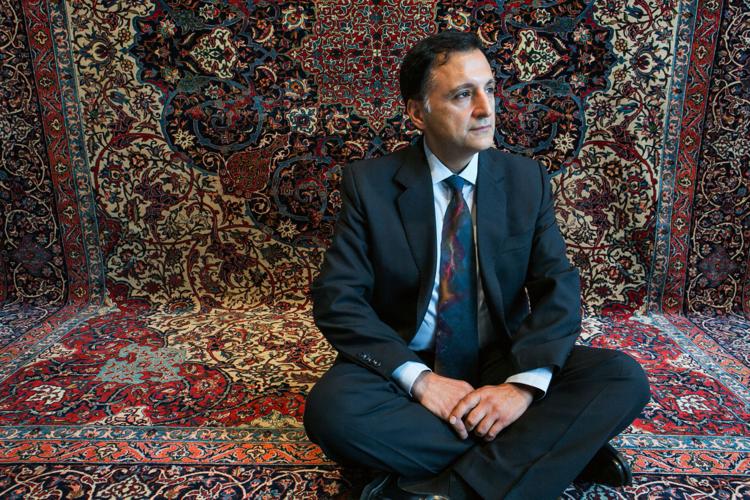
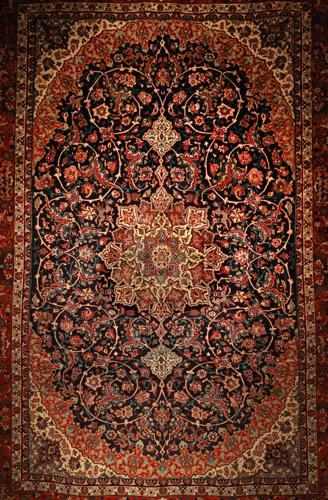
For the last 30 years, Reza Amindavar has traveled the world searching out antique handmade rugs and textiles, building a collection rich in history and culture that he is now sharing at the Tucson Museum of Art.
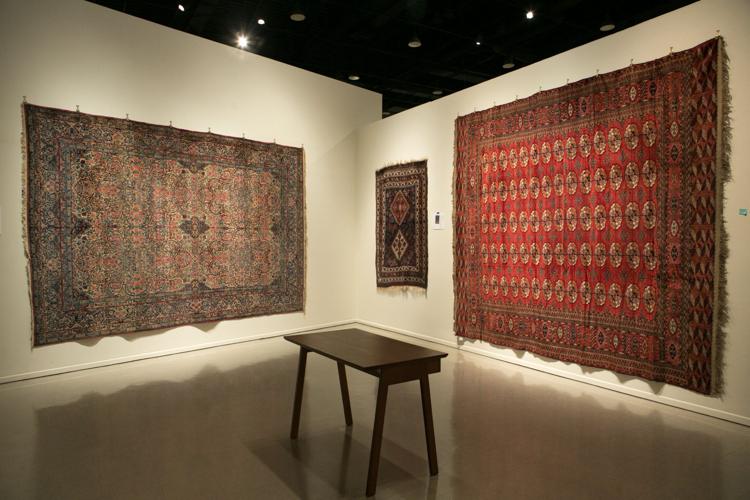
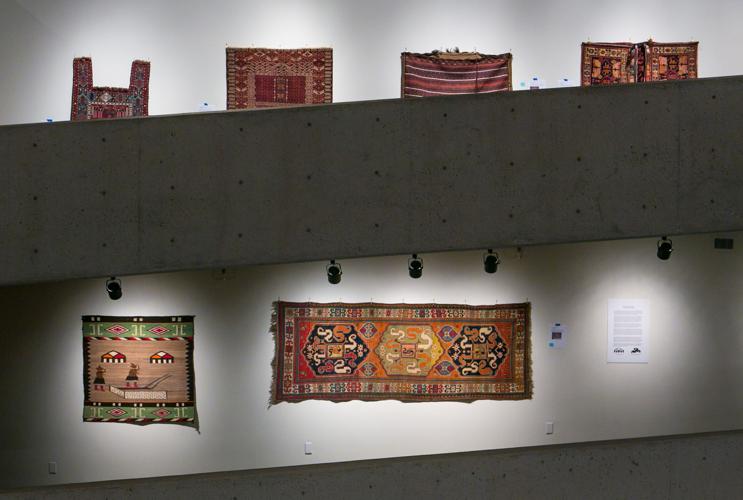
“The Splendor of Woven Art: Oriental Rugs and Textiles from the Reza Amindavar Collection” features 48 rugs brought together from more than a dozen countries, dating from the early 1800s to the 1950s.
The Iranian-born Amindavar’s passion was sparked by a grandmother who wove rugs. It grew because the textiles speak to him, he said, and in every woven line, he sees the labor of the unknown rug weavers from another time.
“They created something that everybody should appreciate,” he said. “They were sitting, 150 years ago, in a cottage, in their tent. They were weaving these rugs.”
The decision to lend them to the museum came when a friend suggested that Amindavar share his happiness with the community.
He worked with curator Christine Brindza over two years to put together the exhibit, which Brindza called an “immersive experience,” adding that it’s a great fit for the museum and a different kind of media than they usually feature.
“You feel like you’re walking into a whole new world,” she said. “These rugs are so powerful, the colors are so bright, and they’re from floor to ceiling. You have some kind of emotional reaction to them.”
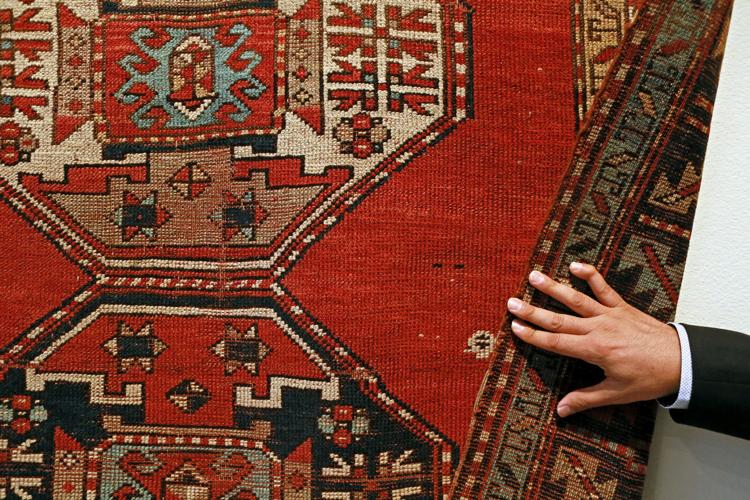
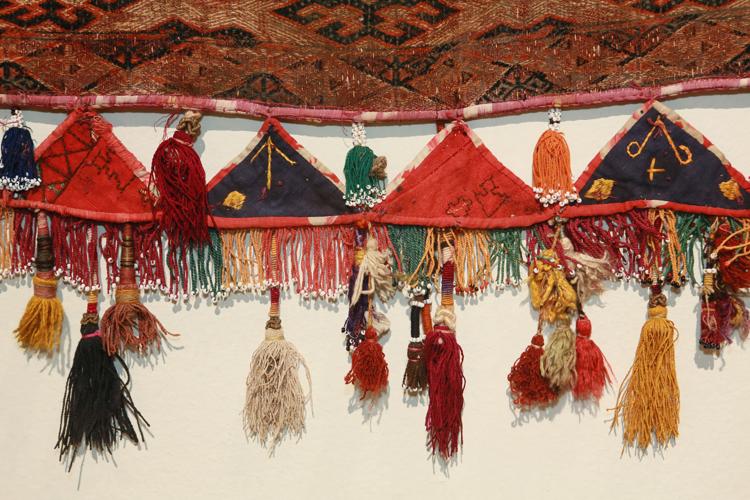
Made from silk and wool, the textiles vary in style, from tribal rugs created by nomadic people to city rugs and palace rugs created in workshops.
In most Eastern cultures, people remove their shoes inside, and the more the rugs are walked on, the more the fibers are broken in, making them glow, Amindavar said.
He normally keeps his 480 rugs in temperature-controlled storage, and three or four times a year, takes them out to admire.
“Each time I do that, I see something new,” he said. “Each piece is a book by itself.”
Being handwoven, many of the rugs are not perfectly symmetrical, but many weavers didn’t want to make flawless rugs because they believed the only perfect thing is God, Amindavar said.
Hearing about textiles from other rug collectors, he travels often in search of new additions to his collection. At times he spent every penny he had on them because it’s a priority to make sure each textile gets its proper appreciation, he said.
One of the rugs in his collection belonged to Mohammad Mossadegh, the elected prime minister of Iran. Amindavar thinks the rug may have been saved as a symbol of democracy when the government was overthrown in 1953.
Amindavar came to the United States 33 years ago to study engineering and moved to Tucson in 2006. Now he devotes his life to his collection.
Over the last 15 years, he has sold about 10 of his textiles to friends, he said, adding that people who know what the rugs are worth may pay $30,000 to $50,000.
“I don’t sell rugs; I just marry my children to another family,” he said about such exchanges.
Having paid more than $100,000 for one rug, Amindavar said he made his money by being smart and working hard.
He’s spent the last three decades studying textiles and has acquired a breadth of knowledge, down to the number of lines and knots per millimeter, as well as an understanding of their worth in dollars.
“Almost every day, I’m learning something new,” he said. “I’m humble enough to know there’s a lot for me to learn, and I’m passionate enough to know that I’m not going to stop.”

