

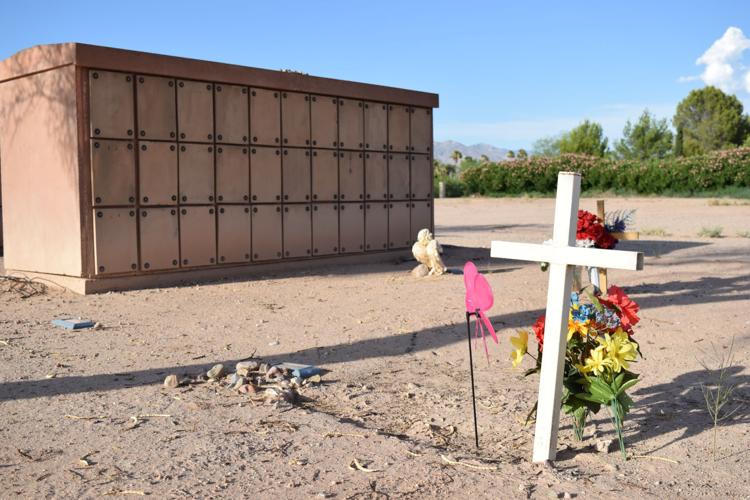
Even as the number of people attempting to illegally cross the border continues to decline, immigrants are still dying in the intense heat of the Arizona desert, with many found remains going unidentified.
After three years of fundraising, the Tucson-based Colibrí Center for Human Rights has raised over $1 million to create a DNA database to help identify the dead.
Since 2001, over 2,500 sets of human remains have been found, of which more than 900 went unidentified, according to the Pima County Medical Examiner. Through the work of forensic scientists, medical examiners and others, the Colibrí Center hopes to give answers to families with missing loved ones.
“Now we have the funding and the relationships to be able to collect DNA from families and compare it directly to the DNA collected from the remains,” said Robin Reineke, co-founder and executive director of Colibrí, who has been working with the medical examiner to identify remains for 10 years.
When remains are found in the Southern Arizona desert, they’re brought to the medical examiner for a full analysis, including DNA testing. That information is sent to a federal database. If family members have their DNA in the database, the deceased can be identified with almost complete accuracy.
“The breakdown is the fact that these families are kind of out of place,” Reineke said. “They’re seen by the state as undocumented, border crossers, foreign nationals. So when it comes to reporting a missing person, it’s complicated because they don’t fit the mold.”
Colibrí, founded in 2013, aims to provide a safe, reliable, responsive and respectful place for families to report a missing person and get information without having to go to law enforcement, Reineke said.
Next month, Colibrí will begin collecting DNA in areas across the U.S. with large Mexican and Central American migrant populations, from people with missing family members who may have recently attempted a desert crossing.
The three-year project starts in San Francisco and then is to continue in New York, the Carolinas, Sacramento and Los Angeles.
Colibrí eventually will collect DNA from families in Tucson , but is starting in places with larger migrant populations.
Until now, Colibrí has relied on unique details reported among the missing, like tattoos, clothes and personal belongings, to find matches among the human remains. In 10 years it has helped identify about 100 people.
“We’re looking for a needle in a hay stack,” Reineke said about using this method alone, because of the harsh effects of desert weather on the dead and because few undocumented border crossers have accessible records.
This issue has persisted since the mid-1990s, when increased border security around cities and other traditional points of illegal entry pushed people crossing the border into the harsh desert.
Hard summer
From January through May, 32 sets of human remains were found, according to the Pima County Medical Examiner Greg Hess and Deputy Chief Medical Examiner Eric Peters. In June, the number spiked to 24 and in July, another 24 sets were recovered.
Although fewer people attempt the crossing during the summer, more people who do so die.
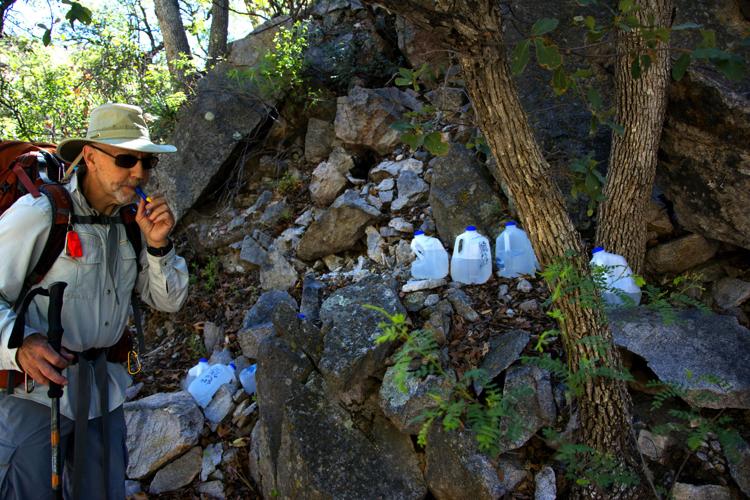
The Tucson Samaritans hike the migrant trails 365 days a year, bringing along food, water and first aid. The area they cover is roughly 2,000 square miles, from the Baboquivari Mountains to Interstate 19, looking for remains and people who need assistance.
“Ten percent of the time, we see people; 90 percent, they see us,” said Kathryn Ferguson, long time Samaritan volunteer and author of, “The Haunting of the Mexican Border.”
The Samaritans spend the day bringing water to common migrant passages, often carrying five or six gallons per person.
The Joint Intelligence and Operations Center in Tucson, a department of U.S. Customs and Border Protection, also attempts to curb the number of deaths with a 911 system to receive calls from border crossers in distress.
“We all have the same goal,” said CBP public affairs officer John Lawson. “We don’t want a bunch of skeletal remains of people.”
Border Patrol Search, Trauma, and Rescue, known as BORSTAR, began an emergency call line in 2004, which was monitored by one agent with a cell phone. But the agent was sometimes out of cell range or on another call and unable to answer.
In March 2015, the emergency phone line became a part of the operations center in Tucson, attended at all times and utilizing BORSTAR and other JIOC departments to conduct rescues. When someone lost in the desert calls 911, the call is routed to the JIOC’s call system.
From March through September 2015, the call center received 467 calls, which led to 804 rescues. From October 2015 through July 2016, it received 767 calls, resulting in 983 people being rescued.
The dedicated rescue line has led to many more rescues in the desert. Between 2011 and 2015, the average number of people rescued through the old emergency line was 208.
JIOC receives more calls during the summer months. In June and July alone there were 242 calls and 364 rescues.
Only about 1 percent of 911 calls are for medical emergencies, officials said. About 70 percent of calls are for non-medical rescues — when people have decided their situation is dire and it is time to call for help.
“We want folks to get to that decision point before they’re critical,” said Mark Mitchell, JIOC acting director.
Other efforts
The Mexican Consulate’s Center of Information and Assistance to Mexicans, or CIAM, launched in 2013 and answers over 800 calls a day from Mexican families needing assistance for a variety of reasons, including looking for missing family members.
An average of five to 10 calls come in a day about missing persons, officials said. CIAM searches for the missing in public databases, prisons, hospitals and court records, as well as by communicating with CBP.
“This is one of the main tasks of the center,” said Ricardo Pineda, Consul of Mexico in Tucson. “We want to provide every resource of the consulate to assist Mexican families to reconnect.”
CIAM also works to match DNA. People who think a family member may have died crossing the desert can give a DNA sample, generally saliva, in locations throughout Mexico. They look at other identifying factors as well, but those are less reliable due to the effects of the sun and elements.
“If a body is found after several days or weeks or months, they are unrecognizable,” Pineda said. “It is only through DNA that we can make a match.”
CIAM has been able to help identify more than 50 human remains over the last two years, officials said. In that time, they have also been able to find and inform families about more than a dozen missing people still alive. In total, they have located 43 percent of missing persons reported through the CIAM call center.
“Unfortunately, in this area we still are dealing with this specific issue,” Pineda said. “As horrible as it is, it is still happening.”
It’s a humanitarian crisis, Reineke of the Colibrí Center said.
“We should be shocked by it every day,” she said. “I think locally, along the border, we’ve gotten numb to it. And as a nation, people don’t realize, and I think if more people realized the scale and the intense suffering happening here, we would be outraged.”

