



When a neighborhood lays claim to being “the first Tucson suburb” it would seem to suggest that a good amount of the city’s history and identity emanated from the vision of the prominent residents who became the city’s first suburbanites.
At least that’s the theory when the West University Neighborhood’s current residents list the historically Tucson names that have been a part of the neighborhood over the years.
“This is where all the power players were, the sheriff, the judges, the mayor. This was the tony place,” said neighborhood resident Chris Gans, pointing out just two of the most prominent names in Tucson’s history — Drachman and Ronstadt — that have had a presence in the neighborhood. Gans moved into the neighborhood in 1977 and is the current president of the West University Neighborhood Association.
West University was officially listed in the National Register of Historic Places in 1980. But as much history as has taken place in the neighborhood since was established in 1890, it is making new history with the bustle of development going on around and through the neighborhood bordered by East Speedway on the north, Sixth Street on the south, North Stone Avenue on the west, and Park Avenue on the east.
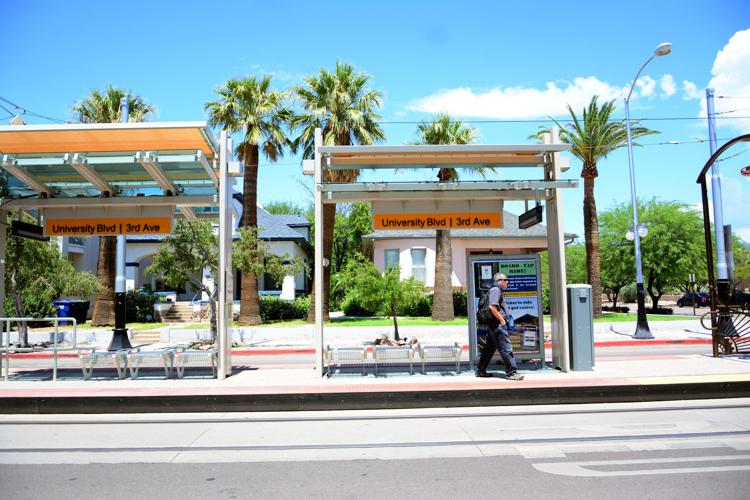
Note the privately owned, modern high-rises for University of Arizona student housing that hover over the northeast section of the neighborhood near Speedway and Park, which alone signal the transformation taking place in the area. The Main Gate area near the entrance to the campus at Park Avenue and University Boulevard is busy throughout the year, not just while school is in session. And Tucson’s streetcar now cuts a path through the middle of the neighborhood with development along the way toward a revitalized downtown.
It all adds up to a neighborhood that is much different for Ford Burkhart than it was when he moved there as a 4-year-old immediately after World War II.
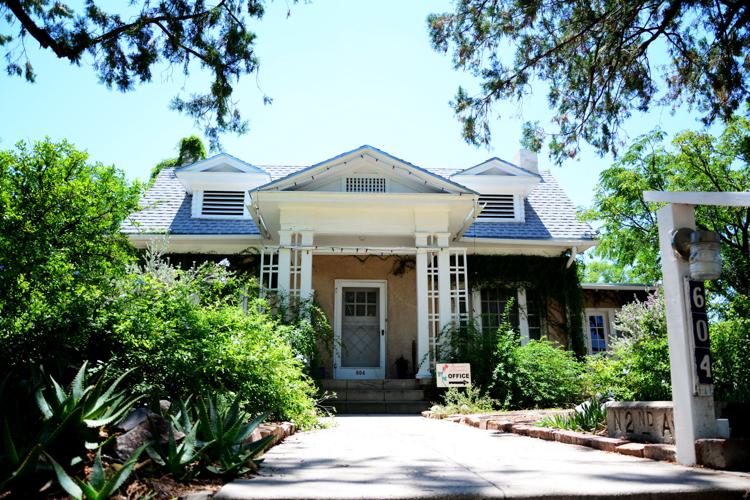
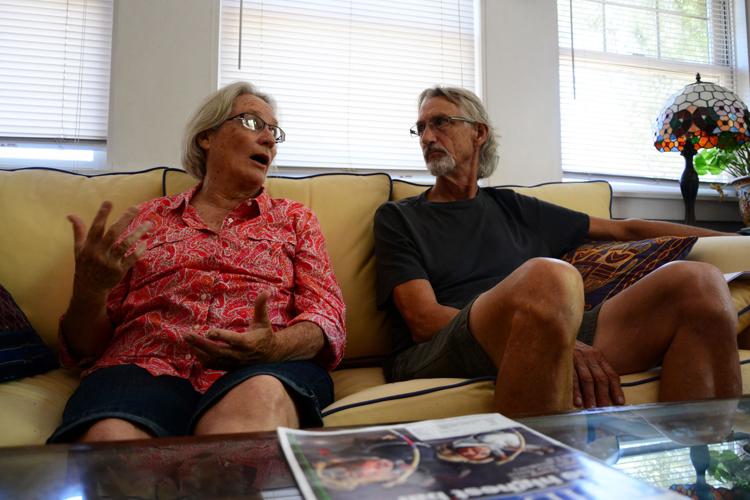
Burkhart, a longtime journalist and former UA journalism professor who is now a freelance writer, has lived in the neighborhood on and off since 1946, and currently lives there with his wife, the author Carolyn Niethammer. Though he’s lived in other places over the years wherever his employment took him, his house, a two-bedroom California bungalow on East First Street has been in the family since 1946.
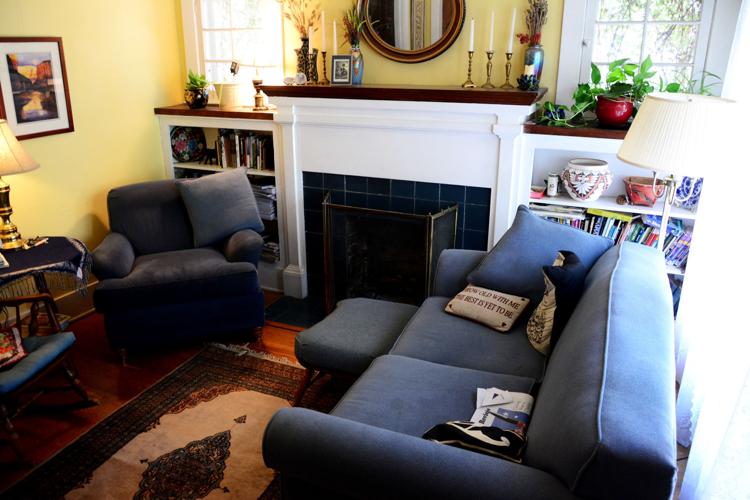
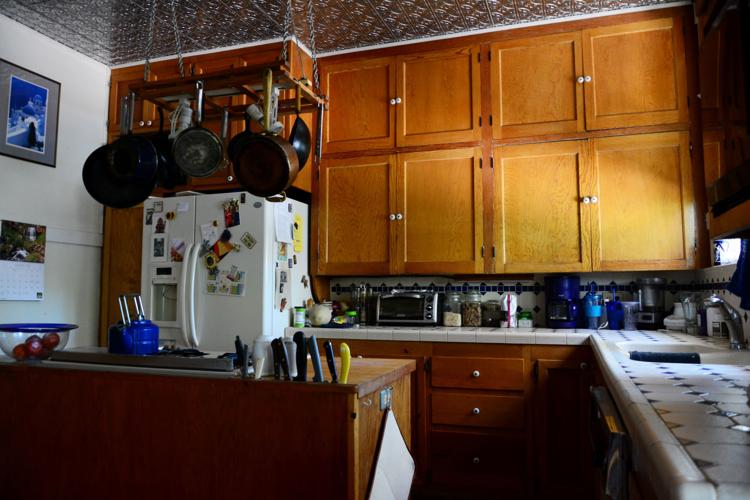
Aside from the bedrooms, there was only a kitchen, a bath, a dining room and living room, adding up to about 800 square feet when the house was built. The couple has added on to the west end of the north-facing house where the carport was located. When Burkhart’s grandmother would stay with the family, he said, she would sleep on a cot in the dining room.
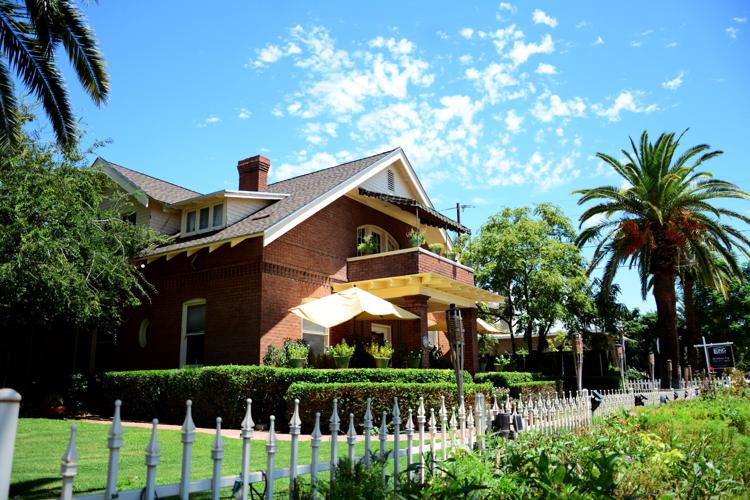
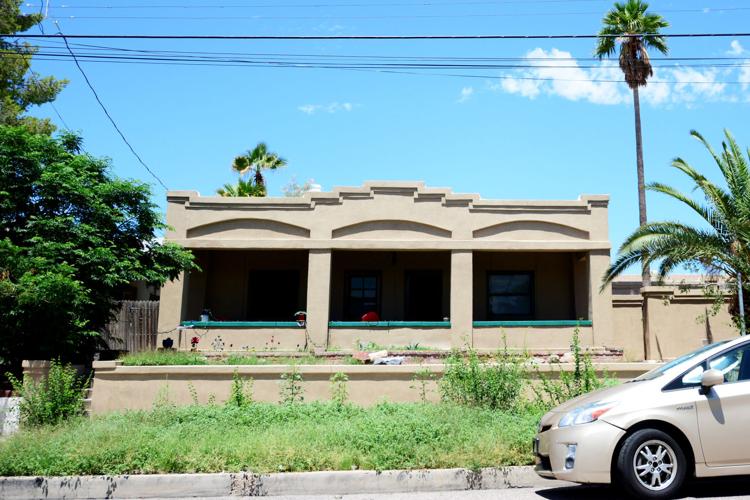
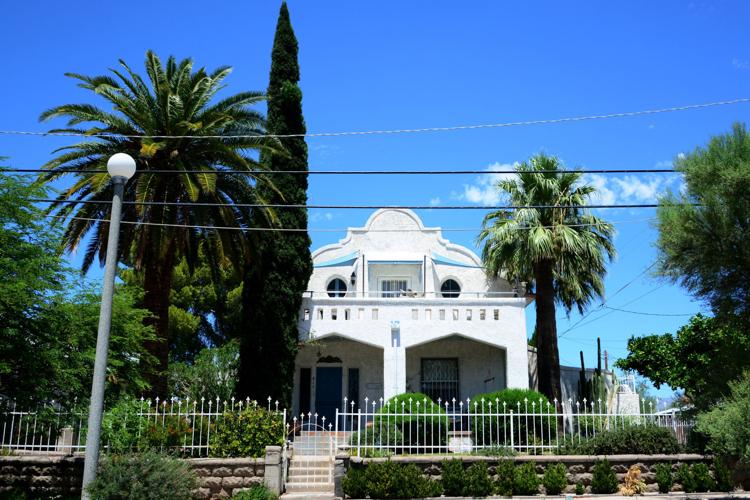
Niethammer said she thinks the house was built around 1917 in the midst of the neighborhood’s development. The city of Tucson’s Historic Preservation Office says the neighborhood was built out between 1890 and 1930 with a mix of architectural styles “ranging from Transitional to Art Deco, with about half being Craftsman Bungalows.”
“It’s a museum of architecture,” Burkhart said of the neighborhood. “It was developed during the age when America was really becoming this great place for the middle class, where the middle class could suddenly live well.”
“It’s an eclectic neighborhood,” Gans added. “This is not a subdivision in the sense that everything looks the same. There’s nothing like this. We have the most diverse architectural palette of all the (historic) neighborhoods.”
With nearly 70 years in the neighborhood, Burkhart has a strong sense of its history. He believes that mixed within the various architectural styles are a number of Sears Catalog homes — possibly one next door to his house — which could literally be ordered from a catalog, delivered in a kit, and then built on a lot.
According to its online archives, Sears, Roebuck and Co. started selling the homes in 1908 with a starting price of $452 to just under $3,000. The kits would be shipped via railroad. With West University sitting just north of the Southern Pacific Railroad it was an easy hop to get it to the building site, Burkhart said.
“There were thousands of them all over the country,” he said. “You would just tell them how big your lot was and then everything would come on the railroad — plans and materials.”
In fact, many of the design aspects of his own house are similar to what was found in the Sears catalog homes, including wood-framed French doors throughout the house, the peaked roof, and the style of front and back porches.
Burkhart said he recalls playing with his toys in the shade of the carport where the family car was usually parked. Small plastic army men were popular right after the war, he said, and so, apparently, were marbles.
“I can remember in 1946 I used to go out and play with my little trucks and everything and it was just like a magic world because we had come from Albany, New York, where it was cold and snowing,” Burkhart said. “I would just pick up a couple of toys and go sit in the shade all winter.”
Decades later, the telltale signs were still there when Burkhart and Niethammer moved back to the home in 1977.
“When we first came, we did a lot of landscaping,” she said. “As I dug up both in the front yard and the back yard I would find lots of marbles and lots of army men that he lost. So that was kind of fun.”
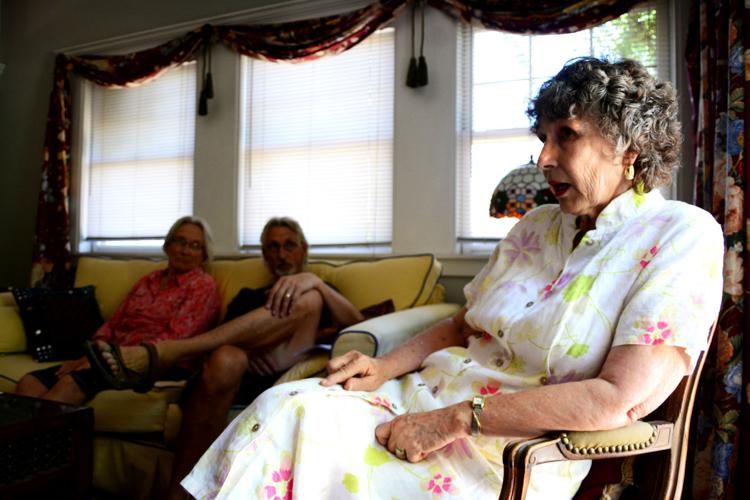
As the neighborhood aged, the residents did as well, said Barbara Tanzillo, the former costume shop manager at the Arizona Theater Company who was in the seventh grade when her family moved to West University in the early ’60s.
“Our mortgage was $125 a month,” she said with a laugh. “But here we are, a family of nine, and there were no kids in the neighborhood. It seemed like they were all older folks or people without kids. I don’t remember having kids next door.”
As the university’s enrollment grew, so did the number of students living in the neighborhood, creating a mix of residents including professionals working downtown and on the UA campus that until recently remained relatively predictable.
The effect of the current development has been interesting to the residents. Though the neighborhood fought the approval of the height of the new towers for the students – one of many battles the neighborhood association has fought over the years to preserve its “sense of place” − it seems to have had the effect of consolidating the students in one area.
“When they did the main gate development, we were not opposed to development there,” said Gans, the neighborhood association president. “What we were opposed to was the path they (city planners) were taking. They were going much too quickly.
“I think they felt a lot of pressure from the streetcar coming in and they had to have development near the streetcar. In that process, the mayor and council promised to leave the area west of Euclid alone. The heights and development styles remained what they were when the historic neighborhood was established.”
Burkhart’s observation – not remotely scientific − is that the neighborhood has or is becoming an enclave where students have been replaced by young couples and more professionals.
“There used to be students in all the houses around us,” he said. “We just had a little gathering a week ago and there was not a single student. They were all young couples.”
“It’s still in process,” Niethammer said. “But I must say, it’s really nice to see those young couples around. We’ve got two (medical) residents from (Banner-University Medical Center). We’ve got a travel agent and social worker. We’ve got a guy who works for a sustainable development company. A couple of guys across the street work for downtown restaurants. It’s thrilling for us.”

