



If you think you’ve been bugged a little more this summer by pesky moths fluttering around your TV while binge-watching your favorite program or a horde of flying ants invading your indoor space, it’s not your imagination.
Weather conditions this year appear to have made for a particularly active year for insects in general, but especially for the type that make it inside your home, sometimes wreaking havoc on your daily life.
“We’ve had optimal conditions for these things to be out because we’ve had such an abundant amount of rain,” said Gene Hall, collection manager for the University of Arizona Insect Collection. Hall also conducts insect diagnostics for the UA College of Agriculture and Life Sciences Cooperative Extension.
“June is usually one of the hottest, driest months we have, and that’s usually one of the hardest months on these things,” Hall said. “But we had a really wet June this year. That has had an impact on things maybe being a little out of sync.”
Tucson’s average rainfall for June is 0.20 inches, according to the National Weather Service. But this June, the city got 1.59 inches, less than a half-inch short of the all-time record. July also was above average, by more than an inch, before the rain slowed a little in August. But just more than a week ago, the area was doused by the remnants of Hurricane Newton, which dropped 1.25 inches of rain in a single day.
The moisture and the cooler temperatures that came with it made conditions ideal for the bugs’ presence to last longer by providing a better food supply with greener and more abundant plants, allowing them to spawn extra generations, Hall said.
One of Hall’s jobs at Cooperative Extension is to field inquiries from residents about bugs. And he’s been busy this summer.
“I get (inquiries) by email because people send attachments and photographs. I get phone calls. I get walk-ins where people drop off specimens. People mail them to me,” Hall said. “The first thing everybody wants to know is — what is it? Sometimes it’s because they’re afraid it’s going to be something that’s going to bite them or sting them.
“My job is to tell people what it is they have and then I tell them about its biology, and what it’s about, its life cycle, and what it’s known to do. Then I try to give them as much education about it as possible. Generally most people are happy with that.”
If there is a next question it tends to be how to get them out of the house, Hall said. The answer is ridiculously simple.
“The basic line of defense is to not give them a way get in to begin with,” Hall said. But the execution is the trick because of the very nature of how bugs act.
“Every time you walk through a doorway, they’ll come in with you,” Hall said.
They can squeeze under doors or around windows that aren’t sealed properly. Holes in window screens are like a flashing welcome sign. Flying critters easily get past the barriers put up by exterminators who spray the ground around a home.
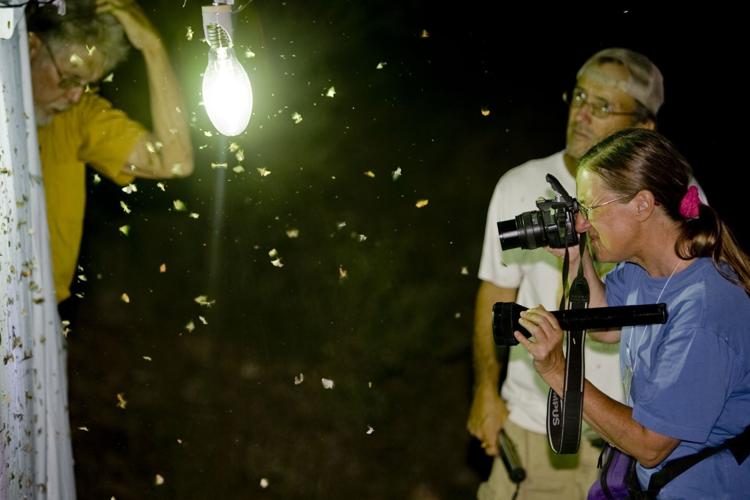
And nighttime can be a frustratingly losing battle because of insects’ natural attraction to light.
“Insects navigate by lights at nighttime,” Hall said. “A lot of them get tied in to navigating by the moon and such. We disrupt that with all these lights that we have. That’s why when you go outside at night you have thousands of insects at your porch light.
“It’s the same thing with interior lights. They can hone in on the light through the windows. Every time we go in and out of doors, or if we don’t have screens that are completely sealed, or if we have gaps under doorways, that’s how insects get in.”
One of the simplest solutions, Hall said, to is to install yellow light bulbs around entryways with lights nearby and on porches. While he’s not conducting a scientific experiment at his own home, Hall said he has indisputable evidence that the yellow bulb works.
“I’ve got one at home and I don’t get bugs at my door at night,” he said. “This is kind of silly. I have a yellow light at my front porch and I have a regular bulb at my back porch and I can see the difference. I would advise those for people to use if they have issues.”
A two-pack of standard yellow bug lights will cost about $4 at a hardware store. The longer-lasting yellow spiral bulbs are about $5 to $6 apiece.
But if you accept that it’s a losing battle to keep 100 percent of bugs out of the home, what to do once they’re inside?
For the harmless nuisance insects like moths, you can use their weakness for light against them. For instance, when you’re cozied up watching a television show in the dark, and a moth interrupts by landing on the screen, it might work to turn off the TV and let the moth fly toward another light.
“I’ve had insects fly from one light to the next at my place,” Hall said. “I’ll have a moth in my living room and then I’ll turn off the living room light and go into the bedroom and watch television and then the moth will be in there too. Of course, when all the lights go out, the insects stop flying around.”
Each year is different when it comes to the type of insects that are more prevalent in the Tucson area, Hall said.
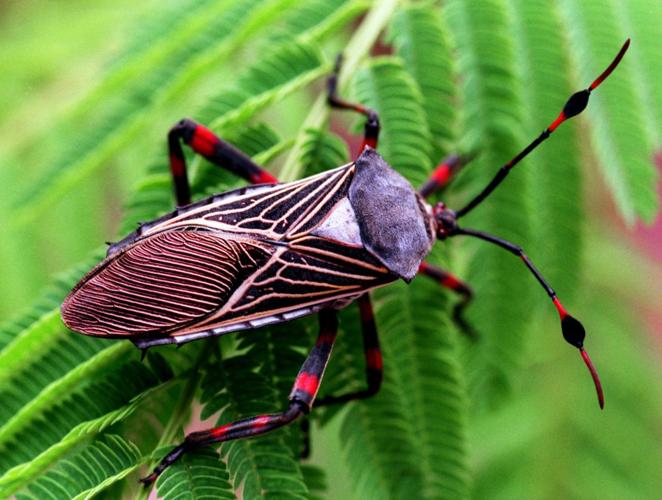
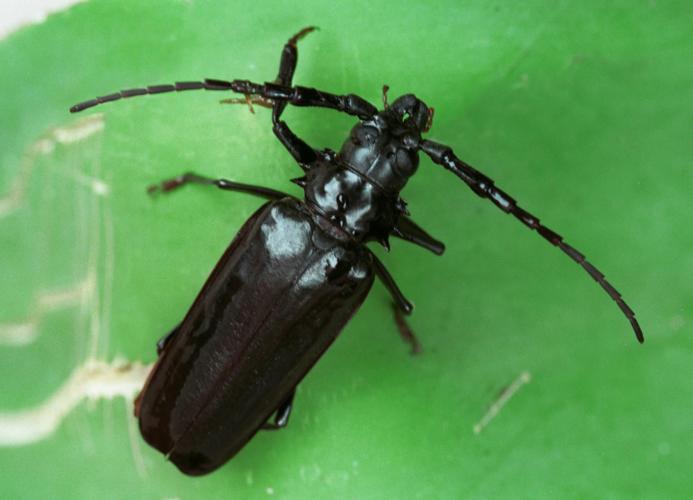
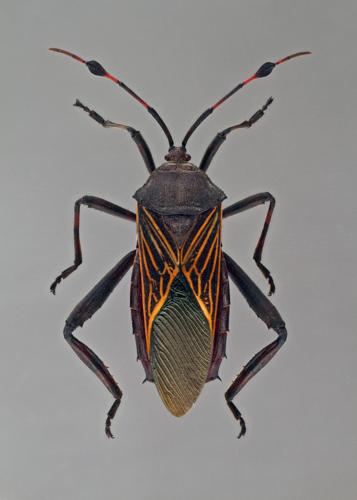
One year it’s the scary-looking palo verde beetle with its long, horn-like antenna and black body that looks like it’s covered in armor. They can reach 3½ inches in length. Last summer, Hall said, it was the giant mesquite bug that made a strong appearance with its red and cream colored markings on its back.
This summer, the green fig beetle, commonly known as the June bug, has been making its presence known.
“Monsoon season is definitely the high time here for insect diversity,” Hall said. “Arizona in general, and especially Southeastern Arizona, has more insect diversity than any other place in the United States because we have mild winters. We don’t have freezes.”
For the most part, Hall said, locals are just curious when it comes to insects in the region, enough so that an annual event, the Arizona Insect Festival, draws thousands to the UA, and will likely do so again Sunday, Sept. 18.
“People in this town really do have a big interest in insects because they’re so dominant in our region,” Hall said. “Most people just learn to live with these things because these bugs are not out to kill us. They’re not out to make our lives miserable. The majority of the insects out there are just doing their thing and they’re just a part of the great biodiversity of our region.”

