


We are in the shank of summer’s extravagant offering of vegetables, and a single trip to the farmers market will show you that.
I saw some exquisite Japanese eggplants at last weekend’s market, their elongated shapes glossy in the sunlight, lightening their deep lavender skins to a delicate orchid color.
“Ratatouille,” I instantly thought and picked up the remaining vegetables needful for one of my favorite summer dishes. But when I got home, I had another idea. Since I was going to have the oven on anyway to roast a chicken, why not a tian instead? The French classic shares the same seasonal ingredients, but it treats them in a different way.
On a bike trip through Provence years ago, my companion and I saw tians of many types on lunch menus when we stopped midday. A wedge of some savory tian or another, some cheese, and a glass or two of icy white wine saw us through long, sweltering afternoons of riding on to our evening destination.
I decided I wanted to resurrect that memory and set about devising a vegetable tian that would suit my Sonoran palate.
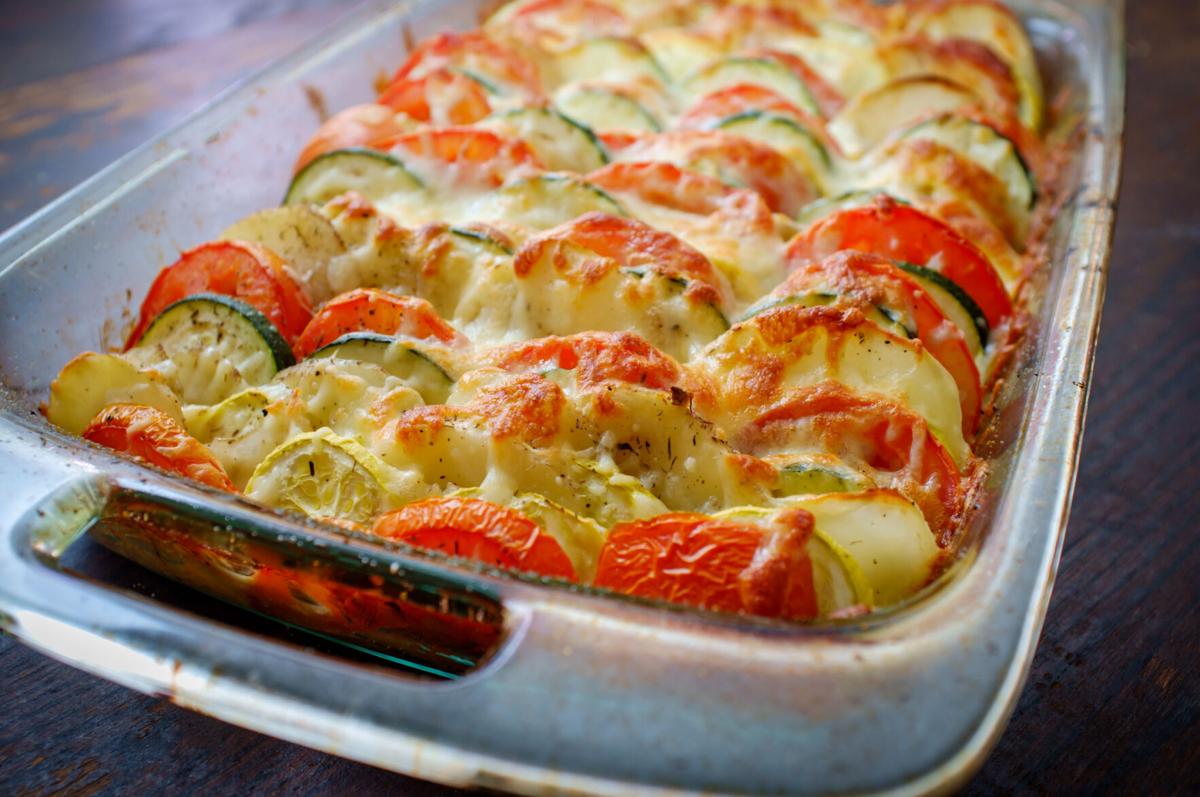
The key to a visually striking tian is to have all the vegetables about the same size in diameter. That way, when you arrange the vegetables in their baking dish, they’re all about the same height.
The cook can cheat a bit, if necessary, by trimming oversized pieces to make them fit. But ideally you would start with vegetables that are the same size. That’s one reason I like Japanese eggplants for this dish; their cylindrical shape makes them easier to use than the more familiar globe eggplant.
Add to this, if you’d like — slices of sweet onion and/or fennel slices are good additions — or subtract if, for example, you loathe eggplant. (What’s wrong with you?)
I sometimes turn this into a showy tart planned for a special lunch menu. If you’d like to try that, blind-bake a pastry-lined tart pan until the crust is golden brown before arranging the vegetables atop the crust. When I do this, I usually use a rectangular rather than a round pan because it seems more dramatic.
Whether tart or tian, refrigerate any leftovers. You’ll have an incredible lunch the next day — maybe, like my Provencal lunches, squired by a bit of cheese and a glass of wine. I promise you won’t feel one bit deprived. As 17th-century Welsh poet George Herbert said, “Living well is the best revenge.”
A Tucsonan tian
Makes 4 to 6 servings as a side dish, 2 to 4 servings as a main dish
A tian is both the dish that this classic French favorite is baked in, and the dish itself. The classic version is the baked form of ratatouille. Seasoned for a Southwestern palate rather than its traditional Provencal flavor profile, this tian is good served hot or at room temperature. Turn it into a tart if you like by blind-baking a pastry crust until golden, then arranging the vegetables atop the crust.
Ingredients
1 pound Japanese or Chinese eggplant
1 to 1½ pounds beefsteak type tomatoes
1 pound zucchini (this is a good place to use the oversized ones)
2 tablespoons olive oil plus additional for drizzling
1 tablespoon hot chile powder
2 teaspoons ground cumin
2 teaspoons Mexican oregano
Coarse salt and black pepper, to taste
½ cup grated Parmesan-Reggiano or Romano cheese
Preparation
Preheat the oven to 350 degrees. Butter a shallow 10-inch round baking dish or pie pan and set aside.
Slice the eggplant, zucchini and tomatoes into one-quarter-inch slices. Line a baking sheet with parchment paper or grease it lightly. Arrange the sliced vegetables on the baking sheet in a single layer; if they won’t all fit, place the remainder on a second parchment-lined baking sheet, or plan to work in two batches.
Brush the sliced vegetables generously with the olive oil. Combine the chile powder, cumin and oregano in a small bowl, and scatter the mixture over the vegetables, making sure everybody gets a good dusting. Season with coarse salt and black pepper.
Bake the vegetables for 15 minutes. Remove from the oven and set them aside until they’re cool enough to handle. They won’t be fully cooked at this point.
Assemble the tian by alternating rounds of eggplant, zucchini and tomato around the outside of the baking dish. Fill the center with the remainder of the vegetables, alternating them if possible. Drizzle additional olive oil over the vegetables. Scatter the Parmesan-Reggiano or Romano cheese over the top of the tian. The assembled dish can stand at room temperature for several hours before baking.
At baking time, again heat the oven to 350 degrees. Bake the tian for 20 to 30 minutes, or until the cheese is slightly browned and the vegetables are tender. Garnish with a scattering of more oregano if desired. Serve hot or allow to cool to room temperature before serving.

