

Dangerous saguaros; killer mildew on chard; stressed plants
- Updated
Answers to your gardening questions from an expert in Southern Arizona.
- By Peter L. Warren Special to the Arizona Daily Star
- Updated
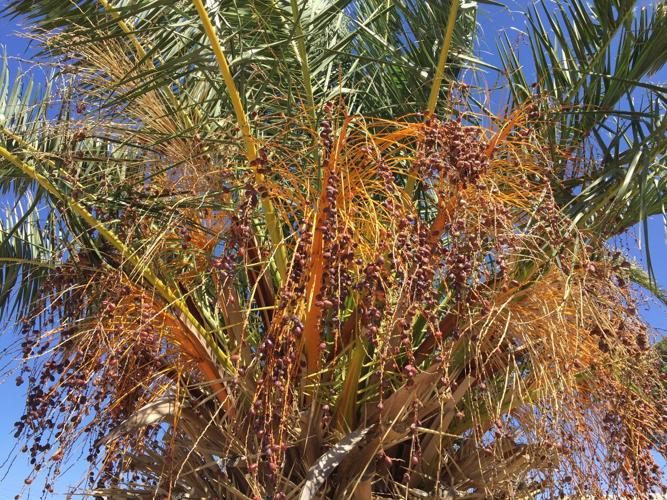
Q: I have several palm trees that produce clumps of seedpods each year. Right now they are yellow and will turn dark burgundy. Should I cut these seed pods off now before they mature? If not, when should I do it?
A: The reason to cut off the pods now would be to avoid having them drop the debris on the ground and to generally clean up the crown of the trees. Some people clean up their trees annually and others let them drop the seed. It is really up to you. The tree doesn't suffer from a light pruning each year and now is a fine time to do it.
Peter L. Warren is the urban horticulture agent for the Pima County Cooperative Extension and the University of Arizona. Questions may be emailed to tucsongardensage@gmail.com
- By Peter L. Warren Special to the Arizona Daily Star
- Updated
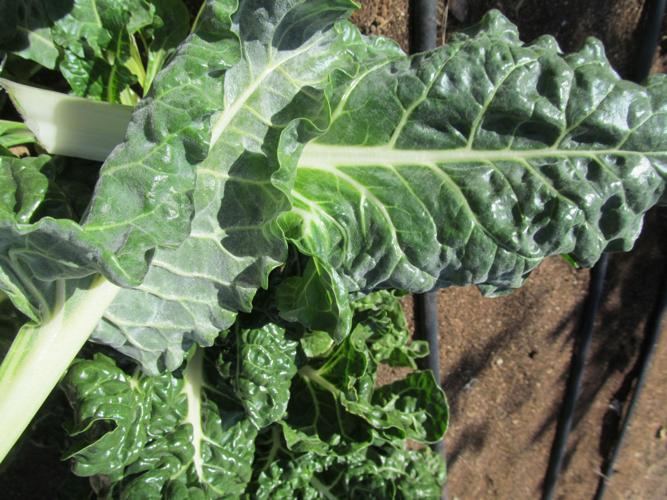
Q: My overwintering chard has started to show a "white powdery" substance covering both front and backsides on some of the leaves. Photos are attached comparing normal and white powdery leaves on the chard plants. Any idea what this substance is and are the chard leaves still edible?
A: It looks like powdery mildew. Left alone it can kill the leaves. The organic solution is to spray it with a baking soda and water mixture. There are also conventional fungicides labeled for use on vegetables available if you are okay with that. The mildew washes off and cooking will take care of the fungus so the leaves should still be edible. Make sure your plants have enough room for air circulation to prevent this in the future.
Peter L. Warren is the urban horticulture agent for the Pima County Cooperative Extension and the University of Arizona. Questions may be emailed to tucsongardensage@gmail.com
- By Peter L. Warren Special to the Arizona Daily Star
- Updated
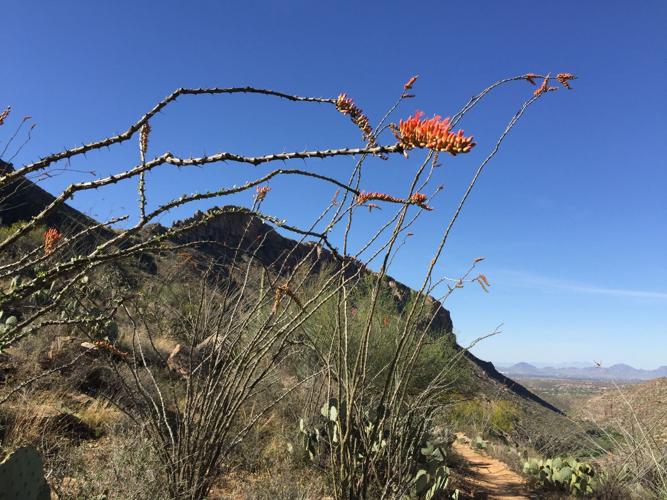
Q: We live in Tucson and I have a question about an ocotillo we have had for about 10 years. It is watered with drip irrigation, and compared to other ocotillos in our neighborhood, leafs out when they do. It has grown well, is probably 15 feet tall with multiple arms. I have never pruned it; I have just left it alone. One thing that has puzzled me — it has never bloomed. There is one other in our neighborhood that hasn't bloomed, but all the others, including ones that are significantly smaller, bloom every spring. From what I have read online, ocotillos should do well with low maintenance, and ours has seemed healthy in every other way except for blooming. Any hope in that department?
A: I agree that ocotillos do well with little or no maintenance. The first cool rain in the spring of 10mm or more triggers flowering in ocotillos according to Bowers and Dimmitt (1994). Another factor that affects flowering is temperature. The temperature shouldn't be a problem in Tucson so maybe your ocotillo isn't getting enough water. You could provide supplemental water but not too much because that would be bad for the plant. Desert plants like the ocotillo can get by with watering every two weeks in the summer and every three weeks in the spring and fall. No irrigation is required in the winter. Flowering generally occurs between March and May although some bloom in the fall.
Peter L. Warren is the urban horticulture agent for the Pima County Cooperative Extension and the University of Arizona. Questions may be emailed to tucsongardensage@gmail.com

- By Peter L. Warren Special to the Arizona Daily Star
- Updated
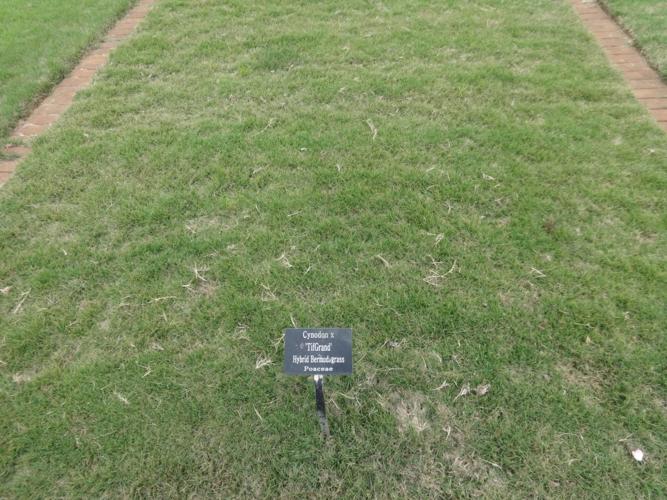
Q: I reside in Scottsdale and I was curious to find out — realistically, how long does a Bermuda grass lawn stay nice and not overrun by weeds, dry patches, and so on before eventually needing to replace it with new sod?
A: The time it takes really depends on the care you are able and willing to give to the grass. Proper mowing, dethatching, fertilizing, irrigating, and pest management are the basic components of a lawn management program. Proper mowing means using a sharpened mower and adjusting it to the best height. This would be somewhere between a half inch to 1 1/2 inches depending on the variety. Mowing is best done on a schedule that keeps up with the growth of the grass. Just like other plants, you don't want to take off too much at one time (one third off the top is a good rule of thumb). Dethatching is something done as needed when the thatch, the spongy layer of plant material between the soil and the green parts of the grass, becomes thicker than half inch. You might need to rent a vertical mower or power rake to do this job. Fertilization with half pound of nitrogen fertilizer per 1,000 square feet each month during the growing season (April through September) promotes good vegetative growth. Make sure you water your lawn after you fertilize. How often you water after that depends on the weather. Typically, every three days to a depth of six to eight inches is good for the summer. This can be reduced if we have significant rain. If you keep up with all of this, the pest problems will be less because healthy grass is likely to shade out weeds and be more tolerant of insects and diseases. Overall, Bermuda grass is a tough plant that does well given the right conditions.
Peter L. Warren is the urban horticulture agent for the Pima County Cooperative Extension and the University of Arizona. Questions may be emailed to tucsongardensage@gmail.com.
- By Peter L. Warren Special to the Arizona Daily Star
- Updated
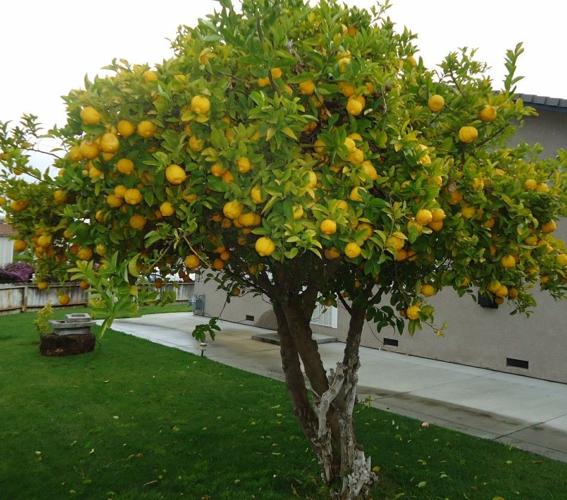
Question: I have a lemon tree that we planted three years ago. It is not growing well. It is next to an adult California pepper tree. (10 feet away) I would like to dig it out and transfer it. Are there any concerns or special care doing this?
Answer: Ten feet away from another tree is likely too close and the California pepper tree is known for its competitive roots so I am glad you are thinking of moving the lemon. One of the first things to consider when planting is the mature size of the tree so there will be plenty of room between the tree and anything else. There are some basic guidelines when transplanting. Moisten the area where you intend to plant a few days prior to digging to make it easier. Dig the planting hole twice as wide but only as deep as the root ball. The edges of the excavated area should be rough and sloping. A shallow hole prevents the tree from sinking and burying the trunk. One of the most common mistakes is planting too deep. Since your tree has already been in the ground for three years the roots will be growing. You may have to prune some of them back to extract it from the original planting hole. This is a good opportunity to check the root system for matted or circling roots. If needed you can cut and separate roots that are circling or heading in the wrong direction. Place the tree carefully into the planting hole. Remove just enough soil from the top of the root ball to expose the root collar, which should be level or slightly above the surrounding soil. The root collar is where the trunk flares out just above where the roots begin.
Backfill the planting hole with native soil. There is no need to add amendments. Studies show there is no advantage to mixing compost or other organic amendment into the soil. If hand watering or using bubbler irrigation, form a berm just outside the root ball to create an irrigation well. Apply water within this area. As the tree grows, expand the well. If using a drip system, use two or three emitters to wet this same area. Increase the number of emitters and spread them out to stay in line with the edge of the crown as the tree grows. Set your irrigation schedule to supply water every seven to 10 days in the summer and make sure the water reaches a depth of 36 inches. Apply a two to four inch layer of mulch to the entire tilled area. Keep mulch away from the trunk.
Peter L. Warren is the urban horticulture agent for the Pima County Cooperative Extension and the University of Arizona. Questions may be emailed to tucsongardensage@gmail.com.
- By Peter L. Warren Special to the Arizona Daily Star
- Updated
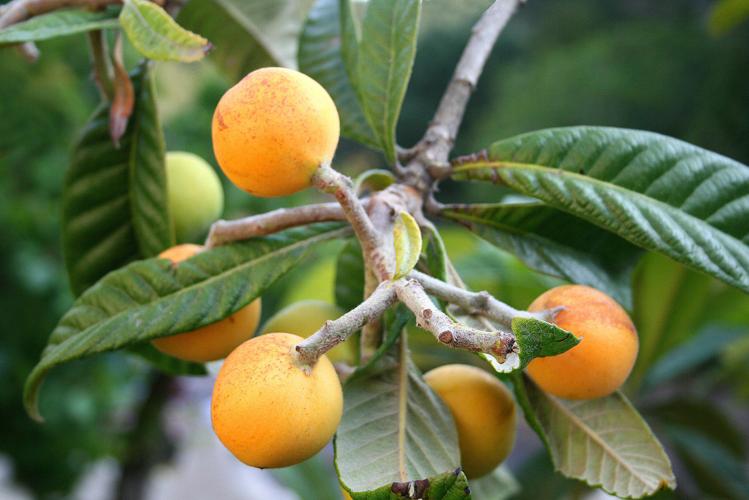
Q: Every gardener has a "great white whale," and mine is the loquat. I have already killed two of them ... one due to insufficient watering, and one for reasons unknown. The third is in a pot, so I can move it if it gets too sun scalded. I'd like to plant it permanently, but don't know what the specific requirements are for it to grow successfully here. Mesquite Valley Growers told me it can't grow in full sun, and Civano showed me theirs...in full sun! Can you help me?
A: Loquats may be grown easily in full sun in some places such as coastal California and there are probably some microclimates in our area where they do fine in full sun. In general, in the Sonoran Desert they do best with western sun protection and in partial shade. Newly planted loquats even benefit with eastern sun protection from a shade structure until they are established. The leaves tend to suffer in extreme heat and fruit can be damaged as well. The trunk may suffer from sun scald if planted in full sun so it’s not a good idea to prune them in that situation and instead, allow the branches to grow down to protect the trunk. Loquats grow well on a variety of soil types but need good drainage and will not tolerate standing water. While they are drought tolerant, they will produce higher quality fruit with regular, deep watering. The deep watering allows the roots grow deeper and it helps wash salt that accumulates through the root zone. This means you should water every seven to 14 days during the summer, every 10 to 21 days in the spring and fall, and every 14 to 21 days in the winter. Loquats benefit from regular, light applications of a complete fertilizer but too much nitrogen will reduce flowering. Composted manures and other natural fertilizers that contain less salt are good alternatives. Micronutrient deficiencies are sometimes a problem so keep an eye on the leaves for symptoms. If you still have problems, please let me know before you shout, "Thus, I give up the spear!"
Peter L. Warren is the urban horticulture agent for the Pima County Cooperative Extension and the University of Arizona. Questions may be emailed to tucsongardensage@gmail.com.
- By Peter L. Warren Special to the Arizona Daily Star
- Updated
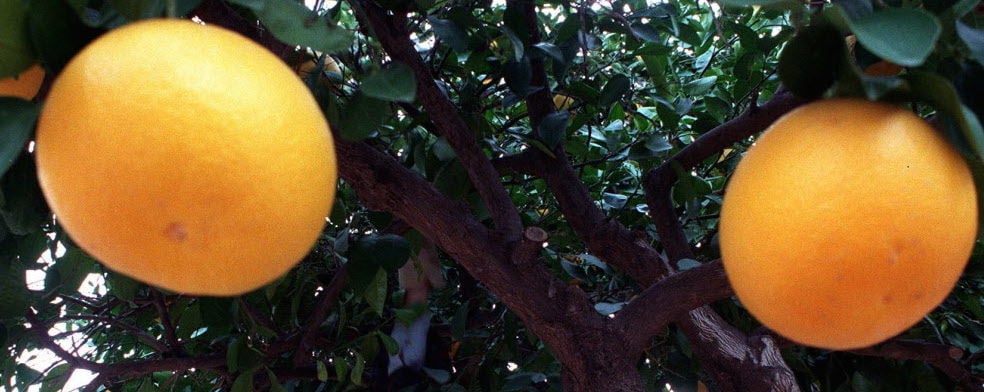
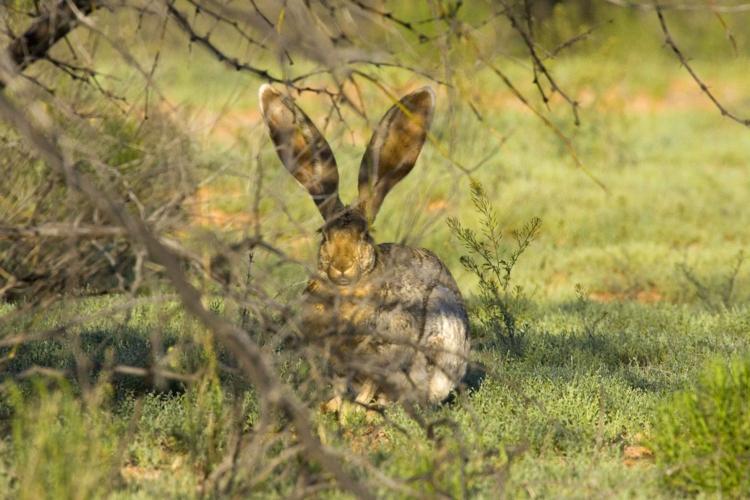
Q: We moved into our home in 1970, and there was a small grapefruit tree growing in the back yard. We don't know how old the tree is, but it is healthy and always produces hundreds of delicious grapefruit every year. Today I noticed that a cottontail rabbit was under the tree eating some of the leaves. There are a lot of cottontails in our neighborhood, but I didn't know that they eat grapefruit leaves. In the summer I always see a few damaged leaves in different places in the tree, but I thought that was caused by a leafcutter. My question is: what can I do to keep rabbits from eating the leaves?
A: Fencing is really the only prevention for keeping rabbits and other four-legged creatures away from desirable plants. If that isn’t an option you might consider doing nothing. Since your tree seems to be doing fine producing so much fruit and because rabbits can't climb trees, I recommend letting them eat the low hanging leaves. Most plants can tolerate some defoliation and still remain healthy and produce flowers and fruit. I would say the same thing about leaf-cutter bees. They only cause cosmetic damage to the tree.
Peter L. Warren is the urban horticulture agent for the Pima County Cooperative Extension and the University of Arizona. Questions may be emailed to tucsongardensage@gmail.com.

- By Peter L. Warren Special to the Arizona Daily Star
- Updated
Q: I know this is kind of a stretch, but I got your email off an answered question about caring for a cactus on a website. I bought a cactus in Japan (I'm stationed over here) and I have a couple questions. First is it normal to have that discoloration around the base and arms? Also, what kind of cactus is this? I just want to make sure I'm doing everything for it so it can survive!
A: Your plant is a type of Euphorbia. These plants are in the Euphorbiaceae family rather than the cactus family Cactaceae. They are often confused for cacti due to the spines and general appearance. The browning is a function of age and not anything wrong with the plant. Caring for this plant is similar to what you would do for cacti. Make sure it is in well-drained soil and water once a month if kept indoors in a container. The hot desert sun would be too much and I would recommend indirect sunlight, but in other locations where it’s not so hot make sure it gets plenty of sun. A water-soluble complete fertilizer can be used at a quarter strength monthly during the growing season. Avoid fertilizers that are high in nitrogen.
Peter L. Warren is the urban horticulture agent for the Pima County Cooperative Extension and the University of Arizona. Questions may be emailed to tucsongardensage@gmail.com.
- By Peter L. Warren Special to the Arizona Daily Star
- Updated
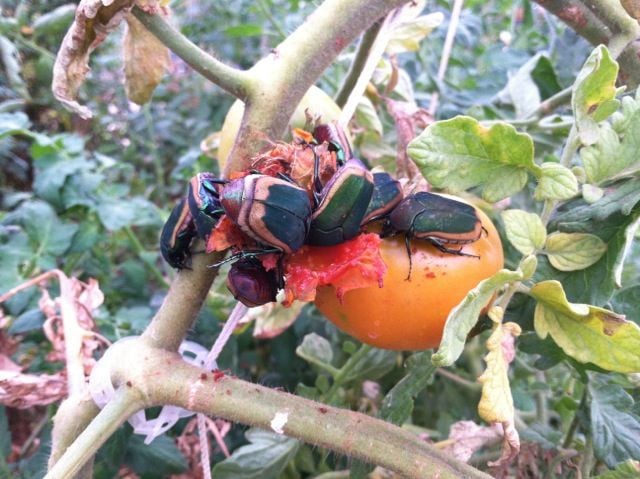
Q: My grape arbors are full of these bugs — hundreds of them eating my figs and grapes. I’ve never seen anything like this before. I shake the grape arbors and swarms fly out. Is there something we can do? Help! Attack of the June bugs!
A: They are sometimes called June bugs based on the time of year we see them. Today they are called March bugs. They are also called fig beetles (Cotinis mutabilis) and their white grubs are often found in the soil as people prepare their garden beds for planting. As adults, they can be managed with conventional insecticides, assuming this is not an organic operation. There are a variety of insecticides that work well and are labeled for use on grapes and figs. The problem is the beetles can fly and when there are large numbers of them it requires repeat treatments. So you can’t really stop them, you can only hope to contain them. There aren’t any great organic solutions for the adults unless you count the two brick method. Insecticides should not be sprayed while plants are blooming to conserve our valuable pollinators.
Peter L. Warren is the urban horticulture agent for the Pima County Cooperative Extension and the University of Arizona. Questions may be emailed to tucsongardensage@gmail.com.

- By Peter L. Warren Special to the Arizona Daily Star
- Updated
Q: I see these red bugs on the new growth of my Texas mountain laurel. It did not bloom last year and it was suggested that I am not watering enough. So I have been and now I have these guys. I don’t know if you can see in the picture but there is clear sap all around as well. I am thinking these are not beneficial? What should I do? They appear to be doing a lot of damage to new growth, so I am going to use a soap mixture to deal with them.
A: These red bugs (Lopidea major), also known as the sophora plant bug or mountain laurel bug, are relatively harmless although not beneficial. They will suck some sap and do minor aesthetic damage to the new growth for a short time in the spring. They will not do enough damage to justify spending time and money managing them. Insecticidal soap is a good solution as an irritant for small soft-bodied insects and may disrupt their feeding activity. If your soap solution doesn't work as you hope and you are determined to manage them, you might try an organic pyrethroid product called Pyganic that is more effective against plant bugs of this order.
Peter L. Warren is the urban horticulture agent for the Pima County Cooperative Extension and the University of Arizona. Questions may be emailed to tucsongardensage@gmail.com
- By Peter L. Warren Special to the Arizona Daily Star
- Updated
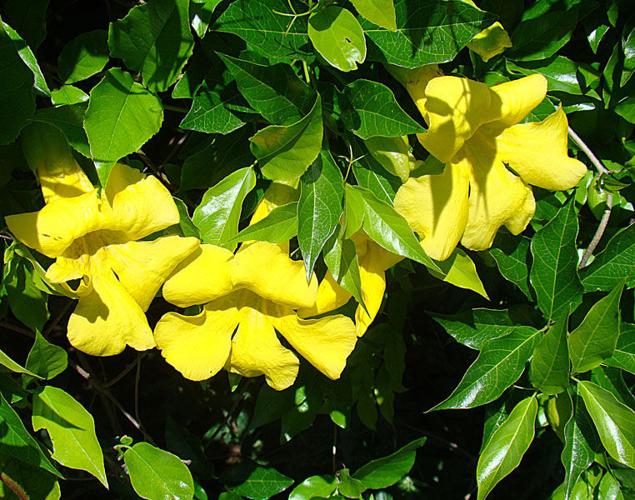
Q: I have a question about planting Cat Claw vines next to my stucco home. Will it damage the stucco?
A: It doesn't damage it per se although it does sometimes make a stain on the stucco. If you are okay with that then it has a decent reputation in the Southwest as an easy-to-grow vine. People from more humid regions such as Florida and Louisiana have a terrible time controlling this plant and consider it an invasive weed.
Peter L. Warren is the urban horticulture agent for the Pima County Cooperative Extension and the University of Arizona. Questions may be emailed to tucsongardensage@gmail.com
- By Peter L. Warren Special to the Arizona Daily Star
- Updated
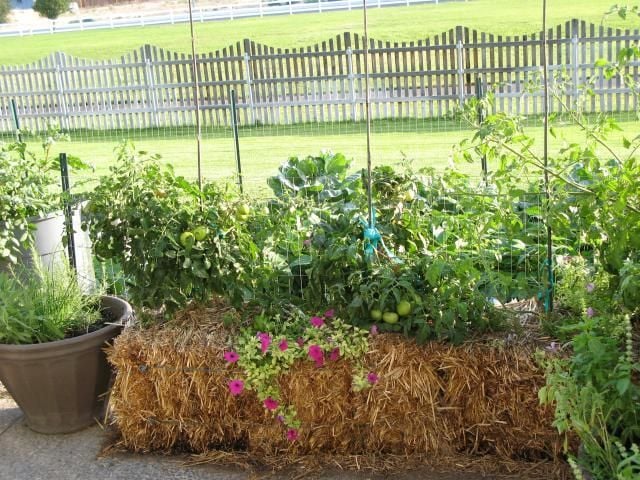
Q: I am considering adding straw bales for growing my spring/summer vegetables and the initial treatment required for wetting the bales, adding Nitrogen as part of the preparation for microbial breakdown of straw materials during a two-week period. I read two online extension articles that stated straw bales with the right amount of moisture and outside temperatures may burn. Are you aware of any "spontaneous combustion" that has ever occurred using single straw bales either placed in a row or individually?
A: Straw bale gardening is a nice way to avoid growing in our poor soil, fighting off garden weeds, and preventing some joint and back pain by having a raised area to garden. Spontaneous combustion is a problem for hay stacked in large piles. Single bales used for gardening are not likely to generate enough heat for combustion.
Peter L. Warren is the urban horticulture agent for the Pima County Cooperative Extension and the University of Arizona. Questions may be emailed to tucsongardensage@gmail.com

- By Peter L. Warren Special to the Arizona Daily Star
- Updated
Q: I’m concerned about the recent news stories about new diseases such as the Zika virus spread by mosquitoes. I spend a good amount of time outdoors gardening and mosquitoes usually bite me. Are there any things I can do to prevent this problem?
A: Zika virus is transmitted to people primarily through the bite of an infected Aedes mosquito. These are the same mosquitoes that spread dengue and chikungunya viruses. Aedes mosquitoes prefer to live near people and only female mosquitoes bite. They are mostly daytime biters, but can also bite at night. Mosquitoes acquire the virus when they feed on a person during the first week of infection when they are carrying high numbers of Zika virus in their blood. Once inside the mosquito, the virus moves from the digestive tract into the salivary glands, a process which is thought to take about a week. After that time, the mosquito can spread Zika to the next person she bites. Zika virus can also be transmitted from mother to her fetus during pregnancy, through blood transfusions, and through sexual contact.
The best way to avoid getting Zika virus or other diseases spread by mosquitoes is to avoid being bitten by infected mosquitoes. We can minimize mosquito numbers by eliminating breeding habitats, for example, standing water in containers around our homes. When outdoors, dress properly and apply insect repellent. Here is a link to a publication on choosing repellents: extension.arizona.edu/sites/extension.arizona.edu/files/pubs/az1311.pdf
Other things you can do include the following.
• Switch to LED lights to be used outdoors - these are not attractive to mosquitoes because they have no ultraviolet spectrum.
• Place fine mesh over rain barrels to prevent egg laying.
• Repair screens for windows that may have developed holes.
• Repair leaky pipes and faucets.
• Mosquito dunks for ponds, birdbaths, and other water features with standing water.
What doesn't work - electronic bug zappers and high frequency repellent devices.
Peter L. Warren is the urban horticulture agent for the Pima County Cooperative Extension and the University of Arizona. Questions may be emailed to tucsongardensage@gmail.com

- By Peter L. Warren Special to the Arizona Daily Star
- Updated
Q: I am getting some strange damage on my palo verde tree bark. Do you have any idea what could be causing this damage?
A: Woodpeckers are likely damaging your tree. These birds seek insects to eat that may be on the bark or just under the surface. In some cases, pecking holes in the bark causes sap to flow and attracts insects for the birds to eat later. Because federal law protects most birds, the management of bird damage is limited to exclusion, frightening/repelling, and distraction. Exclusion can be accomplished with hardware cloth or other screens over the area to be protected. Frightening can involve sound or shiny materials that cause the birds to avoid the area. Distraction can be accomplished by providing another food source such as a suet feeder nearby that is more attractive than the tree.
Peter L. Warren is the urban horticulture agent for the Pima County Cooperative Extension and the University of Arizona. Questions may be emailed to tucsongardensage@gmail.com
- By Peter L. Warren Special to the Arizona Daily Star
- Updated
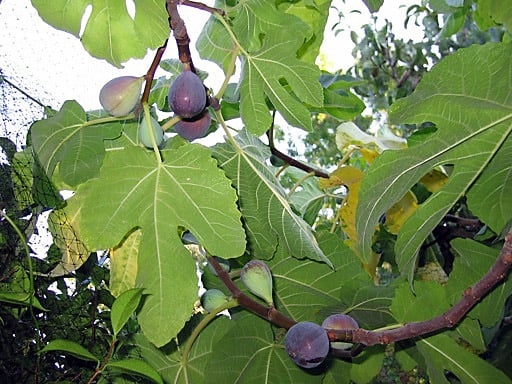
Q: I planted a fig tree for three years in a row and cannot seem to keep them alive. I do not know what I am doing wrong. I live in Catalina, north of Tucson, a little cooler area and my soil is sandy.
A: Figs are certainly a good plant for our area. Some basic things to consider include allowing enough room for them to grow to a mature size, planting them in well-drained soil, and planting them in the fall or early spring to allow them to get established before the hot summer weather. The two varieties that do well here are the brown turkey fig and the black mission fig. Irrigation should be scheduled every week during the summer and every two weeks in the spring, fall, and winter. Light fertilization can be applied during the growing season (May, June, and July). Split a half-pound of nitrogen fertilizer between those three months and water in after applying. If you are seeing other specific symptoms related to the death of your figs, please let me know so we can puzzle them out.
Peter L. Warren is the urban horticulture agent for the Pima County Cooperative Extension and the University of Arizona. Questions may be emailed to tucsongardensage@gmail.com
- By Peter L. Warren Special to the Arizona Daily Star
- Updated
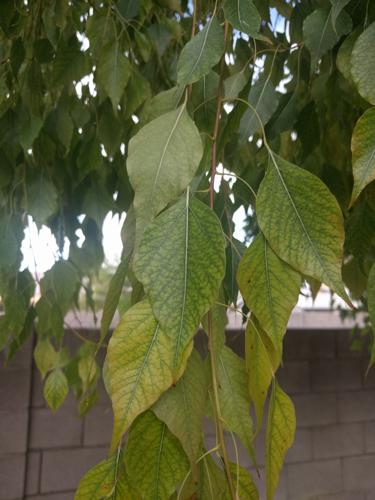
Q: I recently moved to a house in Phoenix, and am trying to understand the various plants in my yard. I have a couple trees that drop pods, which are very hard and dry when they fall (I haven’t seen them on the tree yet). The tree itself is deciduous, with sturdy branches extending from the trunk and “weeping,” vine-like branches that contain the leaves. Does anyone have any idea what this tree is? If so, are the pods edible?
A: Your trees are called bottle trees (Brachychiton populneus). This is an Australian native that does well here and averages 30 feet tall and wide at maturity. It isn’t supposed to be deciduous, so if it is dropping leaves unexpectedly, there could be a problem. The leaf photo you sent shows a nutrient deficiency, and that could cause the trees to drop leaves.
Make sure you are giving it proper fertilization and irrigation to remedy the leaf symptom. Since it is a relatively large evergreen tree, it is popular for producing shade. However, its size makes it too big for small landscapes and more appropriate for parks. The pods are not edible and might be the downsides of these trees if you use a reel lawn mower, walk around in bare feet, or don’t like picking them up. This species is susceptible to Texas root rot, and should not be planted in areas where this disease is known to occur.
Peter L. Warren is the urban horticulture agent for the Pima County Cooperative Extension and the University of Arizona. Questions may be emailed to tucsongardensage@gmail.com
- By Peter L. Warren Special to the Arizona Daily Star
- Updated
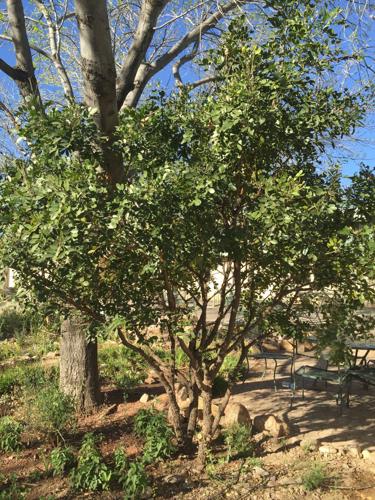
Q: Several months ago, I planted a Sophora secundiflora in a well-prepared, well-drained spot. When I purchased the plant, I asked about watering and was told, “Don’t let it dry out.” The shrub had what I considered a poorly developed root system. I used a 2-inch layer of pea-sized gravel for mulch. About a month after it was planted, I noticed yellowing of the leaves. Thinking this might be chlorosis, I looked for causes of this on the Web. The one that kept coming back up was overwatering. So I decreased watering. Now I am thinking it was not chlorosis, and withholding water was a bad idea. The buds at the base of the leaf petioles still seem hydrated, as do the twigs and stems. Any ideas on what I should or should not do to ensure this shrub survives?
A: Texas mountain laurel is a drought-tolerant species native to the Southwest and requires well-drained soil and infrequent watering. During the first year after it is planted, it can be watered once a week. After that, it is best to change your irrigation schedule to once every 14 to 21 days except for winter, when you can stop irrigating until spring each year. Unfortunately, the symptoms of overwatering can look like underwatering, so it’s understandable how you could mistake one for the other. Transplanting stress may also be a factor in the first year and show up the same way. Many plants purchased in containers have greatly reduced root systems, so some of that is expected. The important thing is to provide good care while the tree becomes established. Time will tell if your tree will survive. It may just drop the yellow leaves and releaf.

- By Peter L. Warren Special to the Arizona Daily Star
- Updated
Q: I know that I and many other readers of the Star would really appreciate advice from you about what to plan regarding cutting back bushes this year. Normally, we would have been thinking no later than mid-March, but with this goofy hot weather we’re having, normal-year planning seems irrelevant. Help, o Garden Sage!
A: Pruning damaged or dead wood may be done anytime, but as you know, we recommend waiting for warm weather for cold-sensitive plants. Pruning for other reasons such as structure, shape and size is typically done with the idea of minimizing stress to the plants, and that is usually accomplished in the cool part of the year, so your mid-March deadline makes sense. With tougher plants, that deadline can be extended into the warmer months. Some plants, however, are pruned with blooming in mind, and timing depends on when each species produces flower buds. We have a pruning calendar you can access on the Internet that has more details (search for az1499.pdf). Regarding the unusual weather this year, it is easy to see how our unseasonably warm weather lately might give us a false sense of security and/or fear about the days and weeks ahead. Our UA climate science specialist, Mike Crimmins, reminds us that it is still technically winter, and the volatile weather patterns we have been seeing this year are difficult to predict. We are still hoping that El Niño will send some rain our way in March. Crimmins says that would reduce the freeze risk since the moisture helps keep overnight temps up. So with all the uncertainty, the best plan would be to stick with the mid-March plan for pruning and starting tender annuals outdoors.
Peter L. Warren is the urban horticulture agent for the Pima County Cooperative Extension and the University of Arizona. Questions may be emailed to tucsongardensage@gmail.com

- By Peter L. Warren Special to the Arizona Daily Star
- Updated
Q: About four to five years ago, I planted an oak tree in my front yard. ... As yet, it has not grown, I don’t think, 1 inch. It does get leaves every year, but that’s it. What can I do to help it grow?
A: Trees transplanted to a new location typically take a couple years to adjust to their new surroundings. A big part of the adjustment is growing new roots, which are usually drastically pruned and damaged in the transplanting process. Since the below-ground root growth is not obvious to us above-ground animals, it appears that nothing is happening for quite a while. The rule of thumb is: The first year they sleep, the second year they creep, and the third year they leap. This growth pattern assumes the tree was planted in a suitable location and the care was appropriate. Care, once established, includes annual fertilization with a complete fertilizer and regular irrigation. For an oak tree that is not a native desert species that means watering to a depth of 24 to 36 inches every seven to 14 days in the summer, every 10 to 14 days in the spring and fall, and every 14 to 21 days in the winter. The emitters for your drip irrigation system should be placed in a ring around the tree at or near the edge of the tree canopy so the water will reach the absorbing roots. You can also put a half-inch of compost on top of the soil around the tree root zone and an inch or two of organic mulch on top of the compost. The slow release of nutrients from these as they decompose, along with their protection of the root zone, can help keep your tree healthy.
Peter L. Warren is the urban horticulture agent for the Pima County Cooperative Extension and the University of Arizona. Questions may be emailed to tucsongardensage@gmail.com
- By Peter L. Warren Special to the Arizona Daily Star
- Updated
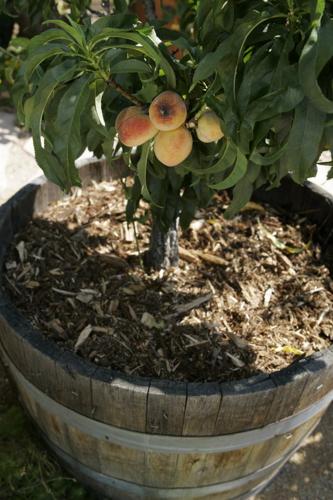
Q: I would like to know when and how and what type of fertilizer I should use for plum, apricot, peach and fig trees. My trees are 2 to 3 years old.
A: Once established, fruit trees need to be fertilized each spring to ensure that new healthy growth occurs and fruit will be large and tasty. For trees of 2 to 3 years of age, you can use 3/4 of a pound of a complete fertilizer that contains nitrogen, phosphorus and potassium. Spread the fertilizer evenly under the tree near the edge of the crown of the tree, also known as the drip line where rain falls and your drip irrigation should be installed. Timing your irrigation to coincide with fertilization will help the fertilizer reach the roots and protect the roots.
Peter L. Warren is the urban horticulture agent for the Pima County Cooperative Extension and the University of Arizona. Questions may be emailed to tucsongardensage@gmail.com
- By Peter L. Warren Special to the Arizona Daily Star
- Updated
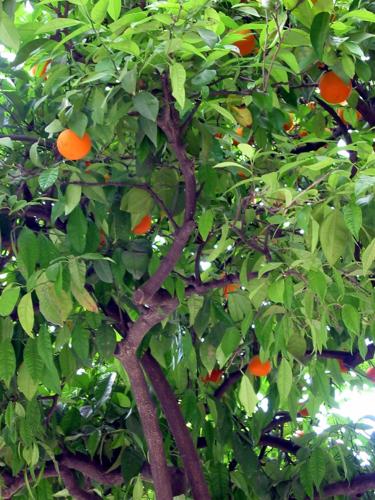
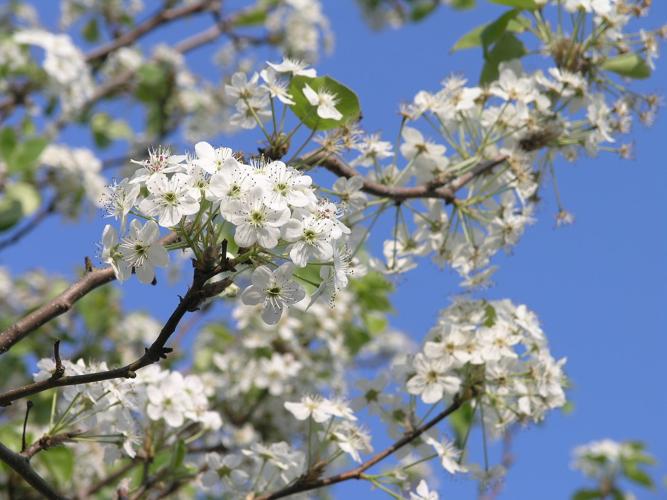
Q: There is a tree in bloom outside my office and I’m wondering what it is. It has white/green blossoms and looks like a pear tree but doesn’t smell like a fruit tree. It sort of smells like sewage. The smell is similar to a carob tree, but more so. I tried to find it online by googling smelly blooming trees and I think it might be a callery pear.
A: You are correct. The tree in question is a callery pear (Pyrus calleryana). These are ornamental pear trees bred to produce flowers and not edible fruit. They became very popular in the last quarter of the 20th century and can be found in many cities and towns as a street tree. The variety most seen is ‘Bradford’ although there are at least a couple dozen others. The flowers have an unfortunate odor as you noticed and are best observed at a distance. Another unfortunate feature of Bradford pears is their branch structure. The tendency for branches to grow from the trunk at sharp angles predisposes these trees to break in high winds. The one thing this tree has going for it is resistance to fireblight, a disease that affects other pear trees. The newer varieties have been bred for better features but fireblight continues to be a concern.
Peter L. Warren is the urban horticulture agent for the Pima County Cooperative Extension and the University of Arizona. Questions may be emailed to tucsongardensage@gmail.com

- By Peter L. Warren Special to the Arizona Daily Star
- Updated
Q: How can I keep the mice out of my compost? One of the most terrible days of my life was last fall when I used a sharp-bladed shovel to dig out last year’s compost pile. Suddenly and unexpectedly I heard the shrill and amazingly loud screaming of mice. As I quickly removed my shovel I saw with horror that it had sliced a mouse nest in half, decapitating, killing, and wounding three of the blind, hairless baby mice. The two unharmed baby mice I put back in the compost where they were soon rescued by the parents. But I never want to have that experience again.
After the catastrophe, I got rid of my old compost bin that used to sit on the ground and replaced it with a plastic bin raised up 2 feet from the ground on metal legs. I used metal mesh to seal the base of the bin in case mice could actually climb up the slippery metal legs, and this I thought would keep the mice away from my delicious kitchen scraps. Now, two months later I again see small gray mice inside the compost bin. It is winter and they want to be warm and not hungry, but I dread what will happen in the early summer when I want to use that compost in my garden. Any ideas of how to avoid another mouse tragedy?
A: It is difficult to keep rodents out of anything. If you weren’t so concerned about the mice, I would recommend snap traps baited with peanut butter near the base of your compost bin. Since you are concerned, the best bet is excluding them from the compost bin. Exclusion could work with your current compost bin if you can use mesh with small enough holes that they cannot squeeze through. Hardware cloth with quarter-inch holes should be enough to keep out adult mice. Using a bin with a lid can also aid in exclusion. Another idea is to make this compost habitat less appealing by turning your compost once a week. Turning compost with a pitchfork can result in the same deathly experience if not done frequently enough. There are also the sort of bins that can be turned with a crank if that is more your speed. If composted material is decomposing ideally, it reaches a fairly high temperature in the middle and no mouse is going to set up housekeeping in that heat. In the end, you might have to just be more careful digging around the top of your compost pile to avoid more mouse mayhem.
Peter L. Warren is the urban horticulture agent for the Pima County Cooperative Extension and the University of Arizona. Questions may be emailed to tucsongardensage@gmail.com

- By Peter L. Warren Special to the Arizona Daily Star
- Updated
Q: Should I be worried that my landscaper severely trimmed the bottoms of these two old agaves? He said the reason was to keep snakes from hiding there and make it easier for them to clean around. He removed one without notifying me, saying it was too close to the other and was “dying.” I see some evidence of west-side gray leaves; does this mean my agaves are dying or is it sun damage?
A: It is troubling that your landscaper pruned these plants and so severely. Typically, agaves don’t need pruning unless they have diseased or damaged leaves. Some people prune off the pointy leaf ends if they extend into walkways but even this is damaging to the plant. If snakes are a regular problem in your area, maybe there is a good reason for protecting the landscapers.
It’s not clear what sort of cleanup is required from the photos or what you asked him to do in that regard. Removing one because it was too close makes sense although it probably should have been discussed before removing it.
Finally, agaves don’t do great in direct western sun so you might be seeing sunburn on the leaves facing that direction.
Peter L. Warren is the urban horticulture agent for the Pima County Cooperative Extension and the University of Arizona. Questions may be emailed to

- By Peter L. Warren Special to the Arizona Daily Star
- Updated
Q: I’m in SaddleBrooke and have a few Thompson Yuccas. The recent winds caused one yucca to break off half way up, in the middle of its trunk. The breaking point looks to have had an injury at that point in its past. These plants are on the expensive end and are listed as disease- and pest-free, so I’m surprised to find myself with these issues.
A: Thompson yuccas (Yucca thompsoniana) are very tough plants and they do not have any known pests. They are tolerant of extreme heat and cold hardy to minus 10 degrees. The photo you sent shows what appears to be a rotten core and that made it susceptible to the winds that snapped it off. It’s likely that the past injury you noted was the beginning of the problem and may have allowed for disease to enter and progress.
I also noticed the leaves, which are typically darker green; seem to be suffering from lack of moisture and possibly salt damage. While these plants are drought tolerant, providing irrigation every two weeks in the summer and every three weeks in the spring and fall to a depth of 12 to 18 inches is recommended and makes them look better. Regular irrigation will also help wash the salt through the root zone.
Peter L. Warren is the urban horticulture agent for the Pima County Cooperative Extension and the University of Arizona. Questions may be emailed to
- Updated
Click the photo below to read more gardening tips. This includes “Saguaro surgery; ocotillo - dead or alive?; blood oranges"

- By Peter L. Warren Special to the Arizona Daily Star
Q: I have several palm trees that produce clumps of seedpods each year. Right now they are yellow and will turn dark burgundy. Should I cut these seed pods off now before they mature? If not, when should I do it?
A: The reason to cut off the pods now would be to avoid having them drop the debris on the ground and to generally clean up the crown of the trees. Some people clean up their trees annually and others let them drop the seed. It is really up to you. The tree doesn't suffer from a light pruning each year and now is a fine time to do it.
Peter L. Warren is the urban horticulture agent for the Pima County Cooperative Extension and the University of Arizona. Questions may be emailed to tucsongardensage@gmail.com
- By Peter L. Warren Special to the Arizona Daily Star
Q: My overwintering chard has started to show a "white powdery" substance covering both front and backsides on some of the leaves. Photos are attached comparing normal and white powdery leaves on the chard plants. Any idea what this substance is and are the chard leaves still edible?
A: It looks like powdery mildew. Left alone it can kill the leaves. The organic solution is to spray it with a baking soda and water mixture. There are also conventional fungicides labeled for use on vegetables available if you are okay with that. The mildew washes off and cooking will take care of the fungus so the leaves should still be edible. Make sure your plants have enough room for air circulation to prevent this in the future.
Peter L. Warren is the urban horticulture agent for the Pima County Cooperative Extension and the University of Arizona. Questions may be emailed to tucsongardensage@gmail.com
- By Peter L. Warren Special to the Arizona Daily Star
Q: We live in Tucson and I have a question about an ocotillo we have had for about 10 years. It is watered with drip irrigation, and compared to other ocotillos in our neighborhood, leafs out when they do. It has grown well, is probably 15 feet tall with multiple arms. I have never pruned it; I have just left it alone. One thing that has puzzled me — it has never bloomed. There is one other in our neighborhood that hasn't bloomed, but all the others, including ones that are significantly smaller, bloom every spring. From what I have read online, ocotillos should do well with low maintenance, and ours has seemed healthy in every other way except for blooming. Any hope in that department?
A: I agree that ocotillos do well with little or no maintenance. The first cool rain in the spring of 10mm or more triggers flowering in ocotillos according to Bowers and Dimmitt (1994). Another factor that affects flowering is temperature. The temperature shouldn't be a problem in Tucson so maybe your ocotillo isn't getting enough water. You could provide supplemental water but not too much because that would be bad for the plant. Desert plants like the ocotillo can get by with watering every two weeks in the summer and every three weeks in the spring and fall. No irrigation is required in the winter. Flowering generally occurs between March and May although some bloom in the fall.
Peter L. Warren is the urban horticulture agent for the Pima County Cooperative Extension and the University of Arizona. Questions may be emailed to tucsongardensage@gmail.com
- By Peter L. Warren Special to the Arizona Daily Star
Q: I reside in Scottsdale and I was curious to find out — realistically, how long does a Bermuda grass lawn stay nice and not overrun by weeds, dry patches, and so on before eventually needing to replace it with new sod?
A: The time it takes really depends on the care you are able and willing to give to the grass. Proper mowing, dethatching, fertilizing, irrigating, and pest management are the basic components of a lawn management program. Proper mowing means using a sharpened mower and adjusting it to the best height. This would be somewhere between a half inch to 1 1/2 inches depending on the variety. Mowing is best done on a schedule that keeps up with the growth of the grass. Just like other plants, you don't want to take off too much at one time (one third off the top is a good rule of thumb). Dethatching is something done as needed when the thatch, the spongy layer of plant material between the soil and the green parts of the grass, becomes thicker than half inch. You might need to rent a vertical mower or power rake to do this job. Fertilization with half pound of nitrogen fertilizer per 1,000 square feet each month during the growing season (April through September) promotes good vegetative growth. Make sure you water your lawn after you fertilize. How often you water after that depends on the weather. Typically, every three days to a depth of six to eight inches is good for the summer. This can be reduced if we have significant rain. If you keep up with all of this, the pest problems will be less because healthy grass is likely to shade out weeds and be more tolerant of insects and diseases. Overall, Bermuda grass is a tough plant that does well given the right conditions.
Peter L. Warren is the urban horticulture agent for the Pima County Cooperative Extension and the University of Arizona. Questions may be emailed to tucsongardensage@gmail.com.
- By Peter L. Warren Special to the Arizona Daily Star
Question: I have a lemon tree that we planted three years ago. It is not growing well. It is next to an adult California pepper tree. (10 feet away) I would like to dig it out and transfer it. Are there any concerns or special care doing this?
Answer: Ten feet away from another tree is likely too close and the California pepper tree is known for its competitive roots so I am glad you are thinking of moving the lemon. One of the first things to consider when planting is the mature size of the tree so there will be plenty of room between the tree and anything else. There are some basic guidelines when transplanting. Moisten the area where you intend to plant a few days prior to digging to make it easier. Dig the planting hole twice as wide but only as deep as the root ball. The edges of the excavated area should be rough and sloping. A shallow hole prevents the tree from sinking and burying the trunk. One of the most common mistakes is planting too deep. Since your tree has already been in the ground for three years the roots will be growing. You may have to prune some of them back to extract it from the original planting hole. This is a good opportunity to check the root system for matted or circling roots. If needed you can cut and separate roots that are circling or heading in the wrong direction. Place the tree carefully into the planting hole. Remove just enough soil from the top of the root ball to expose the root collar, which should be level or slightly above the surrounding soil. The root collar is where the trunk flares out just above where the roots begin.
Backfill the planting hole with native soil. There is no need to add amendments. Studies show there is no advantage to mixing compost or other organic amendment into the soil. If hand watering or using bubbler irrigation, form a berm just outside the root ball to create an irrigation well. Apply water within this area. As the tree grows, expand the well. If using a drip system, use two or three emitters to wet this same area. Increase the number of emitters and spread them out to stay in line with the edge of the crown as the tree grows. Set your irrigation schedule to supply water every seven to 10 days in the summer and make sure the water reaches a depth of 36 inches. Apply a two to four inch layer of mulch to the entire tilled area. Keep mulch away from the trunk.
Peter L. Warren is the urban horticulture agent for the Pima County Cooperative Extension and the University of Arizona. Questions may be emailed to tucsongardensage@gmail.com.
- By Peter L. Warren Special to the Arizona Daily Star
Q: Every gardener has a "great white whale," and mine is the loquat. I have already killed two of them ... one due to insufficient watering, and one for reasons unknown. The third is in a pot, so I can move it if it gets too sun scalded. I'd like to plant it permanently, but don't know what the specific requirements are for it to grow successfully here. Mesquite Valley Growers told me it can't grow in full sun, and Civano showed me theirs...in full sun! Can you help me?
A: Loquats may be grown easily in full sun in some places such as coastal California and there are probably some microclimates in our area where they do fine in full sun. In general, in the Sonoran Desert they do best with western sun protection and in partial shade. Newly planted loquats even benefit with eastern sun protection from a shade structure until they are established. The leaves tend to suffer in extreme heat and fruit can be damaged as well. The trunk may suffer from sun scald if planted in full sun so it’s not a good idea to prune them in that situation and instead, allow the branches to grow down to protect the trunk. Loquats grow well on a variety of soil types but need good drainage and will not tolerate standing water. While they are drought tolerant, they will produce higher quality fruit with regular, deep watering. The deep watering allows the roots grow deeper and it helps wash salt that accumulates through the root zone. This means you should water every seven to 14 days during the summer, every 10 to 21 days in the spring and fall, and every 14 to 21 days in the winter. Loquats benefit from regular, light applications of a complete fertilizer but too much nitrogen will reduce flowering. Composted manures and other natural fertilizers that contain less salt are good alternatives. Micronutrient deficiencies are sometimes a problem so keep an eye on the leaves for symptoms. If you still have problems, please let me know before you shout, "Thus, I give up the spear!"
Peter L. Warren is the urban horticulture agent for the Pima County Cooperative Extension and the University of Arizona. Questions may be emailed to tucsongardensage@gmail.com.
- By Peter L. Warren Special to the Arizona Daily Star
Q: We moved into our home in 1970, and there was a small grapefruit tree growing in the back yard. We don't know how old the tree is, but it is healthy and always produces hundreds of delicious grapefruit every year. Today I noticed that a cottontail rabbit was under the tree eating some of the leaves. There are a lot of cottontails in our neighborhood, but I didn't know that they eat grapefruit leaves. In the summer I always see a few damaged leaves in different places in the tree, but I thought that was caused by a leafcutter. My question is: what can I do to keep rabbits from eating the leaves?
A: Fencing is really the only prevention for keeping rabbits and other four-legged creatures away from desirable plants. If that isn’t an option you might consider doing nothing. Since your tree seems to be doing fine producing so much fruit and because rabbits can't climb trees, I recommend letting them eat the low hanging leaves. Most plants can tolerate some defoliation and still remain healthy and produce flowers and fruit. I would say the same thing about leaf-cutter bees. They only cause cosmetic damage to the tree.
Peter L. Warren is the urban horticulture agent for the Pima County Cooperative Extension and the University of Arizona. Questions may be emailed to tucsongardensage@gmail.com.
- By Peter L. Warren Special to the Arizona Daily Star
Q: I know this is kind of a stretch, but I got your email off an answered question about caring for a cactus on a website. I bought a cactus in Japan (I'm stationed over here) and I have a couple questions. First is it normal to have that discoloration around the base and arms? Also, what kind of cactus is this? I just want to make sure I'm doing everything for it so it can survive!
A: Your plant is a type of Euphorbia. These plants are in the Euphorbiaceae family rather than the cactus family Cactaceae. They are often confused for cacti due to the spines and general appearance. The browning is a function of age and not anything wrong with the plant. Caring for this plant is similar to what you would do for cacti. Make sure it is in well-drained soil and water once a month if kept indoors in a container. The hot desert sun would be too much and I would recommend indirect sunlight, but in other locations where it’s not so hot make sure it gets plenty of sun. A water-soluble complete fertilizer can be used at a quarter strength monthly during the growing season. Avoid fertilizers that are high in nitrogen.
Peter L. Warren is the urban horticulture agent for the Pima County Cooperative Extension and the University of Arizona. Questions may be emailed to tucsongardensage@gmail.com.
- By Peter L. Warren Special to the Arizona Daily Star
Q: My grape arbors are full of these bugs — hundreds of them eating my figs and grapes. I’ve never seen anything like this before. I shake the grape arbors and swarms fly out. Is there something we can do? Help! Attack of the June bugs!
A: They are sometimes called June bugs based on the time of year we see them. Today they are called March bugs. They are also called fig beetles (Cotinis mutabilis) and their white grubs are often found in the soil as people prepare their garden beds for planting. As adults, they can be managed with conventional insecticides, assuming this is not an organic operation. There are a variety of insecticides that work well and are labeled for use on grapes and figs. The problem is the beetles can fly and when there are large numbers of them it requires repeat treatments. So you can’t really stop them, you can only hope to contain them. There aren’t any great organic solutions for the adults unless you count the two brick method. Insecticides should not be sprayed while plants are blooming to conserve our valuable pollinators.
Peter L. Warren is the urban horticulture agent for the Pima County Cooperative Extension and the University of Arizona. Questions may be emailed to tucsongardensage@gmail.com.
- By Peter L. Warren Special to the Arizona Daily Star
Q: I see these red bugs on the new growth of my Texas mountain laurel. It did not bloom last year and it was suggested that I am not watering enough. So I have been and now I have these guys. I don’t know if you can see in the picture but there is clear sap all around as well. I am thinking these are not beneficial? What should I do? They appear to be doing a lot of damage to new growth, so I am going to use a soap mixture to deal with them.
A: These red bugs (Lopidea major), also known as the sophora plant bug or mountain laurel bug, are relatively harmless although not beneficial. They will suck some sap and do minor aesthetic damage to the new growth for a short time in the spring. They will not do enough damage to justify spending time and money managing them. Insecticidal soap is a good solution as an irritant for small soft-bodied insects and may disrupt their feeding activity. If your soap solution doesn't work as you hope and you are determined to manage them, you might try an organic pyrethroid product called Pyganic that is more effective against plant bugs of this order.
Peter L. Warren is the urban horticulture agent for the Pima County Cooperative Extension and the University of Arizona. Questions may be emailed to tucsongardensage@gmail.com
- By Peter L. Warren Special to the Arizona Daily Star
Q: I have a question about planting Cat Claw vines next to my stucco home. Will it damage the stucco?
A: It doesn't damage it per se although it does sometimes make a stain on the stucco. If you are okay with that then it has a decent reputation in the Southwest as an easy-to-grow vine. People from more humid regions such as Florida and Louisiana have a terrible time controlling this plant and consider it an invasive weed.
Peter L. Warren is the urban horticulture agent for the Pima County Cooperative Extension and the University of Arizona. Questions may be emailed to tucsongardensage@gmail.com
- By Peter L. Warren Special to the Arizona Daily Star
Q: I am considering adding straw bales for growing my spring/summer vegetables and the initial treatment required for wetting the bales, adding Nitrogen as part of the preparation for microbial breakdown of straw materials during a two-week period. I read two online extension articles that stated straw bales with the right amount of moisture and outside temperatures may burn. Are you aware of any "spontaneous combustion" that has ever occurred using single straw bales either placed in a row or individually?
A: Straw bale gardening is a nice way to avoid growing in our poor soil, fighting off garden weeds, and preventing some joint and back pain by having a raised area to garden. Spontaneous combustion is a problem for hay stacked in large piles. Single bales used for gardening are not likely to generate enough heat for combustion.
Peter L. Warren is the urban horticulture agent for the Pima County Cooperative Extension and the University of Arizona. Questions may be emailed to tucsongardensage@gmail.com
- By Peter L. Warren Special to the Arizona Daily Star
Q: I’m concerned about the recent news stories about new diseases such as the Zika virus spread by mosquitoes. I spend a good amount of time outdoors gardening and mosquitoes usually bite me. Are there any things I can do to prevent this problem?
A: Zika virus is transmitted to people primarily through the bite of an infected Aedes mosquito. These are the same mosquitoes that spread dengue and chikungunya viruses. Aedes mosquitoes prefer to live near people and only female mosquitoes bite. They are mostly daytime biters, but can also bite at night. Mosquitoes acquire the virus when they feed on a person during the first week of infection when they are carrying high numbers of Zika virus in their blood. Once inside the mosquito, the virus moves from the digestive tract into the salivary glands, a process which is thought to take about a week. After that time, the mosquito can spread Zika to the next person she bites. Zika virus can also be transmitted from mother to her fetus during pregnancy, through blood transfusions, and through sexual contact.
The best way to avoid getting Zika virus or other diseases spread by mosquitoes is to avoid being bitten by infected mosquitoes. We can minimize mosquito numbers by eliminating breeding habitats, for example, standing water in containers around our homes. When outdoors, dress properly and apply insect repellent. Here is a link to a publication on choosing repellents: extension.arizona.edu/sites/extension.arizona.edu/files/pubs/az1311.pdf
Other things you can do include the following.
• Switch to LED lights to be used outdoors - these are not attractive to mosquitoes because they have no ultraviolet spectrum.
• Place fine mesh over rain barrels to prevent egg laying.
• Repair screens for windows that may have developed holes.
• Repair leaky pipes and faucets.
• Mosquito dunks for ponds, birdbaths, and other water features with standing water.
What doesn't work - electronic bug zappers and high frequency repellent devices.
Peter L. Warren is the urban horticulture agent for the Pima County Cooperative Extension and the University of Arizona. Questions may be emailed to tucsongardensage@gmail.com
- By Peter L. Warren Special to the Arizona Daily Star
Q: I am getting some strange damage on my palo verde tree bark. Do you have any idea what could be causing this damage?
A: Woodpeckers are likely damaging your tree. These birds seek insects to eat that may be on the bark or just under the surface. In some cases, pecking holes in the bark causes sap to flow and attracts insects for the birds to eat later. Because federal law protects most birds, the management of bird damage is limited to exclusion, frightening/repelling, and distraction. Exclusion can be accomplished with hardware cloth or other screens over the area to be protected. Frightening can involve sound or shiny materials that cause the birds to avoid the area. Distraction can be accomplished by providing another food source such as a suet feeder nearby that is more attractive than the tree.
Peter L. Warren is the urban horticulture agent for the Pima County Cooperative Extension and the University of Arizona. Questions may be emailed to tucsongardensage@gmail.com
- By Peter L. Warren Special to the Arizona Daily Star
Q: I planted a fig tree for three years in a row and cannot seem to keep them alive. I do not know what I am doing wrong. I live in Catalina, north of Tucson, a little cooler area and my soil is sandy.
A: Figs are certainly a good plant for our area. Some basic things to consider include allowing enough room for them to grow to a mature size, planting them in well-drained soil, and planting them in the fall or early spring to allow them to get established before the hot summer weather. The two varieties that do well here are the brown turkey fig and the black mission fig. Irrigation should be scheduled every week during the summer and every two weeks in the spring, fall, and winter. Light fertilization can be applied during the growing season (May, June, and July). Split a half-pound of nitrogen fertilizer between those three months and water in after applying. If you are seeing other specific symptoms related to the death of your figs, please let me know so we can puzzle them out.
Peter L. Warren is the urban horticulture agent for the Pima County Cooperative Extension and the University of Arizona. Questions may be emailed to tucsongardensage@gmail.com
- By Peter L. Warren Special to the Arizona Daily Star
Q: I recently moved to a house in Phoenix, and am trying to understand the various plants in my yard. I have a couple trees that drop pods, which are very hard and dry when they fall (I haven’t seen them on the tree yet). The tree itself is deciduous, with sturdy branches extending from the trunk and “weeping,” vine-like branches that contain the leaves. Does anyone have any idea what this tree is? If so, are the pods edible?
A: Your trees are called bottle trees (Brachychiton populneus). This is an Australian native that does well here and averages 30 feet tall and wide at maturity. It isn’t supposed to be deciduous, so if it is dropping leaves unexpectedly, there could be a problem. The leaf photo you sent shows a nutrient deficiency, and that could cause the trees to drop leaves.
Make sure you are giving it proper fertilization and irrigation to remedy the leaf symptom. Since it is a relatively large evergreen tree, it is popular for producing shade. However, its size makes it too big for small landscapes and more appropriate for parks. The pods are not edible and might be the downsides of these trees if you use a reel lawn mower, walk around in bare feet, or don’t like picking them up. This species is susceptible to Texas root rot, and should not be planted in areas where this disease is known to occur.
Peter L. Warren is the urban horticulture agent for the Pima County Cooperative Extension and the University of Arizona. Questions may be emailed to tucsongardensage@gmail.com
- By Peter L. Warren Special to the Arizona Daily Star
Q: Several months ago, I planted a Sophora secundiflora in a well-prepared, well-drained spot. When I purchased the plant, I asked about watering and was told, “Don’t let it dry out.” The shrub had what I considered a poorly developed root system. I used a 2-inch layer of pea-sized gravel for mulch. About a month after it was planted, I noticed yellowing of the leaves. Thinking this might be chlorosis, I looked for causes of this on the Web. The one that kept coming back up was overwatering. So I decreased watering. Now I am thinking it was not chlorosis, and withholding water was a bad idea. The buds at the base of the leaf petioles still seem hydrated, as do the twigs and stems. Any ideas on what I should or should not do to ensure this shrub survives?
A: Texas mountain laurel is a drought-tolerant species native to the Southwest and requires well-drained soil and infrequent watering. During the first year after it is planted, it can be watered once a week. After that, it is best to change your irrigation schedule to once every 14 to 21 days except for winter, when you can stop irrigating until spring each year. Unfortunately, the symptoms of overwatering can look like underwatering, so it’s understandable how you could mistake one for the other. Transplanting stress may also be a factor in the first year and show up the same way. Many plants purchased in containers have greatly reduced root systems, so some of that is expected. The important thing is to provide good care while the tree becomes established. Time will tell if your tree will survive. It may just drop the yellow leaves and releaf.
- By Peter L. Warren Special to the Arizona Daily Star
Q: I know that I and many other readers of the Star would really appreciate advice from you about what to plan regarding cutting back bushes this year. Normally, we would have been thinking no later than mid-March, but with this goofy hot weather we’re having, normal-year planning seems irrelevant. Help, o Garden Sage!
A: Pruning damaged or dead wood may be done anytime, but as you know, we recommend waiting for warm weather for cold-sensitive plants. Pruning for other reasons such as structure, shape and size is typically done with the idea of minimizing stress to the plants, and that is usually accomplished in the cool part of the year, so your mid-March deadline makes sense. With tougher plants, that deadline can be extended into the warmer months. Some plants, however, are pruned with blooming in mind, and timing depends on when each species produces flower buds. We have a pruning calendar you can access on the Internet that has more details (search for az1499.pdf). Regarding the unusual weather this year, it is easy to see how our unseasonably warm weather lately might give us a false sense of security and/or fear about the days and weeks ahead. Our UA climate science specialist, Mike Crimmins, reminds us that it is still technically winter, and the volatile weather patterns we have been seeing this year are difficult to predict. We are still hoping that El Niño will send some rain our way in March. Crimmins says that would reduce the freeze risk since the moisture helps keep overnight temps up. So with all the uncertainty, the best plan would be to stick with the mid-March plan for pruning and starting tender annuals outdoors.
Peter L. Warren is the urban horticulture agent for the Pima County Cooperative Extension and the University of Arizona. Questions may be emailed to tucsongardensage@gmail.com
- By Peter L. Warren Special to the Arizona Daily Star
Q: About four to five years ago, I planted an oak tree in my front yard. ... As yet, it has not grown, I don’t think, 1 inch. It does get leaves every year, but that’s it. What can I do to help it grow?
A: Trees transplanted to a new location typically take a couple years to adjust to their new surroundings. A big part of the adjustment is growing new roots, which are usually drastically pruned and damaged in the transplanting process. Since the below-ground root growth is not obvious to us above-ground animals, it appears that nothing is happening for quite a while. The rule of thumb is: The first year they sleep, the second year they creep, and the third year they leap. This growth pattern assumes the tree was planted in a suitable location and the care was appropriate. Care, once established, includes annual fertilization with a complete fertilizer and regular irrigation. For an oak tree that is not a native desert species that means watering to a depth of 24 to 36 inches every seven to 14 days in the summer, every 10 to 14 days in the spring and fall, and every 14 to 21 days in the winter. The emitters for your drip irrigation system should be placed in a ring around the tree at or near the edge of the tree canopy so the water will reach the absorbing roots. You can also put a half-inch of compost on top of the soil around the tree root zone and an inch or two of organic mulch on top of the compost. The slow release of nutrients from these as they decompose, along with their protection of the root zone, can help keep your tree healthy.
Peter L. Warren is the urban horticulture agent for the Pima County Cooperative Extension and the University of Arizona. Questions may be emailed to tucsongardensage@gmail.com
- By Peter L. Warren Special to the Arizona Daily Star
Q: I would like to know when and how and what type of fertilizer I should use for plum, apricot, peach and fig trees. My trees are 2 to 3 years old.
A: Once established, fruit trees need to be fertilized each spring to ensure that new healthy growth occurs and fruit will be large and tasty. For trees of 2 to 3 years of age, you can use 3/4 of a pound of a complete fertilizer that contains nitrogen, phosphorus and potassium. Spread the fertilizer evenly under the tree near the edge of the crown of the tree, also known as the drip line where rain falls and your drip irrigation should be installed. Timing your irrigation to coincide with fertilization will help the fertilizer reach the roots and protect the roots.
Peter L. Warren is the urban horticulture agent for the Pima County Cooperative Extension and the University of Arizona. Questions may be emailed to tucsongardensage@gmail.com
- By Peter L. Warren Special to the Arizona Daily Star
Q: There is a tree in bloom outside my office and I’m wondering what it is. It has white/green blossoms and looks like a pear tree but doesn’t smell like a fruit tree. It sort of smells like sewage. The smell is similar to a carob tree, but more so. I tried to find it online by googling smelly blooming trees and I think it might be a callery pear.
A: You are correct. The tree in question is a callery pear (Pyrus calleryana). These are ornamental pear trees bred to produce flowers and not edible fruit. They became very popular in the last quarter of the 20th century and can be found in many cities and towns as a street tree. The variety most seen is ‘Bradford’ although there are at least a couple dozen others. The flowers have an unfortunate odor as you noticed and are best observed at a distance. Another unfortunate feature of Bradford pears is their branch structure. The tendency for branches to grow from the trunk at sharp angles predisposes these trees to break in high winds. The one thing this tree has going for it is resistance to fireblight, a disease that affects other pear trees. The newer varieties have been bred for better features but fireblight continues to be a concern.
Peter L. Warren is the urban horticulture agent for the Pima County Cooperative Extension and the University of Arizona. Questions may be emailed to tucsongardensage@gmail.com
- By Peter L. Warren Special to the Arizona Daily Star
Q: How can I keep the mice out of my compost? One of the most terrible days of my life was last fall when I used a sharp-bladed shovel to dig out last year’s compost pile. Suddenly and unexpectedly I heard the shrill and amazingly loud screaming of mice. As I quickly removed my shovel I saw with horror that it had sliced a mouse nest in half, decapitating, killing, and wounding three of the blind, hairless baby mice. The two unharmed baby mice I put back in the compost where they were soon rescued by the parents. But I never want to have that experience again.
After the catastrophe, I got rid of my old compost bin that used to sit on the ground and replaced it with a plastic bin raised up 2 feet from the ground on metal legs. I used metal mesh to seal the base of the bin in case mice could actually climb up the slippery metal legs, and this I thought would keep the mice away from my delicious kitchen scraps. Now, two months later I again see small gray mice inside the compost bin. It is winter and they want to be warm and not hungry, but I dread what will happen in the early summer when I want to use that compost in my garden. Any ideas of how to avoid another mouse tragedy?
A: It is difficult to keep rodents out of anything. If you weren’t so concerned about the mice, I would recommend snap traps baited with peanut butter near the base of your compost bin. Since you are concerned, the best bet is excluding them from the compost bin. Exclusion could work with your current compost bin if you can use mesh with small enough holes that they cannot squeeze through. Hardware cloth with quarter-inch holes should be enough to keep out adult mice. Using a bin with a lid can also aid in exclusion. Another idea is to make this compost habitat less appealing by turning your compost once a week. Turning compost with a pitchfork can result in the same deathly experience if not done frequently enough. There are also the sort of bins that can be turned with a crank if that is more your speed. If composted material is decomposing ideally, it reaches a fairly high temperature in the middle and no mouse is going to set up housekeeping in that heat. In the end, you might have to just be more careful digging around the top of your compost pile to avoid more mouse mayhem.
Peter L. Warren is the urban horticulture agent for the Pima County Cooperative Extension and the University of Arizona. Questions may be emailed to tucsongardensage@gmail.com
- By Peter L. Warren Special to the Arizona Daily Star
Q: Should I be worried that my landscaper severely trimmed the bottoms of these two old agaves? He said the reason was to keep snakes from hiding there and make it easier for them to clean around. He removed one without notifying me, saying it was too close to the other and was “dying.” I see some evidence of west-side gray leaves; does this mean my agaves are dying or is it sun damage?
A: It is troubling that your landscaper pruned these plants and so severely. Typically, agaves don’t need pruning unless they have diseased or damaged leaves. Some people prune off the pointy leaf ends if they extend into walkways but even this is damaging to the plant. If snakes are a regular problem in your area, maybe there is a good reason for protecting the landscapers.
It’s not clear what sort of cleanup is required from the photos or what you asked him to do in that regard. Removing one because it was too close makes sense although it probably should have been discussed before removing it.
Finally, agaves don’t do great in direct western sun so you might be seeing sunburn on the leaves facing that direction.
Peter L. Warren is the urban horticulture agent for the Pima County Cooperative Extension and the University of Arizona. Questions may be emailed to
- By Peter L. Warren Special to the Arizona Daily Star
Q: I’m in SaddleBrooke and have a few Thompson Yuccas. The recent winds caused one yucca to break off half way up, in the middle of its trunk. The breaking point looks to have had an injury at that point in its past. These plants are on the expensive end and are listed as disease- and pest-free, so I’m surprised to find myself with these issues.
A: Thompson yuccas (Yucca thompsoniana) are very tough plants and they do not have any known pests. They are tolerant of extreme heat and cold hardy to minus 10 degrees. The photo you sent shows what appears to be a rotten core and that made it susceptible to the winds that snapped it off. It’s likely that the past injury you noted was the beginning of the problem and may have allowed for disease to enter and progress.
I also noticed the leaves, which are typically darker green; seem to be suffering from lack of moisture and possibly salt damage. While these plants are drought tolerant, providing irrigation every two weeks in the summer and every three weeks in the spring and fall to a depth of 12 to 18 inches is recommended and makes them look better. Regular irrigation will also help wash the salt through the root zone.
Peter L. Warren is the urban horticulture agent for the Pima County Cooperative Extension and the University of Arizona. Questions may be emailed to
Tags
More information


View this profile on Instagram#ThisIsTucson 🌵 (@this_is_tucson) • Instagram photos and videos
Most viewed stories
-
This Tucson chef has been named a semifinalist for prestigious James Beard Award 🎉
-
Sparkle City: Gem shows season has started — here's what to know
-
A saber tooth tiger fossil, gemstone paintings, and more: Here's the low-down on 4 Tucson gem shows! 💎
-
30 fun events happening in Tucson January 23-25! 🪩
-
Horchata lattes and breakfast burritos: Tucson's Barista del Barrio opens 2nd location
-
Nearly 50 fun events happening in the month of January! ✨
-
Get ready to eat all the spicy tuna rolls you can at this viral sushi spot 🍣