




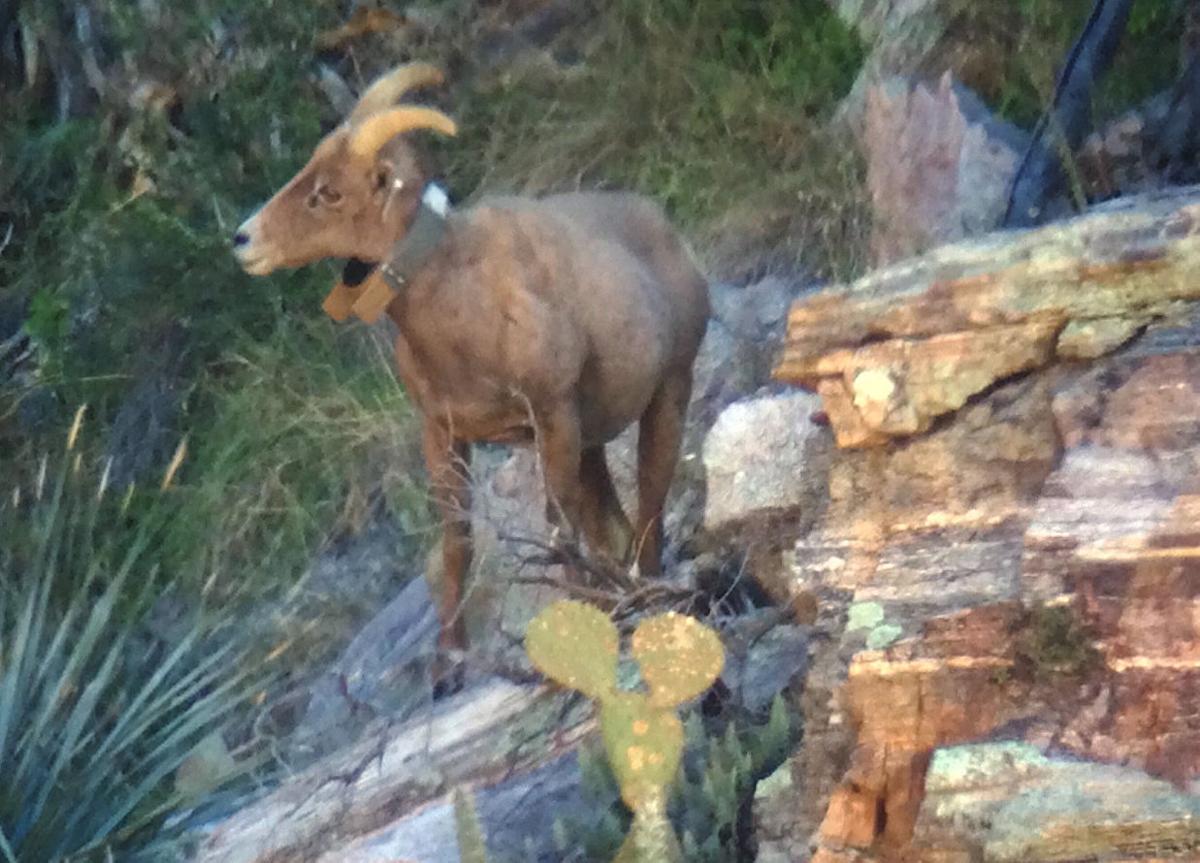
Nine bighorn lambs have been observed so far this season in the Catalina Mountains, and the presence of pregnant ewes in the range indicates that additional newborns could be on the way, state wildlife officials said.
“We are off to a good start this lambing season,” with the season generally considered to be from Jan. 1 to April 30, said Mark Hart, spokesman for the Arizona Game and Fish Department. The agency is overseeing an effort to rebuild a bighorn sheep herd that disappeared from the Catalinas north of Tucson in the 1990s.
“Based on lambs seen so far, we hope to observe as many as we did last year, if not more,” said Hart, noting that 16 lambs were observed in 2015.
He said regular sightings of multiple yearling bighorns “make us optimistic about the survival of lambs born in prior years.”
PROTECTING LAMBS
“Ewes with new lambs are particularly sensitive to disturbance, and recreationists are being asked to help minimize human-caused disturbance by adhering to the trail restrictions within the Pusch Ridge Wilderness Bighorn Sheep Management Area” in the Catalinas, says a Game and Fish Department update report.
“From Jan. 1 through April 30, travel more than 400 feet off designated Forest Service trails is prohibited,” the report says. “Dogs are prohibited year-round.”
HERD STATUS
Game and Fish reported that 46 bighorns with GPS collars are known to be alive, including animals brought to the Catalinas from elsewhere in Arizona in 2013, 2014 and 2015.
The actual number of surviving bighorns could be greater than 46. That’s because GPS collars have fallen off some previously collared animals as they are designed to do when their power source runs out — making it impossible to verify their survival by GPS.

